Understanding time Time Worksheets for 6-Year-Olds
3 filtered results
-
From - To
Discover our "Understanding Time" worksheets tailored specifically for 6-year-olds at Kids Academy! These engaging resources help young learners grasp the concept of time through fun, age-appropriate activities. By using colorful illustrations and interactive exercises, children will learn to read clocks, understand hours and minutes, and develop a strong foundation in time management. Perfect for both classroom and at-home learning, these worksheets cater to various learning styles, making time-telling an enjoyable experience. Set your child on the path to mastering time with our carefully designed worksheets that make learning fun and effective!
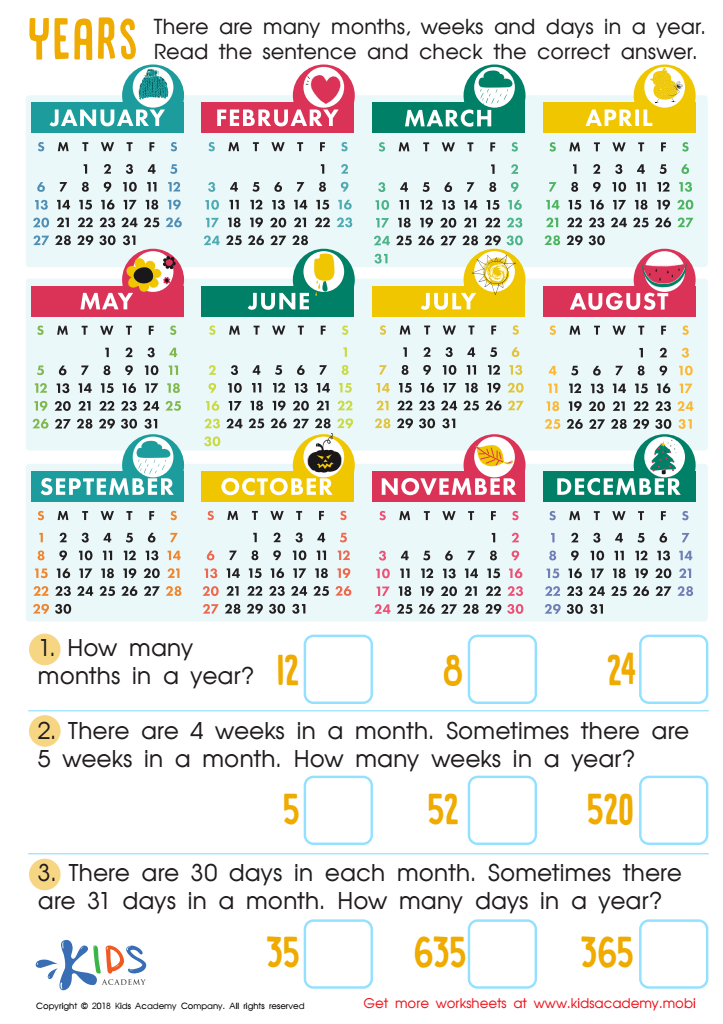
Years Worksheet
 Assign to My Students
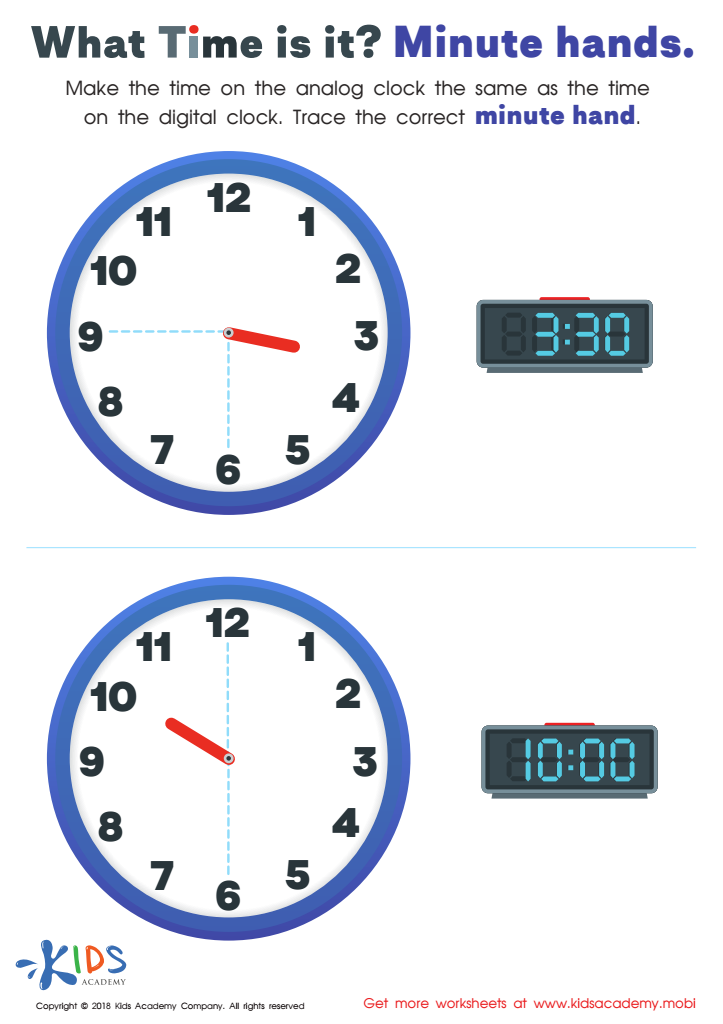
What Time Is it? Minute Hands Worksheet
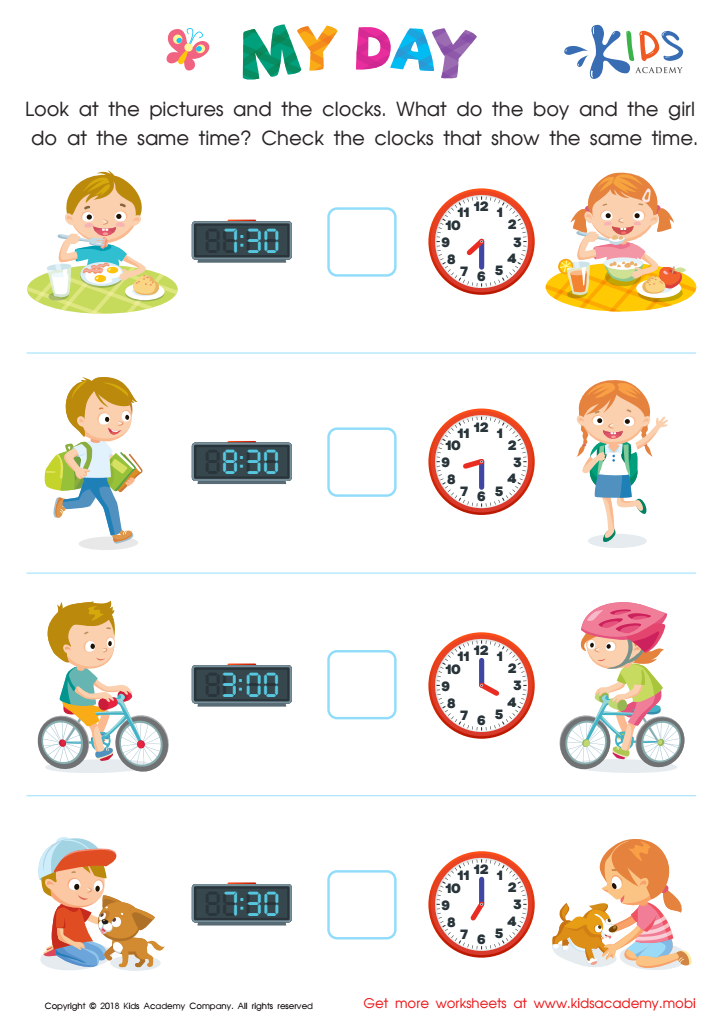
My Day Worksheet








Understanding time is essential for 6-year-olds as it lays the foundation for critical life skills. Time concepts help children develop a sense of structure, routine, and predictability, which are crucial for their emotional and social well-being.
When parents and teachers focus on teaching time, they are helping children grasp the sequence of events throughout the day. This understanding enables kids to manage daily activities, recognize the importance of punctuality, and fulfill responsibilities, fostering a sense of independence and discipline.
Moreover, the ability to comprehend time improves children's mathematical skills. Reading clocks and understanding time intervals introduce them to numbers, counting, and basic arithmetic, enhancing their cognitive development. Knowledge of time also integrates with other subjects like reading, when they learn about timelines in stories and events.
Socially, kids who understand time can better participate in scheduled activities, creating smoother interactions with peers and adults. This not only builds confidence but also teaches them to respect others' time, a valuable social lesson.
In essence, an early grasp of time equips children with critical academic, personal, and social tools. By prioritizing time education, parents and teachers are investing in a child's holistic development, setting the stage for future success and wellbeing.








