Animal identification Reading Worksheets for 6-Year-Olds
4 filtered results
-
From - To
Our Animal Identification Reading Worksheets for 6-Year-Olds are expertly designed to make learning fun and engaging. Through these interactive and colorful worksheets, children will enhance their reading skills while discovering fascinating facts about animals. Perfect for early readers, these activities promote word recognition, phonics, and reading comprehension. Each worksheet features vibrant illustrations and simple exercises aimed to boost confidence and curiosity. Support your child's educational journey with these easy-to-use, printable resources that will transform reading time into an adventure full of learning and discovery. Ideal for home or classroom settings, make reading a rewarding experience today!
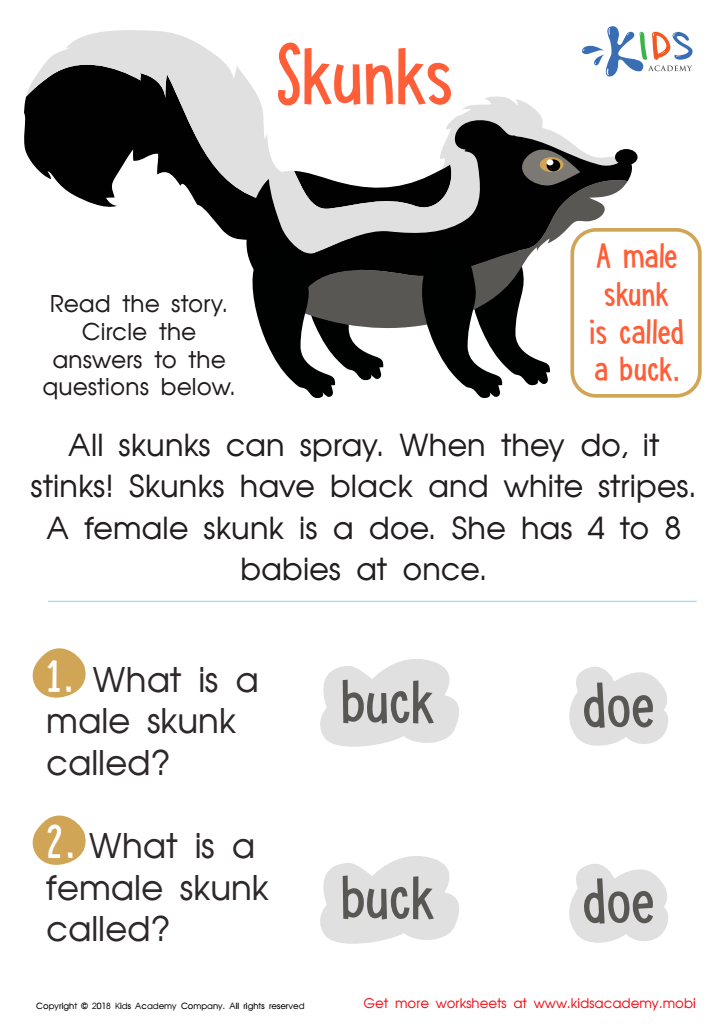
Skunks Worksheet
 Assign to My Students
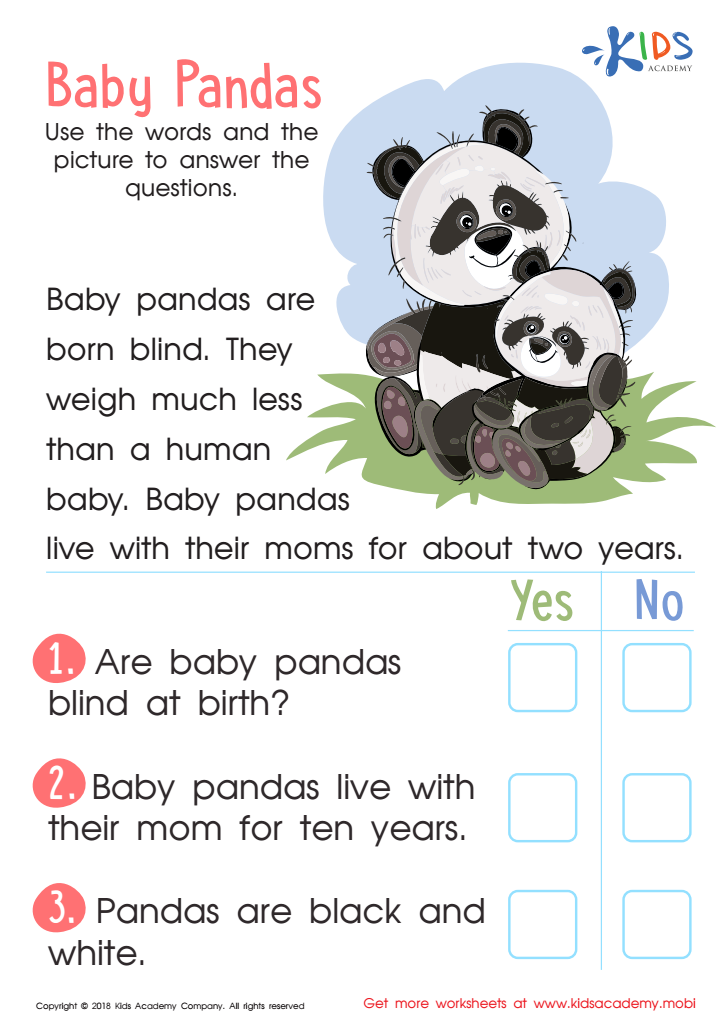
Baby Pandas Worksheet
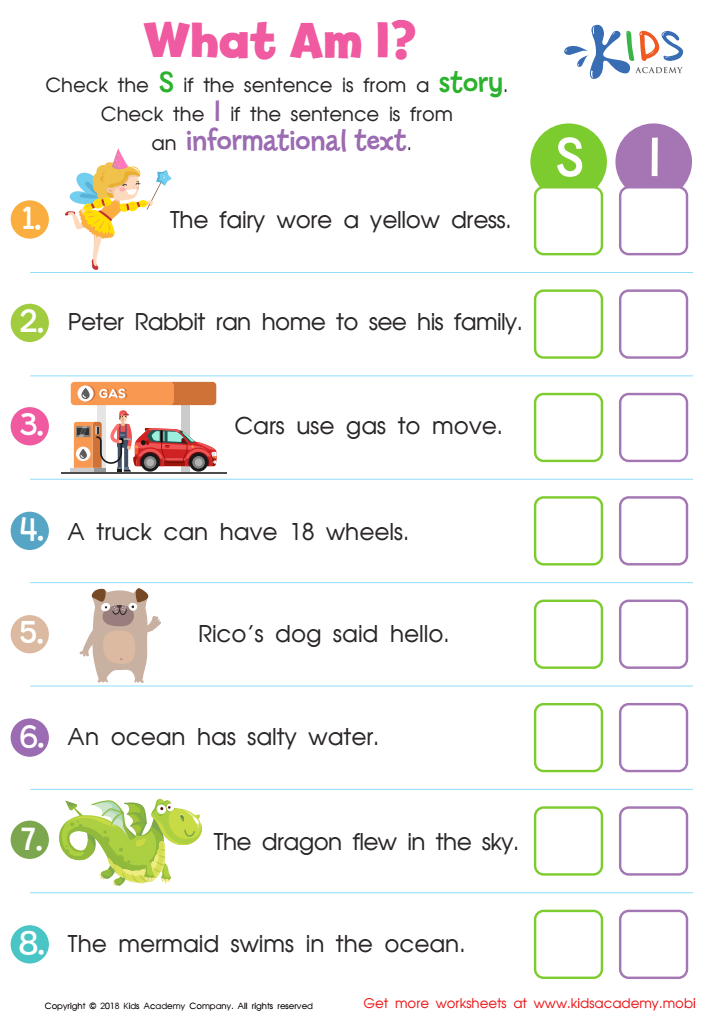
What Am I? Worksheet
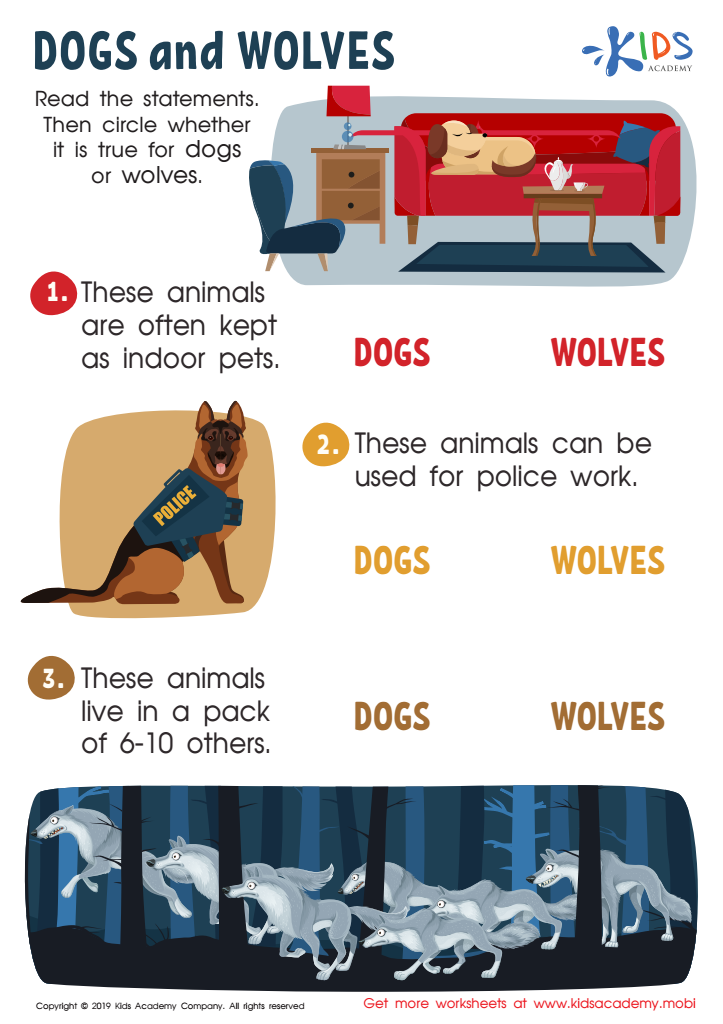
Dogs and Wolves Worksheet






Animal identification reading for 6-year-olds is an important educational activity that brings numerous benefits both to children and their parents or teachers. At this age, kids are naturally curious and eager to learn about the world around them, making it an ideal time to introduce them to different animals.
Engaging in animal identification improves literacy skills by combining reading practice with exciting facts. When children read about animals, they encounter new vocabulary and sentence structures, which enhances their language proficiency. Moreover, it fosters a love for reading by integrating it with a topic they naturally find fascinating.
From a cognitive development perspective, animal identification reading helps children develop categorization skills. Differentiating between various animals—while considering their habitats, diets, and characteristics—supports critical thinking and memory retention.
Scientifically, it builds a foundation for environmental consciousness. Understanding different species fosters empathy and teaches kids about biodiversity and the importance of conservation, nurturing responsible future citizens who value nature.
Socially and emotionally, discussing interesting animal facts with peers, parents, or teachers can strengthen relationships, confidence, and communication skills. Parents and teachers should care about this activity since it holistically supports literacy, cognitive skills, environmental awareness, and relationship-building in a fun and meaningful way.








