Identifying shapes Reading Worksheets for 6-Year-Olds
5 filtered results
-
From - To
Discover fun and engaging "Identifying Shapes" reading worksheets designed specifically for 6-year-olds! These interactive activities help young learners enhance their reading skills while reinforcing their understanding of shapes. Our carefully crafted worksheets incorporate colorful illustrations and clear instructions, making learning enjoyable and effective. Children will practice identifying and describing various shapes such as circles, squares, and triangles through engaging exercises. Ideal for classroom use or at-home learning, these worksheets support early literacy development while encouraging critical thinking. Explore our resources today and watch your child explore the world of shapes and reading with excitement and confidence!
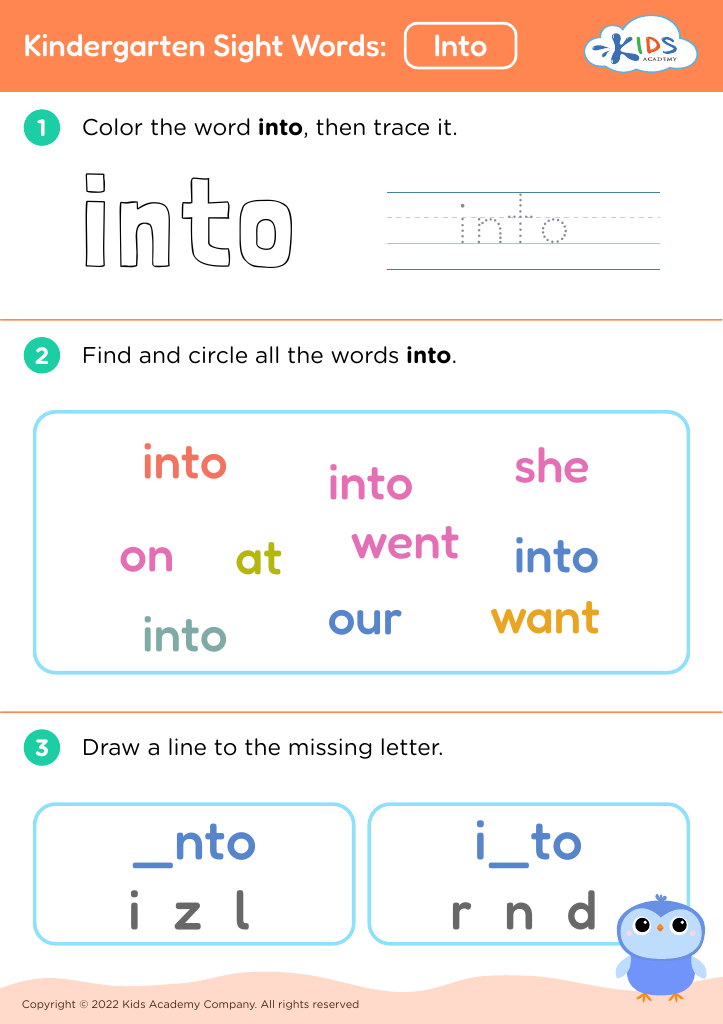








Identifying shapes is a foundational skill for 6-year-olds that fosters critical cognitive development. Parents and teachers should prioritize this practice because shape recognition lays the groundwork for mathematical understanding. When children can identify basic geometric shapes—like circles, squares, triangles, and rectangles—they are better equipped to grasp more complex concepts, such as symmetry, area, and perimeter.
Moreover, shape identification nurtures observational skills and enhances spatial awareness, crucial for everyday problem-solving and tasks, like those encountered in art or design. Beyond math, understanding shapes links to literacy as children learn related vocabulary, enhancing their language skills. For instance, learning terms like "polygon" or "vertex" enriches their overall communication.
Furthermore, identifying shapes encourages creative play and exploration, fundamental for a balanced educational experience. Integrating shape identification with games and activities can make learning enjoyable, increasing a child’s engagement and retention.
Finally, nurturing this skill at home and in the classroom creates a supportive learning environment that encourages curiosity and confidence. Ultimately, a focus on identifying shapes can significantly impact a child’s academic trajectory and foster a lifelong love of learning.








