Rhyming skills development Reading Worksheets for 6-Year-Olds
3 filtered results
-
From - To
Enhance your 6-year-old’s reading journey with our engaging Rhyming Skills Development Reading Worksheets. Our printables introduce rhyming through fun and interactive activities, designed to strengthen phonemic awareness and improve vocabulary. Each worksheet is crafted to help children recognize and produce rhyming words, making learning enjoyable and effective. Boost their confidence in reading as they explore a world of rhymes with our expertly developed resources. Perfect for home or classroom use, these worksheets are an excellent addition to your child’s learning routine. Begin building critical rhyming skills today with Kids Academy!

Rhyming Words Rhyming Worksheet
 Assign to My Students
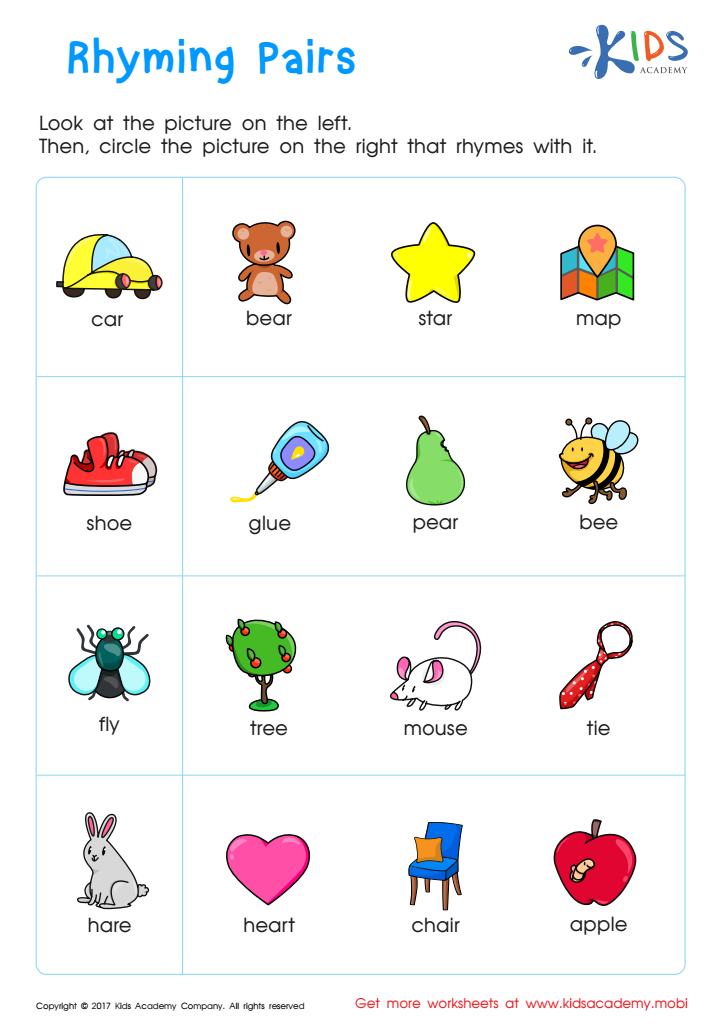

First Words: Picture Rhymes Worksheet






.jpg)

Developing rhyming skills is essential for 6-year-olds as it fundamentally supports early reading and literacy. Firstly, rhyming helps children recognize phonemic patterns, which are the sounds within words. This phonemic awareness is a critical pre-reading skill as it allows children to hear how words are constructed, making it easier for them to decode new words and expand their vocabulary.
Additionally, rhyming fosters auditory discrimination, improving the ability to distinguish between different sounds. This is particularly useful in understanding the relationship between sounds and written letters, a key step in spelling and writing.
Fun and engaging, rhyming activities like singing songs, reciting poems, and listening to rhymes motivate children to participate in literacy activities. This fosters a positive attitude towards reading, which is vital for cultivating a lifelong love of books.
Finally, rhyming generally enhances memory and cognitive development. The repetition and musicality of rhymes make it easier for children to remember words and their meanings, which supports overall language development.
In summary, encouraging rhyming skills in kindergarten-age children is a joyful and impactful way to set them on a successful reading path and build a strong foundation for their educational journey.








