Spatial awareness Reading Worksheets for 6-Year-Olds
4 filtered results
-
From - To
Enhance your child's spatial awareness with our engaging Reading Worksheets designed specifically for 6-year-olds! These interactive resources will help young learners improve their understanding of position, direction, and relationships between objects. Through fun activities, including puzzles and illustrated scenarios, children will develop critical thinking skills while enjoying stimulating content. Perfect for at-home learning or classroom use, our worksheets align with early education standards, making them a valuable tool for teachers and parents alike. Foster your child's confidence in spatial reasoning and comprehension with our thoughtfully designed materials today! Explore our wide range of worksheets to make learning fun and effective.
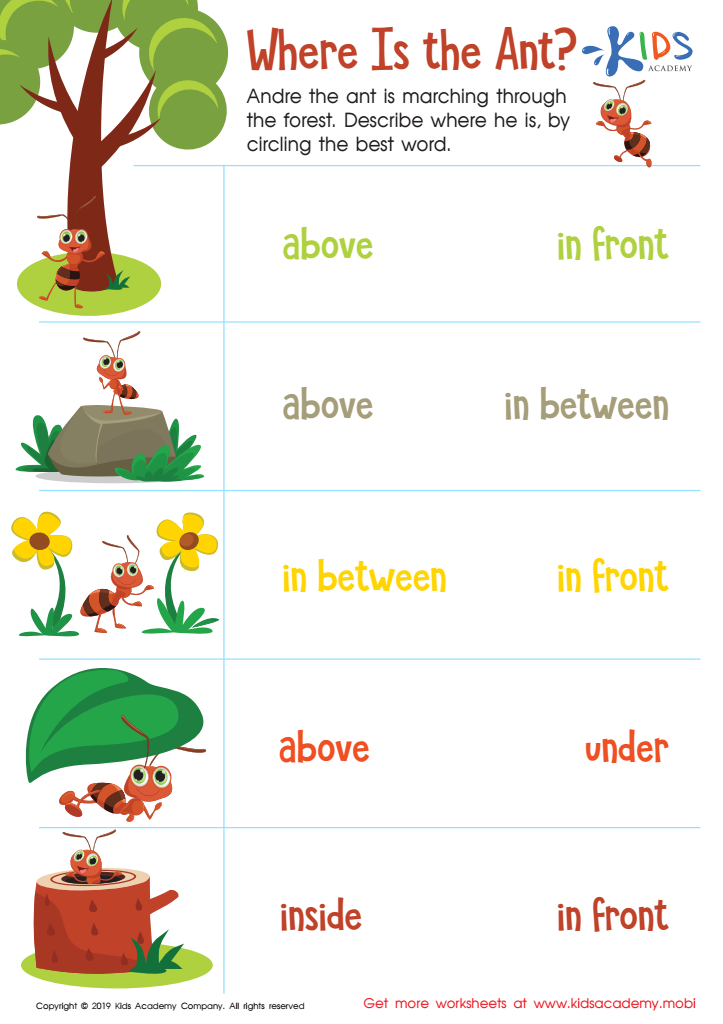
Where Is the Ant? Worksheet
 Assign to My Students
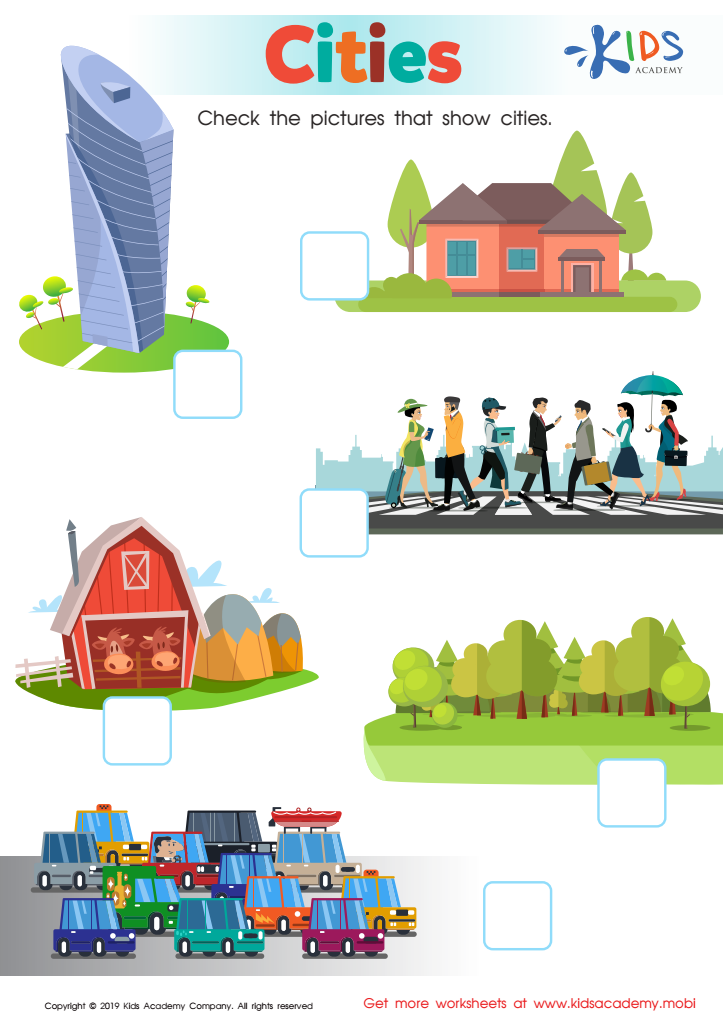
Cities Worksheet
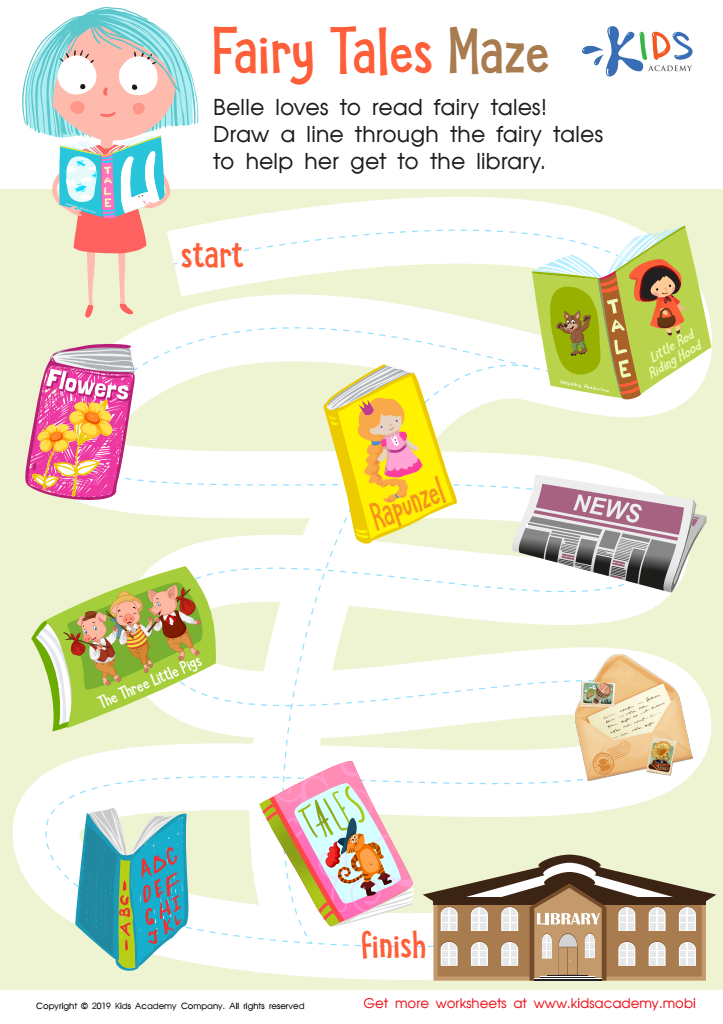
Fairy Tales Maze Worksheet
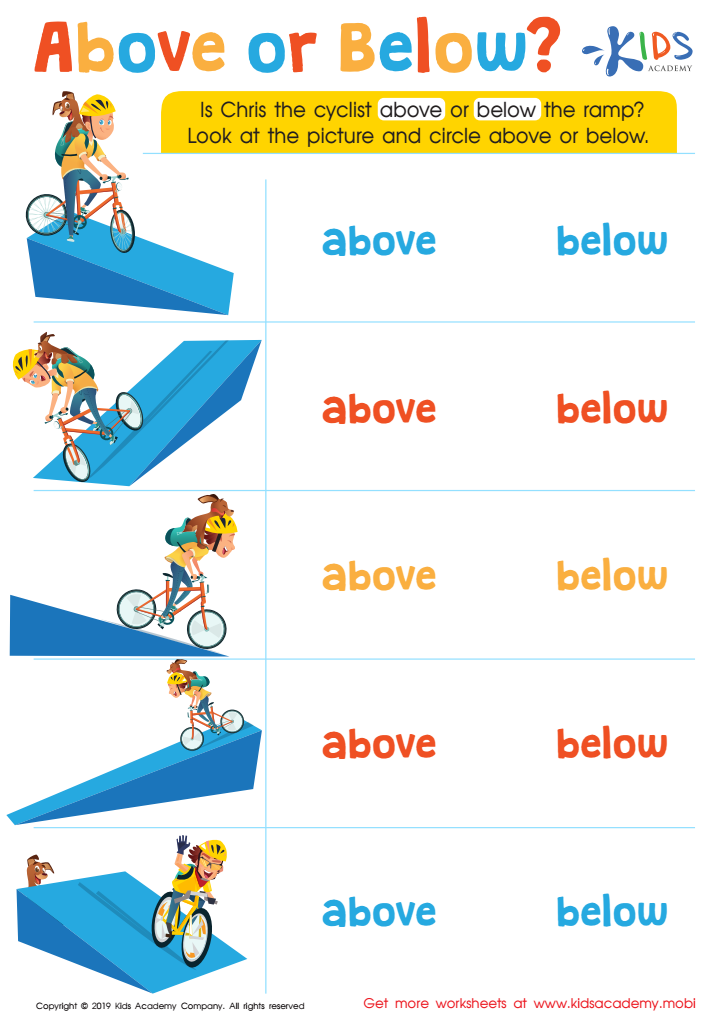
Above or Below? Worksheet






Spatial awareness is a crucial skill for 6-year-olds, playing a significant role in their overall development. Parents and teachers should care about it because spatial awareness directly impacts a child's ability to read and understand literature. When children possess strong spatial awareness, they can better grasp the concept of directionality, such as left to right reading and the progression of words on a page.
Moreover, spatial awareness fosters visualization skills, enabling children to imagine scenes, characters, and plots clearly as they read. This visualization aids in comprehension, allowing for a deeper connection with the text and enhancing engagement. Furthermore, these skills are foundational for later mathematical understanding, including geometry and problem-solving.
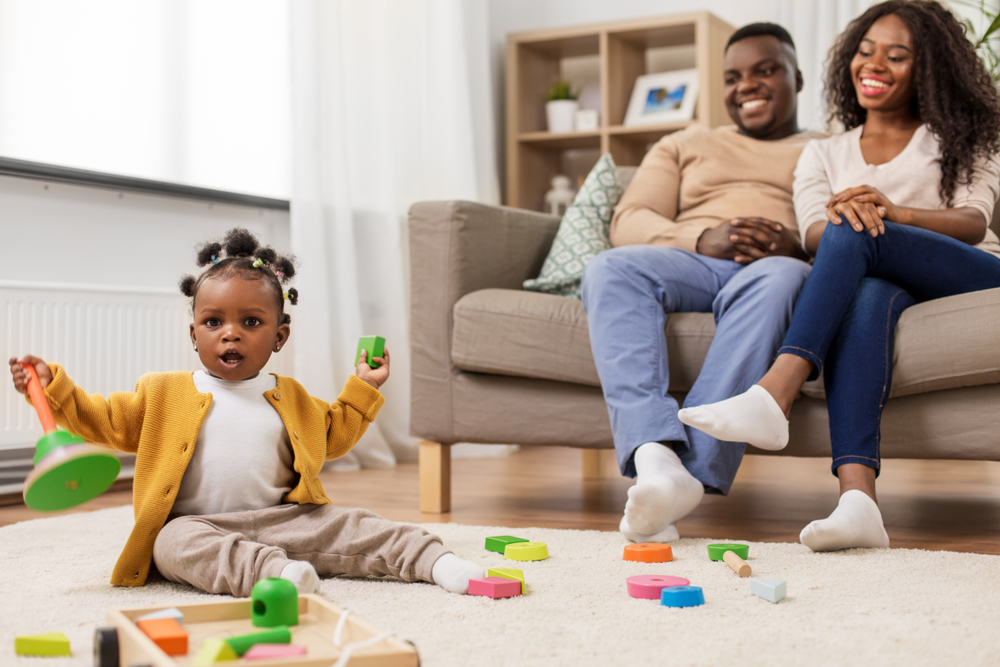
Engaging in activities that promote spatial awareness—such as puzzles, building blocks, and spatial games—provides children with the necessary tools to navigate not only the printed page but also their physical environment. As spatial skills develop, they contribute to confidence in learning that extends beyond literacy, impacting various academic areas.
By focusing on fostering spatial awareness, adults set the stage for enjoyable and enriching learning experiences that contribute to a child’s education and lifelong success.








