
Understanding patterns Reading Worksheets for 6-Year-Olds
3 filtered results
Difficulty Level
Grade
Age
-
From - To
Subject
Activity
Standards
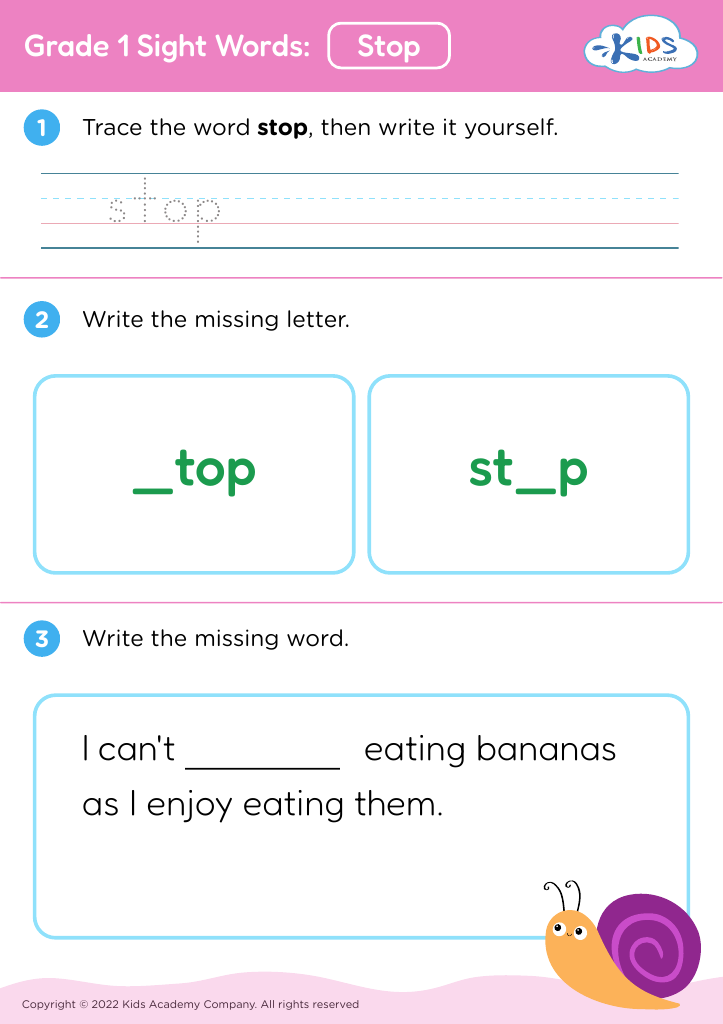
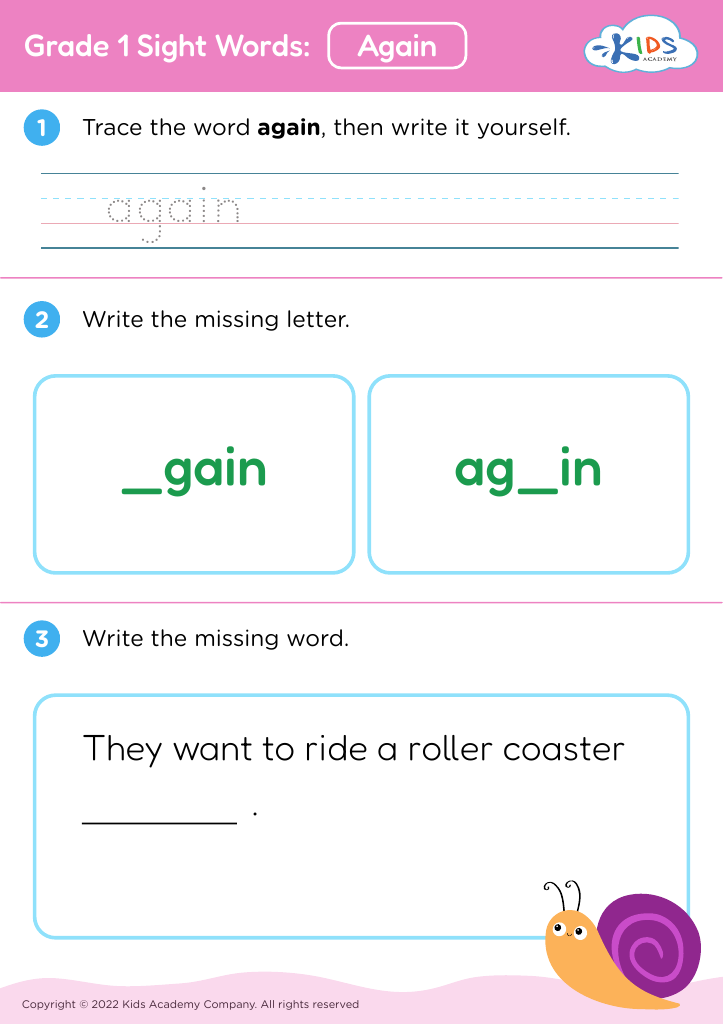
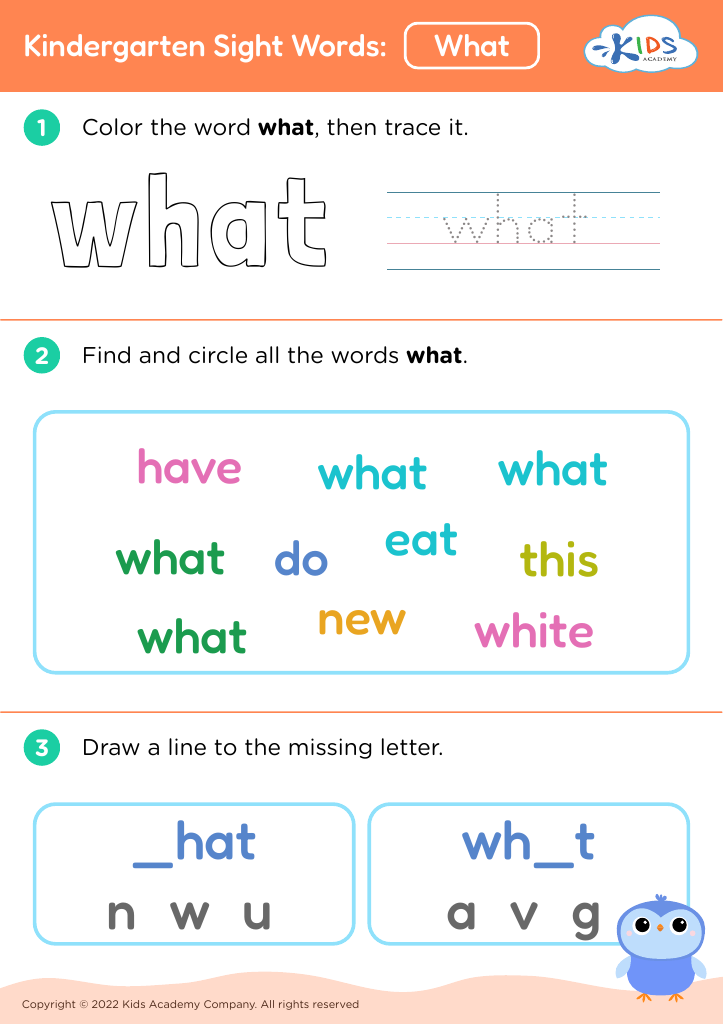
Unlock the power of pattern recognition with our "Understanding Patterns Reading Worksheets for 6-Year-Olds" at Kids Academy! These expertly designed printable worksheets help young readers enhance crucial learning skills through engaging activities that focus on identifying and creating patterns. Perfect for first graders, our fun and educational worksheets promote critical thinking, boost reading comprehension, and lay a solid foundation for future math success. Nurture your child's curiosity and academic growth today by exploring our collection tailor-made to transform learning into an exciting adventure! Discover more at Kids Academy and watch your little learner thrive.
Favorites
With answer key
Interactive
Join Kids Academy for Free
Who is primarily going to use this learning content?






Understanding patterns in reading for 6-year-olds is essential as it lays the foundation for vital cognitive and literacy skills. At this age, children are beginning to make sense of the practical connections between letters, sounds, and words. Identifying and understanding patterns helps children anticipate what could come next in a sequence, which is a skill critical not just for reading, but also for comprehension, math, and problem-solving in general.
When 6-year-olds recognize repeating patterns in stories or sentence structures, they become more fluent readers. It also promotes confidence as they successfully decode texts and grasp underlying messages with ease. Patterns in language, such as rhyming or repetitive phrases often found in children’s books, reinforce memory, pronunciation, and contextual learning.
Furthermore, pattern recognition in reading enhances a child's analytical abilities. For example, distinguishing between similar-looking words through contextual clues teaches them to pay attention to detail and improves their ability to understand the subtle differences in meanings.
Engaging in pattern recognition activities makes learning interactive, fun, and approachable, encouraging a lifelong interest in studying and exploring various subjects holistically. Therefore, both parents and teachers play a crucial role in nurturing these skills to support children's overall academic and cognitive growth.








