Vocabulary enhancement Reading Comprehension Worksheets for 6-Year-Olds - Page 2
27 filtered results
-
From - To
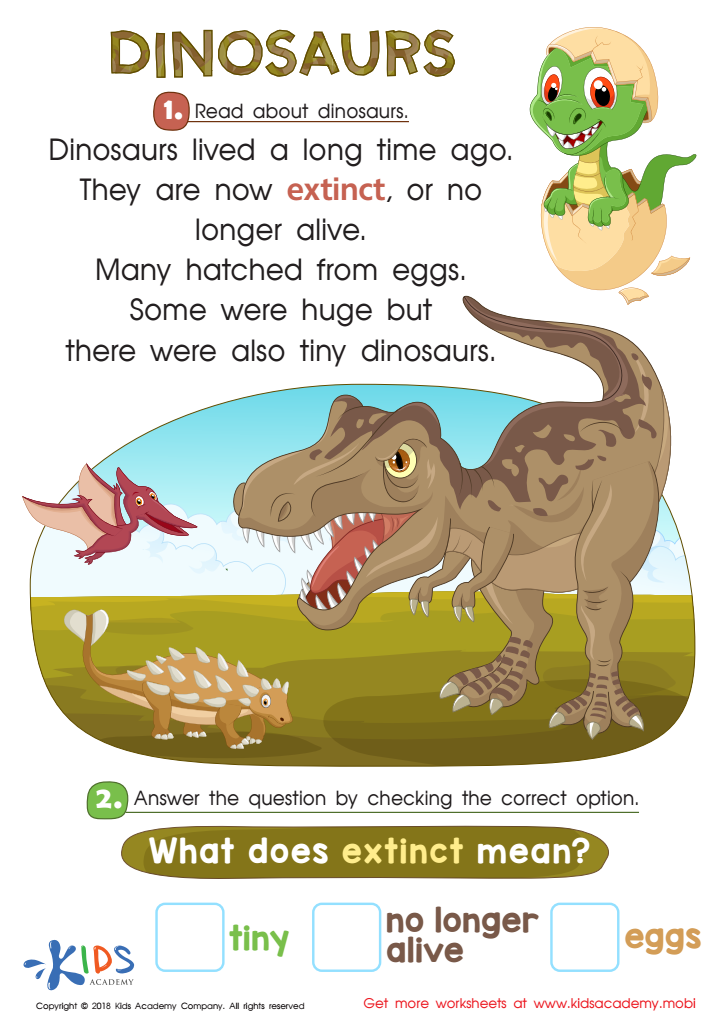
Dinosaurs Worksheet
 Assign to My Students
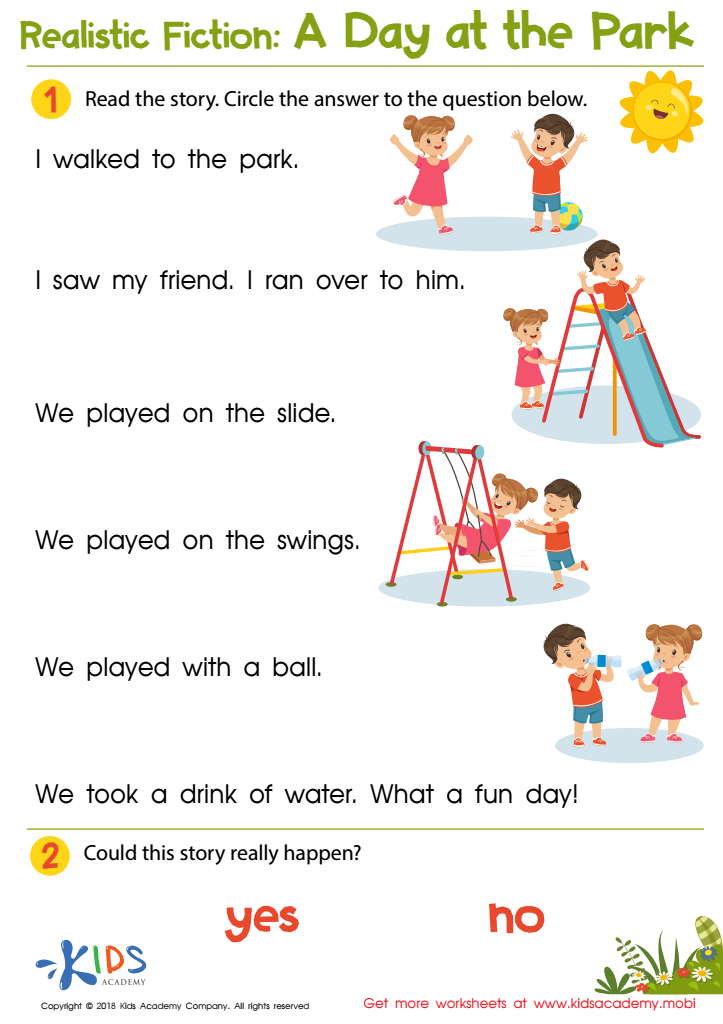
A Day at the Park Worksheet
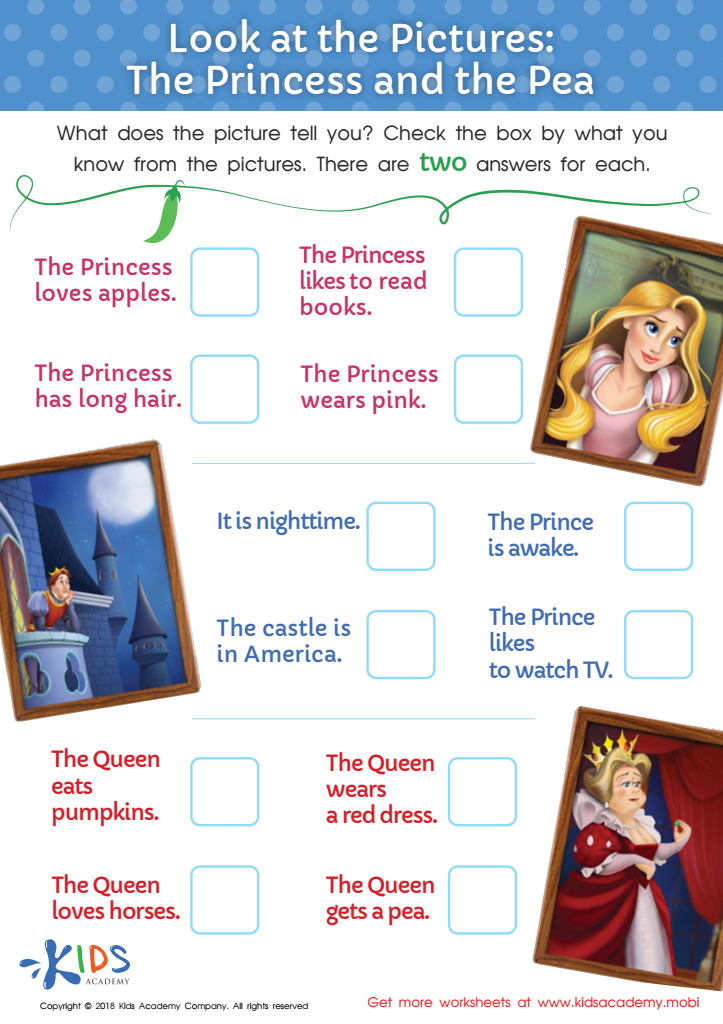
Look at the Pictures: The Princess and the Pea Worksheet








Parents and teachers should prioritize vocabulary enhancement and reading comprehension for 6-year-olds because these skills are foundational to their overall academic success and lifelong learning. At this critical age, children are rapidly developing language abilities, and a robust vocabulary enhances their ability to express themselves, understand complex instructions, and engage meaningfully with their environment.
A broad vocabulary directly supports reading comprehension, enabling children to make sense of new texts, infer meanings, and grasp the nuances of language. This, in turn, fosters a love for reading that can lead to greater academic achievement across subjects as children grow. Comprehension skills also help children follow stories and content, enhancing their knowledge and stimulating critical thinking.
Moreover, strong language skills pave the way for effective communication, both in writing and speaking, which are crucial for social interactions and collaborative learning experiences. Early vocabulary and comprehension skills set a positive trajectory for cognitive development and ensure children are equipped with the tools needed to excel.
Therefore, parents and teachers can help by regularly reading with children, introducing new words in context, and encouraging inquiry and discussion about stories and concepts, which collectively lay the groundwork for lifelong learning and achievement.








