Developing observation skills Science Worksheets for 6-Year-Olds
3 filtered results
-
From - To
Enhance your child's learning journey with our "Developing Observation Skills Science Worksheets" designed specifically for 6-year-olds. These engaging worksheets from Kids Academy help young learners hone their observation skills through fun and interactive activities. Children will explore the world around them, learning to notice details, recognize patterns, and make informed predictions. Perfect for kindergartners and first-graders, these worksheets build a strong foundation in scientific thinking, critical for future academic success. Teachers and parents will find these resources invaluable for encouraging curiosity and a love for science. Discover the joy of learning with our expertly crafted observation skills worksheets today!
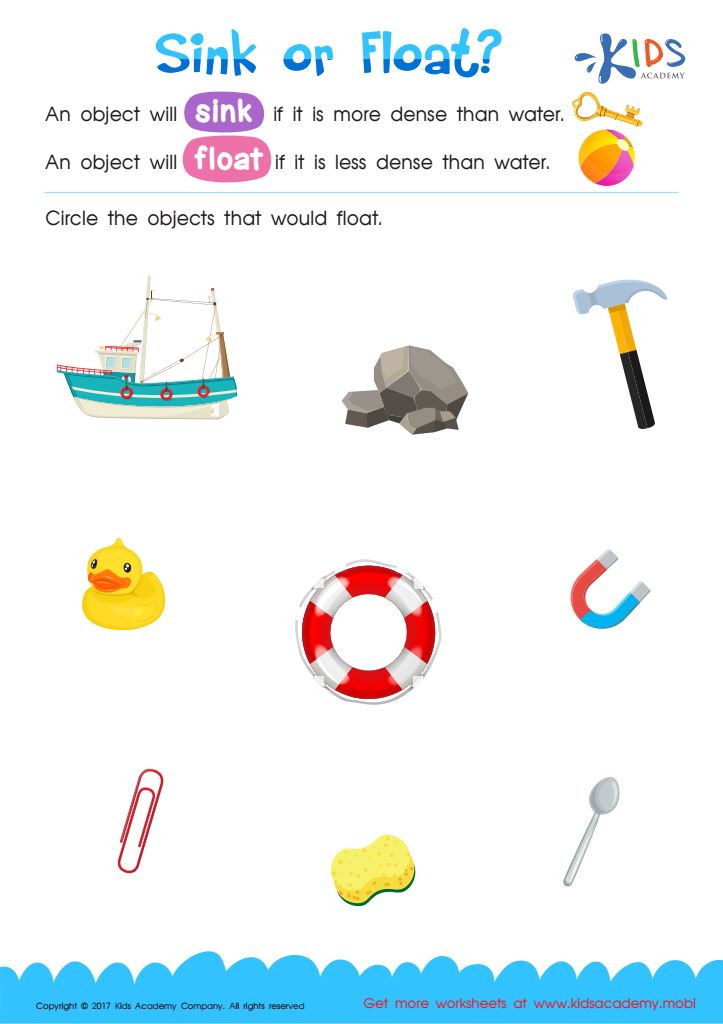
Sink or Float Printable
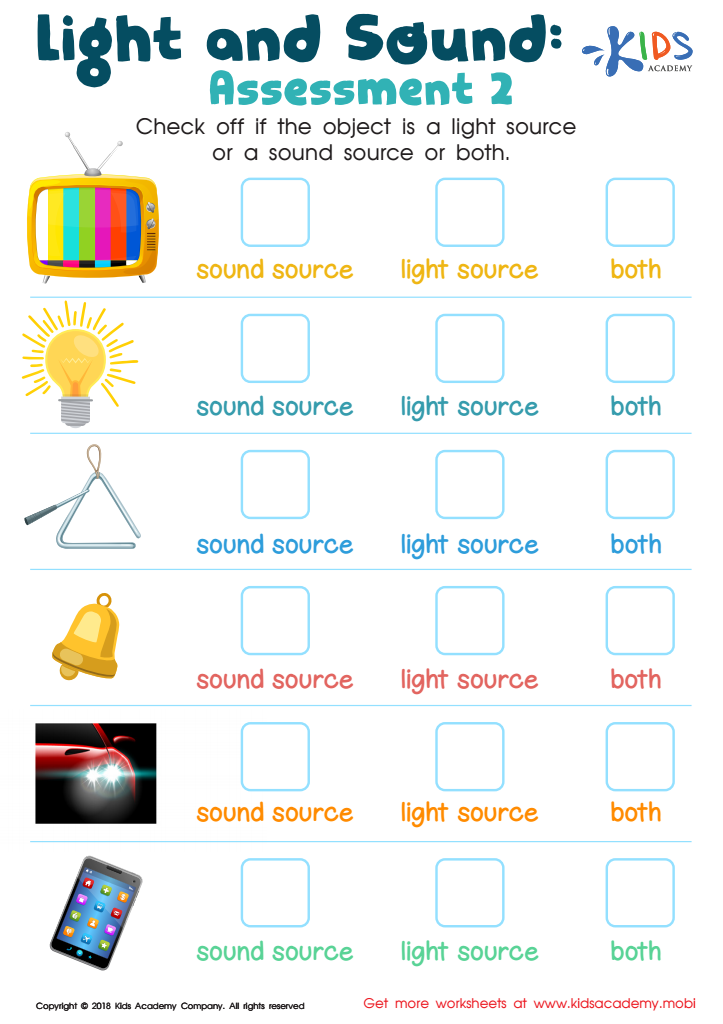
Light and Sound: Assessment 2 Worksheet
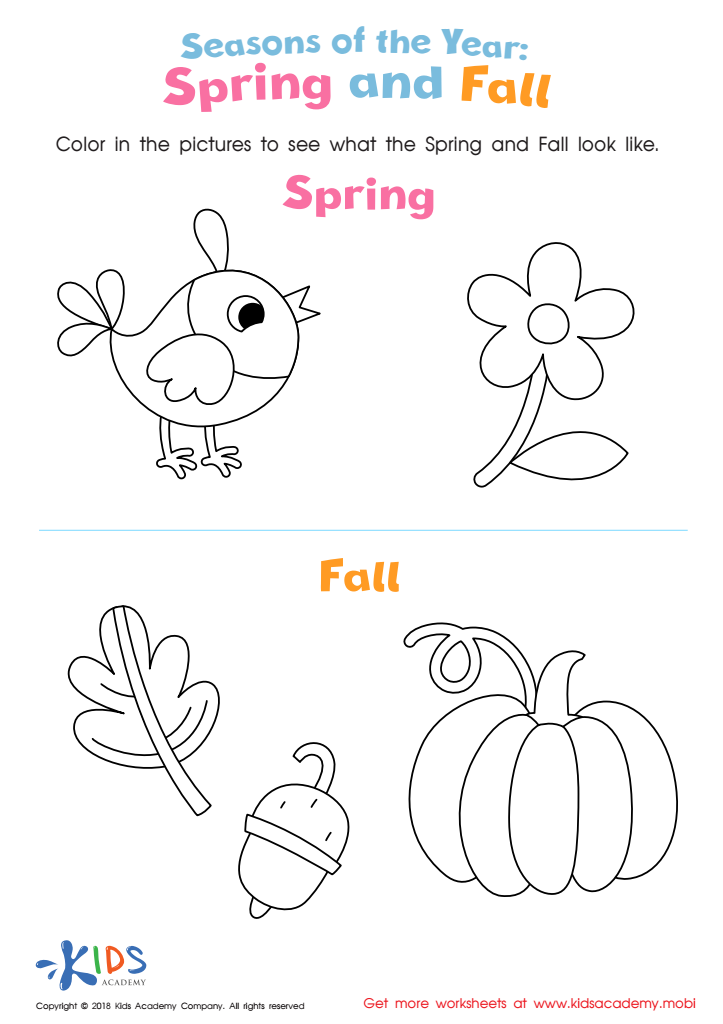
Spring and Fall Worksheet
 Assign to My Students



.jpg)




Developing observation skills in science for 6-year-olds is crucial as it lays a strong foundation for lifelong learning and inquiry. These skills enhance a child's ability to notice details, patterns, and variations in their environment, which is fundamental to the scientific method and overall cognitive development. By honing these skills early on, children learn to ask questions, make predictions, and draw conclusions based on evidence, promoting critical thinking and problem-solving abilities.
Moreover, fostering observation skills nurtures a child's natural curiosity and love for discovery. It engages them in active rather than passive learning, making education a hands-on, enjoyable experience. This approach not only strengthens their understanding of scientific concepts but also bolsters other academic subjects through improved focus and attention to detail.
For parents and teachers, encouraging observation skills means opening a door to collaborative and exploratory learning activities, from nature walks to simple, guided experiments at home or in the classroom. These activities foster essential communication skills as children describe their observations and discuss their findings.
Ultimately, nurturing observation skills in young children helps them develop a robust framework for analytical thinking and an integrated approach to learning that will serve them well throughout their educational journey and beyond.







