Shape Recognition Physical Science Worksheets for 6-Year-Olds
3 filtered results
-
From - To
Discover our engaging Shape Recognition Physical Science Worksheets designed specifically for 6-year-olds! These fun and interactive worksheets help young learners identify and understand various shapes through exciting activities and vibrant illustrations. By incorporating shape recognition into physical science, kids will develop their observational skills while exploring the world around them. Our worksheets promote hands-on learning with activities that encourage creativity and critical thinking. Perfect for home or classroom use, these resources will make learning about shapes an enjoyable adventure. Foster your child’s curiosity and essential early science skills today with our easy-to-use printable worksheets!
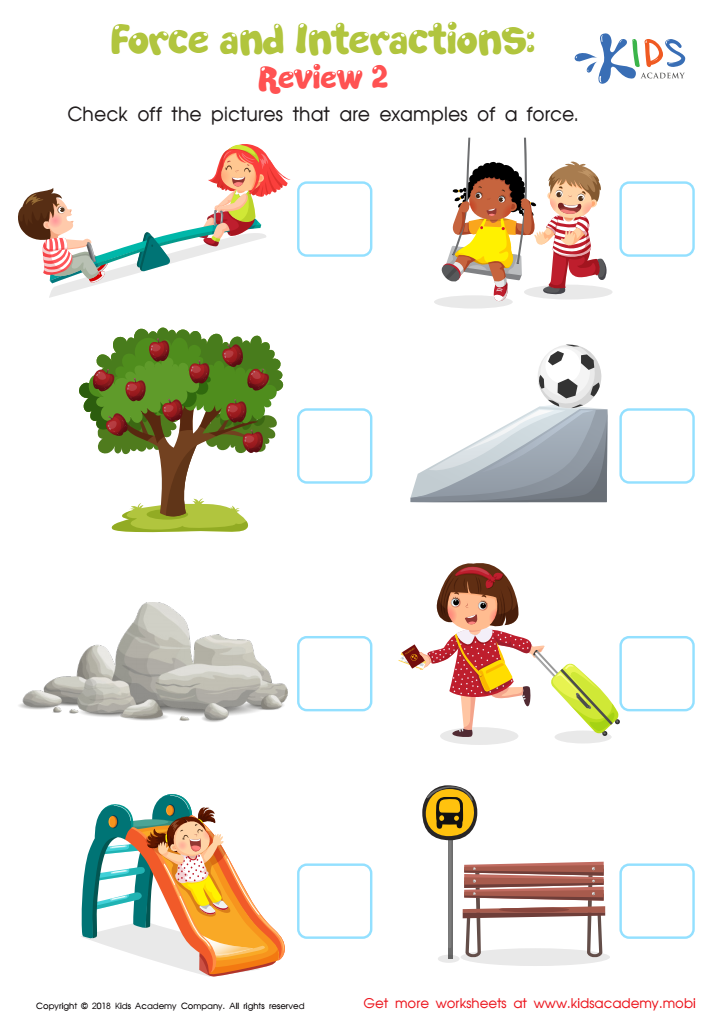
Force and Interactions: Review 2 Worksheet
 Assign to My Students
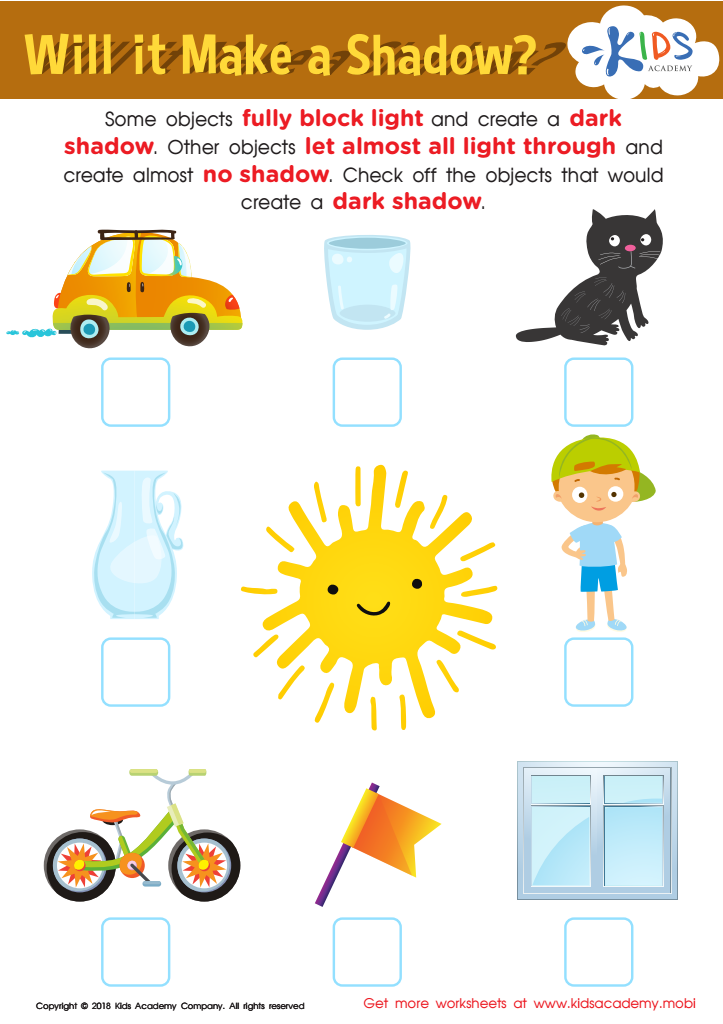
Will It Make a Shadow? Worksheet
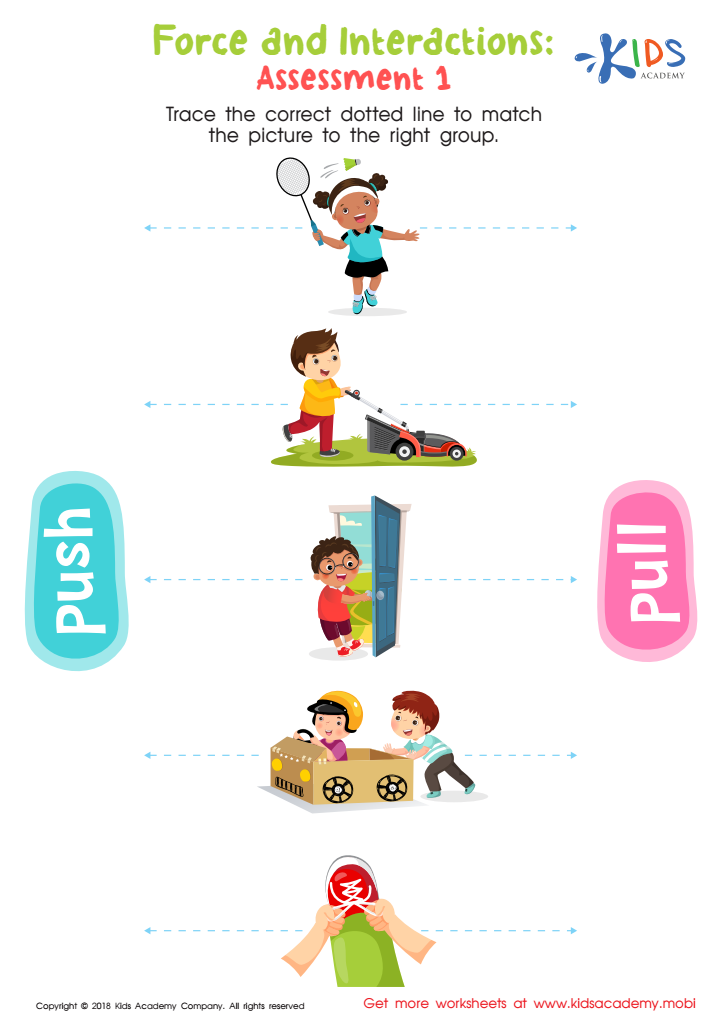
Force and Interactions: Assessment 2 Worksheet







Shape recognition is a fundamental skill in early childhood education, playing a crucial role in a child’s cognitive, social, and physical development. For 6-year-olds, understanding shapes is tied to their ability to navigate the world around them. When parents and teachers focus on shape recognition, they help children develop spatial awareness, which enhances critical thinking and problem-solving skills. This foundational knowledge lays the groundwork for more advanced concepts in mathematics, such as geometry and measurements.
Additionally, recognizing different shapes helps children categorize and organize their surroundings, fostering their ability to make connections between objects. This skill also promotes creativity through art and construction activities, as children learn to combine shapes to form more complex structures.
From a social perspective, teaching shape recognition can also be integrated into playful group activities, encouraging teamwork and communication skills among peers. By keeping learning engaging and interactive, both parents and teachers create a supportive environment that nurtures a child's inquisitive nature.
Ultimately, investing in shape recognition contributes to a well-rounded educational experience, equipping children with essential tools they will use throughout their academic journey and daily life. Hence, parents and teachers should prioritize this fundamental aspect of early physical science education.







