
Observational skills Space Worksheets for 6-Year-Olds
3 filtered results
Difficulty Level
Grade
Age
-
From - To
Subject
Activity
Standards
Enhance your 6-year-old's observational skills with our engaging Space Worksheets! These thoughtfully crafted activities encourage young learners to observe, compare, and analyze information about celestial bodies and the universe. Through interactive exercises, children will explore planets, stars, and rockets while honing their critical thinking and attention to detail. Our worksheets are designed to align with early science education, promoting curiosity and discovery in a fun way. Perfect for at-home learning or classroom activities, these resources will inspire a lifelong passion for space exploration and help your child develop essential observational skills. Download now and spark your child’s interest in the cosmos!
Favorites
With answer key
Interactive
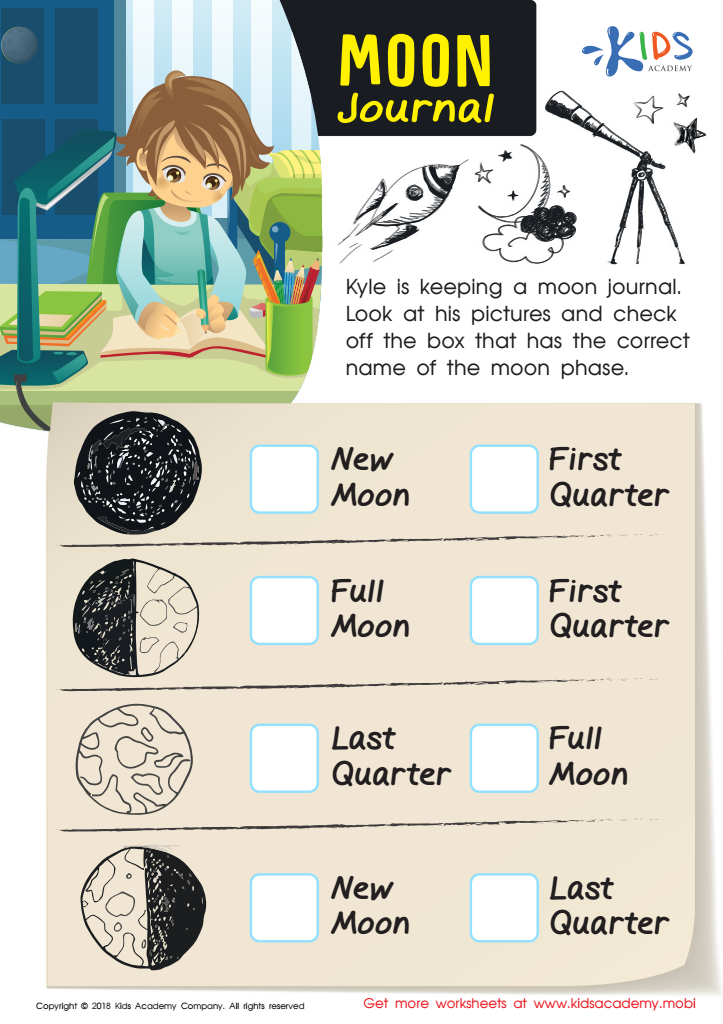
Moon Journal Worksheet
Observe the moon and its 8 phases with your child by downloading this free PDF worksheet from Kids Academy! Review the moon phases with them then help them label Kyle's moon journal. Select the right moon phase for each picture to complete the page!
 Assign to My Students
Moon Journal Worksheet
Worksheet
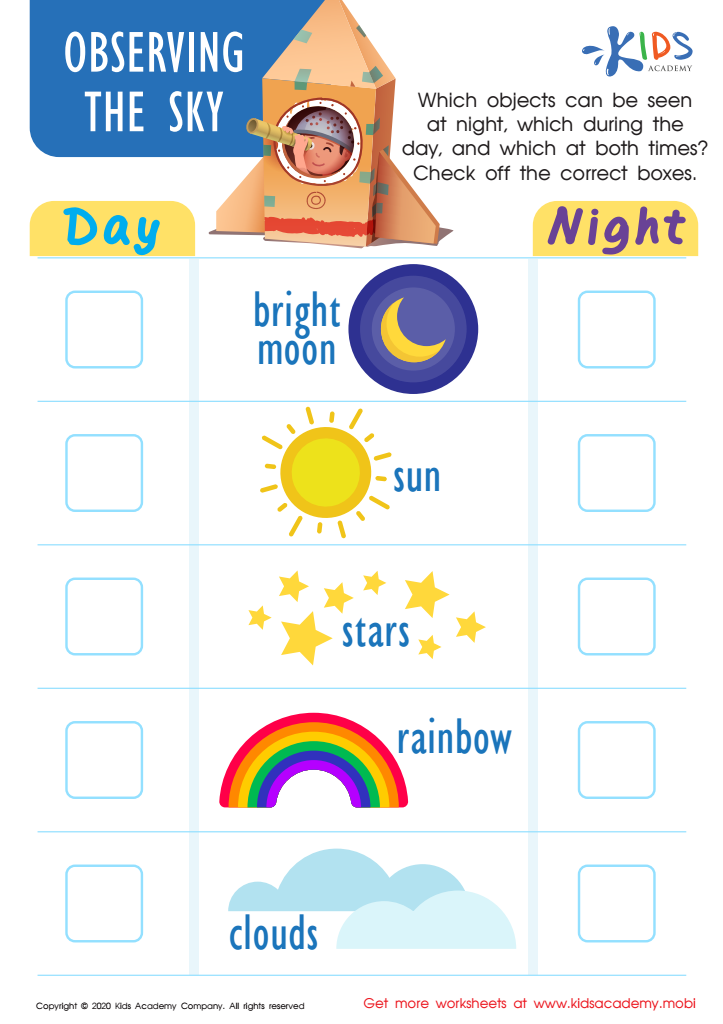
Observing the Sky Worksheet
Look up to the sky and observe day and night objects! See a rainbow or some clouds by day and stars and the moon at night. Help your little learner review this science concept with Kids Academy's fun and colorful worksheet. Have them sort and check off the objects seen by day or night, going down the column in the center.
Observing the Sky Worksheet
Worksheet
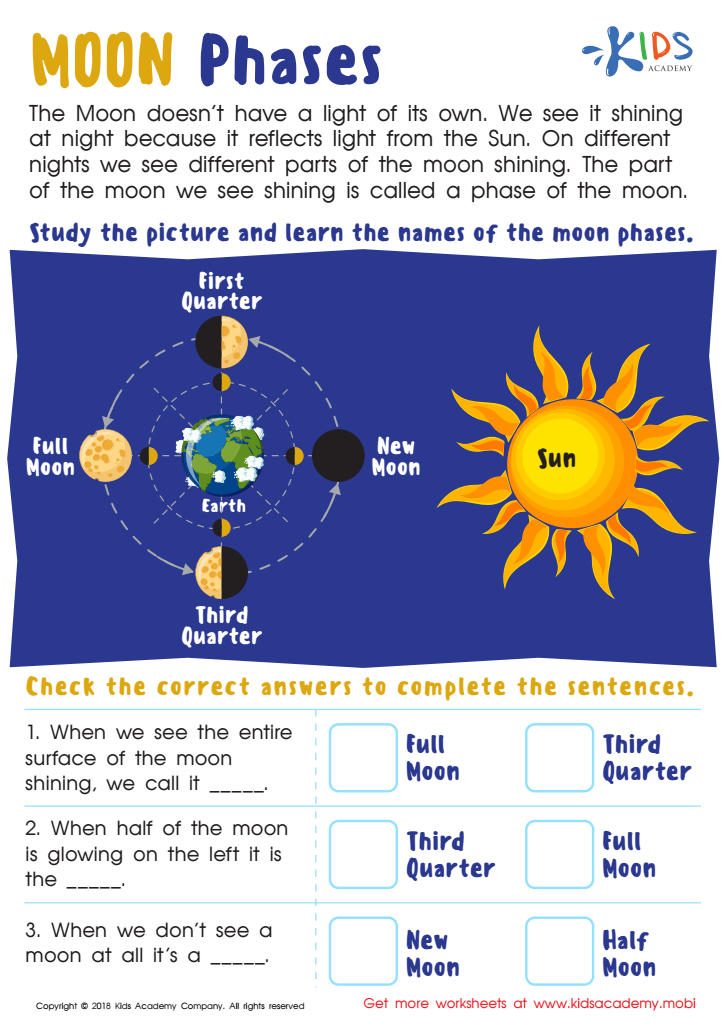
Moon Phases Worksheet
Gaze up at the night sky and the moon's appearance may change from night to night. Encourage your child to learn more about the sun, the moon, and space with this science worksheet. Have them read the text then study the picture. Finally, read the sentences and check the answers to identify the moon's phases.
Moon Phases Worksheet
Worksheet
Join Kids Academy for Free
Who is primarily going to use this learning content?






Observational skills are crucial for 6-year-olds as they form the foundation for learning and understanding the world. At this age, children are naturally curious. Encouraging observational skills enhances their ability to focus, notice details, and ask questions. When parents and teachers foster these skills, they empower children to engage in critical thinking, problem-solving, and imaginative play.
Observational skills also promote social development. As children learn to observe their peers, they become more attuned to social cues, enabling them to form friendships and understand boundaries. This awareness can help prevent conflicts and support cooperative learning experiences.
Moreover, observational skills are linked to academic success. In subjects such as science, drawing conclusions from observations is fundamental. Children who practice these skills are more likely to excel in evaluating information and making connections, which are essential in any learning environment.
Finally, investing in the development of observational skills nurtures lifelong learners. They foster curiosity, a love for exploration, and a robust ability to interact with their surroundings, paving the way for thoughtful, engaged citizens. Therefore, both parents and teachers should prioritize the enhancement of these skills in the formative years, setting children on a path towards personal and academic growth.







