Matching skills Social Studies Worksheets for 6-Year-Olds
3 filtered results
-
From - To
Enhance your child's cognitive development and understanding of the world with our engaging Matching Skills Social Studies Worksheets for 6-Year-Olds. Designed by educational experts, these worksheets cover essential social studies concepts, promoting critical thinking through fun matching activities. Ideal for both classroom and home use, the worksheets help young learners recognize and connect important people, places, and events, building a strong foundation in social studies. Colorful images and interactive prompts make learning enjoyable, keeping children motivated and eager to explore more. Equip your child with vital knowledge while boosting their matching skills through these thoughtfully crafted resources.
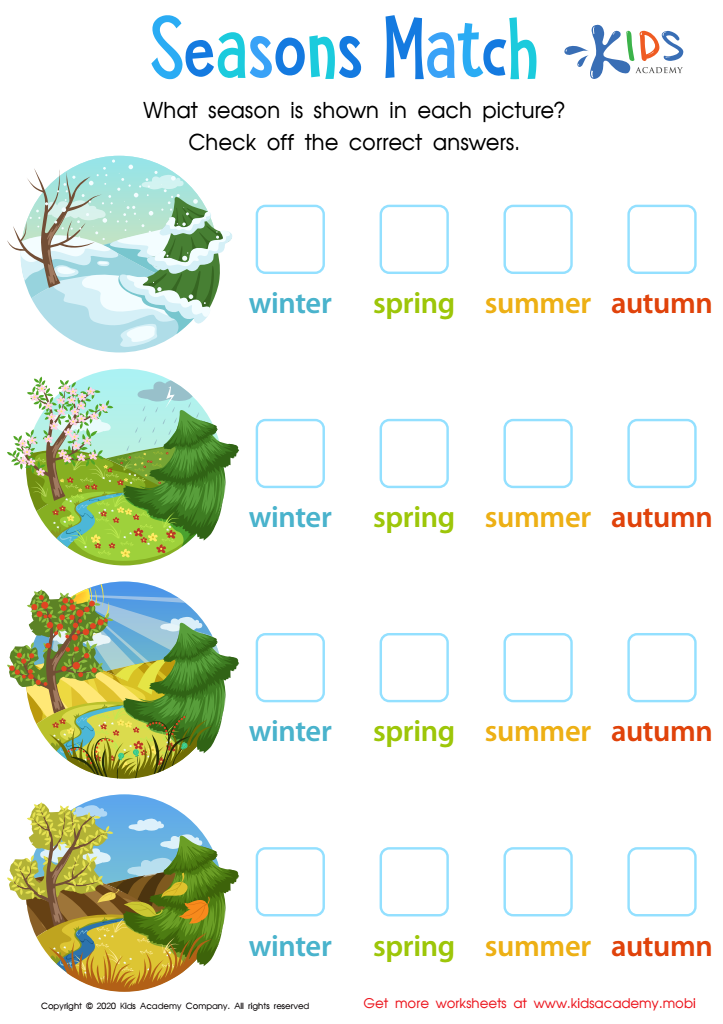
Seasons Match Worksheet
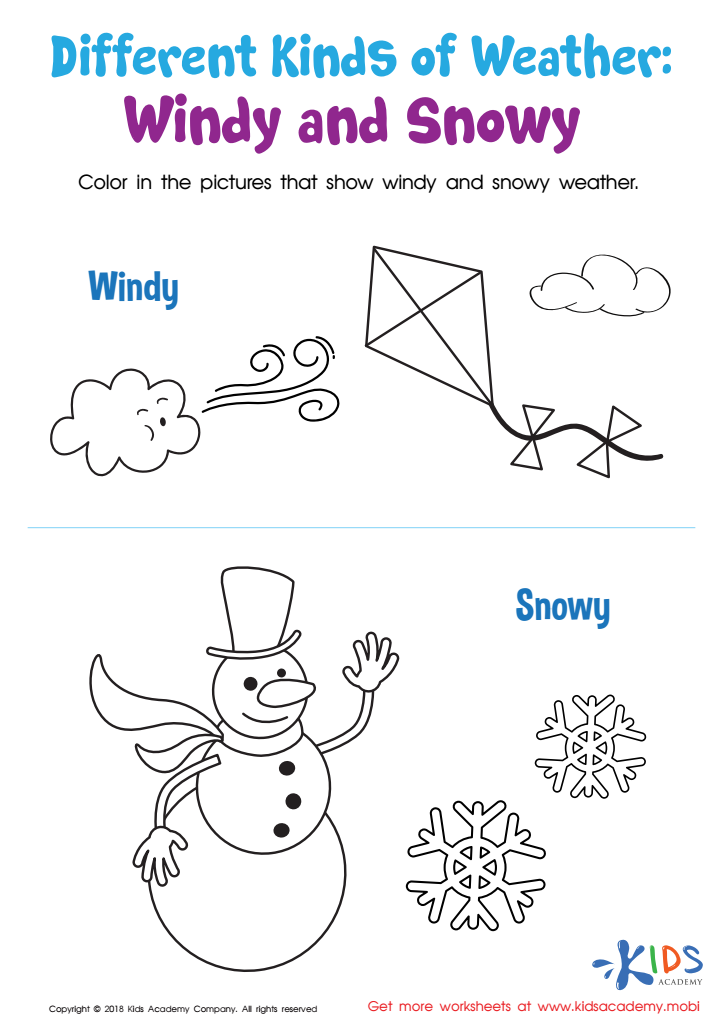
Different Kinds of Weather: Windy and Snowy Worksheet
 Assign to My Students
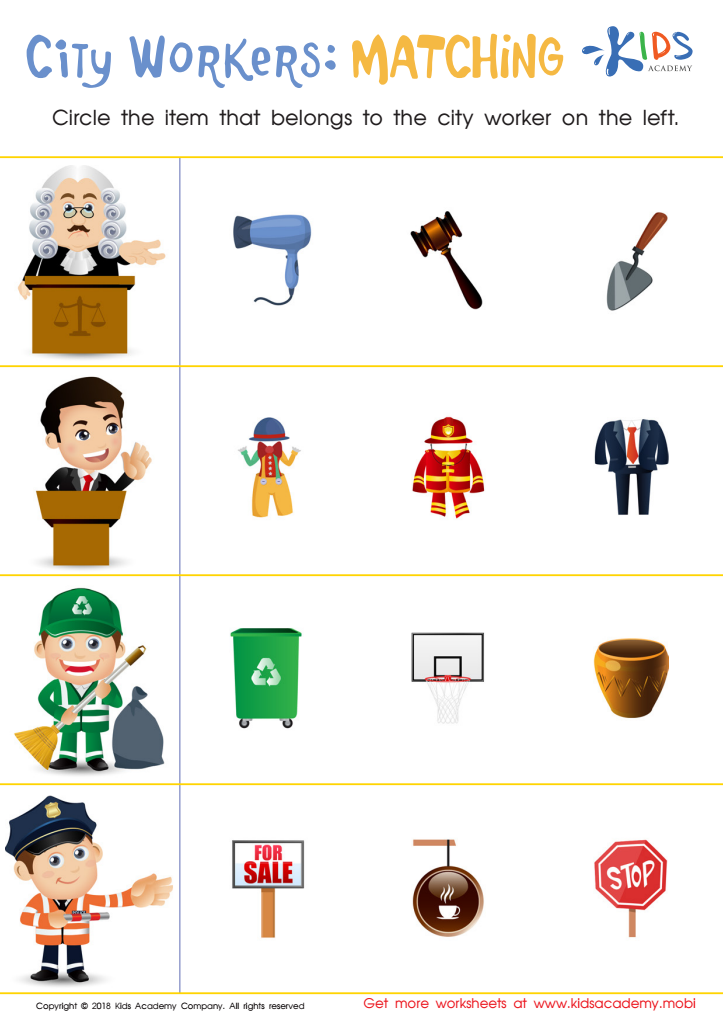
City Workers: Matching Worksheet







Parents and teachers should emphasize the development of matching skills in social studies for 6-year-olds as these skills form a foundational block of early cognitive and academic growth. Matching exercises enhance children's abilities to recognize patterns, strengthen memory, and improve attention to detail. In the context of social studies, these activities help kids understand relationships between people, places, and events by associating images, symbols, and terminologies with their meanings and functions.
For instance, matching pictures of various community helpers with their tools (like a firefighter with a hose or a doctor with a stethoscope) enables children to comprehend roles and responsibilities within their community. This practical knowledge fosters a sense of societal awareness and encourages children to appreciate the contributions of different people around them. Additionally, such activities can broaden their understanding of diverse cultures and historical contexts, shedding light on how societies are structured and operate.
Moreover, matching tasks support the development of visual discrimination and cognitive association skills, which are critical for reading readiness and mathematical thinking. Through engaging, age-appropriate social studies content, children build important life skills that transcend the classroom, ultimately fostering informed, observant, and empathetic future citizens. Thus, parents and teachers play a crucial role in introducing and nurturing these skills early on.








