
Understanding seasons Social Studies Worksheets for 6-Year-Olds
4 filtered results
Difficulty Level
Grade
Age
-
From - To
Subject
Activity
Standards
Explore our engaging "Understanding Seasons Social Studies Worksheets" designed specifically for 6-year-olds! These fun and interactive worksheets help young learners grasp the concept of seasons through colorful graphics and age-appropriate activities. Children will discover the unique characteristics of spring, summer, autumn, and winter while developing their observational and critical thinking skills. From matching games to creative drawing prompts, each worksheet encourages exploration and a deeper appreciation for nature. Perfect for classroom or home learning, these resources support early social studies education while keeping kids entertained. Take the first step in nurturing a love for learning about the world around them!
Favorites
With answer key
Interactive
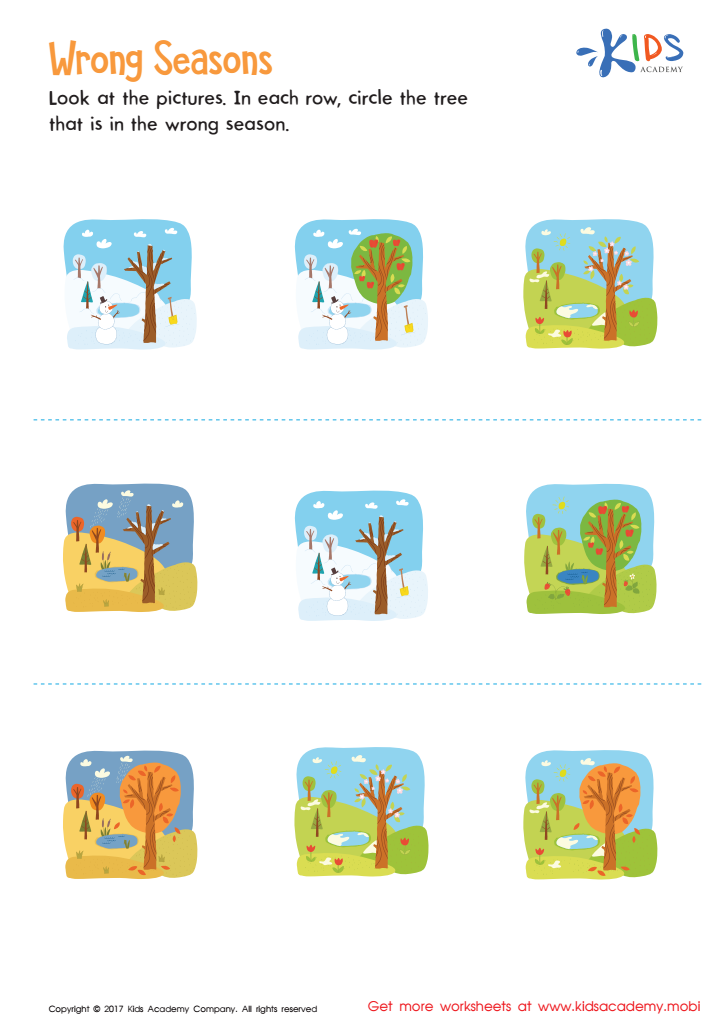
Wrong Seasons Worksheet
Uh oh! Trees are out of place in these vibrant pictures! Use this wrong seasons worksheet to help your child develop observation, analytical, and critical thinking skills. They'll learn about how the seasons change the surroundings, like trees. Print it out today to sharpen your child's eye for spotting the seasons!
Wrong Seasons Worksheet
Worksheet
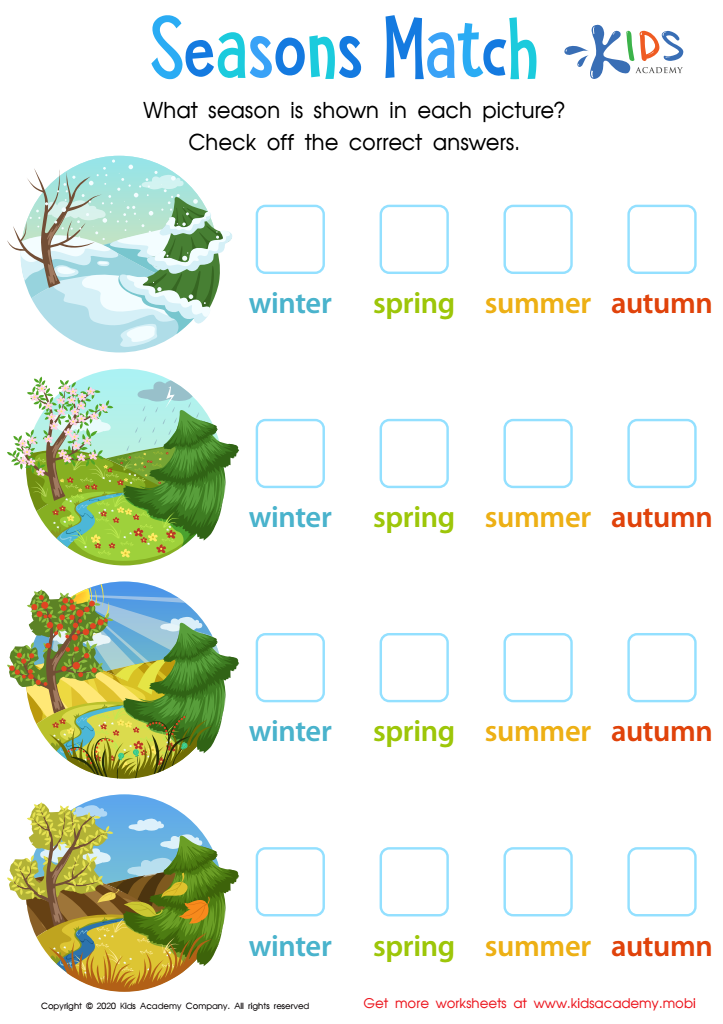
Seasons Match Worksheet
Preschoolers should begin learning about seasons and weather early. Most can tell what season it is by upcoming holidays or school activities. Test their knowledge with a printable PDF worksheet. It asks them to match each image with its corresponding season!
Seasons Match Worksheet
Worksheet
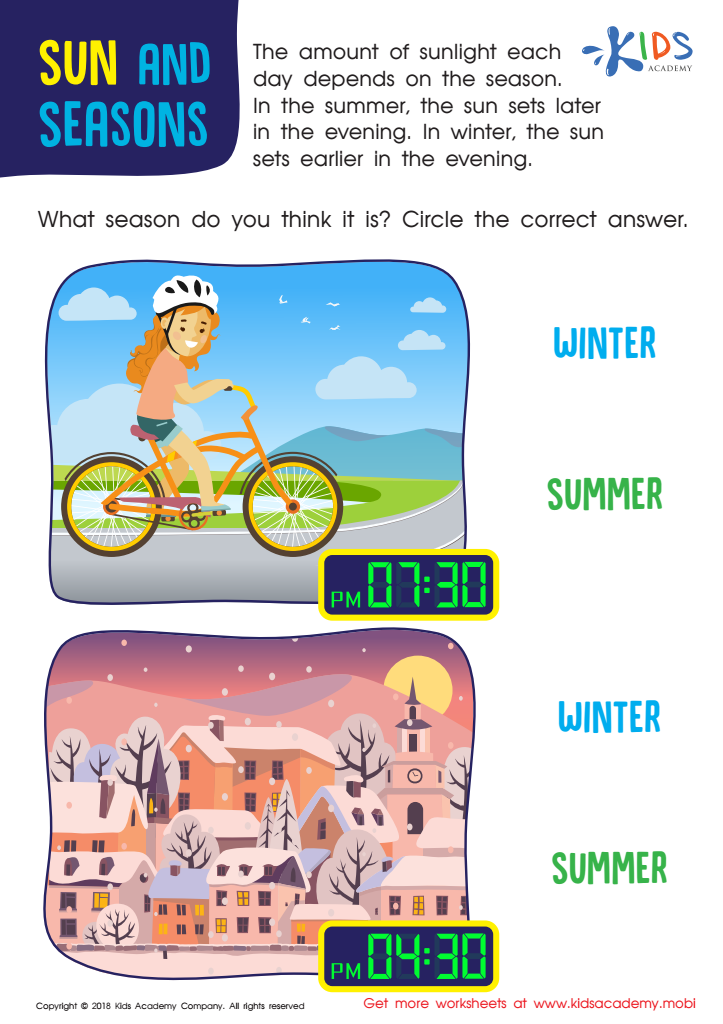
Sun and Seasons Worksheet
Help your child understand science and seasons with this Kids Academy worksheet! Discuss how the daylight varies in summer and winter with them. Guide them to note the digital clock on each page then circle the correct answers. With this sheet, your child will gain a better understanding of why days are longer in summer and shorter in winter!
Sun and Seasons Worksheet
Worksheet
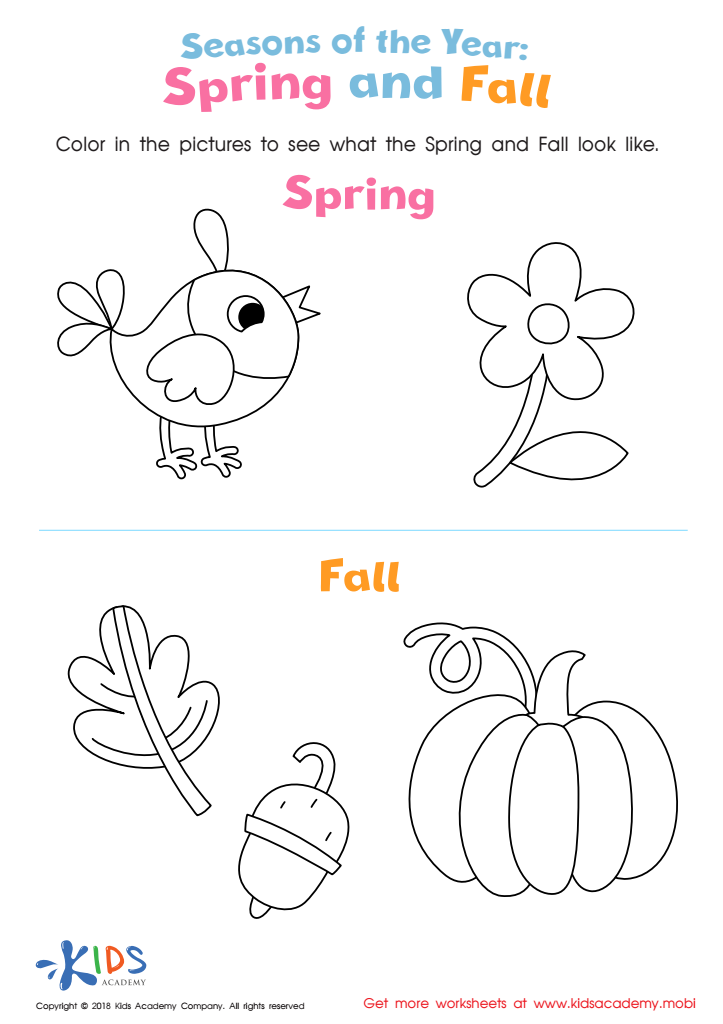
Spring and Fall Worksheet
This coloring sheet is great fun for kids. It features animals, shapes, and asks kids to identify spring and fall. Ask them to name the things in the sheet, and then help choose colors that fit each season. Let their imaginations run wild!
Download (PDF)
 Assign to My Students
Assign to My Students
Spring and Fall Worksheet
Worksheet
Join Kids Academy for Free
Who is primarily going to use this learning content?






Understanding seasons is a vital aspect of social studies for 6-year-olds, as it combines scientific concepts with cultural awareness, offering children a framework to interact with the world around them. For parents and teachers, it is essential to recognize how seasons affect daily life, weather patterns, and local ecosystems, helping children understand changes in their environment.
Teaching about seasons also fosters an appreciation for natural phenomena and cultivates curiosity. Children learn about the cyclical nature of the world, grasping concepts like time and change, which are fundamental for their intellectual development. Furthermore, seasons are intertwined with cultural traditions and celebrations, allowing children to explore and respect diverse practices from around the globe.
This knowledge promotes social skills, as children can relate to each other’s experiences and traditions tied to the seasons, enhancing their interpersonal connections.
By integrating discussions about seasons into social studies, educators and parents encourage exploratory learning, critical thinking, and the ability to observe patterns in their environment. In summary, understanding seasons helps 6-year-olds become aware of their world while developing key cognitive and social skills, making it a crucial element in early education curricula.








