Noun identification Writing Worksheets for 6-Year-Olds
6 filtered results
-
From - To
Our Noun Identification Writing Worksheets for 6-Year-Olds are designed to enhance young learners’ understanding of nouns. These engaging, age-appropriate activities help children identify, categorize, and use nouns in sentences. Through fun, interactive exercises, kids will boost their grammar skills and vocabulary. Each worksheet features vibrant illustrations and clear instructions to keep students motivated and focused. Ideal for classroom or home use, these printable worksheets offer crucial practice in writing and language development, laying a solid foundation for future academic success. Give your child a head start with our expertly crafted noun identification worksheets!
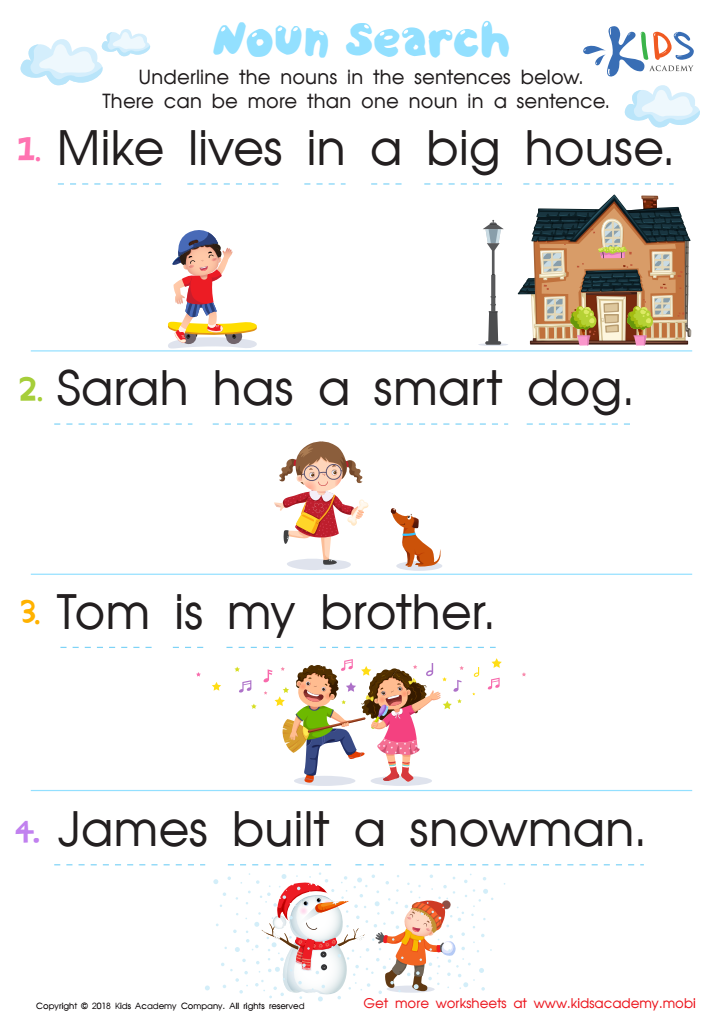
Noun Search Worksheet
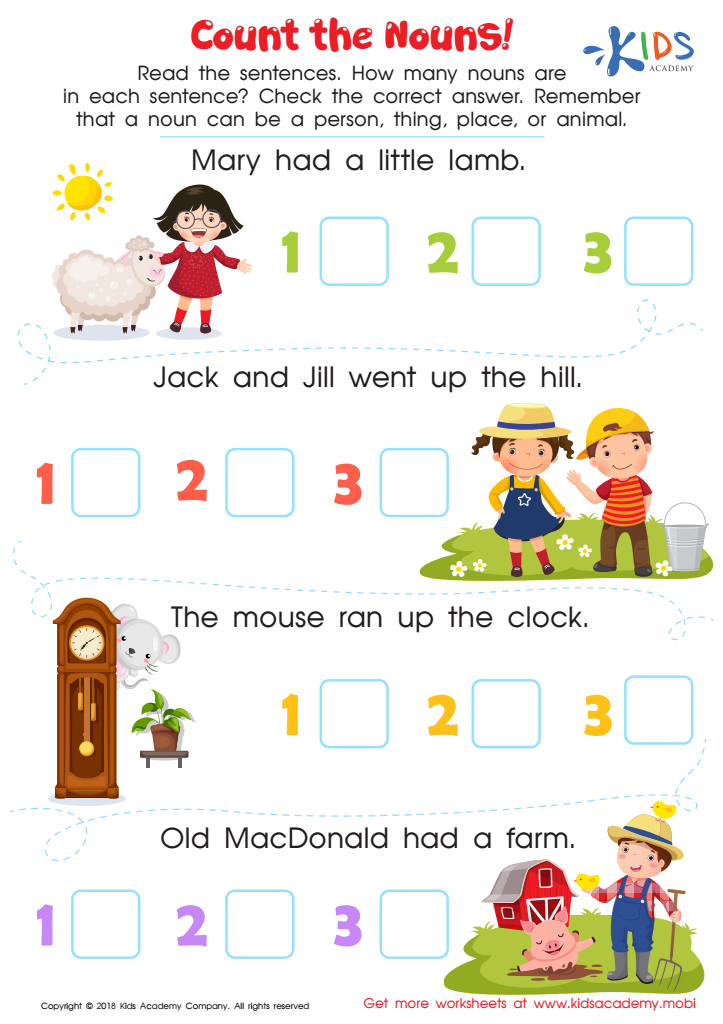
Count the Nouns Worksheet
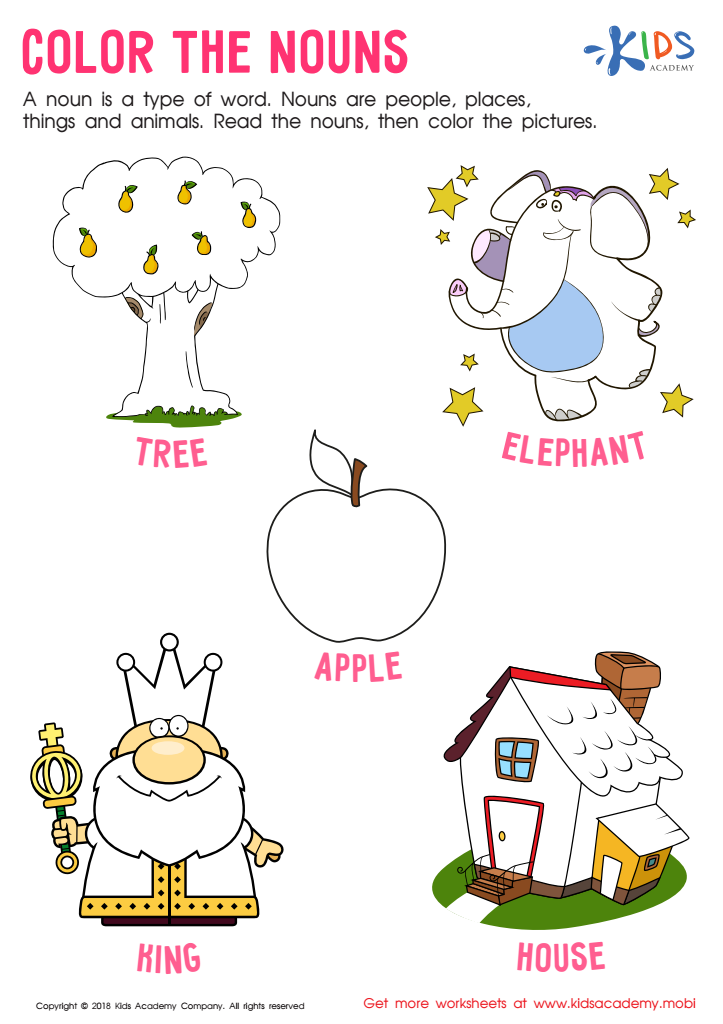
Color the Nouns Worksheet
 Assign to My Students
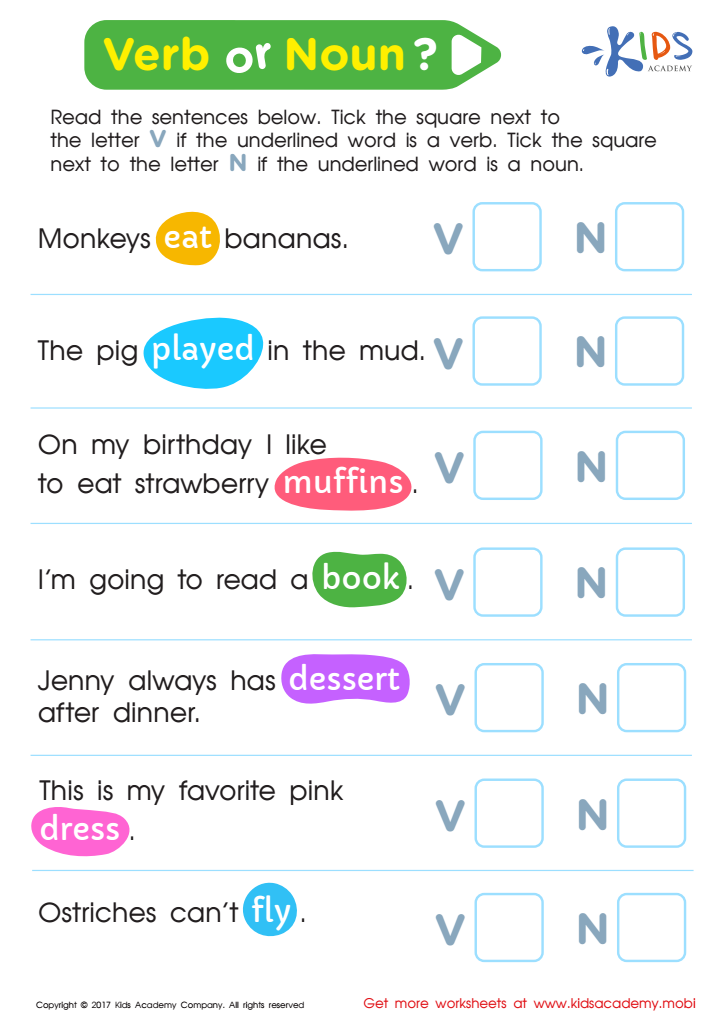
Verb or Noun Worksheet
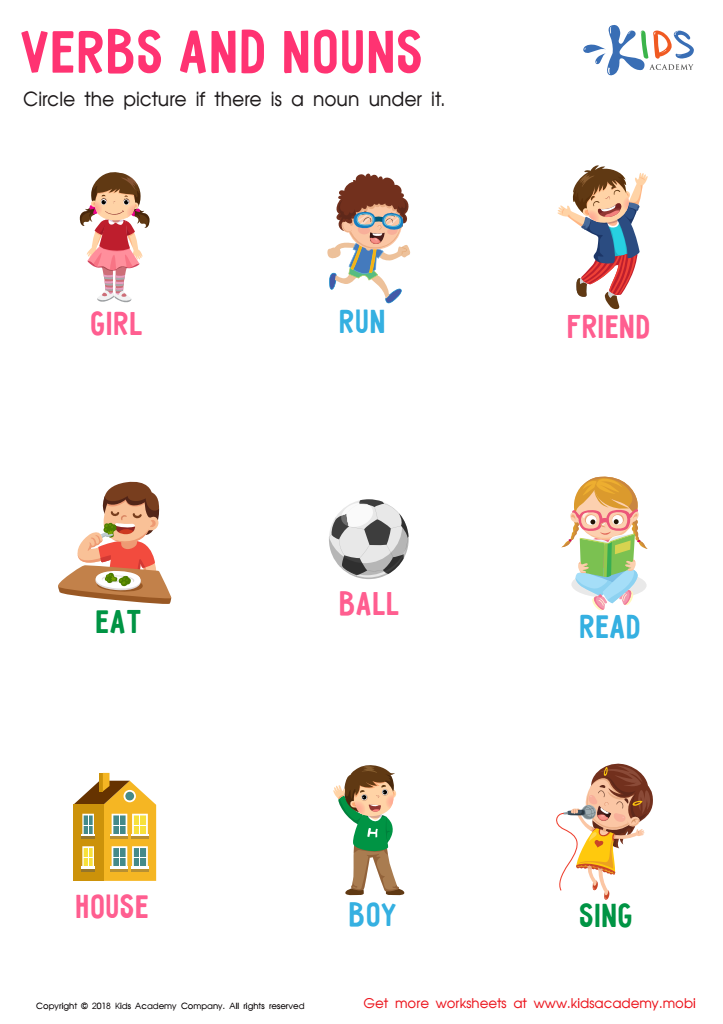
Verbs and Nouns Worksheet
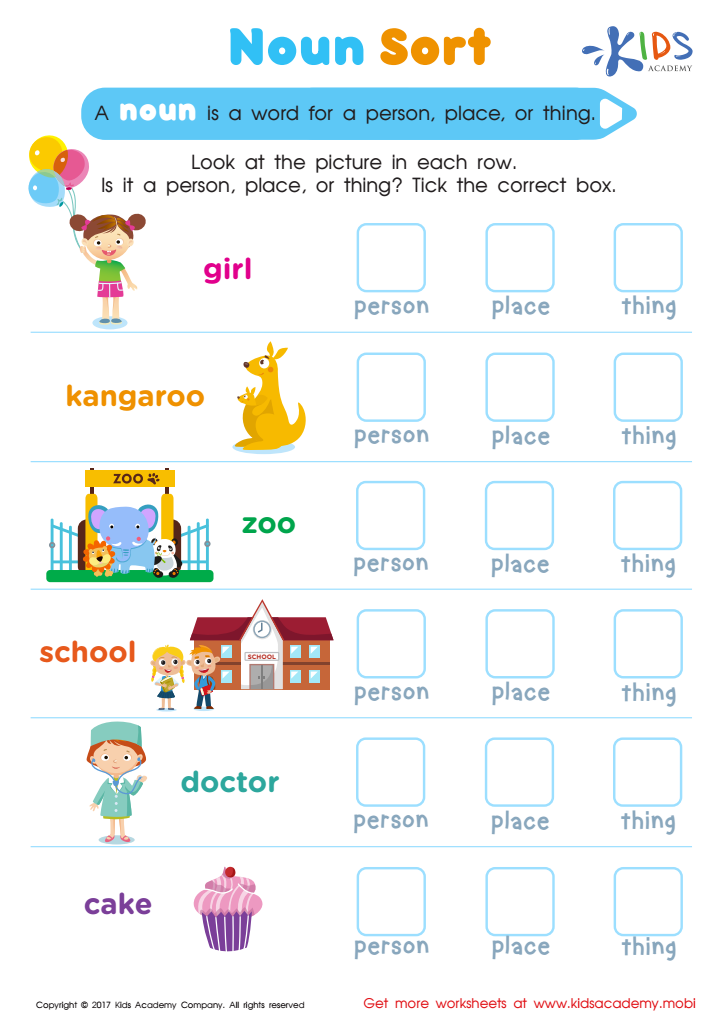
Noun Sort Printable






.jpg)
Understanding and identifying nouns is a foundational step in a child's language development and literacy skills, making it crucial for parents and teachers to prioritize this in teaching 6-year-olds. Nouns, which represent people, places, things, and ideas, serve as the building blocks of sentences. Mastery of noun identification helps children enhance their grammar, improve sentence construction, and develop clear communication skills.
When children learn to identify nouns, they can more easily follow and create contextually appropriate sentences, fostering better reading comprehension and expressive writing. This ability becomes even more significant as they advance in school, where they will encounter more complex texts and be required to convey their thoughts clearly and accurately in written form.
Moreover, engaging in activities that involve noun identification supports broader cognitive development. Classifying objects, people, and places helps sharpen their categorization skills and boosts their ability to notice details and relationships. This, in turn, supports learning in other subjects such as science, where categorization and observation are key.
By focussing on noun identification at an early age, parents and teachers not only support a child's linguistic abilities but also lay a resilient foundation for their overall academic and interpersonal success. Activities like storytelling, interactive games, and practical examples make this learning process engaging and effective.