
Sound Association Alphabet Worksheets for Ages 7-8
13 filtered results
Difficulty Level
Grade
Age
-
From - To
Subject
Activity
Standards
Enhance your child's literacy skills with our engaging Sound Association Alphabet Worksheets for ages 7-8! Designed to strengthen phonemic awareness, these worksheets help kids connect sounds with corresponding letters while boosting their reading and writing abilities. Each sheet features fun activities such as matching letters to images, identifying beginning sounds, and practicing letter formation. These hands-on exercises not only reinforce alphabet knowledge but also foster a love for learning through creativity and play. Perfect for homeschooling, classroom use, or supplemental activities, our worksheets make mastering the alphabet an enjoyable experience. Start your child's journey toward reading fluency today!
Favorites
With answer key
Interactive
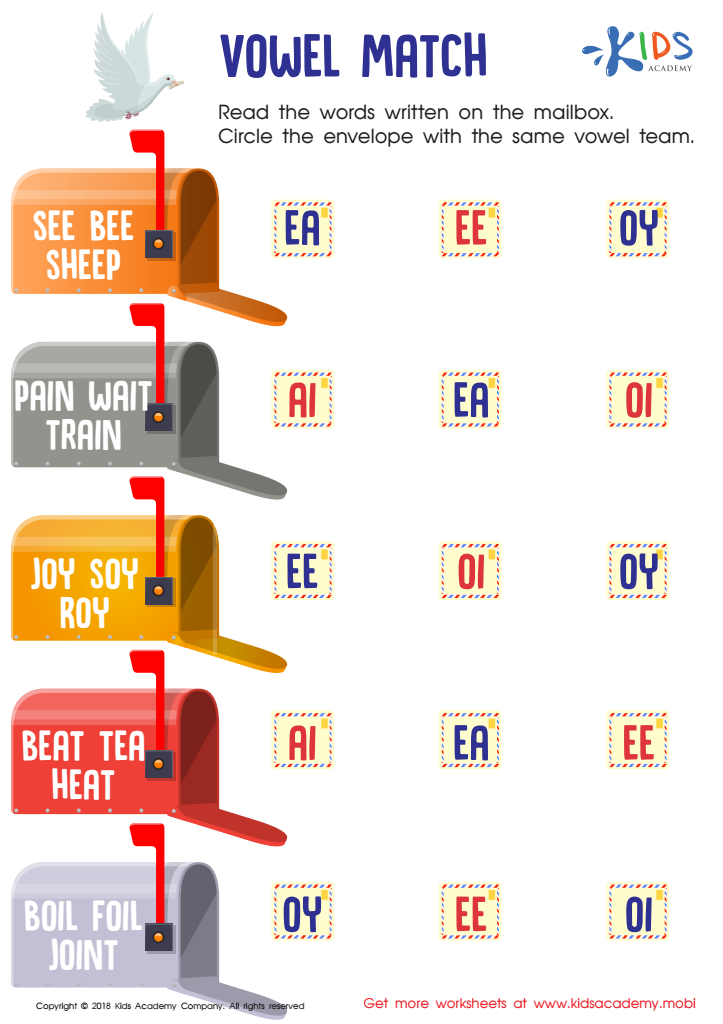
Vowel match Worksheet
Early readers can find vowel teams (digraphs) tricky. This simple worksheet helps kids match words with the right digraphs and learn to read! They'll practice reading words from different families, and linking the letters to their sounds. It's a fun way to get kids sending letters to the right addresses!
Vowel match Worksheet
Worksheet
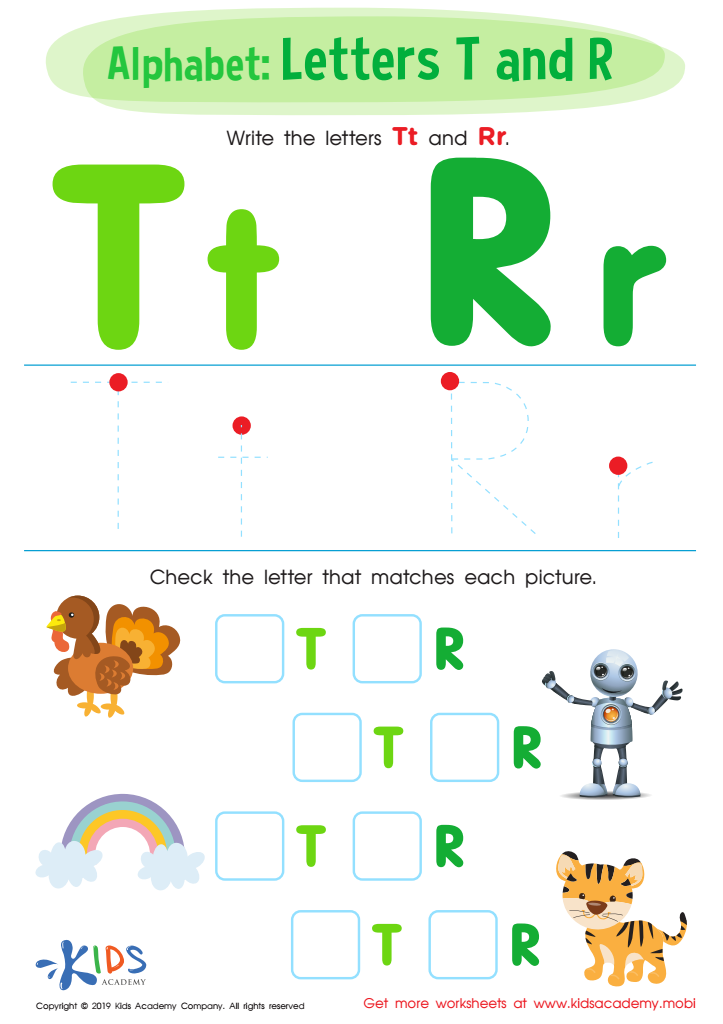
Letters T and R Worksheet
Is your kid bored with basic letter learning? Try this Letters T & R traceable sheet! It combines tracing and picture matching to help solidify fundamental skills. Your child will gain a better understanding and have fun at the same time.
Letters T and R Worksheet
Worksheet
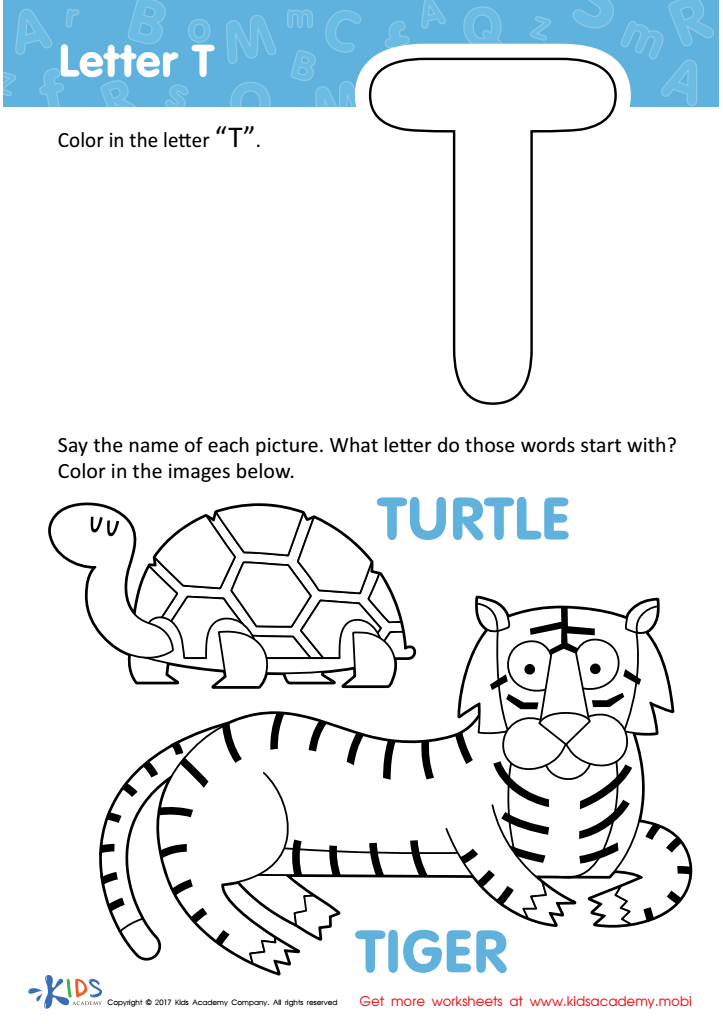
Letter T Coloring Sheet
Introduce your child to the letter "T" and its animals – turtles and tigers! With this coloring page, you can stimulate your child's imagination and creativity, while helping them recognize the letter "T". Have fun with your child and get coloring!
Download (PDF)
 Assign to My Students
Assign to My Students
Letter T Coloring Sheet
Worksheet
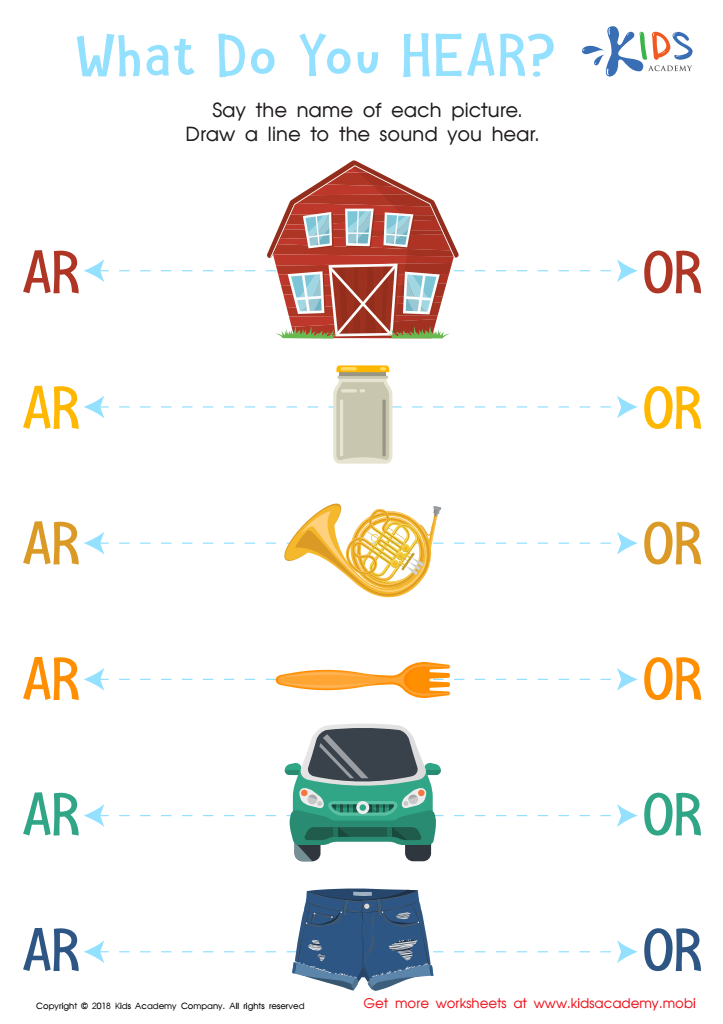
What do you hear Worksheet
Kids can practice distinguishing between r-controlled vowel teams /ar/ and /or/ with this worksheet. The pictures help identify the words and the sounds heard. Tracing a line to the correct sound supports fine motor skills development.
What do you hear Worksheet
Worksheet
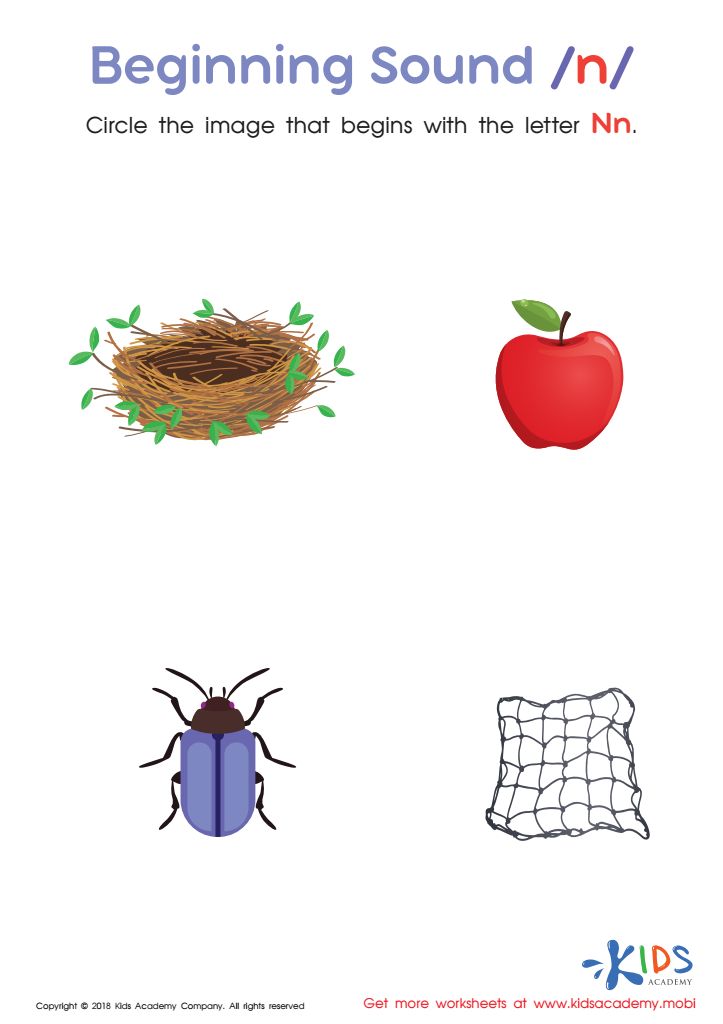
Beginning Sound «n» Worksheet
Help your emerging reader learn the initial «n» sound with this free PDF worksheet! Strengthen fine motor skills by tracing circles around words beginning with «n». Pictures are clear and engaging, giving beginning Phonics learners the right amount of practice and the confidence to succeed.
Beginning Sound «n» Worksheet
Worksheet
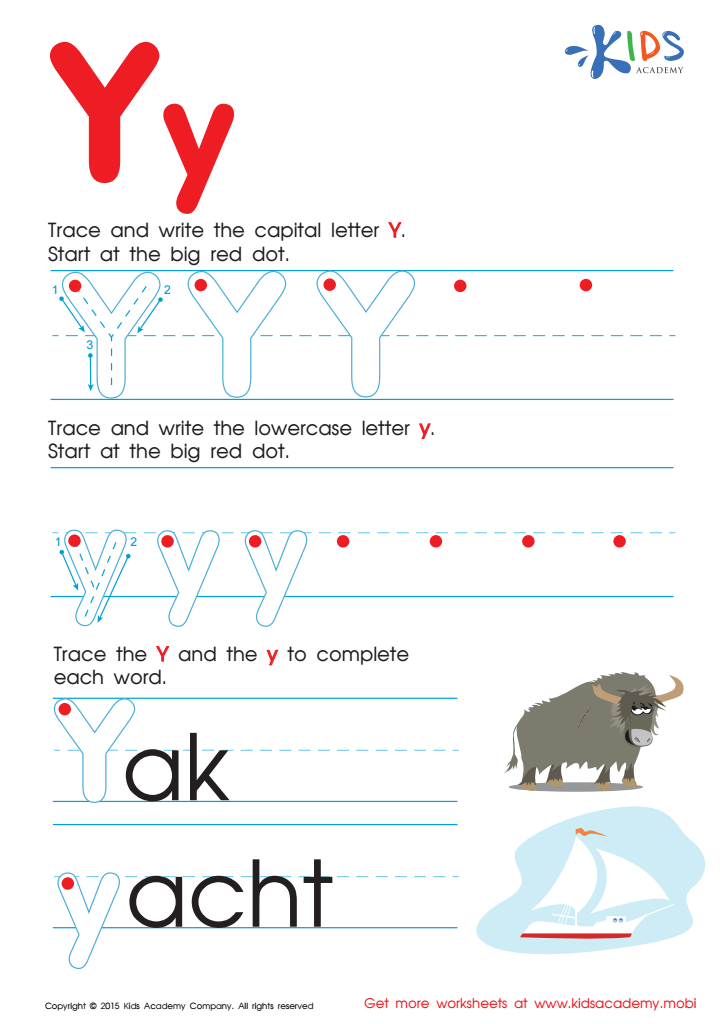
Letter Y Tracing Page
Trace the capital letter "Y" on the red dot, then trace and write the lowercase letter. Complete the words to help the Yak walk and the yacht swim. More worksheets at Kids Academy.
Letter Y Tracing Page
Worksheet
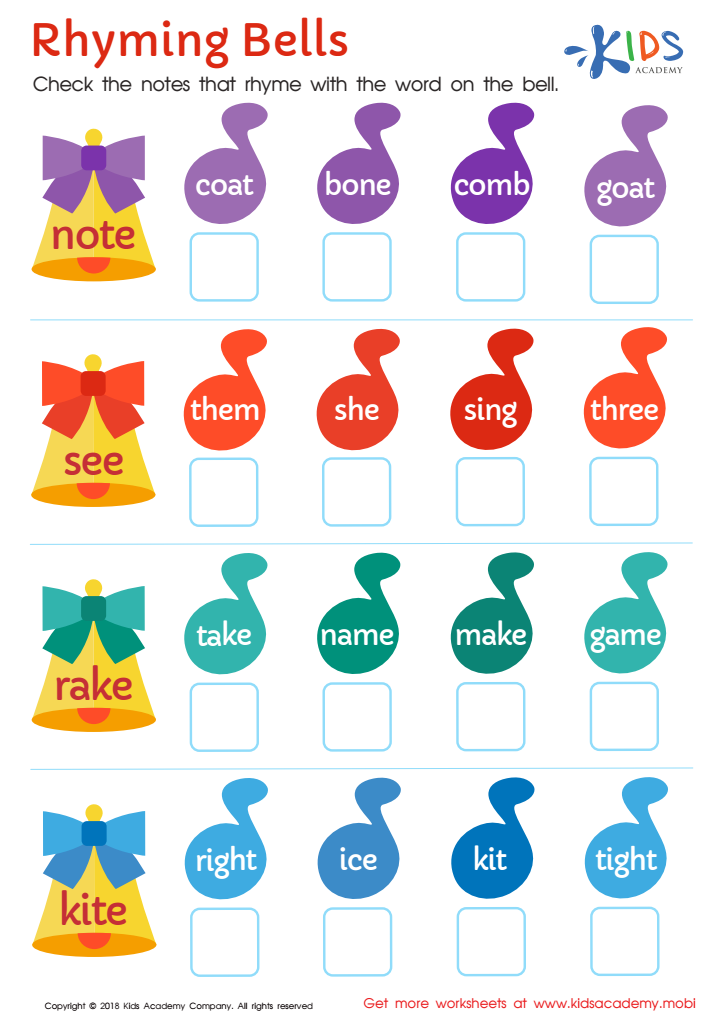
Rhyming Bells Worksheet
This printable worksheet helps students recognize rhyming words. Read a word, then pick the 4 words that rhyme. Look out for words with different spellings but same ending sound. It's a great exercise to improve understanding of rhyming words.
Rhyming Bells Worksheet
Worksheet
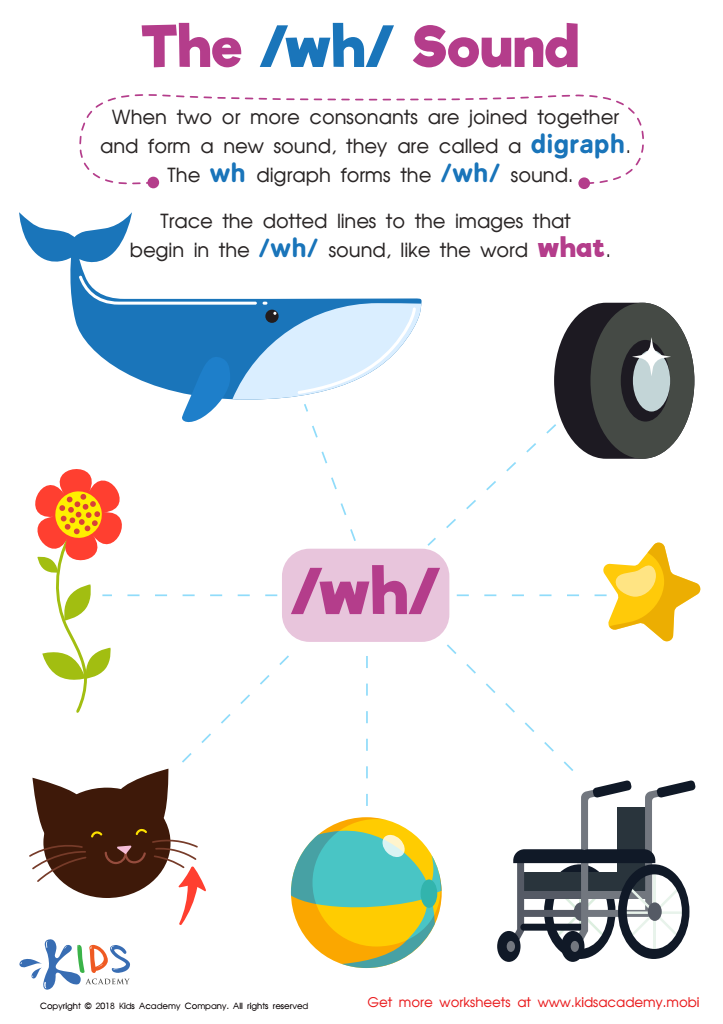
The /wh/ Sound Worksheet
Digraphs join two consonants to make a new sound, like /wh/. Give examples, like "whale", "when" and "why". Ask kids to name pictures in a worksheet and trace dotted lines to images beginning with the /wh/ sound; "what" is one example.
The /wh/ Sound Worksheet
Worksheet
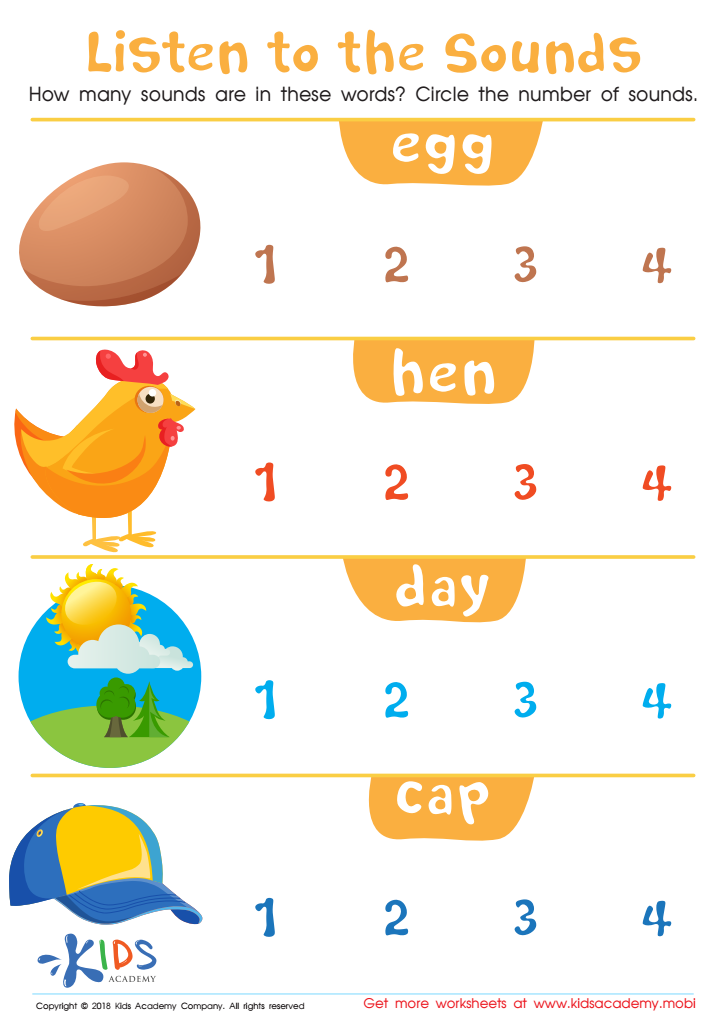
Listen to the Sounds Worksheet
This worksheet builds emerging readers' skills in using sounds for reading and spelling. It helps strengthen auditory processing by having them count the sounds in each word, then trace the corresponding number. Fun and cheerful!
Listen to the Sounds Worksheet
Worksheet
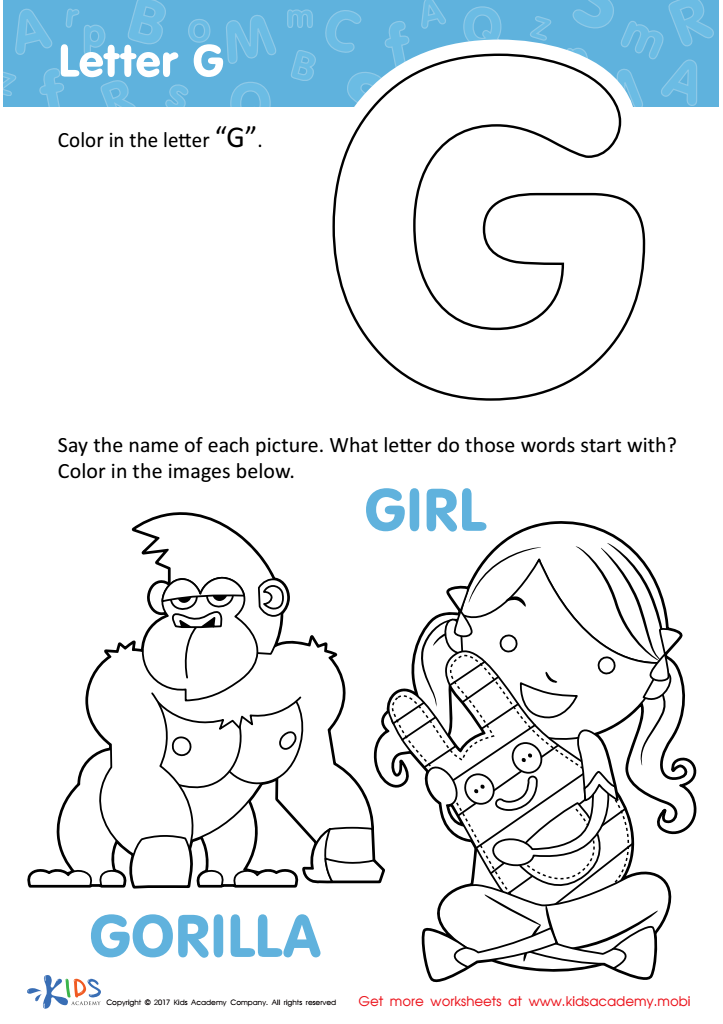
Letter G Coloring Sheet
This "G" coloring page encourages creativity and teaches kids the letter "G" sound. With its fun visuals and familiar words, it's sure to excite your child. Plus, you can talk about the letter’s sound with the pictures given.
Download (PDF)
Assign to My Students
Assign to My Students
Letter G Coloring Sheet
Worksheet
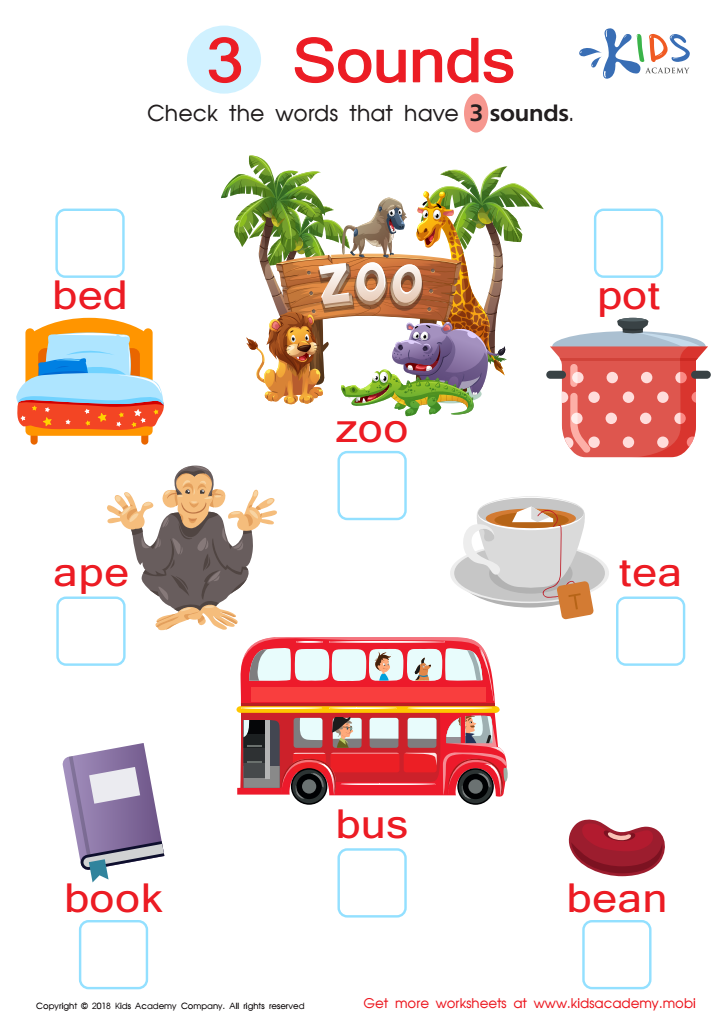
3 Sounds Worksheet
Kids will love learning with this free, colorful worksheet. It's full of familiar words they can name and sound out with three distinct sounds. This helps build decoding skills, plus they get to check off words they read. It's a fun way to teach children to identify and use sounds.
3 Sounds Worksheet
Worksheet
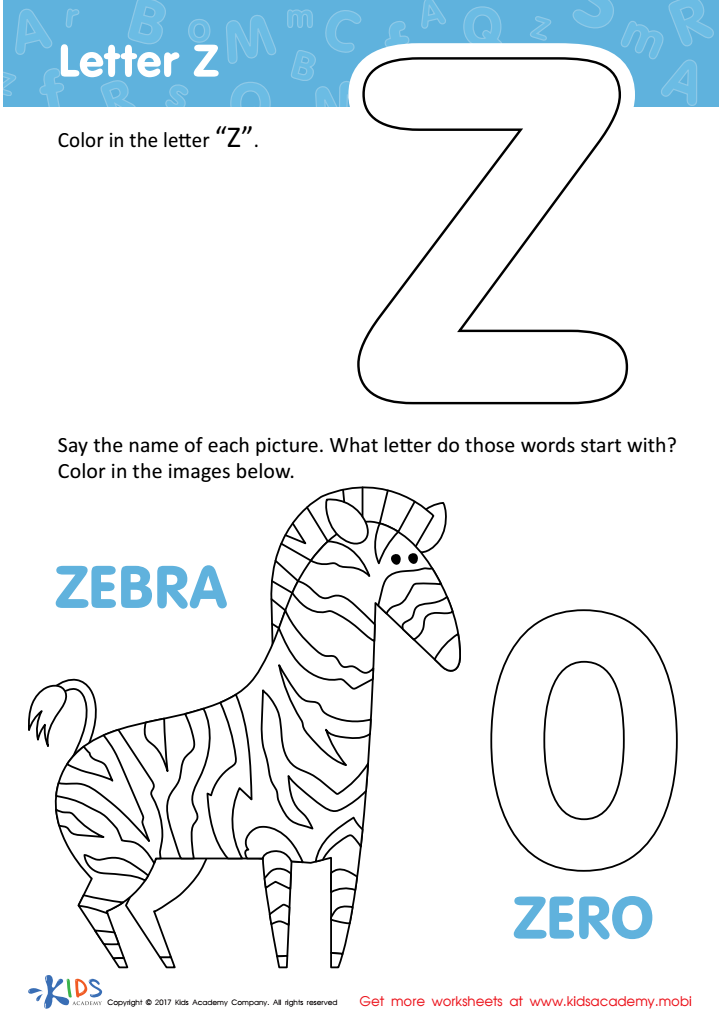
Letter Z Coloring Sheet
This coloring page featuring the letter "Z" is perfect for your child to practice letter recognition! Help them learn the unique sound it makes as they color. It'll be a fun and easy activity they won't have trouble with!
Download (PDF)
Assign to My Students
Assign to My Students
Letter Z Coloring Sheet
Worksheet
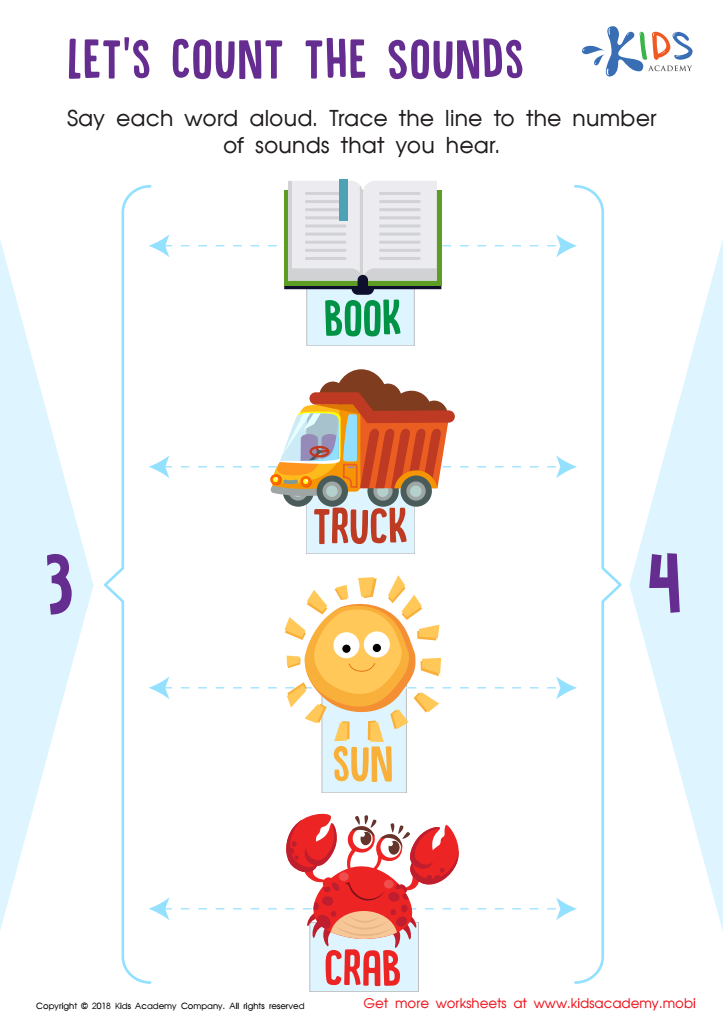
Let's Count the Sounds Worksheet
This bright and cheery traceable worksheet encourages children to practice auditory discrimination and phonological awareness. Using picture clues, they read each word and trace the line that represents the number of sounds heard. This builds decoding skills and helps them become successful readers.
Let's Count the Sounds Worksheet
Worksheet
Join Kids Academy for Free
Who is primarily going to use this learning content?






.jpg)
Sound association with the alphabet is crucial for children aged 7-8 as they solidify their reading and writing skills. During this developmental stage, kids are transitioning from learning to read to reading to learn. A strong understanding of the connections between sounds and letters is essential for decoding words, which directly influences their fluency and comprehension.
Parents and teachers should prioritize sound association for several reasons. First, improving phonemic awareness enhances vocabulary acquisition; as children recognize sound patterns, they can decode unfamiliar words more effectively. This leads to heightened confidence in reading, making literacy a more enjoyable experience.
Moreover, sound association plays a role in writing development. Children who grasp sound-letter connections can express their thoughts more clearly through writing, fostering creativity and communication skills.
Given that reading proficiency at this age can have lasting impacts on educational achievement, early interventions in sound association can prevent future struggles. Consequently, embedding sound association strategies into daily lessons or at home supports task completion across subjects, encouraging overall academic success.
Ultimately, investment in sound association philosophy ensures children become proficient, enthusiastic readers and writers, setting a strong foundation for lifelong learning. Engaging both parents and teachers in this crucial aspect is essential for fostering resilient learners.







