Spelling practice Vowel Blends Worksheets for Ages 7-8
5 filtered results
Difficulty Level
Grade
Age
-
From - To
Subject
Activity
Standards
Enhance your child’s spelling skills with our Vowel Blends Worksheets designed for ages 7-8. These engaging worksheets provide targeted practice in recognizing and using vowel blends, crucial for developing strong reading and writing abilities. With a variety of fun exercises, children will explore different vowel combinations, allowing them to master phonics concepts in an interactive way. Our worksheets aim to build confidence in young learners while making spelling enjoyable. Ideal for both classroom use and at-home learning, these resources make linguistic development accessible and exciting. Boost your child's literacy skills today with our easy-to-use printable vowel blends worksheets!
Favorites
With answer key
Interactive
The AI Vowel Pair Worksheet
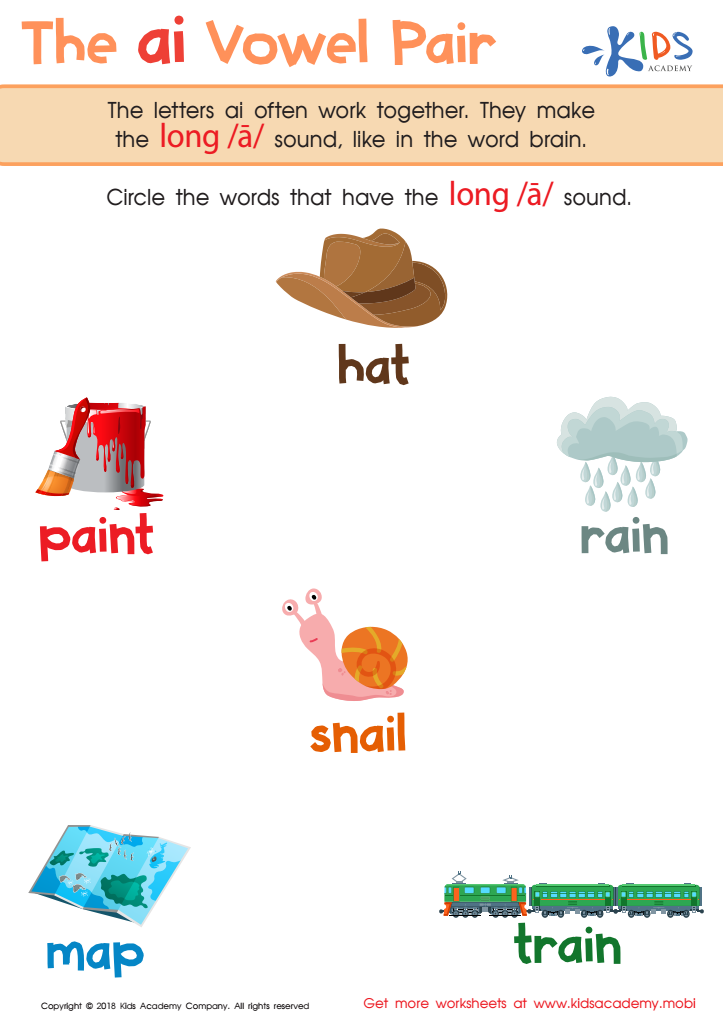
Vowel pairs make different sounds than individual letters. The 'ai' combination often forms the long /a/ sound, like in 'brain' and 'strain'. Get your kids to look at the pictures in the worksheet, identify each and say the name aloud. Help them circle the words with the long /a/ sound.
 Assign to My Students
The AI Vowel Pair Worksheet
Worksheet
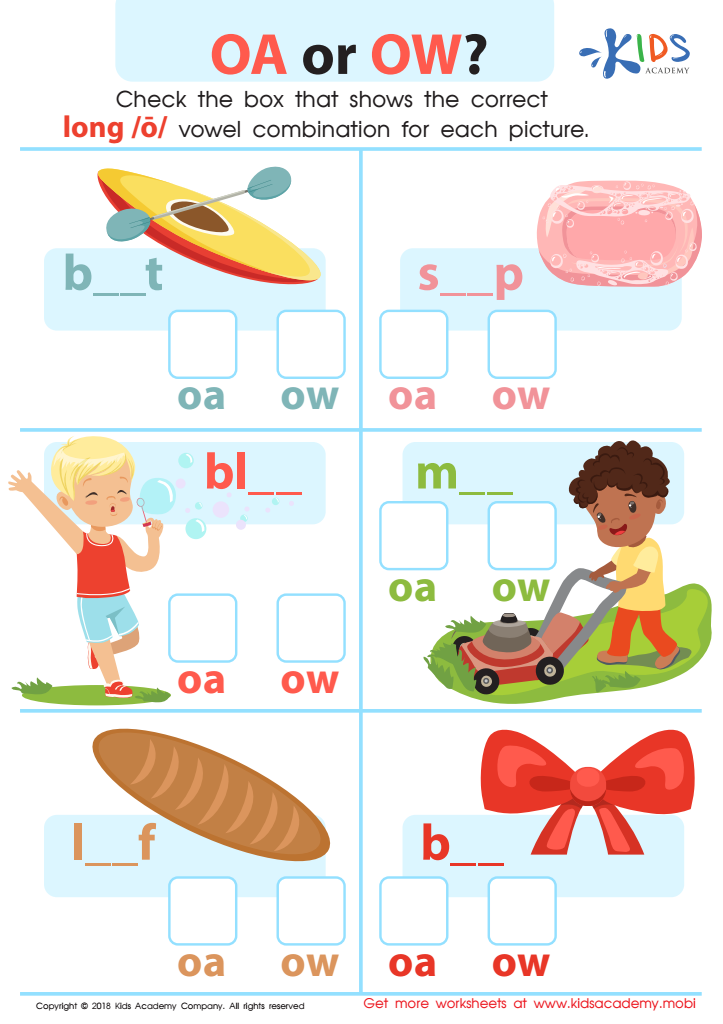
Reading: OA or OW Worksheet
This printable worksheet helps young and emergent readers with decoding words and understanding digraphs (two letters with one sound). It requires students to complete the spelling for each word based on the picture, focusing on /oa/ and /ow/ spellings. It's ideal for a reading classroom and for spelling practice.
Reading: OA or OW Worksheet
Worksheet
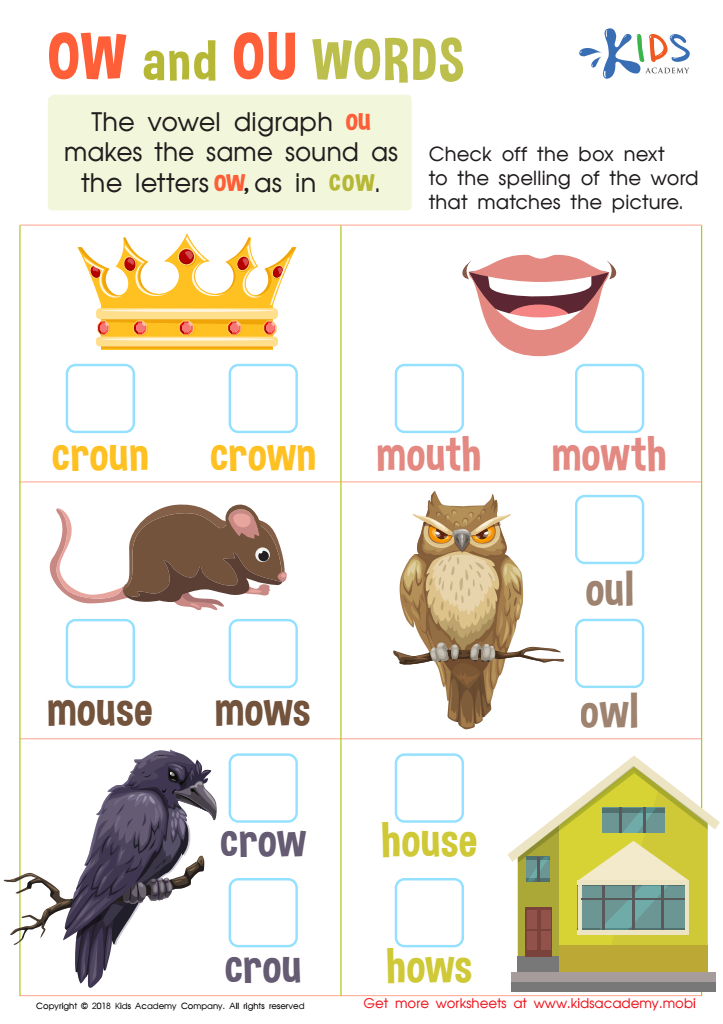
Reading: OW and OU Words Worksheet
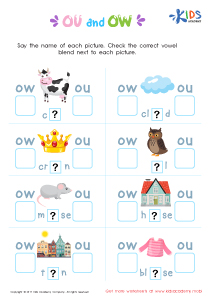
Help your kids learn phonetics! Explain the different sounds and long/short variations. Emphasize that some vowel sounds are the same, e.g. ou = ow in cow. For practice, have them read aloud the words in the worksheet and check the box next to the spelling that matches the picture.
Reading: OW and OU Words Worksheet
Worksheet
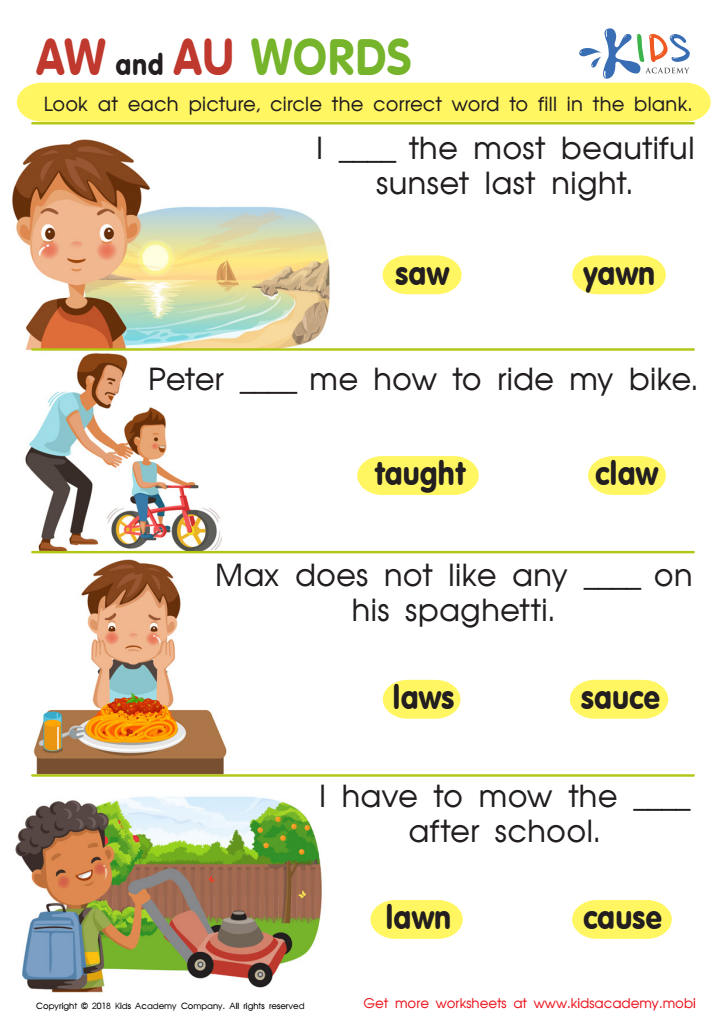
Reading: AW and AU Words Worksheet
This worksheet helps kids recognize that /au/ and /aw/ can make the same sound. Students read sentences and pick the correct word with one of the digraphs. Understanding digraphs improves decoding and reading fluency. Perfect for reading and phonics classes.
Reading: AW and AU Words Worksheet
Worksheet
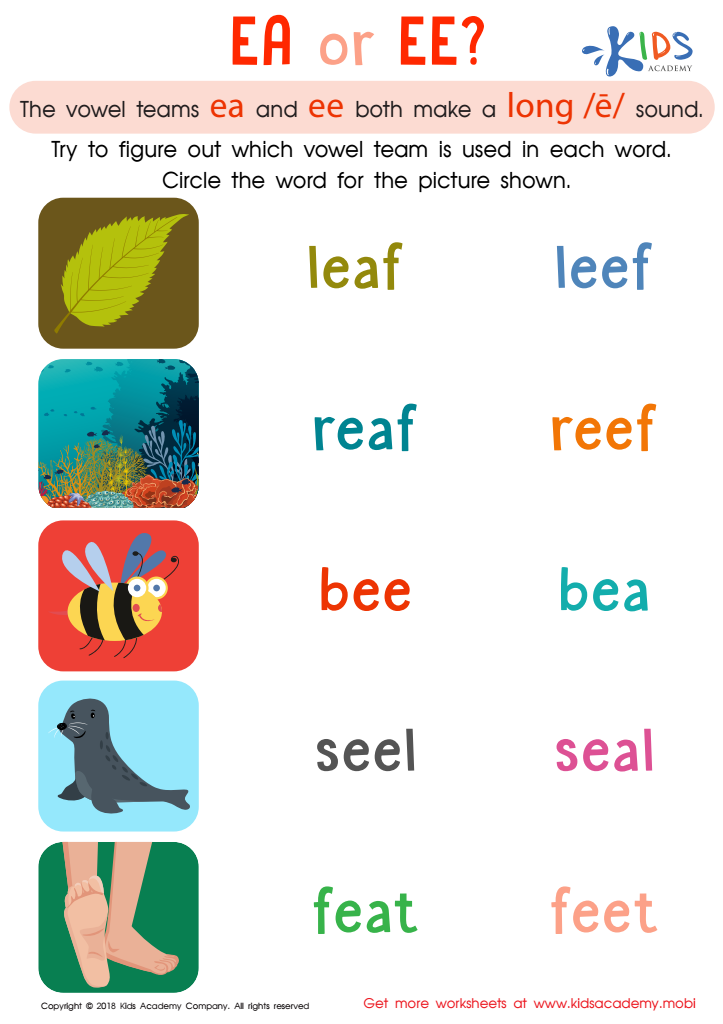
Reading: EA and EE Worksheet
Confused by the long E sound's varying spellings? Give students practice with this printable. It will improve their reading and spelling skills by helping them identify the correct spellings for words with the /ee/ and /ea/ vowel teams. Clear up the confusion and sharpen their skills.
Reading: EA and EE Worksheet
Worksheet
Join Kids Academy for Free
Who is primarily going to use this learning content?





Spelling practice, particularly focusing on vowel blends, is crucial for children aged 7-8 as it underpins their overall literacy development. During this age, children are transitioning from learning to read to reading to learn, and mastering vowel blends enhances their phonemic awareness, enabling them to decode and spell more complex words. Vowel blends, such as "ai," "ea," and "ou," are common in many sight words and everyday vocabulary, which improves children's reading fluency and comprehension skills.
By prioritizing spelling practice in vowel blends, parents and teachers help strengthen children's reading confidence and competence. This, in turn, supports effective communication skills, fostering social interactions and academic participation. Additionally, recognizing and using vowel blends in spelling activities encourages creativity, as children can experiment with new words to expand their vocabulary.
Engaging with spelling practice also cultivates a positive attitude toward learning, which is vital for children's motivation and self-esteem. Overall, focusing on vowel blends not only supports essential literacy skills but also aligns with the cognitive and emotional development, setting the stage for future academic success. Nurturing these skills through supportive practice will yield long-term benefits for young learners.