Categorizing objects Worksheets for Ages 7-8
4 filtered results
-
From - To
Enhance your child’s critical thinking skills with our engaging Categorizing Objects Worksheets designed specifically for ages 7-8! These worksheets provide a fun and interactive way for children to classify items based on characteristics such as color, shape, size, and function. By encouraging students to think systematically, our resources foster their ability to identify relationships and patterns in everyday items. Ideal for teachers and parents alike, these worksheets can be used in the classroom or at home to support learning. Access a variety of unique activities that promote cognitive development and encourage a love for learning through categorization. Start exploring today!
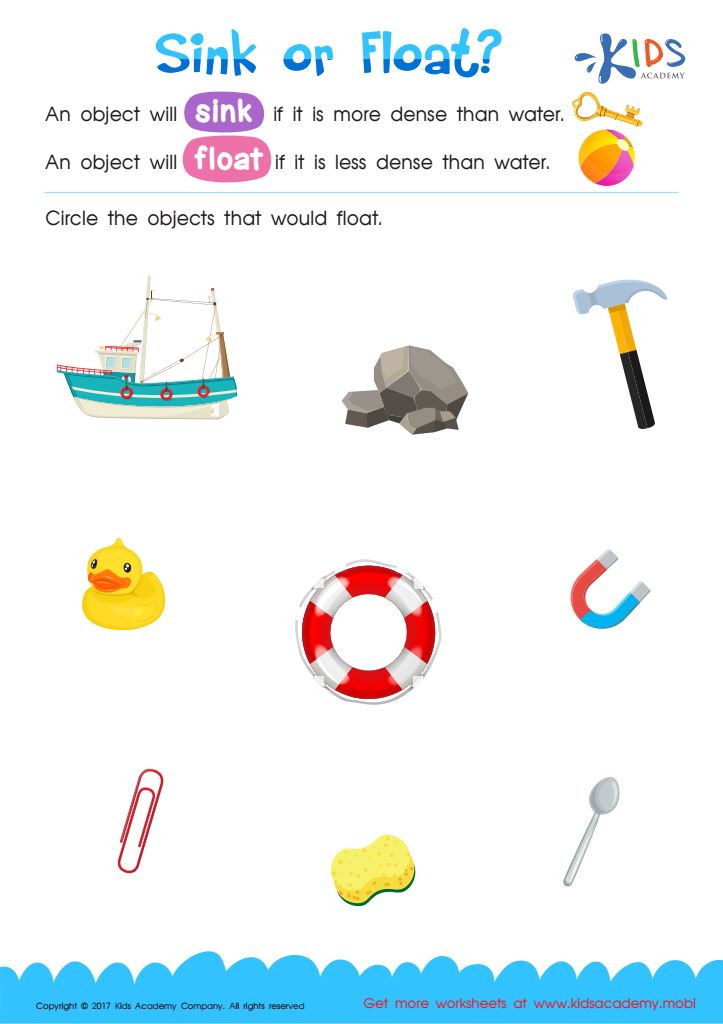
Sink or Float Printable
 Assign to My Students
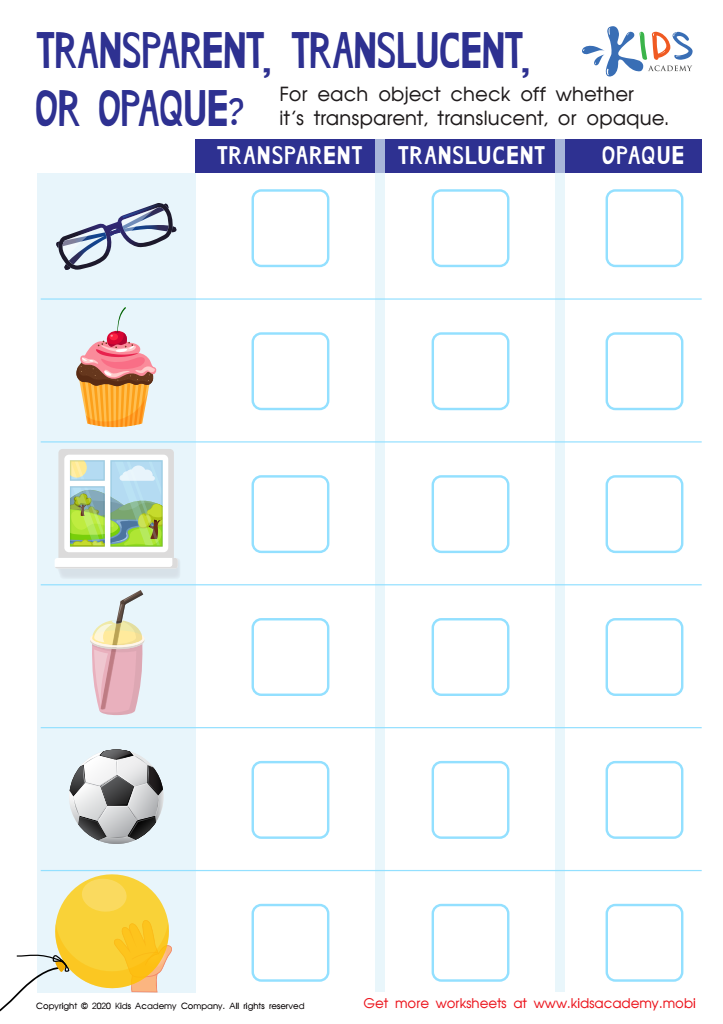
Transparent, Translucent, or Opaque Worksheet
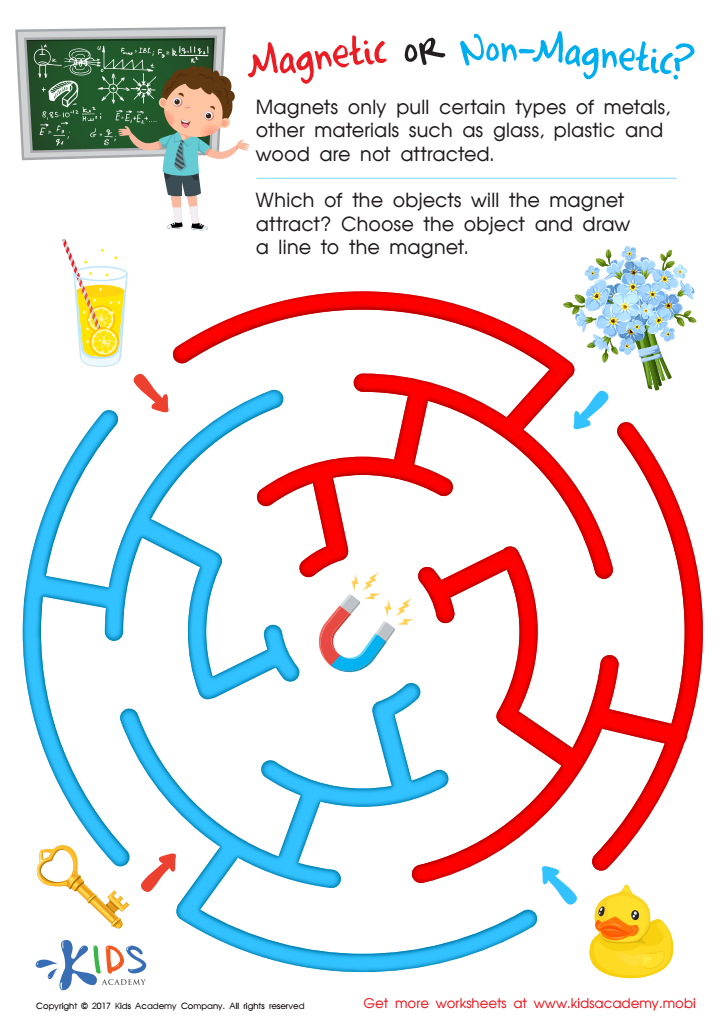
Magnetic or Non–Magnetic Worksheet








Categorizing objects is a fundamental skill that greatly impacts children's cognitive and social development. For children ages 7-8, engaging in categorization helps them make sense of the world around them. It supports critical thinking, as children learn to identify similarities and differences among items. This skill lays the groundwork for more advanced concepts in science, mathematics, and literacy, such as grouping parts of speech, recognizing patterns, and understanding classifications in biology.
Furthermore, categorization enhances problem-solving abilities. By classifying information, children develop the ability to organize their thoughts and tackle tasks more effectively. They become better decision-makers, learning to assess situations and choose appropriate actions based on their observations.
Socially, teaching kids to categorize can improve communication. It helps them articulate their thoughts and ideas, as they categorize their experiences and share them with peers. Facilitating discussions about categorization can also create opportunities for collaboration and teamwork, reinforcing social skills among children.
In essence, parents and teachers should prioritize categorization skills in early education, as they contribute to holistic child development, laying a strong foundation for academic success and everyday problem-solving. Engaging children in enjoyable categorizing activities increases their enthusiasm for learning while boosting their intellectual growth and social interactions.








