
Sentence structure Worksheets for Ages 7-8
5 filtered results
Difficulty Level
Grade
Age
-
From - To
Subject
Activity
Standards
Unlock your child's writing potential with our engaging Sentence Structure Worksheets for ages 7-8! Designed to enhance literacy skills, these worksheets provide fun and interactive exercises that help young learners understand the basics of sentence formation. From identifying subjects and predicates to constructing complete sentences, each activity promotes critical thinking and creativity in writing. Ideal for homeschooling or classroom use, our resources are crafted to keep children motivated while mastering essential grammatical concepts. Explore a variety of themes and formats that cater to different learning styles. Foster your child's love for language and watch them flourish as confident communicators!
Favorites
With answer key
Interactive
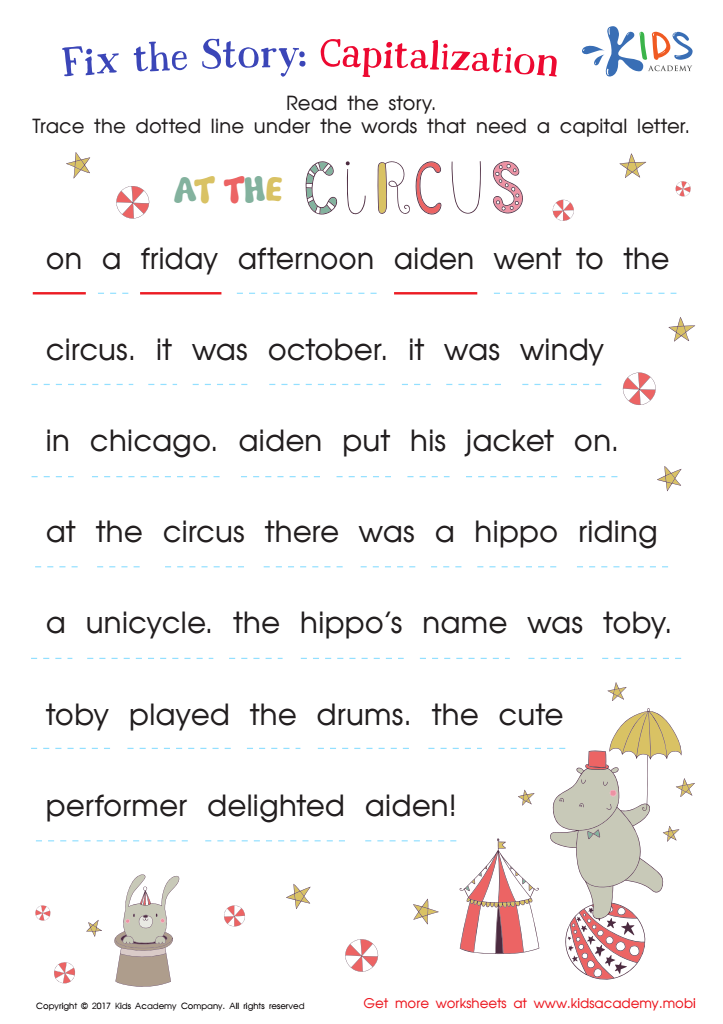
Capitalization: Fix the Story Worksheet
This worksheet is perfect for mastering capitalization in stories: Fix the Story. Read along with your child and help them find all the words that require capitalization. It's sure to be a fun and engaging challenge!
 Assign to My Students
Capitalization: Fix the Story Worksheet
Worksheet
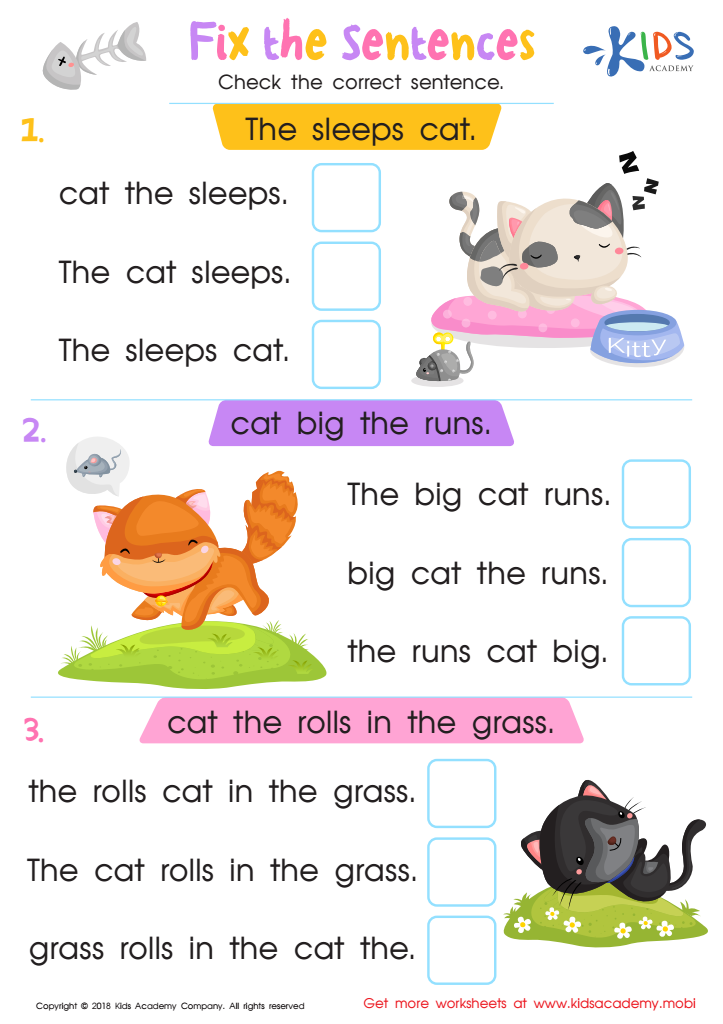
Fix the Sentences Worksheet
Once your students know the alphabet, teach them words. Then move on to constructing sentences. If they have a handle on sentence structure, give them this worksheet. Ask them to read the sentences and check the correct one.
Fix the Sentences Worksheet
Worksheet
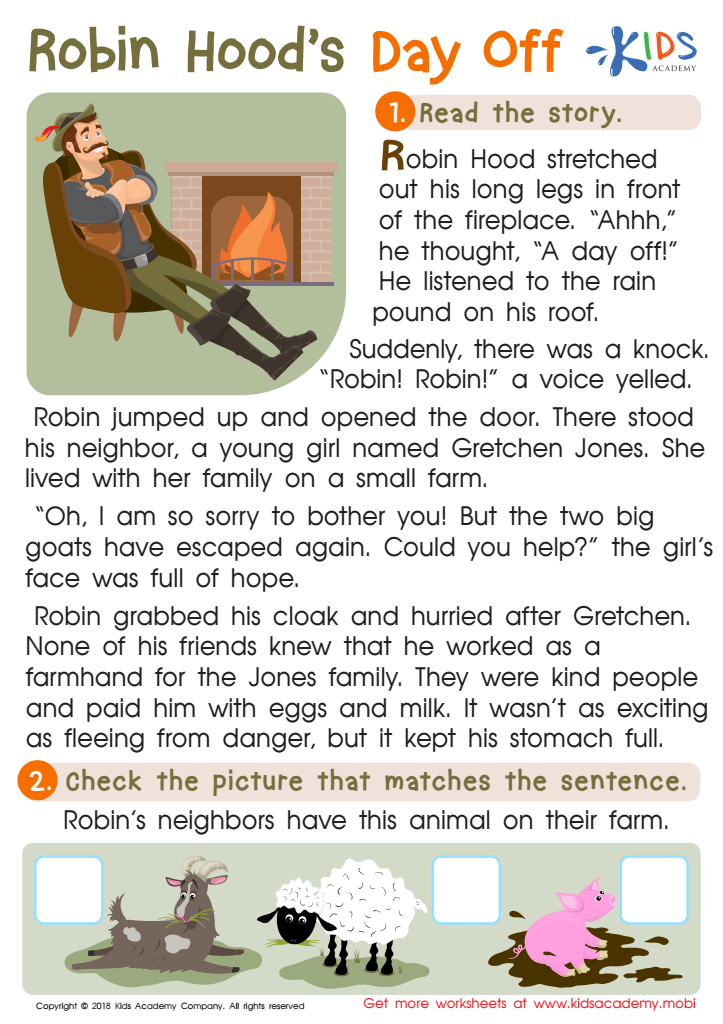
Robin Hood's Day Off Worksheet
Encourage your child to express their personality by writing stories. Show them this worksheet's short story about Robin Hood and read it slowly and carefully. Read it again if needed and ask the question below the story. This will help your child use their knowledge to answer it.
Robin Hood's Day Off Worksheet
Worksheet
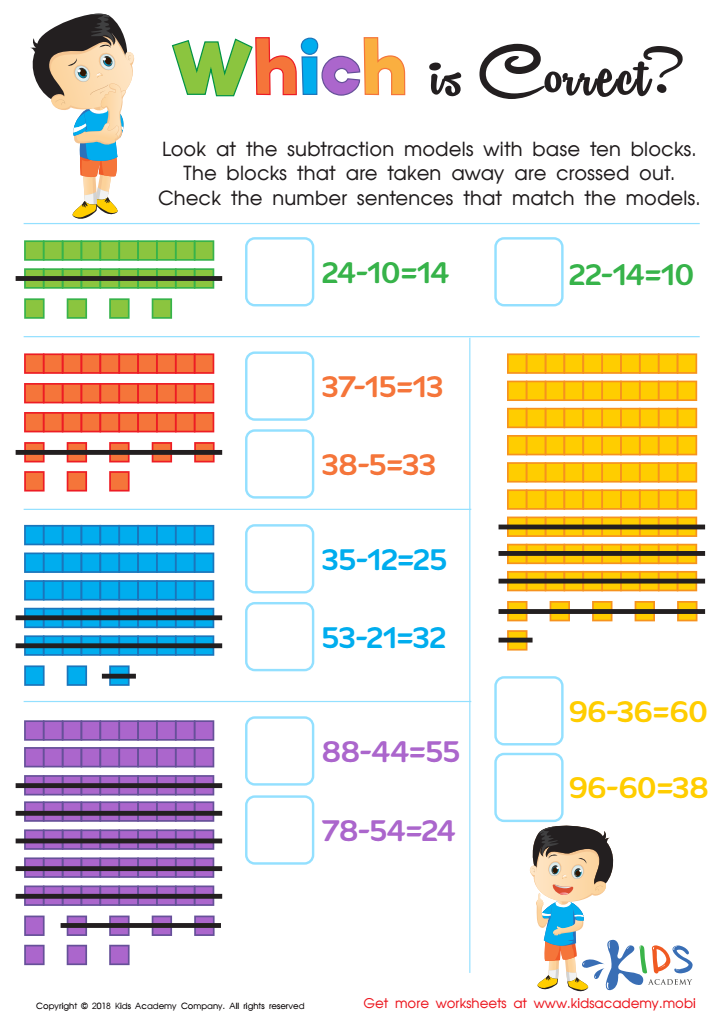
Which Is Correct? Math Worksheet
Young mathematicians will gain confidence solving subtraction problems with this bright, colorful worksheet. They'll use base ten blocks representations, then pick the right number sentence to match. It's great practice for developing number sense, helping them excel in higher-level math.
Which Is Correct? Math Worksheet
Worksheet
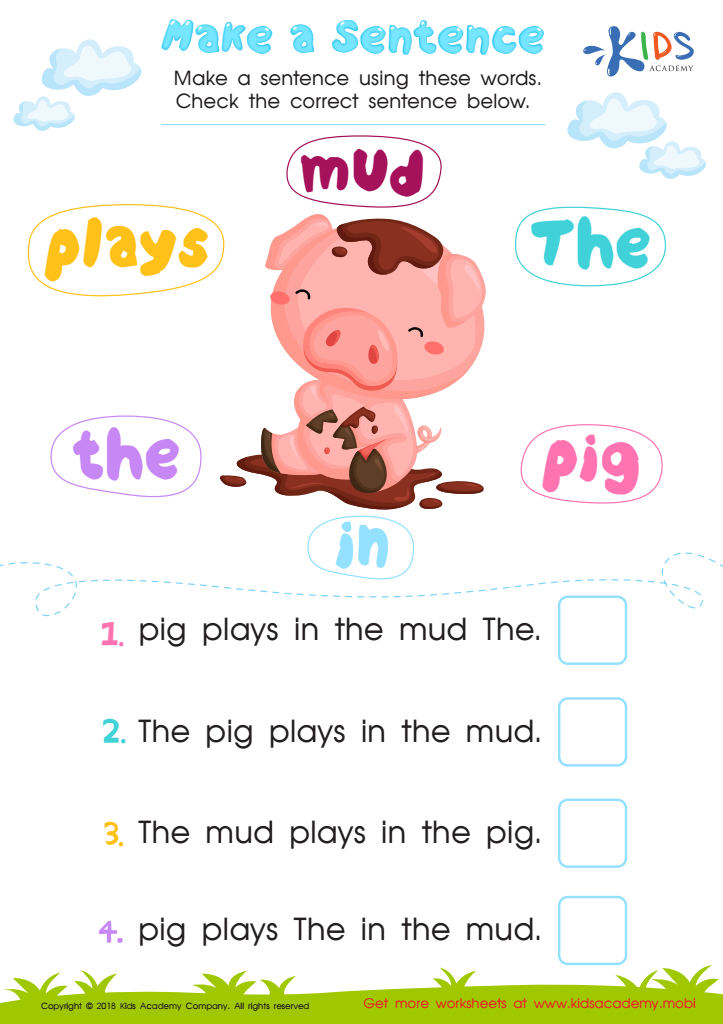
Assessment: Make a Sentence Worksheet
Help your kids identify the animal in the printout. Read the words in the bubbles and then read the four sentences in the options 1 – 4. Ask them to check the box with the correct sentence.
Assessment: Make a Sentence Worksheet
Worksheet
Join Kids Academy for Free
Who is primarily going to use this learning content?








Understanding sentence structure is crucial for children aged 7-8 as it lays the foundation for effective communication and literacy skills. At this age, children are transitioning from learning to read to reading to learn. By grasping sentence structure, they can express their thoughts clearly and logically. This skill enables them to construct coherent narratives and articulate their ideas during classroom discussions or in written assignments.
Moreover, a strong command of sentence structure enhances reading comprehension. Children who understand how sentences are built can decode complex texts more easily and extract meaning from what they read. This fosters a deeper love for reading, encouraging them to engage with various genres and topics.
For parents and teachers, focusing on sentence structure helps in identifying and addressing potential literacy challenges early on. By providing rich language experiences—through storytelling, writing prompts, and discussions—adults can nurture a child's writing prowess and critical thinking skills. Ultimately, helping children master sentence structure contributes to their overall academic success, self-confidence, and ability to communicate effectively in an increasingly complex world. Investing in this area is essential for their intellectual growth and development as independent learners.








