Understanding rounding Worksheets for Ages 7-8
7 filtered results
-
From - To
Discover our engaging "Understanding Rounding Worksheets" designed specifically for children ages 7-8! These educational resources help young learners master the concept of rounding numbers, enhancing their math skills in a fun and interactive way. Our worksheets provide a variety of exercises, including relatable scenarios and visually stimulating activities to reinforce understanding. As children practice rounding to the nearest tens and hundreds, they boost their confidence and problem-solving abilities. Perfect for classroom activities or at-home learning, these worksheets lay a strong foundation for future mathematical concepts. Start your child's journey to math success today with our thoughtfully created rounding resources!
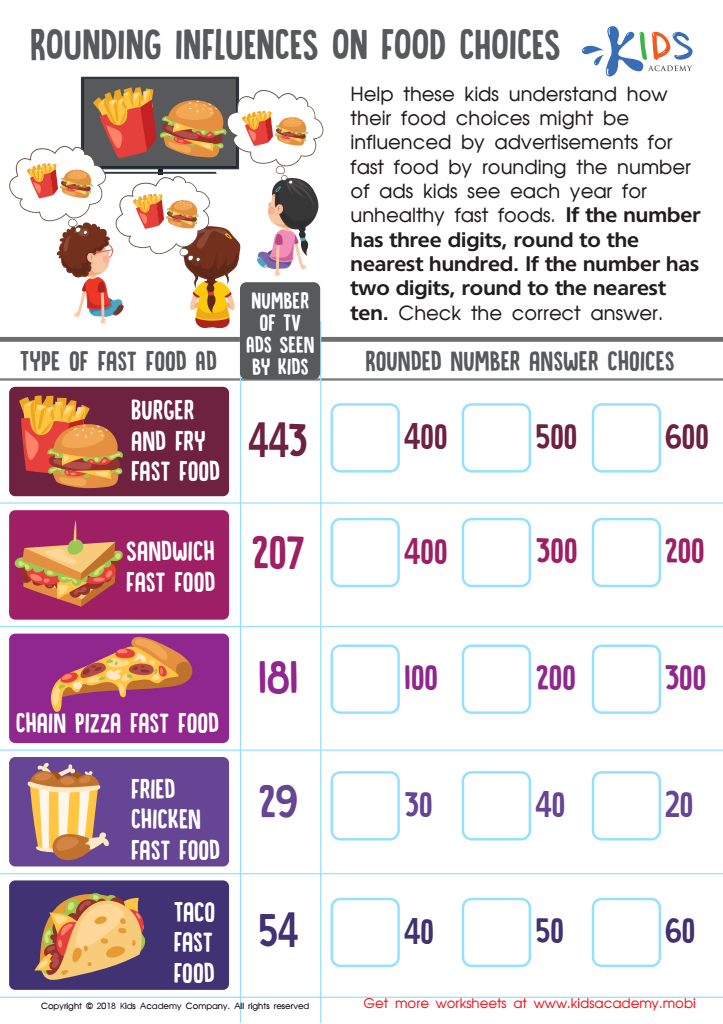
Rounding Influences Food Choices Worksheet
 Assign to My Students
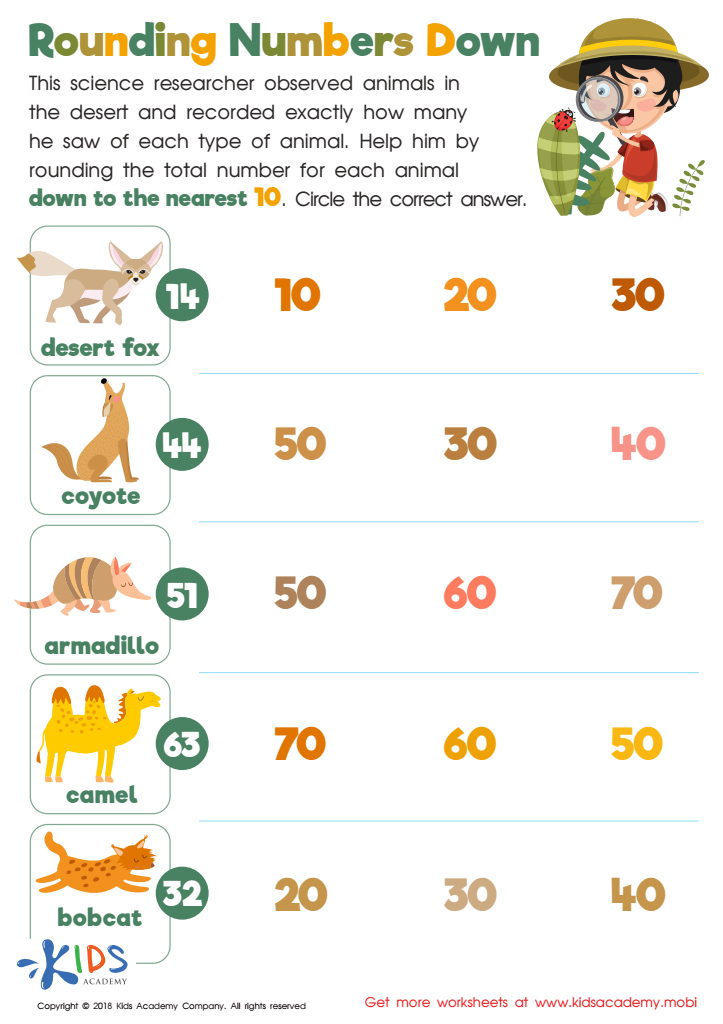
Rounding Numbers Down Worksheet
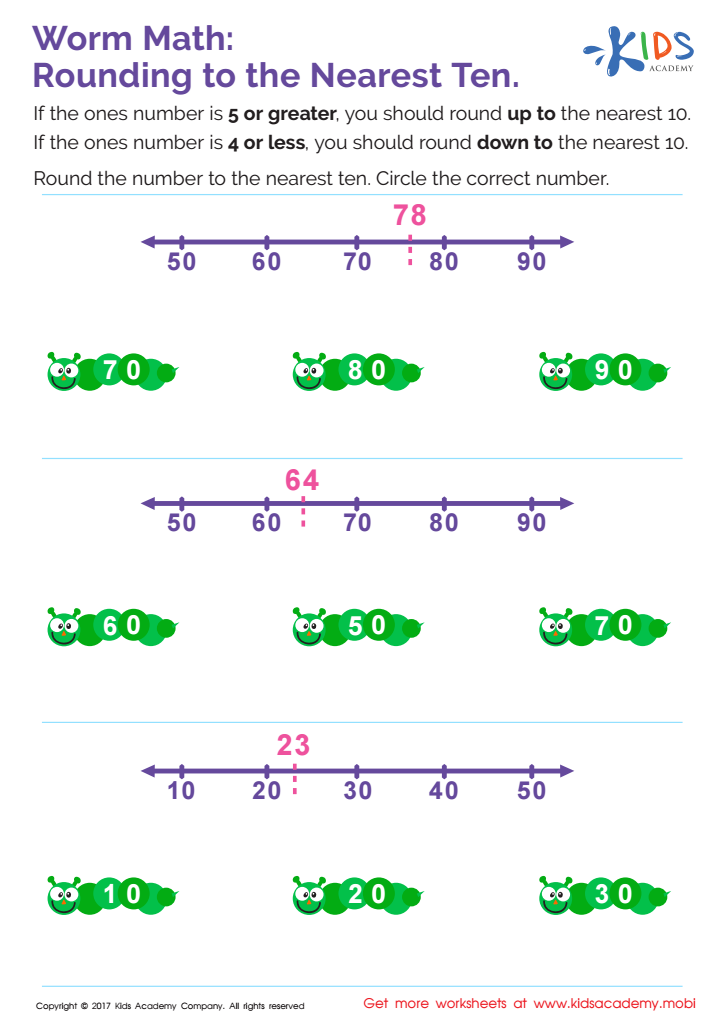
Rounding to the Nearest Ten Worksheet
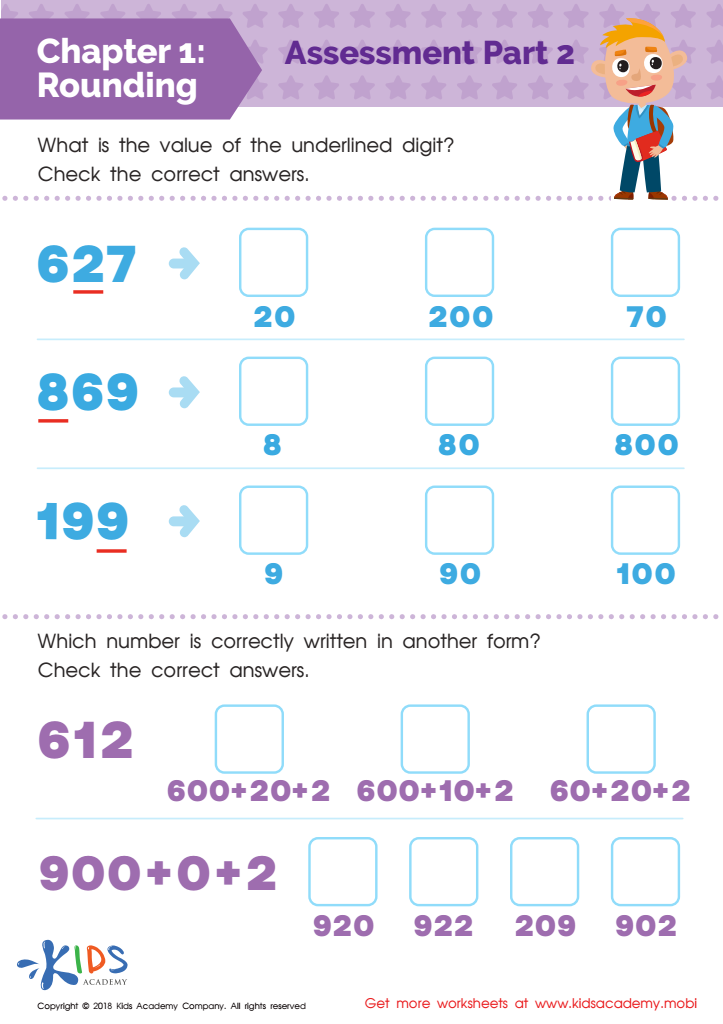
Rounding 3 Digit Numbers Worksheet
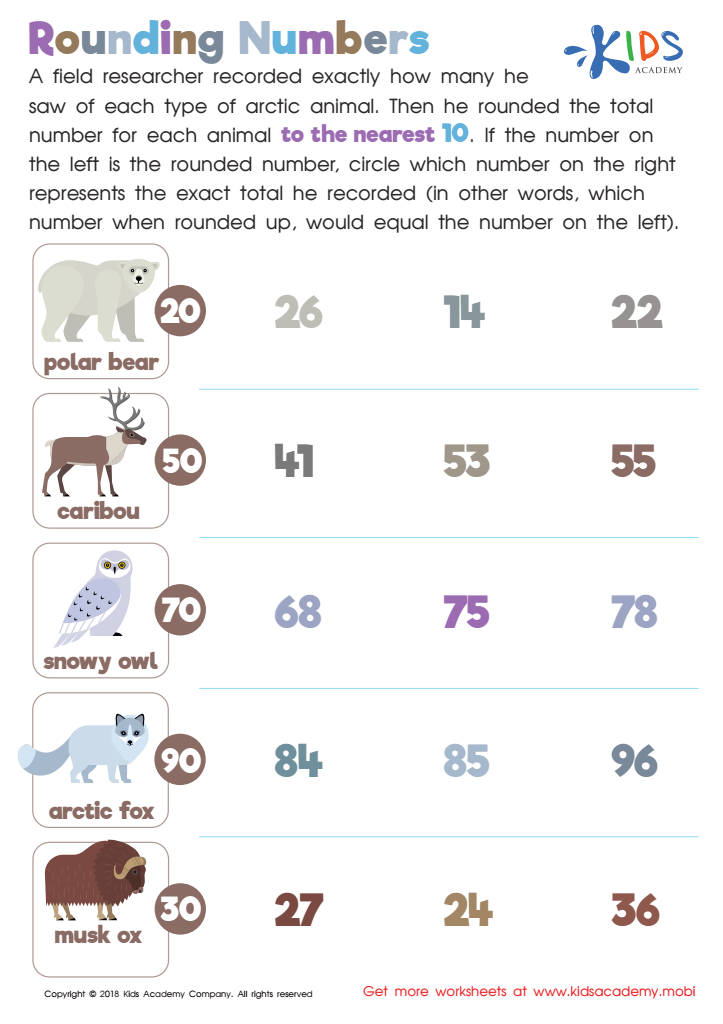
Rounding Numbers Worksheet
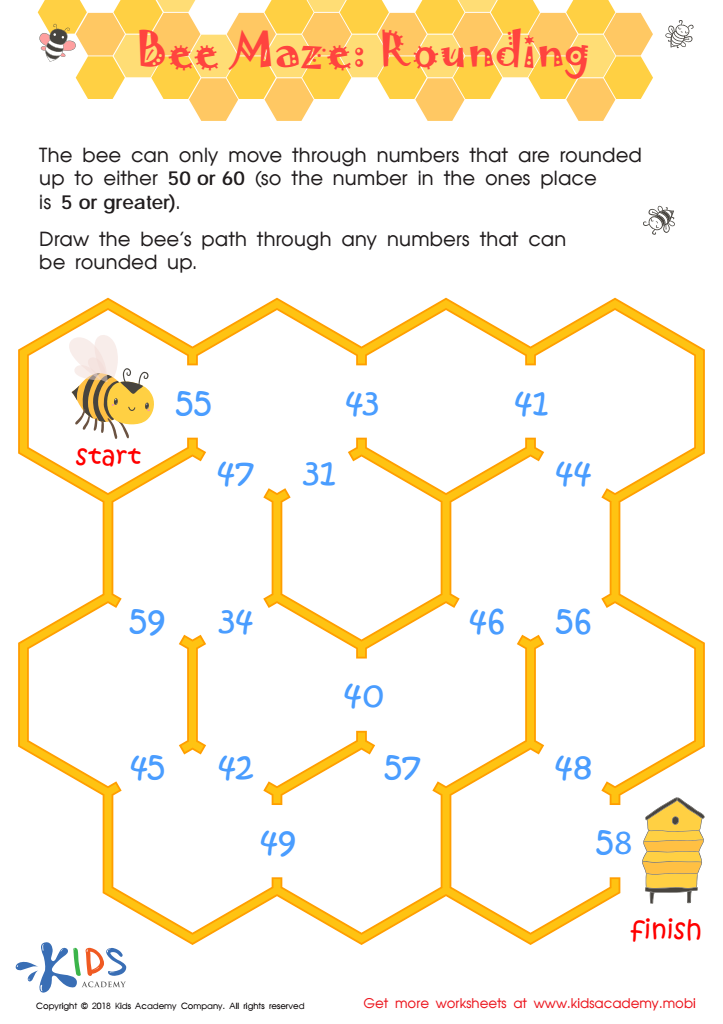
Bee Maze Rounding Worksheet
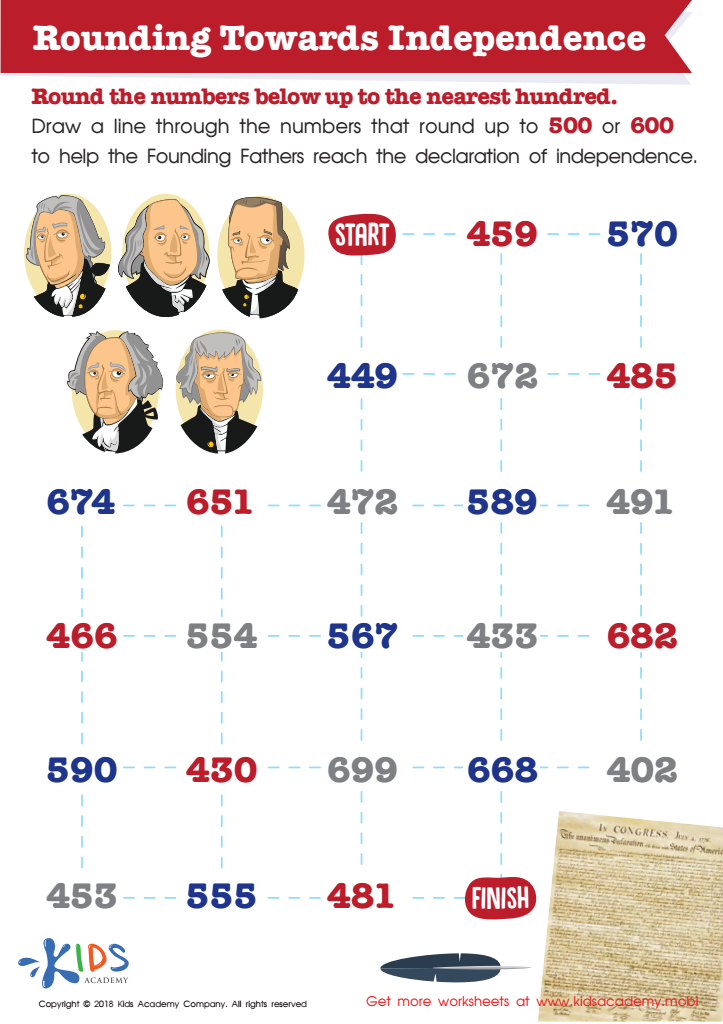
Rounding Towards Independence Worksheet



.jpg)




Understanding rounding is crucial for children ages 7-8 as it lays the foundation for essential mathematical skills needed in everyday life. At this age, students are transitioning from basic arithmetic to more complex problem-solving, and rounding enhances their ability to estimate values quickly. This skill is not just an academic exercise; it helps them make sense of numbers in real-world situations, such as shopping, where they might need to round prices to the nearest dollar for easier calculation of totals or to determine if they have enough money.
Moreover, rounding fosters critical thinking and enhances mental math capabilities. Students learn how to determine which way to round by evaluating numbers, thereby strengthening their number sense. It also aids in improving their confidence in handling larger numbers and makes complex operations, like addition and subtraction, more manageable.
Parents and teachers should prioritize rounding because it aids in gaining a solid grasp of mathematics, paving the way for future concepts like decimals and percentages. By helping children understand and apply rounding, adults empower them with tools that support not only mathematics but also logical reasoning and decision-making skills. Encouraging practice in rounding today ensures a more mathematically confident and competent learner tomorrow.








