Understanding syllables Worksheets for Ages 7-8
6 filtered results
-
From - To
Unlock your child’s reading potential with our "Understanding Syllables Worksheets" designed for ages 7-8! These engaging, printable resources help young learners grasp the concept of syllables through fun activities tailored for their developmental stage. By breaking down words into manageable parts, children enhance their phonological awareness, crucial for effective reading and writing. Our worksheets feature colorful illustrations and interactive exercises that make learning about syllables enjoyable and effective. Ideal for both classroom and home use, these worksheets empower parents and teachers to support literacy skills and build a strong foundation for future academic success. Explore our collection today!
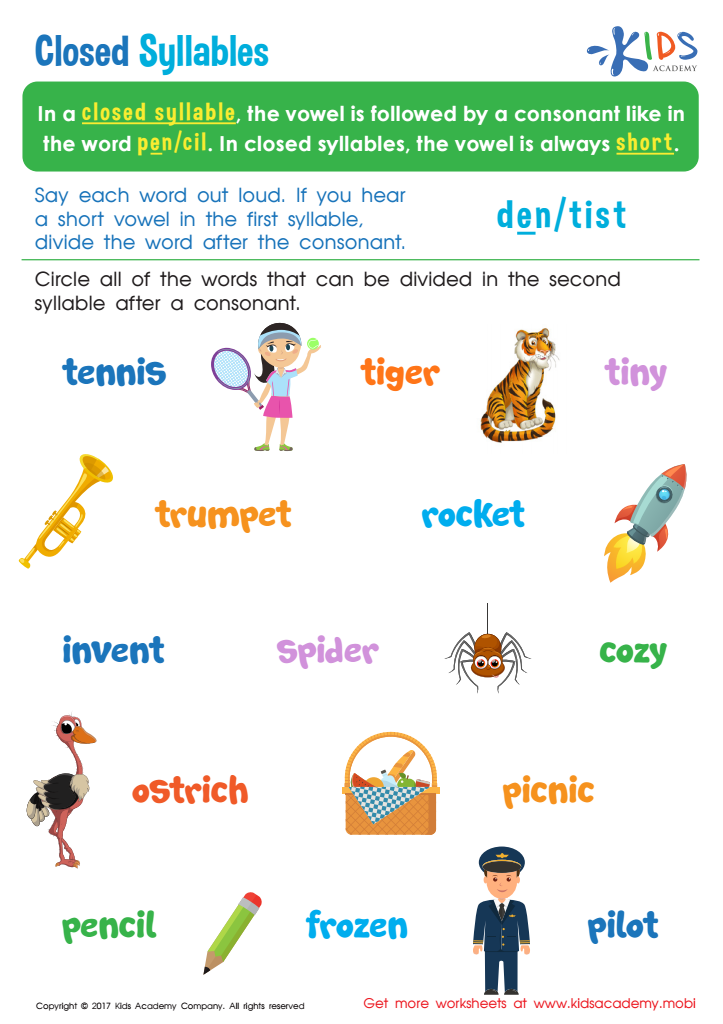
Closed Syllable Spelling Worksheet
 Assign to My Students
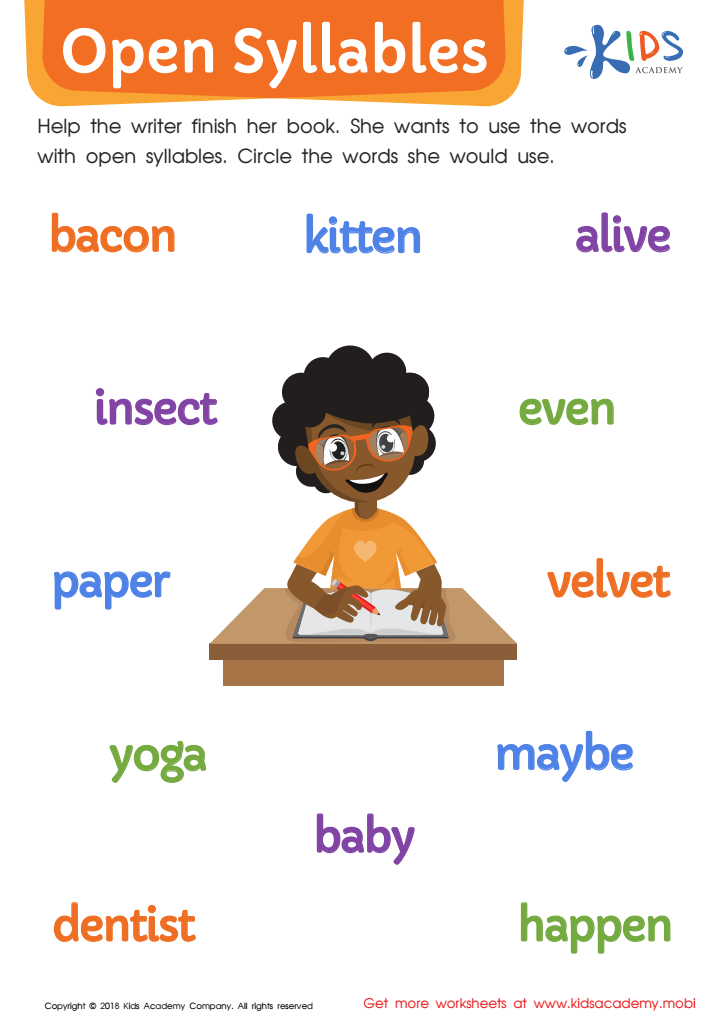
Open Syllables Worksheet
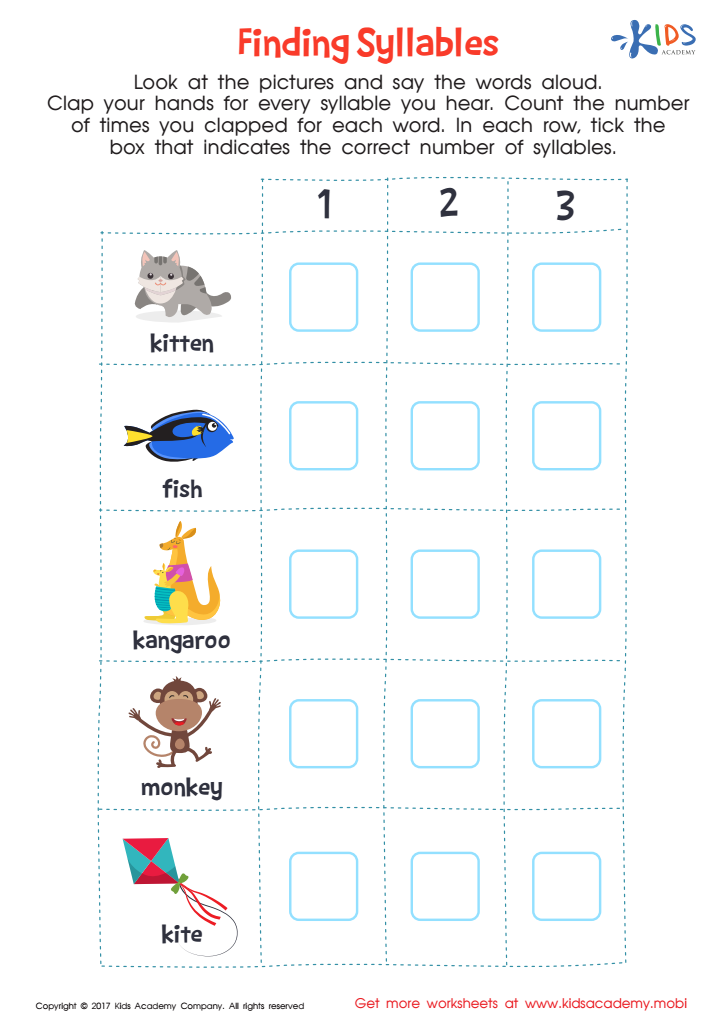
Finding Syllables Word Structure Worksheet
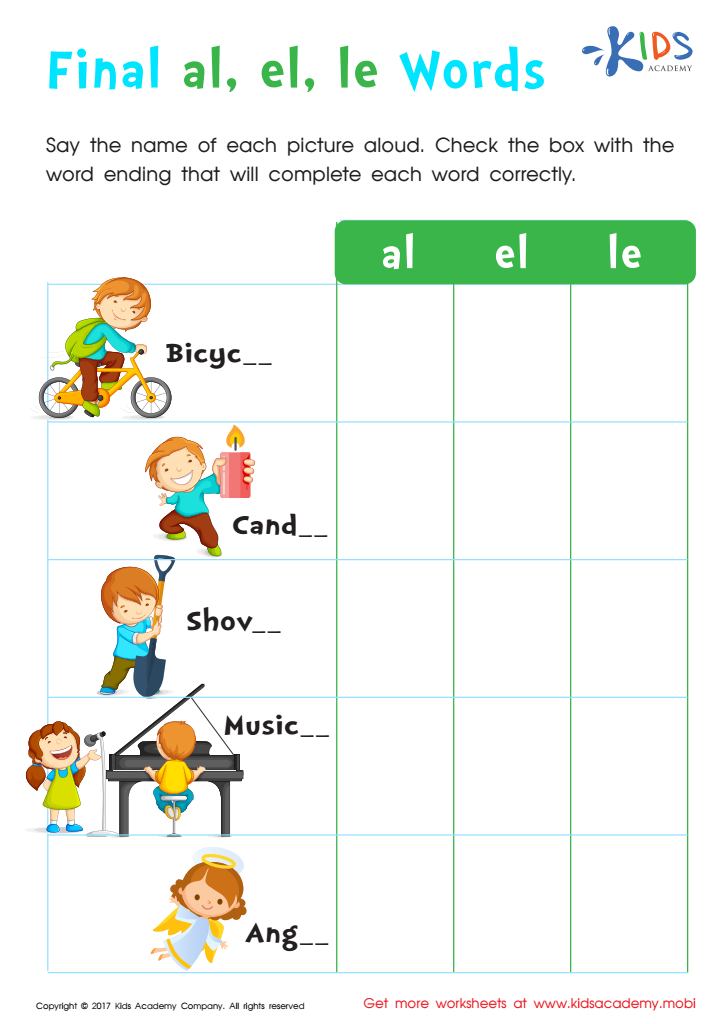
Spelling Words Ending with –le, –el and –al Worksheet
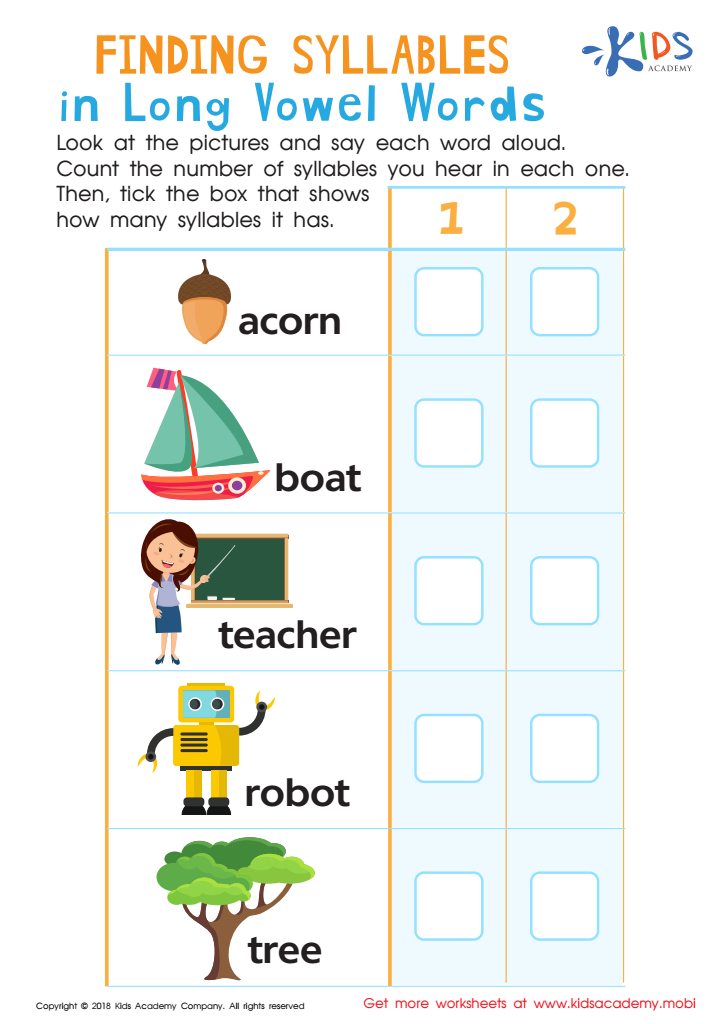
Finding Syllables in Long Vowel Words Worksheet
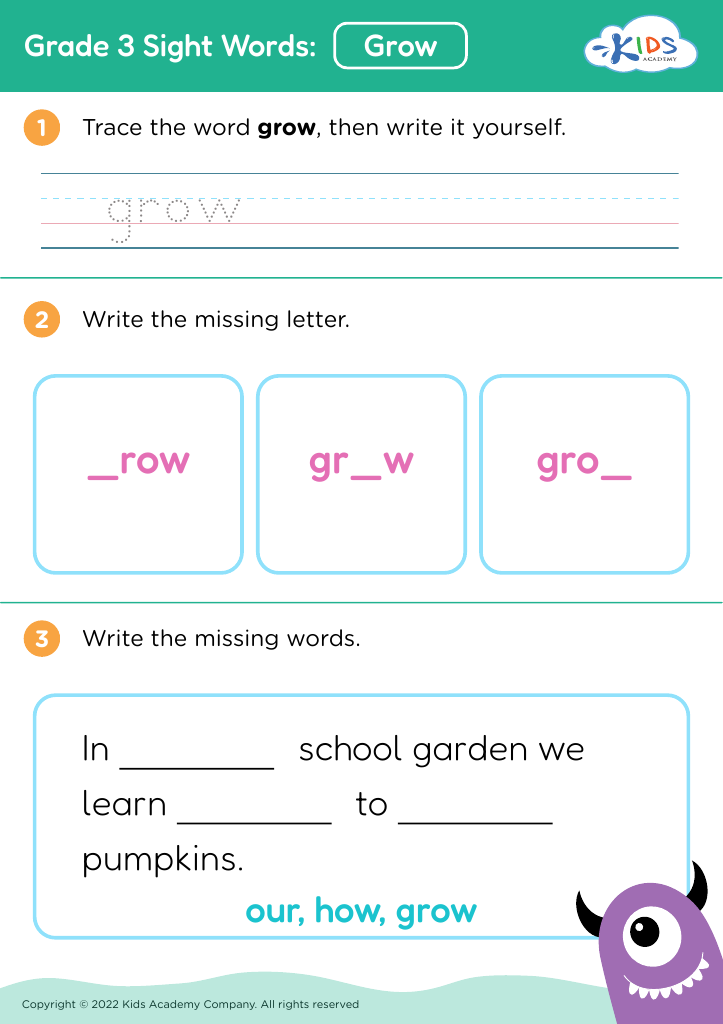






.jpg)
Understanding syllables is crucial for children aged 7-8 as it lays the foundation for reading, writing, and overall literacy skills. At this age, children are refining their understanding of phonics and beginning to transition from learning to read to reading to learn. Syllables are the building blocks of words; recognizing and manipulating them helps students break down complex words into manageable parts, making reading less daunting.
Moreover, an awareness of syllables enhances spelling and vocabulary development. When children comprehend syllabication rules, they can spell words more accurately and expand their language skills. Additionally, syllable counting is a key element in developing rhythm and fluency in their reading, which can lead to better comprehension and retention of information.
For teachers and parents, nurturing syllable awareness in young learners fosters confidence and enthusiasm for reading. Engaging in fun syllable games and activities can prevent frustration while encouraging a love for language. Ultimately, by understanding syllables, children build essential linguistic skills that will benefit them throughout their academic journeys and beyond, creating lifelong learners who appreciate the power of words.








