
Visual discrimination Worksheets for Ages 7-8
10 filtered results
Difficulty Level
Grade
Age
-
From - To
Subject
Activity
Standards
Enhance your child's cognitive abilities with our Visual Discrimination Worksheets for ages 7-8, specially designed to sharpen essential skills. These engaging, printable activities from Kids Academy focus on improving attention to detail, boosting pattern recognition, and promoting critical thinking. The worksheets are filled with fun exercises that include identifying differences, matching pairs, and sequencing images, making learning both effective and enjoyable. Ideal for reinforcing classroom lessons or home practice, our Visual Discrimination collection is a valuable resource for young learners, helping them achieve academic success while having fun. Download today and watch your child's skills flourish!
Favorites
With answer key
Interactive
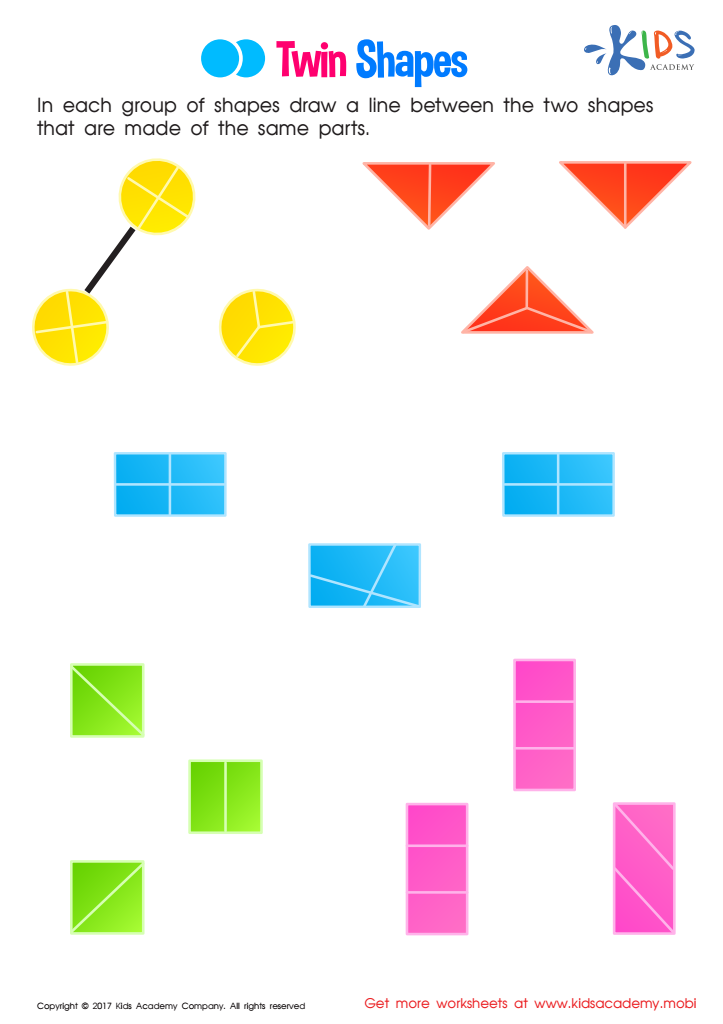
Twin Shapes Worksheet
Your students' goal in this worksheet is to find the twin shapes: drawing a line between two shapes made of the same parts. Likely, the first shapes encountered were circles, triangles, rectangles and squares - examples of which are seen frequently in everyday life. Encourage them to apply what they know and work out which is the twin shape!
 Assign to My Students
Twin Shapes Worksheet
Worksheet
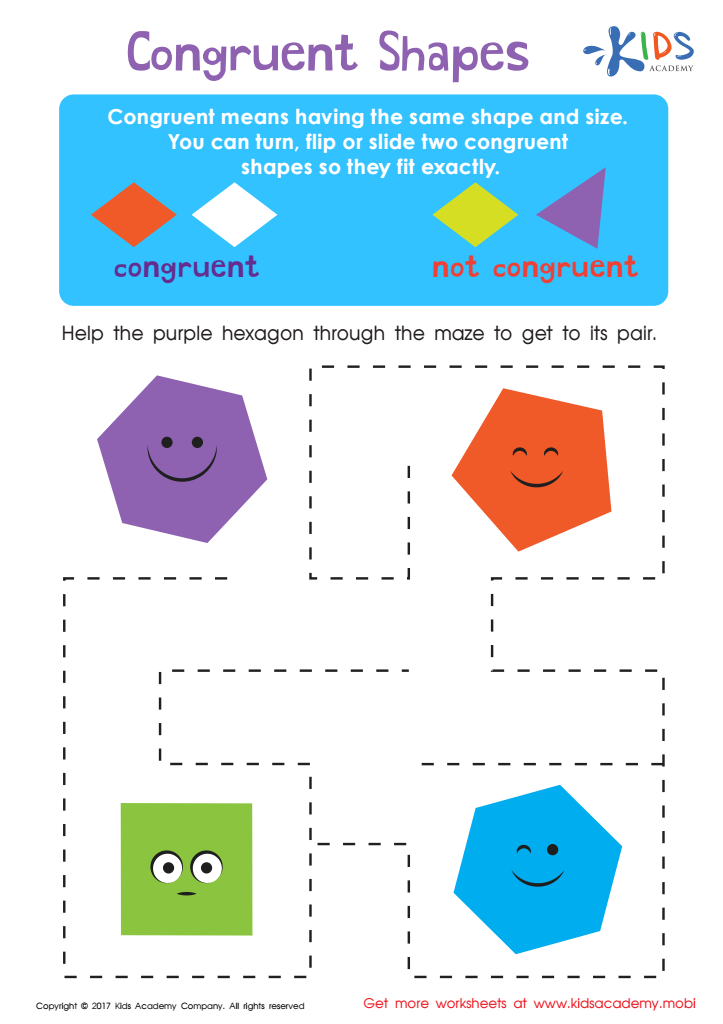
Congruent Shapes Worksheet
Help your child find the twin of the purple hexagon! This congruent shapes worksheet is great for increasing vocabulary while challenging mental rotation skills.
Congruent Shapes Worksheet
Worksheet
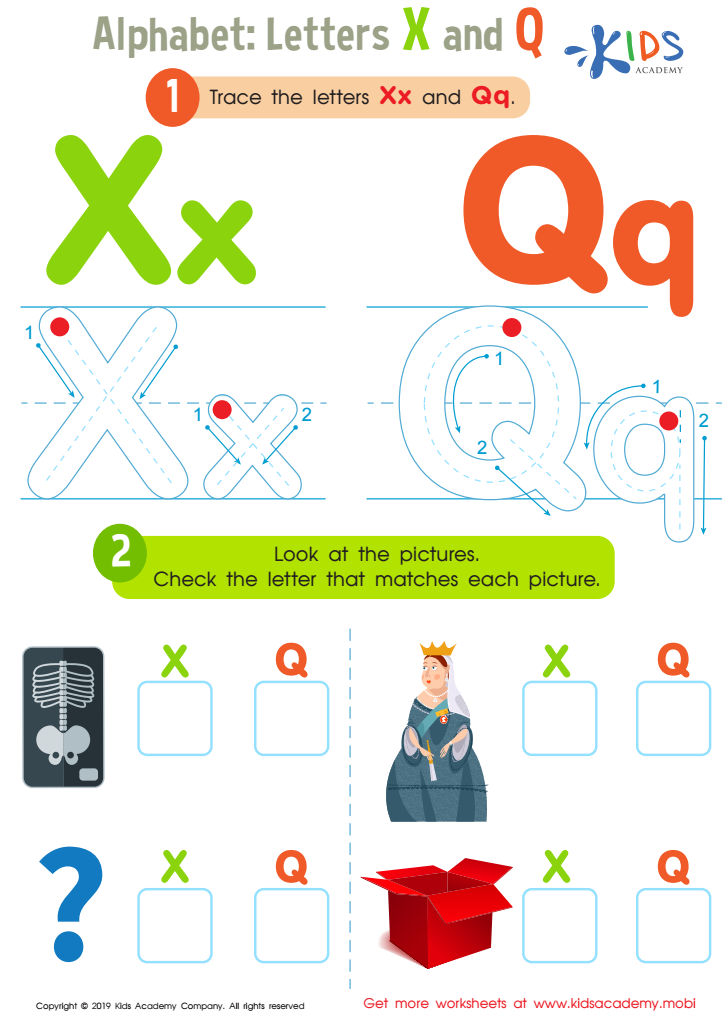
Letters X and Q Tracing Worksheet
Do you want your students to improve writing and letter recognition? This worksheet is a great place to start! Kids can trace the letters «X» and «Q» and identify pictures that match each letter. With a little encouragement, they'll do a great job!
Letters X and Q Tracing Worksheet
Worksheet
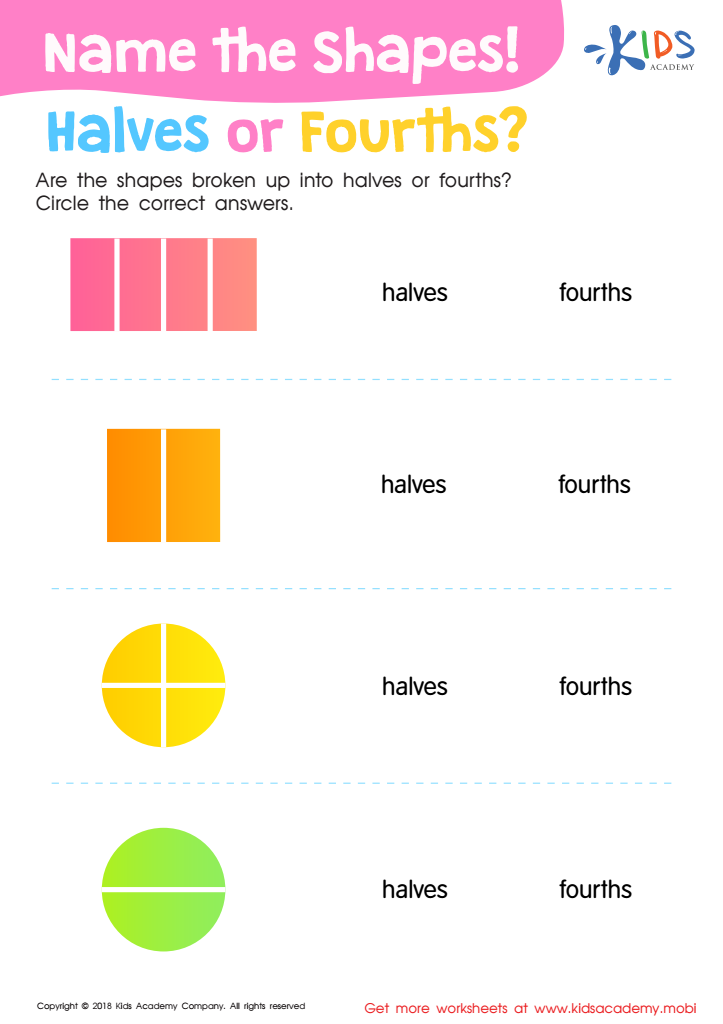
Name the Shapes Halves or Fourths? Worksheet
Before starting, ask your child if they understand what halves and fourths are. If they can answer correctly, move on with the worksheet. Help them circle the right option beside each shape, showing if it's split into halves or fourths.
Name the Shapes Halves or Fourths? Worksheet
Worksheet
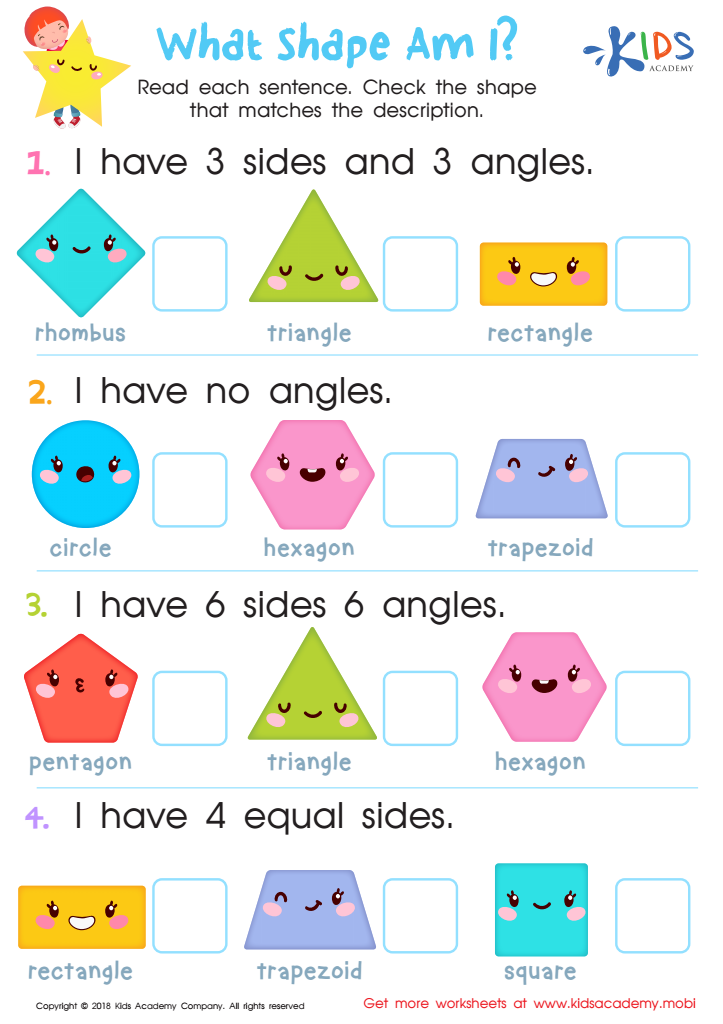
What Shape Am I? Worksheet
Help your child read each sentence in this colorful worksheet. Have them identify the shapes described and check the boxes. To prepare, ask simple questions like "How many sides does a triangle have?" and "Which shape has 4 equal sides?" Your child will become more skilled at shapes by the end of this activity.
What Shape Am I? Worksheet
Worksheet
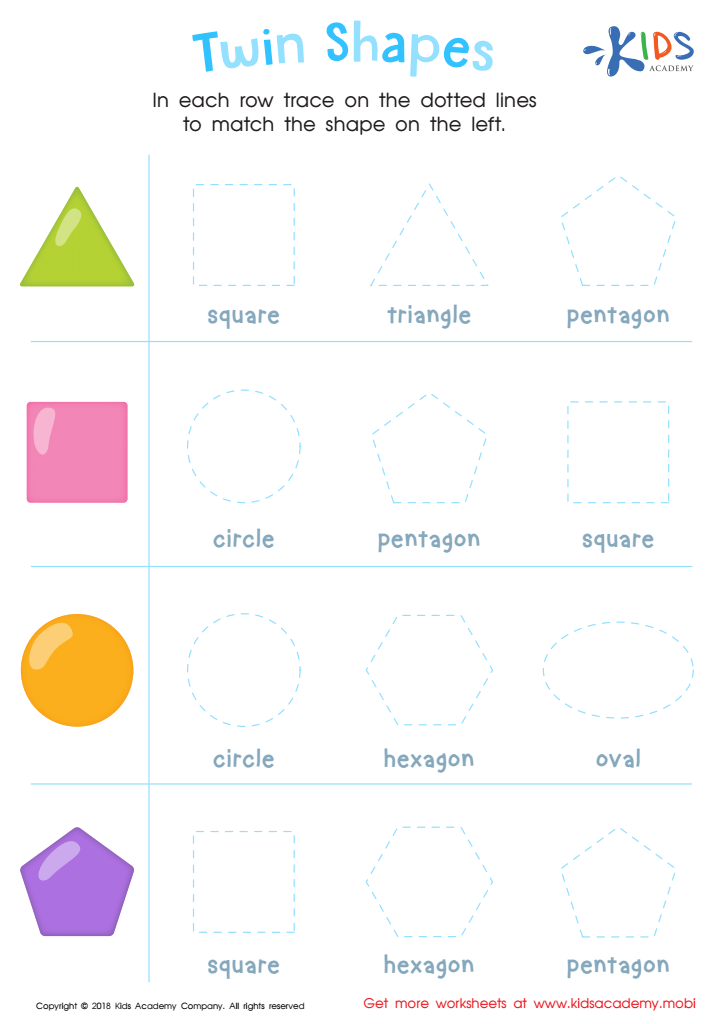
Twin Shapes Dot-to-Dot Worksheet
Test your child's ability to copy with this worksheet. Ask them to find and name the four shapes on the left. Then, they must match each with the dotted lines on the right. Help your child with all four shapes in this fun exercise.
Twin Shapes Dot-to-Dot Worksheet
Worksheet
Join Kids Academy for Free
Who is primarily going to use this learning content?







Visual discrimination is the ability to perceive and differentiate between visual stimuli, which is crucial for children's cognitive and academic development, particularly between the ages of 7 and 8. At this stage, children begin to refine their reading and writing skills, and visual discrimination plays a central role in this process.
For teachers and parents, understanding the importance of visual discrimination helps in supporting their children's literacy. Being able to distinguish between different letters, shapes, and words is fundamental to reading. If a child cannot distinguish between similar-looking letters such as 'b' and 'd' or 'p' and 'q', their reading fluency and comprehension can suffer. This skill also extends to mathematics, where recognizing and differentiating numbers and symbols is equally important.
Furthermore, strong visual discrimination skills aid in non-academic areas such as following instructions, letter formation in writing, and even playing games that require pattern recognition or sorting. Early intervention is key. The sooner parents and teachers recognize and support children who struggle with visual discrimination, the better these children can succeed academically and socially.
Activities like puzzles, matching games, and tracing can help enhance visual discrimination. Caring about this skill thus lays a foundation for children to become proficient readers, efficient problem solvers, and confident learners—attributes that contribute to their overall success.








