Practice division Addition Worksheets for Ages 7-8
3 filtered results
-
From - To
Discover our engaging division addition worksheets designed specifically for kids ages 7-8! These worksheets provide a fun and interactive way for young learners to practice their mathematical skills, focusing on the connection between addition and division. Each worksheet is filled with colorful illustrations and challenging problems to enhance understanding and build confidence in math. Additionally, they align with educational standards to ensure quality learning. Whether at home or in the classroom, our printable resources are perfect for reinforcing math concepts, fostering critical thinking, and providing hours of enjoyable practice. Help your child master division and addition today with our expertly crafted worksheets!
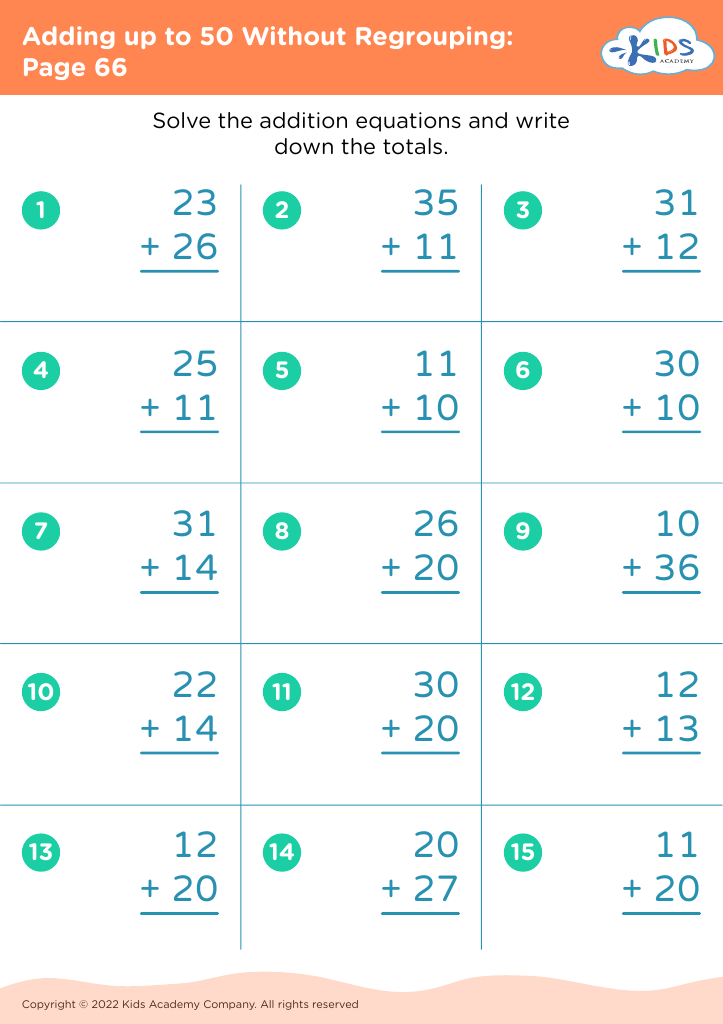
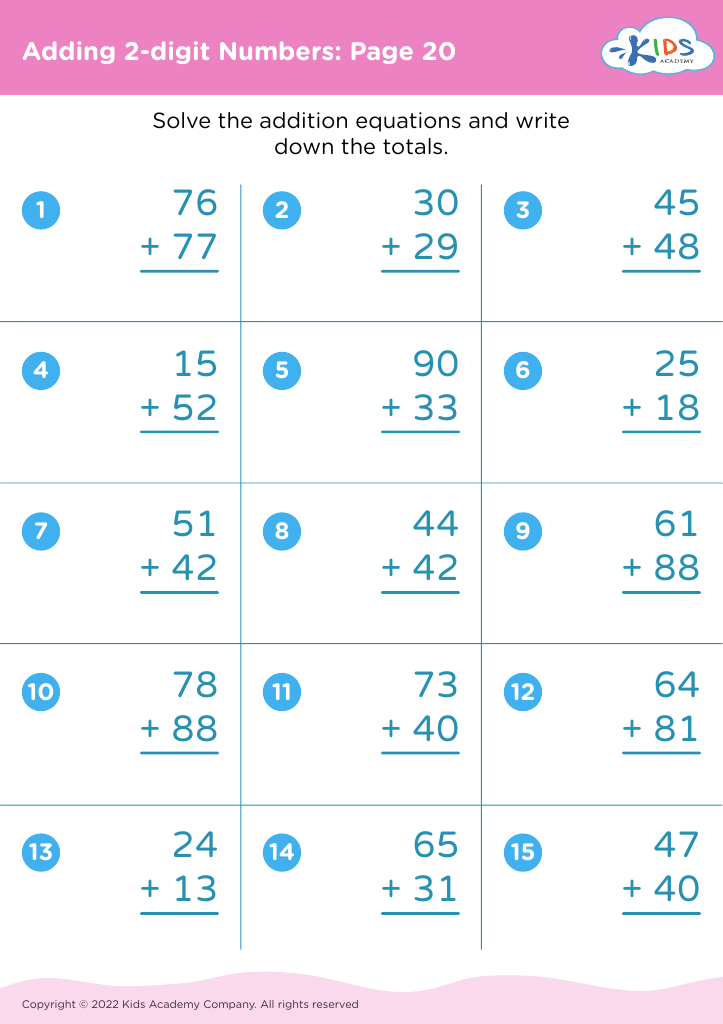
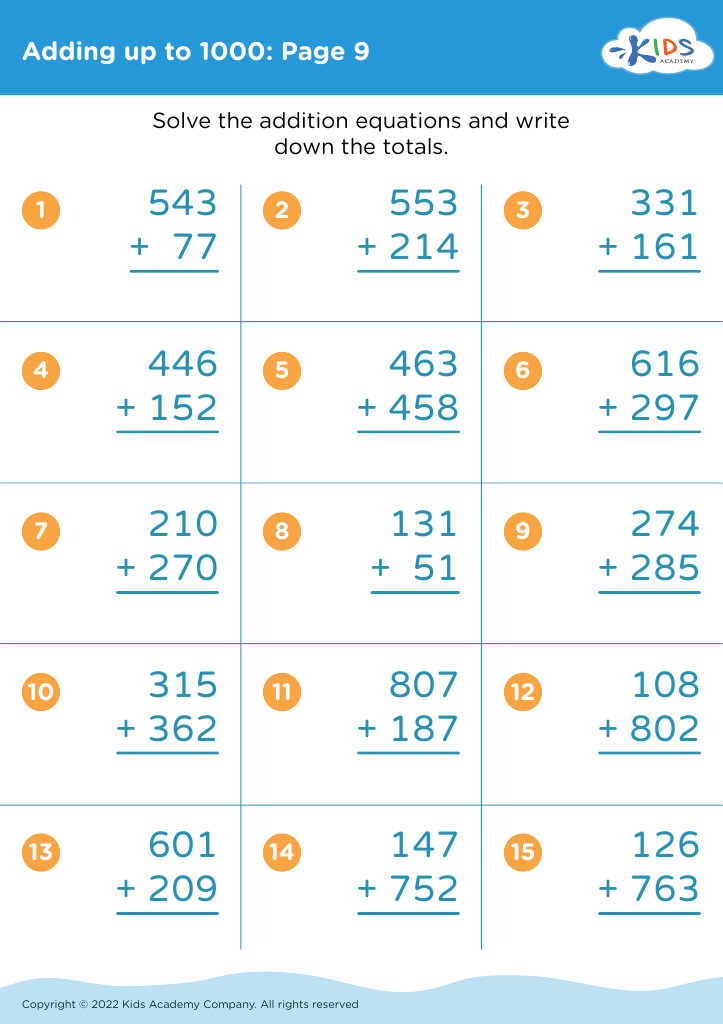








Parents and teachers should prioritize practicing division and addition for children ages 7-8 because these foundational skills are crucial for overall mathematical development. At this age, children begin transitioning from basic arithmetic to understanding more complex concepts, such as fractions, and problem-solving techniques. Mastery of division and addition forms a strong numerical foundation that enhances confidence and fosters a positive attitude toward math.
Engaging in regular practice helps children develop not only computational skills but also a deep understanding of relationships between numbers. For instance, recognizing how addition relates to division—understanding that division is essentially finding how many times a number can fit into another—promotes critical thinking.
Moreover, practicing these operations enhances cognitive skills such as memory, concentration, and logical reasoning. Children will encounter division and addition in real-life situations, such as sharing, budgeting, or measuring, making this practice relevant and practical. Ultimately, emphasizing this area in their education sets the stage for academic success in future math topics and builds a strong work ethic and discipline as they progress through school. Both parents and teachers play a pivotal role in making learning engaging and fostering a lifelong love for math.








