
Enhancing mental arithmetic Math Worksheets for Ages 7-8
4 filtered results
Difficulty Level
Grade
Age
-
From - To
Subject
Activity
Standards
Boost your child’s mental arithmetic skills with our engaging worksheets designed specifically for ages 7-8! These fun and interactive materials help young learners develop quick calculation abilities, memory retention, and problem-solving skills. Covering various essential topics such as addition, subtraction, multiplication, and division, our worksheets encourage students to think critically and mathematically without relying on calculators. With colorful visuals and age-appropriate challenges, children will enjoy practicing their math skills while building confidence in their abilities. Download our printable worksheets today and transform math learning into an exciting adventure, setting the stage for future success in mathematics!
Favorites
With answer key
Interactive
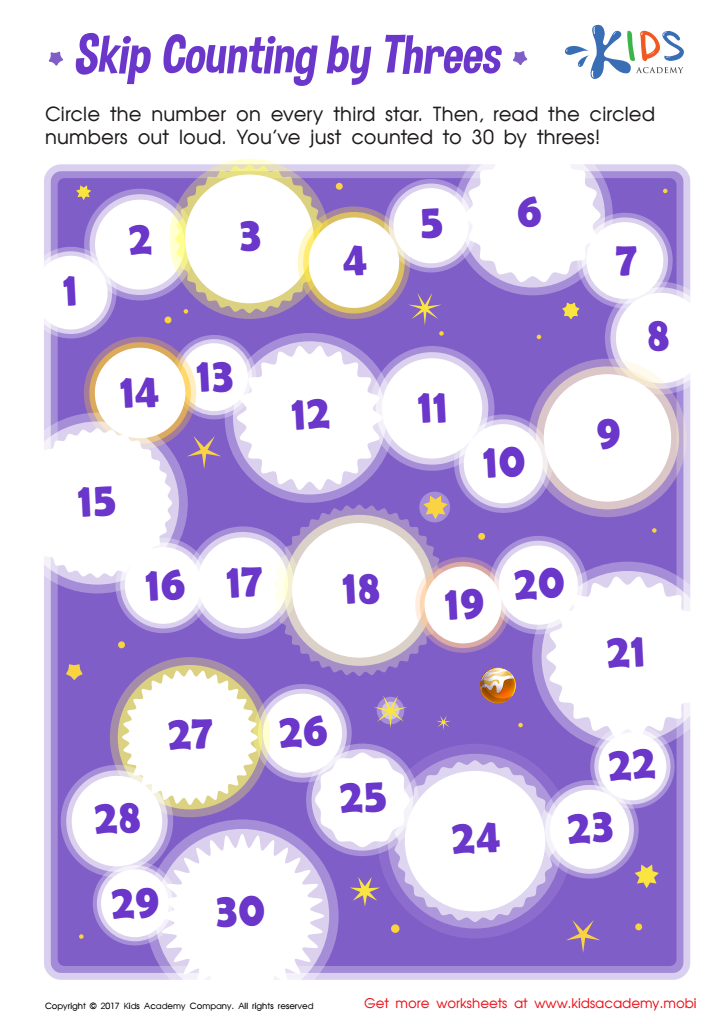
Skip Counting By Three Printable
Inspire your child with this star-themed skip counting worksheet! It offers a fun way to learn while providing a foundation for more advanced math skills, like adding, subtracting, and multiplication. It will help your child gain a sense of numeracy, practice problem solving, and stay ahead in math.
 Assign to My Students
Skip Counting By Three Printable
Worksheet
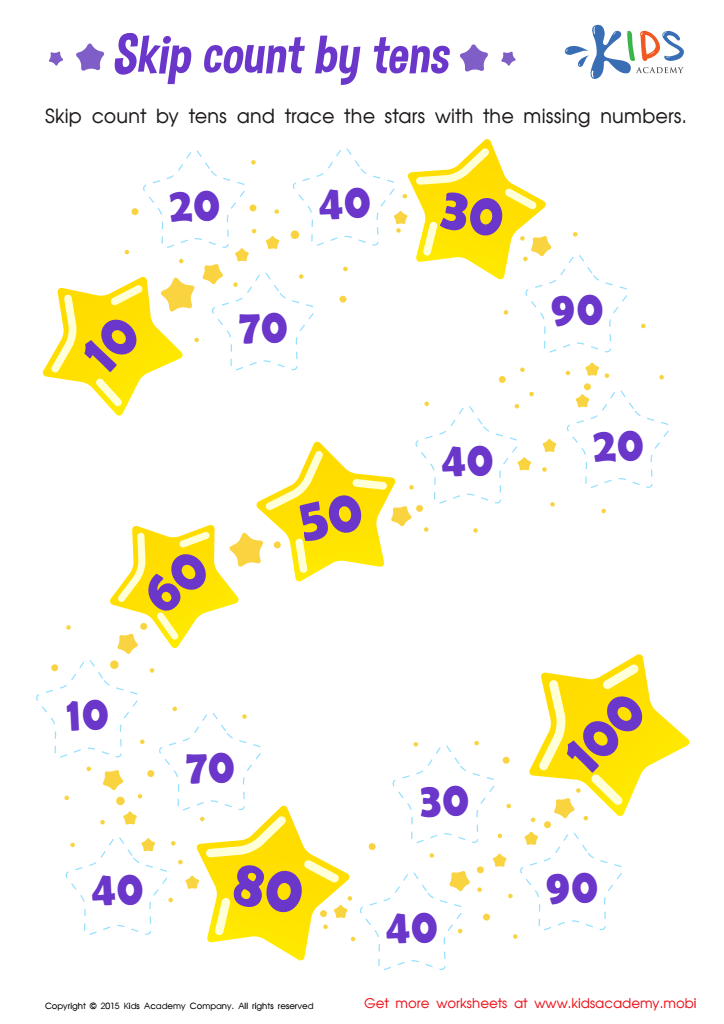
Learn dozens: Skip Count by Tens Printable
Follow a shooting star on an adventure of skip counting by 10s. Strengthen math skills with this fun and colorful worksheet. Kids will solve a puzzle, exercise logical reasoning and problem-solving skills. Get them ready for multiplication and division through increased skip counting abilities. Print this worksheet and take your star to the next level!
Learn dozens: Skip Count by Tens Printable
Worksheet
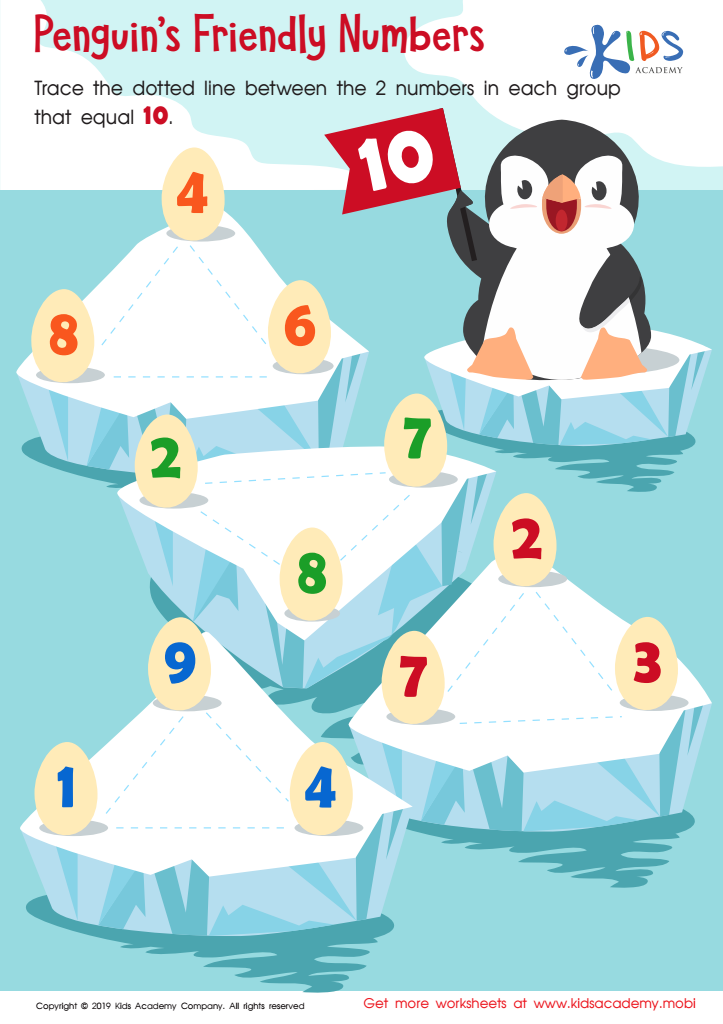
Penguin's Friendly Numbers Worksheet
Can your child find the little penguin? Ask them to tell you what they know about penguins and challenge them with this tracing sheet. There are 4 icebergs with 3 numbers each - have them trace the dotted line between 2 numbers that amount to 10.
Penguin's Friendly Numbers Worksheet
Worksheet
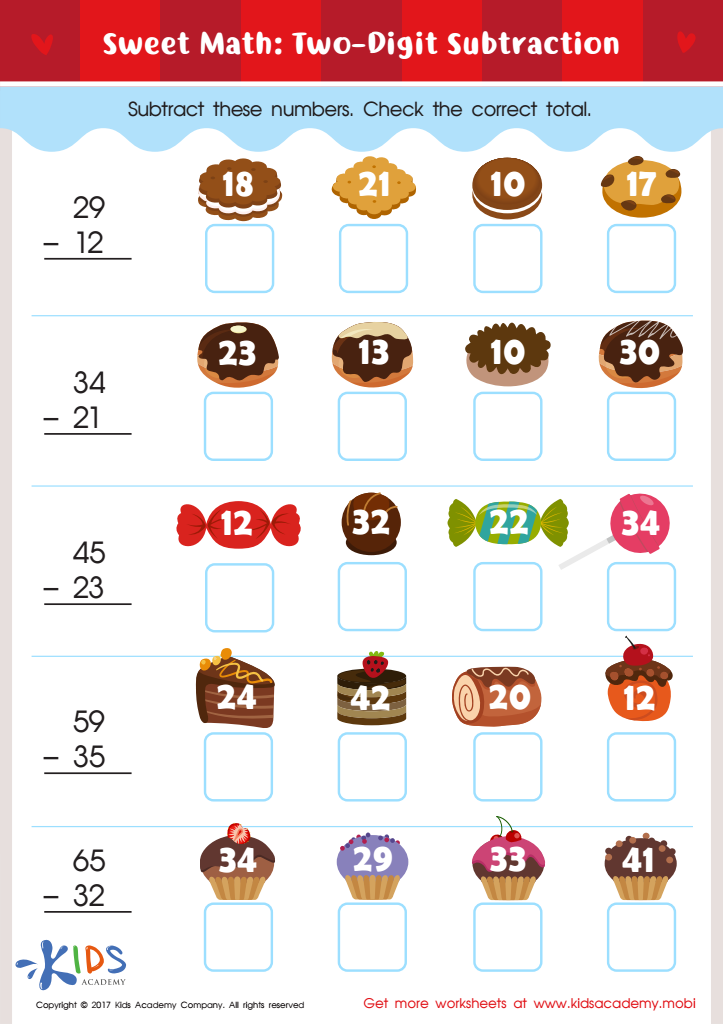
Two Digit Subtraction Worksheet
Make subtraction practice fun and easy with Kids Academy's delightful two digit subtraction worksheet PDF! Your child will love finding the sweet treat containing the correct answer to each 2-digit problem. Offer this quick practice and watch them learn!
Two Digit Subtraction Worksheet
Worksheet
Join Kids Academy for Free
Who is primarily going to use this learning content?








Enhancing mental arithmetic skills in children aged 7-8 is crucial for several reasons. First, this age group is at a pivotal point in their cognitive development, where foundational mathematical concepts are being established. Mental arithmetic strengthens these foundations, encouraging children to manipulate numbers with confidence and efficiency. It builds computational fluency, which is vital for tackling more complex mathematical concepts later in their academic journey.
Moreover, improving mental arithmetic enhances problem-solving capabilities. Children learn to approach problems analytically, fostering critical thinking skills that extend beyond mathematics into other subjects. This can lead to better academic performance overall.
Mental arithmetic also promotes number sense, helping children understand the relationships between numbers. When children can perform calculations in their heads, they are less reliant on calculators and can assess estimates quickly—a skill that is highly applicable in real-life situations.
Additionally, fostering mental arithmetic can boost self-esteem and reduce anxiety related to math. As children become more proficient, they develop a positive attitude toward mathematics, laying the groundwork for lifelong learning and interest in the subject. For parents and teachers, encouraging these skills contributes to a classroom environment that values mathematical thinking and prepares children for future challenges.








