
Improving mathematical skills Math Worksheets for Ages 7-8
8 filtered results
Difficulty Level
Grade
Age
-
From - To
Subject
Activity
Standards
Enhance your child's mathematical abilities with our engaging Math Worksheets designed for ages 7-8! Our carefully crafted resources focus on improving essential math skills, including addition, subtraction, multiplication, and problem-solving strategies. Each worksheet features fun, interactive activities that promote critical thinking and make learning enjoyable. Suitable for both home and classroom use, these worksheets encourage independent learning and mastery of key concepts while supporting a strong mathematical foundation. Start building your child's confidence in math today with our comprehensive collection of worksheets tailored to fit their developmental needs. Explore the possibilities and watch your child's skills flourish!
Favorites
With answer key
Interactive
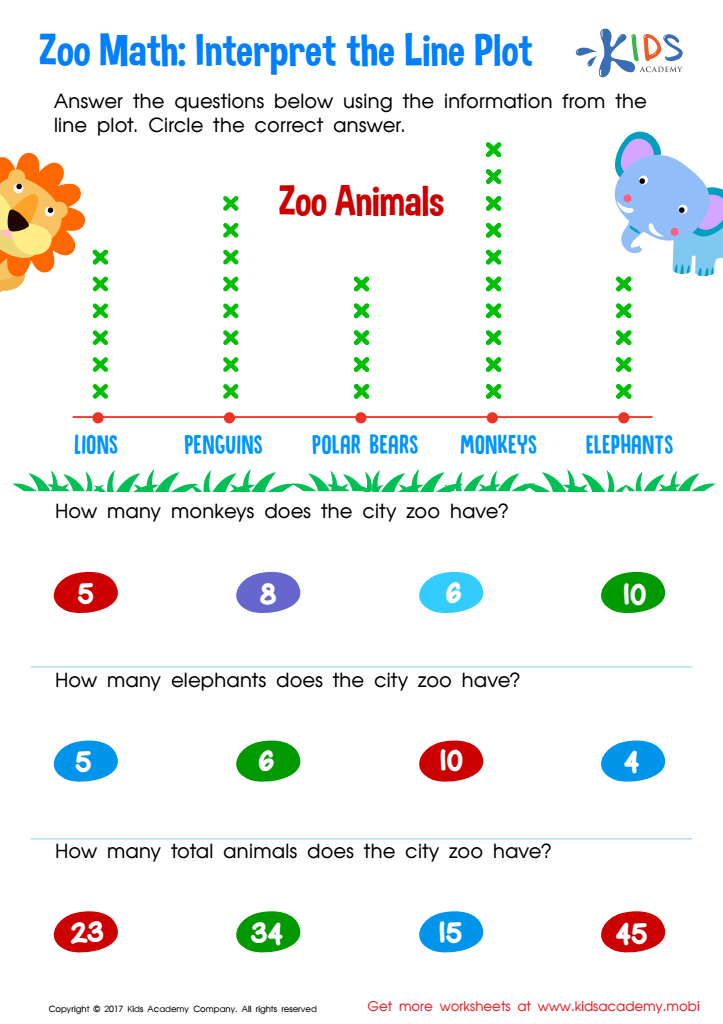
Interpret Line Plot Worksheet
Kids can learn to read graphs and analyze data easily with line plots. A fun zoo animal worksheet motivates kids to answer questions by reading the line plot and finding out how many animals a local zoo has.
 Assign to My Students
Interpret Line Plot Worksheet
Worksheet
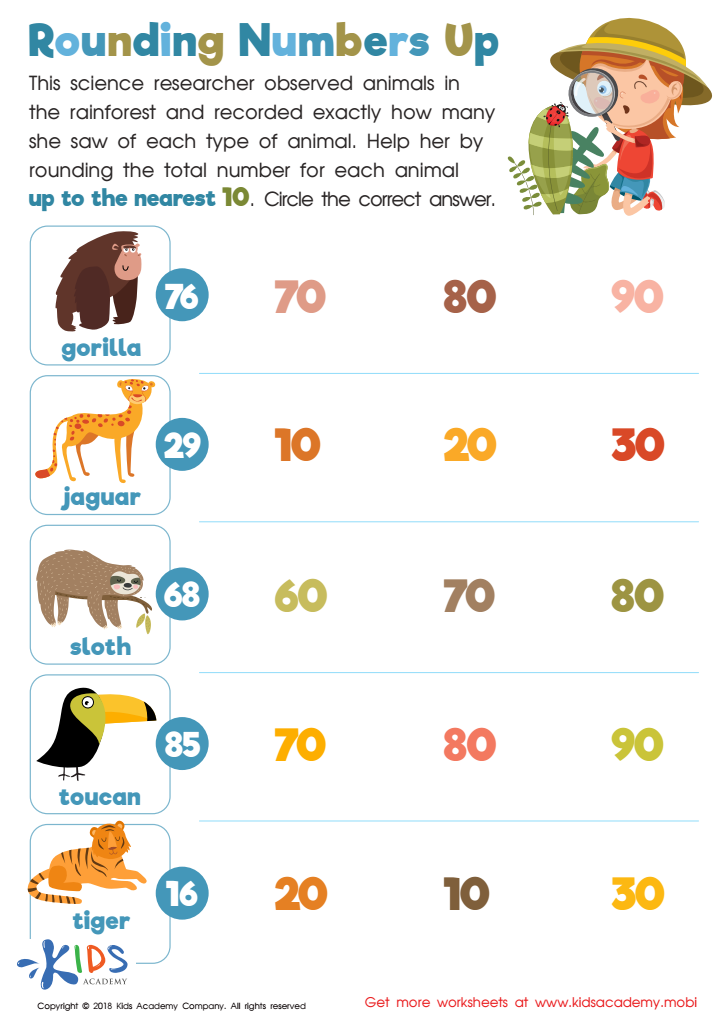
Rounding Numbers Up Worksheet
Does your child want to be a science researcher? If so, they share something in common with the person in this worksheet. She observed rainforest animals and counted them. Your child can help by rounding the totals to the nearest 10 and circling the correct answer for each type.
Rounding Numbers Up Worksheet
Worksheet
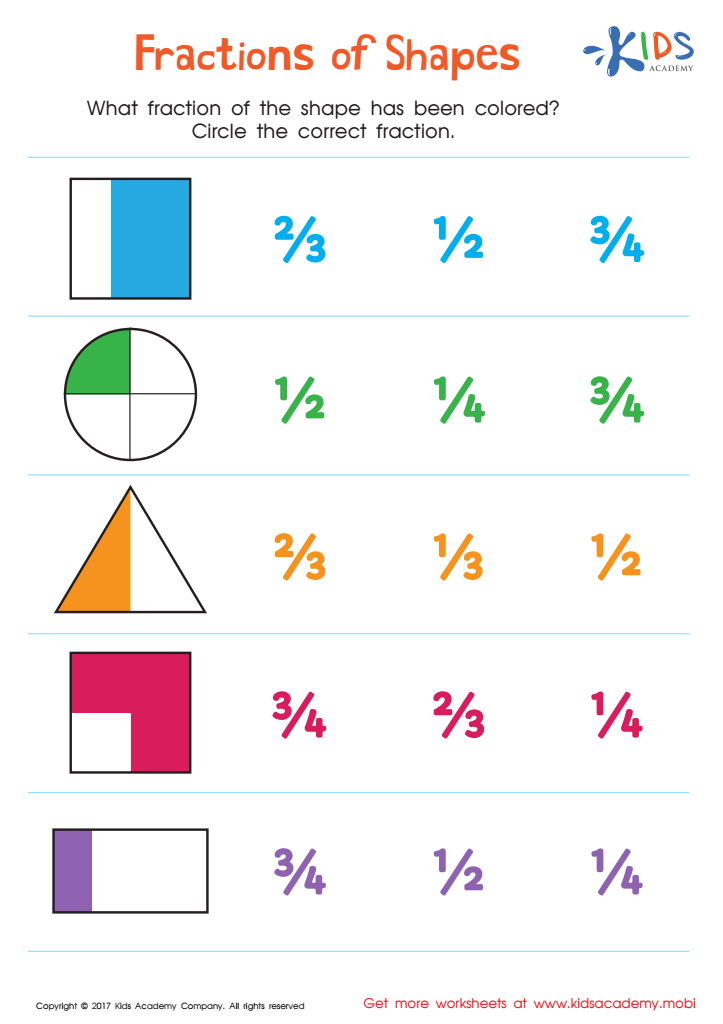
Fractions of Shapes: Math Concept Worksheet
Fractions can be tricky, but with pictures to illustrate them, they become much easier to understand. Our fractions of shapes worksheet is a great way to help children visualize fractions and gain a better understanding of them.
Fractions of Shapes: Math Concept Worksheet
Worksheet
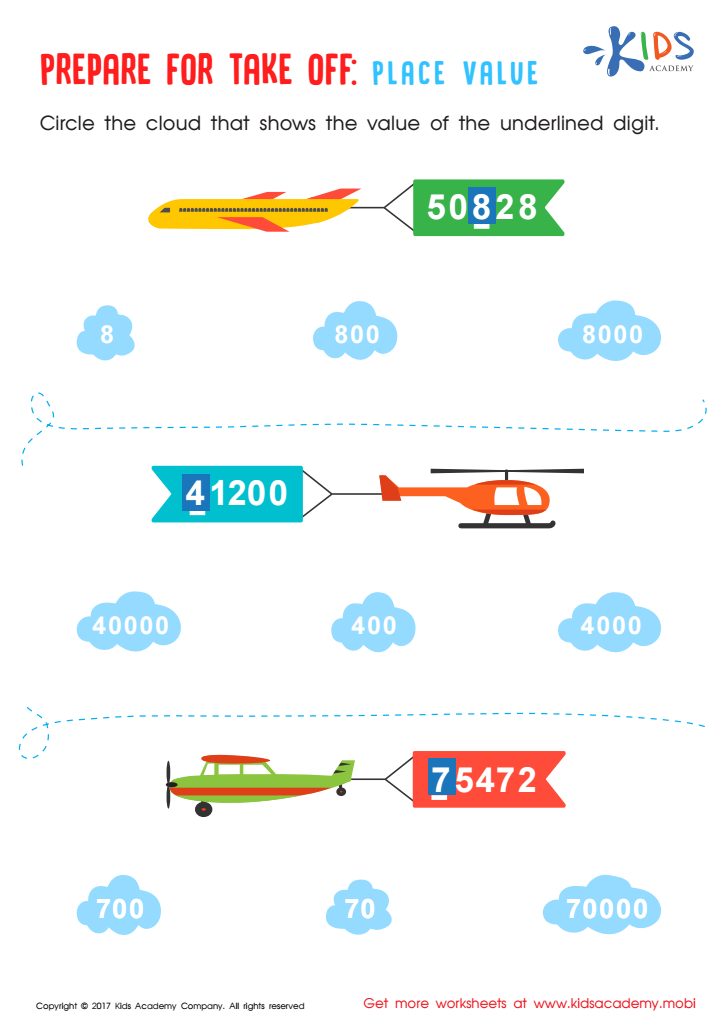
Free Place Value Worksheet for 3rd Grade
Take place value to new heights with this free 3rd grade worksheet! Your child will use large numbers in the tens of thousands and identify the place value of the underlined digit. Explore sky-high numbers and soar in place value skills!
Free Place Value Worksheet for 3rd Grade
Worksheet
Join Kids Academy for Free
Who is primarily going to use this learning content?








Improving mathematical skills in children aged 7-8 is crucial for several reasons. At this age, children are transitioning from concrete understanding of numbers to more abstract concepts, making it a foundational period for future learning. Mastering basic math skills—addition, subtraction, and the understanding of place value—lays the groundwork for more complex topics introduced in later grades, such as multiplication and division.
Moreover, strong mathematical skills foster critical thinking, problem-solving, and analytical abilities. These skills are not only essential in academic environments but also in daily life, where decision-making often relies on numerical understanding. As children develop confidence in math, it can boost their overall self-esteem and willingness to tackle challenging subjects.
Additionally, at this age, children's interest and attitudes towards math can be formed significantly—positive experiences with math can encourage lifelong appreciation and proficiency. For parents and teachers, prioritizing math education can translate into improved performance in school, better preparation for standardized tests, and greater opportunities for future academic success. Engaging young learners with fun and meaningful math activities can transform their perception of the subject, ensuring they grow into capable, confident individuals ready to confront the challenges of higher education and beyond.








