Discover engaging Problem-Solving Practice Math Worksheets designed specifically for children aged 7-8. Our worksheets help young learners develop critical thinking skills and enhance their math proficiency in a fun and interactive way. Each worksheet is filled with age-appropriate problems that challenge students to apply their knowledge in real-world scenarios, fostering a love for math as they learn to think independently. Perfect for classroom use or supplementing at-home learning, our resources aim to build confidence and problem-solving skills in young mathematicians. Start your child’s math journey today and watch them excel with our thoughtfully crafted worksheets!
Check out this FREE Trial Lesson on Math for age 7-8!

Standard Addition

Favorites
With answer key
Interactive
  • 7-8
  • Problem-solving practice
  • Math
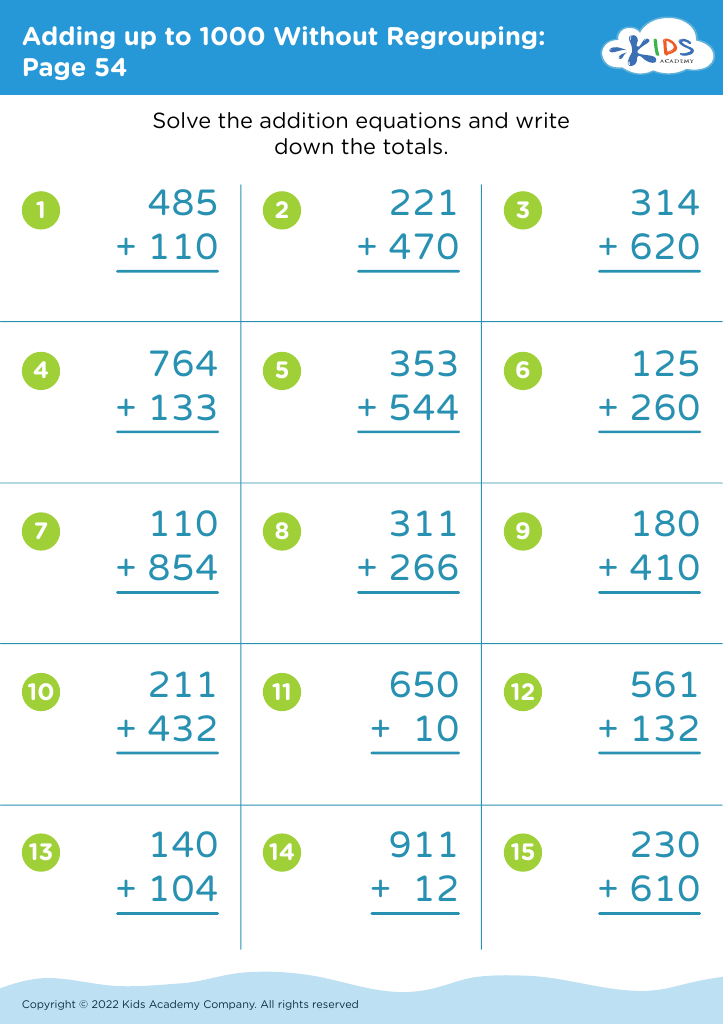
Adding up to 1000 Without Regrouping: Page 54
Worksheet
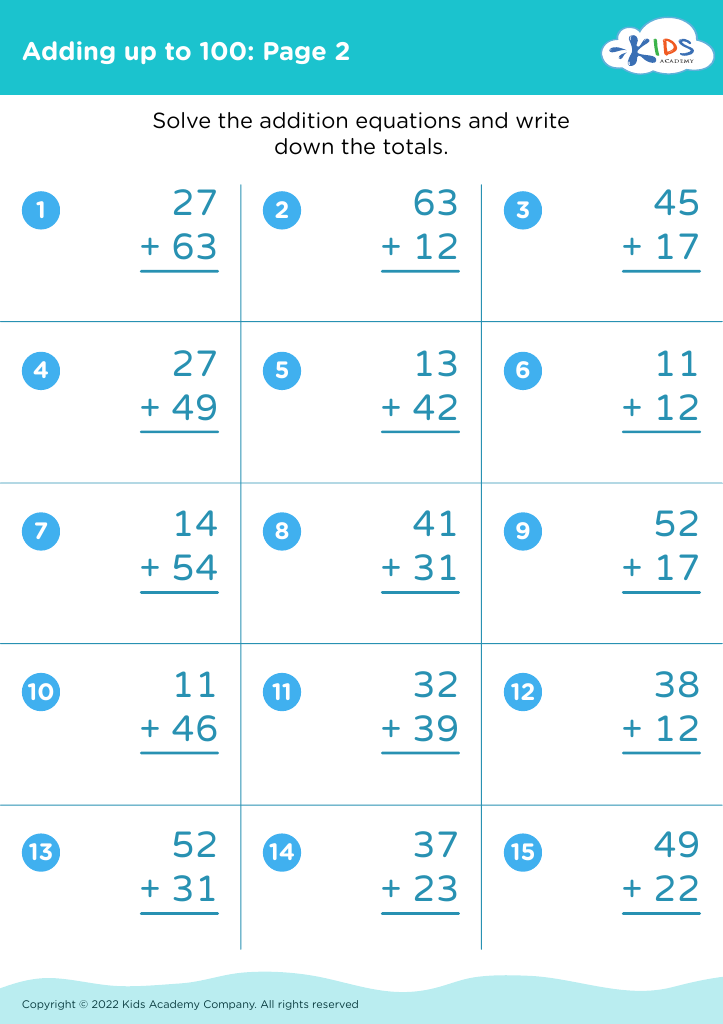
Adding up to 100: Page 2

Adding up to 100: Page 2

Adding up to 100: Page 2
Worksheet
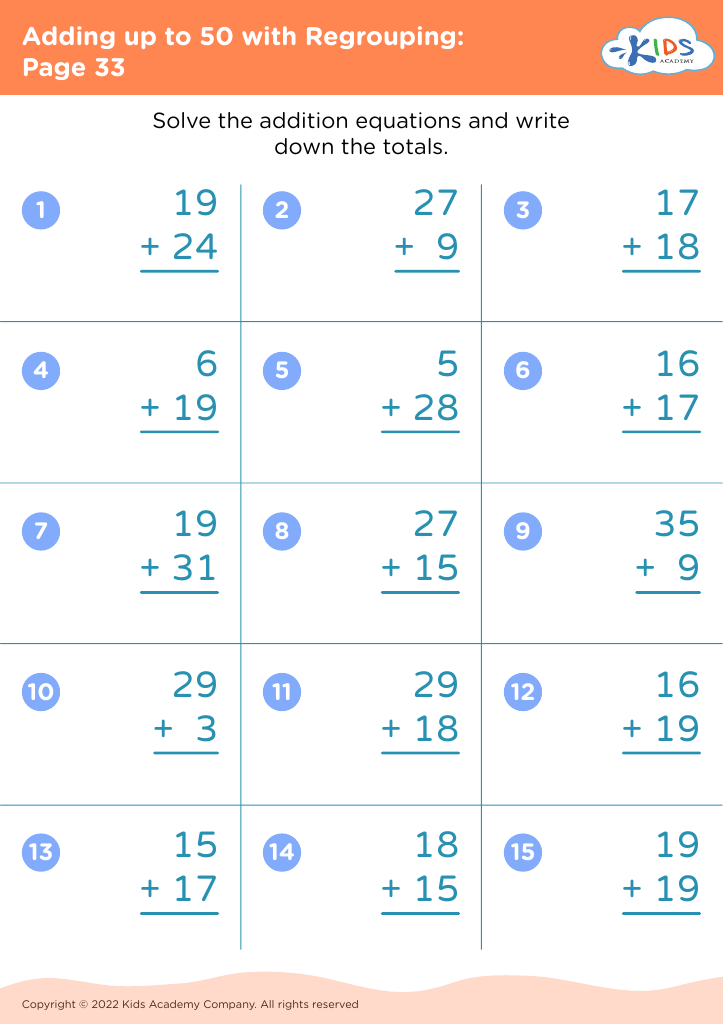
Adding up to 50 with Regrouping: Page 33
Worksheet
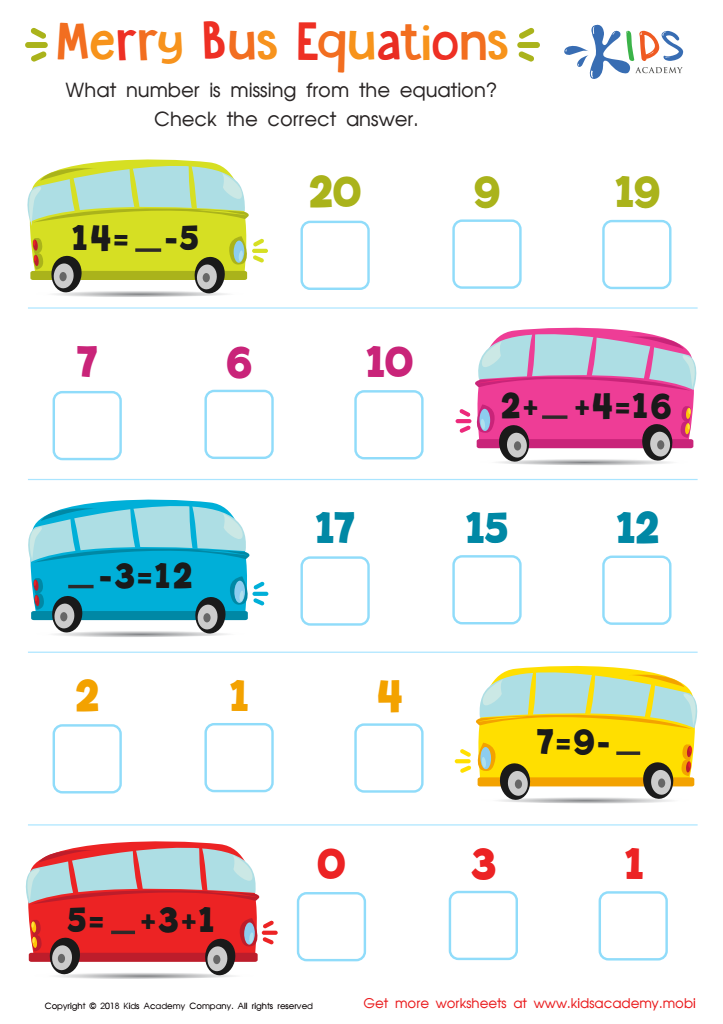
Merry Bus Equations Worksheet

Merry Bus Equations Worksheet

Help your child master elementary math with this fun worksheet! Featuring colorful buses and a variety of addition and subtraction equations, some with 3-digit numbers, it encourages kids to find the missing number and choose the correct answer. Give them the practice they need for success!
Merry Bus Equations Worksheet
Worksheet
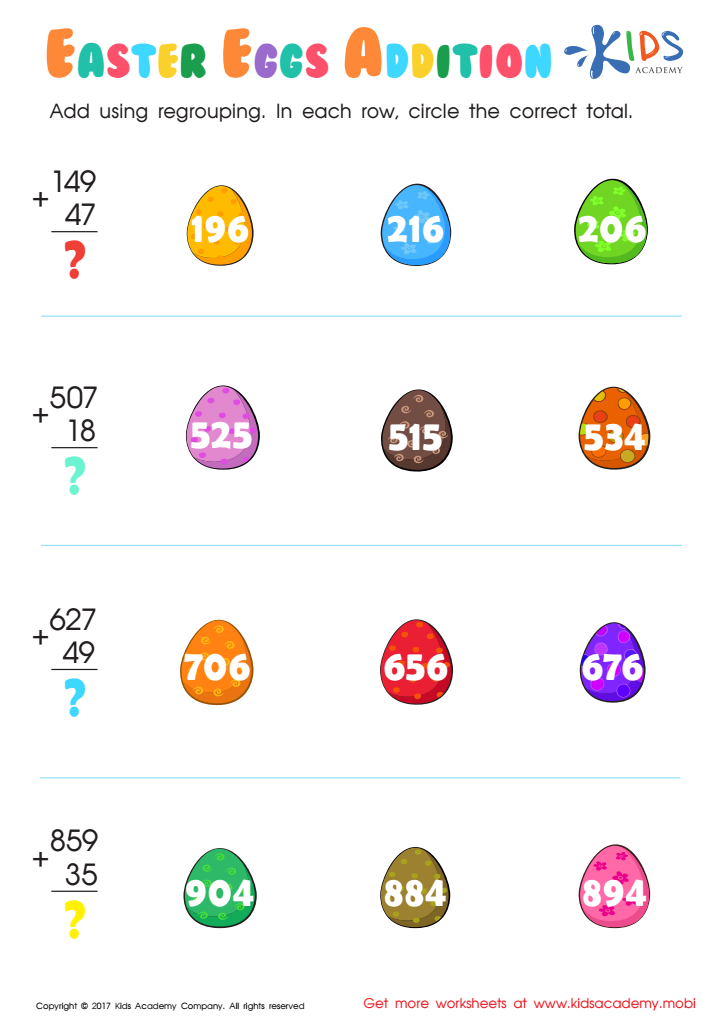
Addition with regrouping worksheet

Addition with Regrouping Worksheet

Try this fun holiday-themed addition with regrouping worksheet! Kids can practice adding while regrouping using bright, colorful holiday images. It's a great way to make math exciting, and keep their interest piqued!
Addition with Regrouping Worksheet
Worksheet
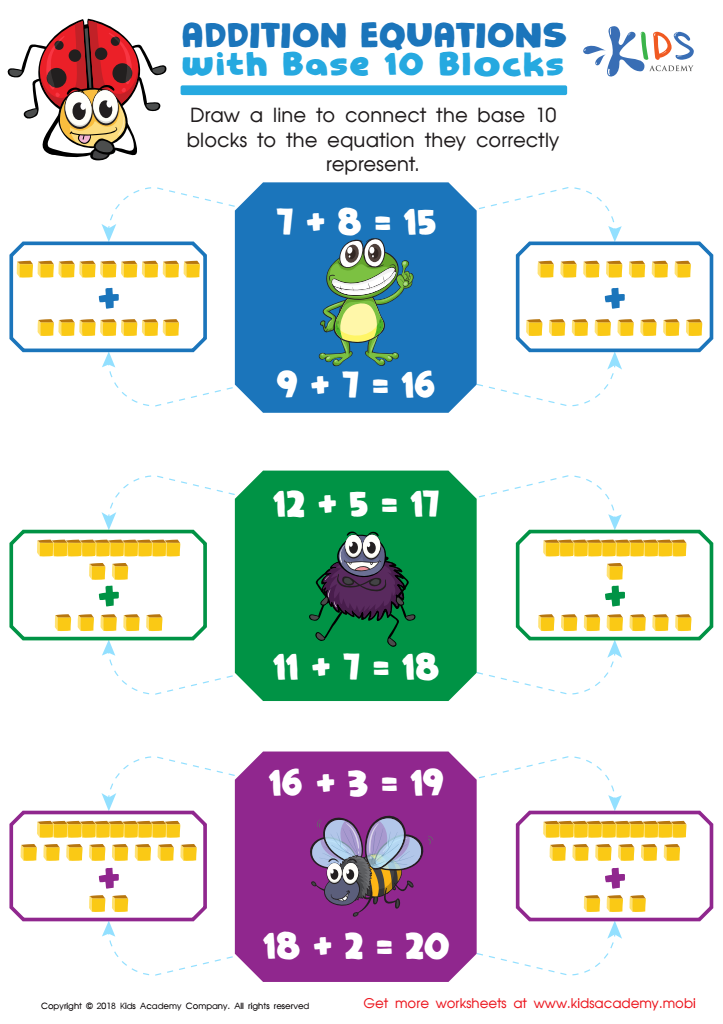
Addition Equations With Base 10 Blocks Worksheet

Addition Equations With Base 10 Blocks Worksheet

If your students are struggling with base 10 addition, this worksheet is here to help. Guide them with connecting the blocks to the equation with a line. It's a fun and colourful way to encourage learning.
Addition Equations With Base 10 Blocks Worksheet
Worksheet
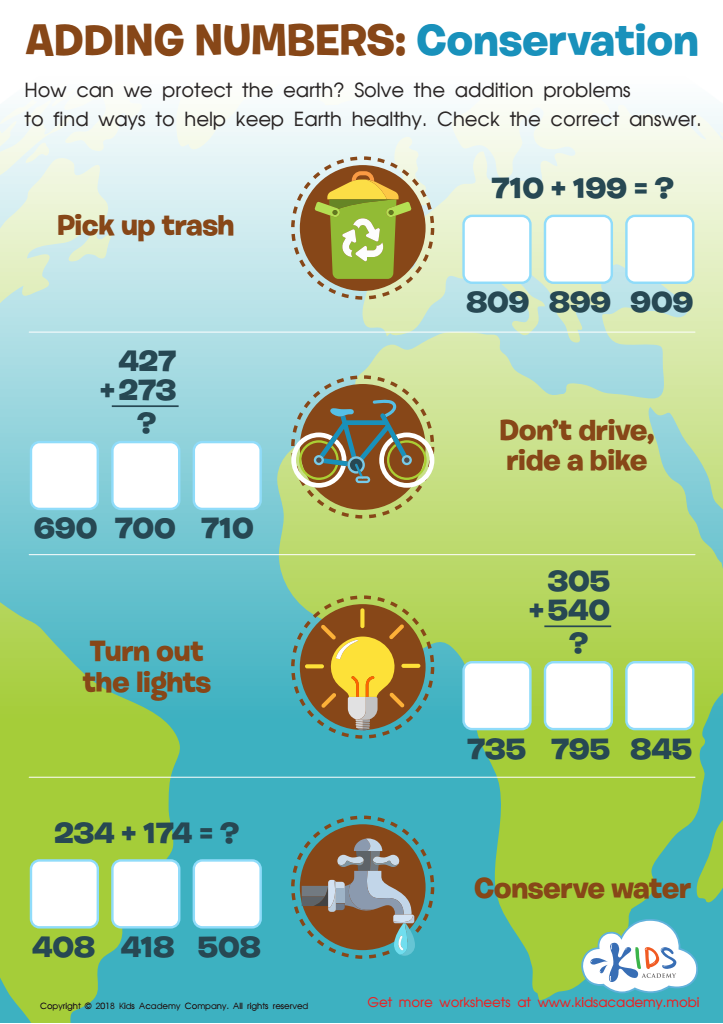
Adding Numbers: Conservation Worksheet
Adding Numbers: Conservation Worksheet
We all live on the Earth, which provides us with the vital necessities for survival. Unfortunately, we too often take advantage of this, causing pollution, water wastage and global warming. Help teach your kids how we can protect our planet - ask them to come up with good ideas and work together to find solutions. Challenge them to solve the subtraction problems to see what they can do to help keep the Earth healthy.
Adding Numbers: Conservation Worksheet
Worksheet
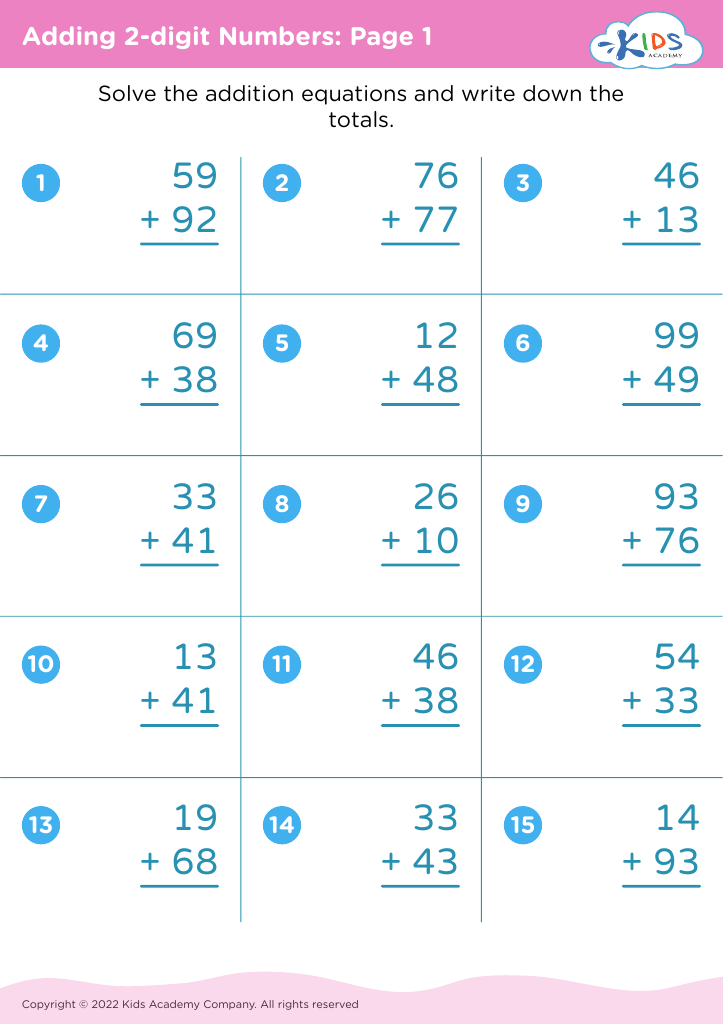
Adding 2-digit Numbers: Page 1

Adding 2-digit Numbers: Page 1

Adding 2-digit Numbers: Page 1
Worksheet
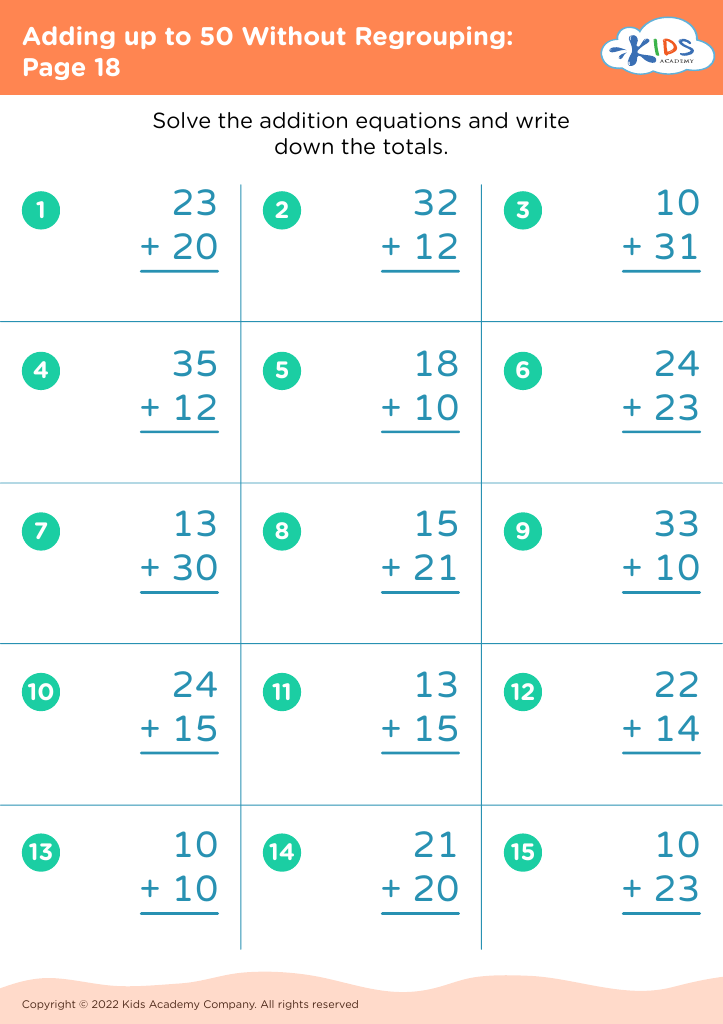
Adding up to 50 Without Regrouping: Page 18
Worksheet
What Is a Line Plot? Worksheet
What Is a Line Plot? Worksheet

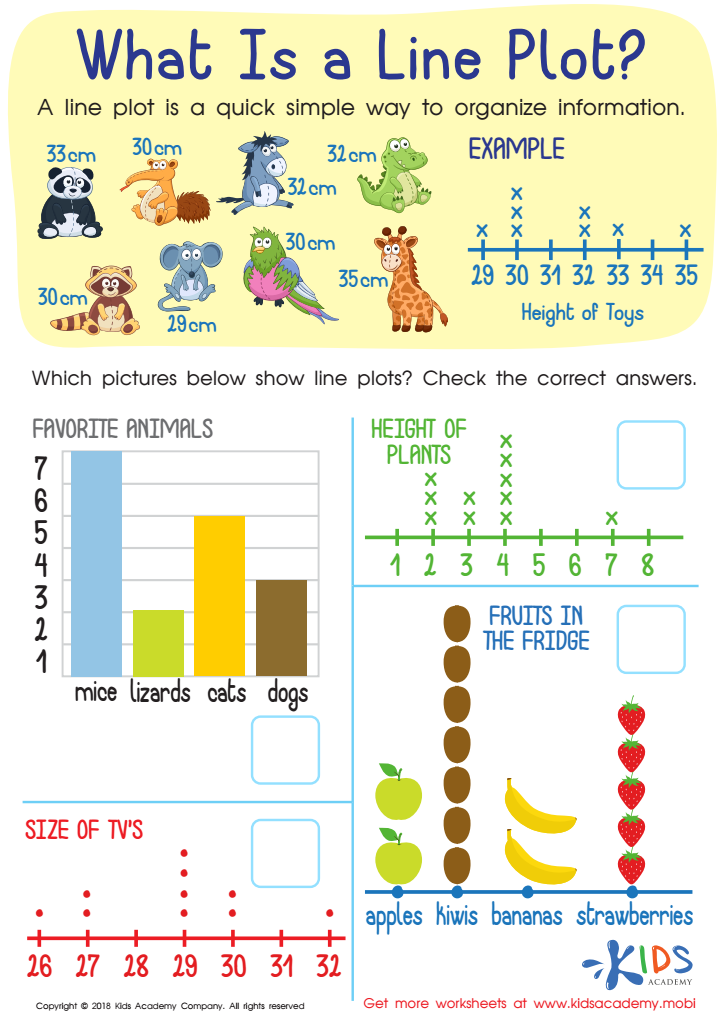
A line plot is an ideal method to organize data. For example, if your child needs to arrange objects for easy recognition, draw a line plot. This worksheet can help teach the skill. Kids must identify correct pictures that display line plots.
What Is a Line Plot? Worksheet
Worksheet
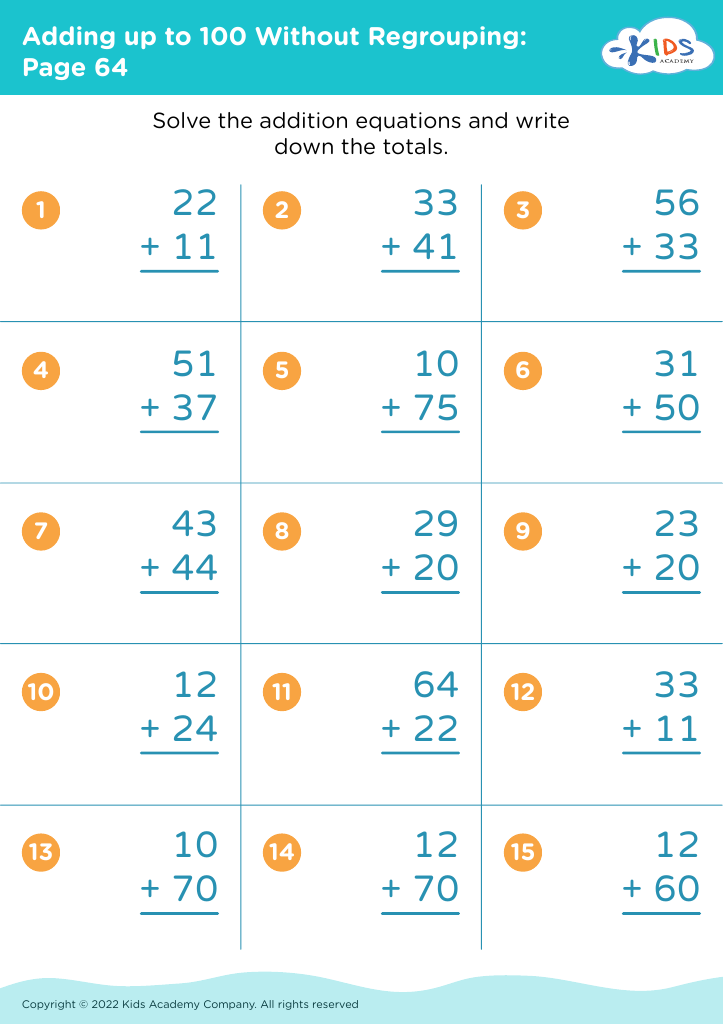
Adding up to 100 Without Regrouping: Page 64
Worksheet
Pizza Fraction Printable

Fractions: Pizza Printable

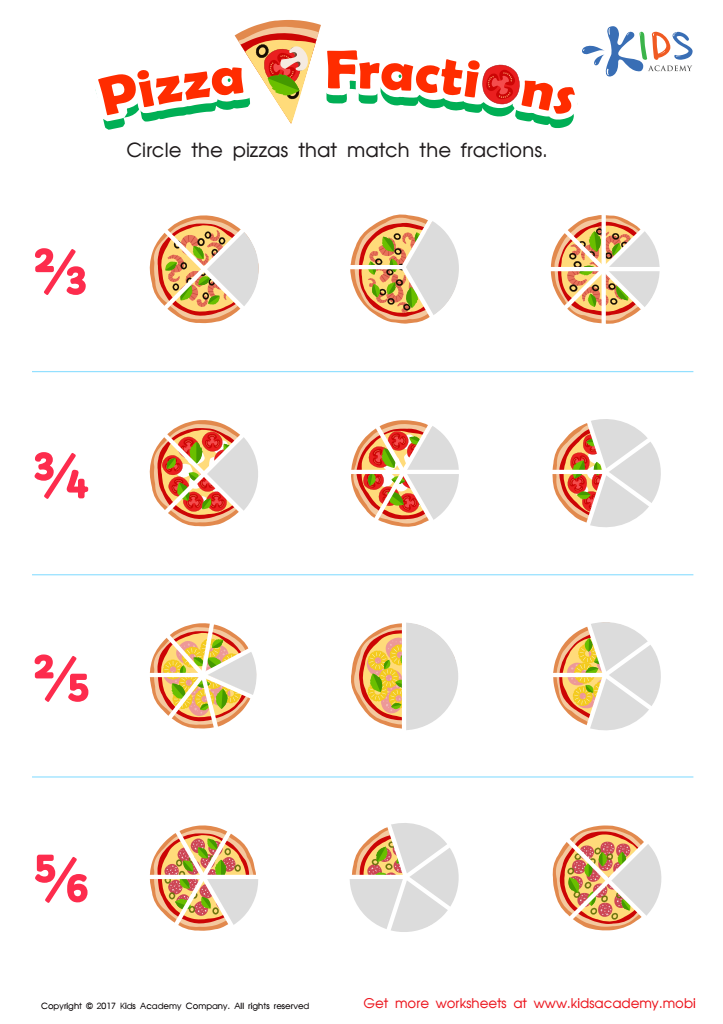
Fractions can be tricky for kids, but this pizza fractions printable can help! Kids can understand fractions by seeing them, as they use one of their favorite foods. It helps them grasp the concept and gain a deeper understanding of what fractions represent. Extend their learning by quizzing them when you order pizza next time.
Fractions: Pizza Printable
Worksheet
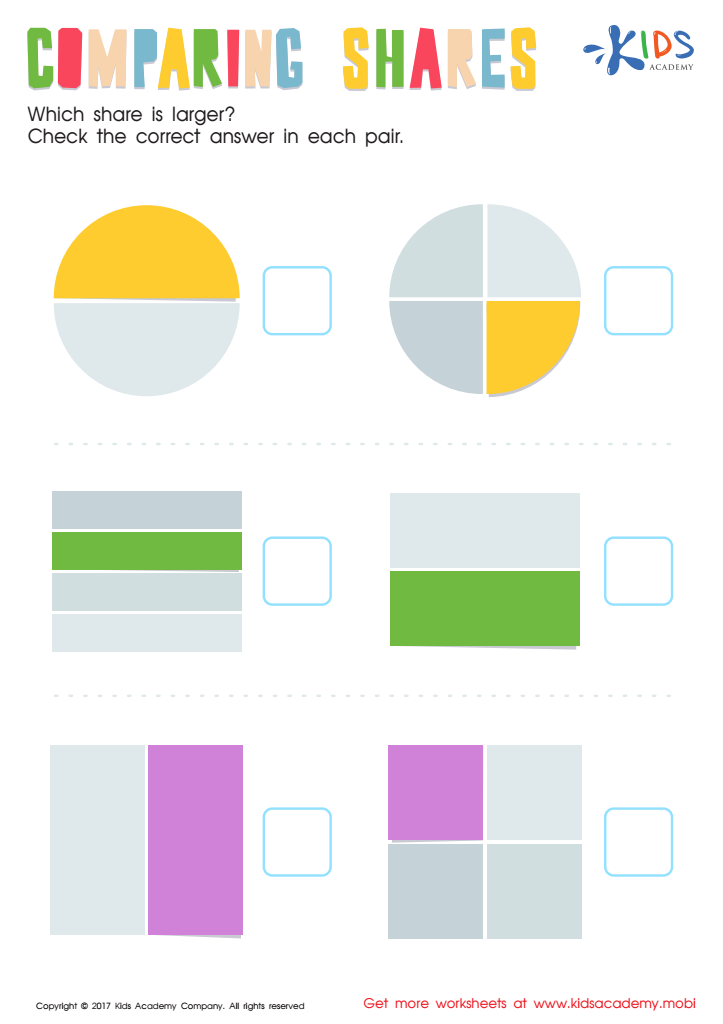
Comparing Shares Worksheet


Comparing Shares Worksheet

Can your students identify and draw shapes correctly? If so, this exercise may be too easy. For those who are still learning, extra help may be needed. The worksheet requires students to select which shape is larger in each pair; circles and squares are included.
Comparing Shares Worksheet
Worksheet
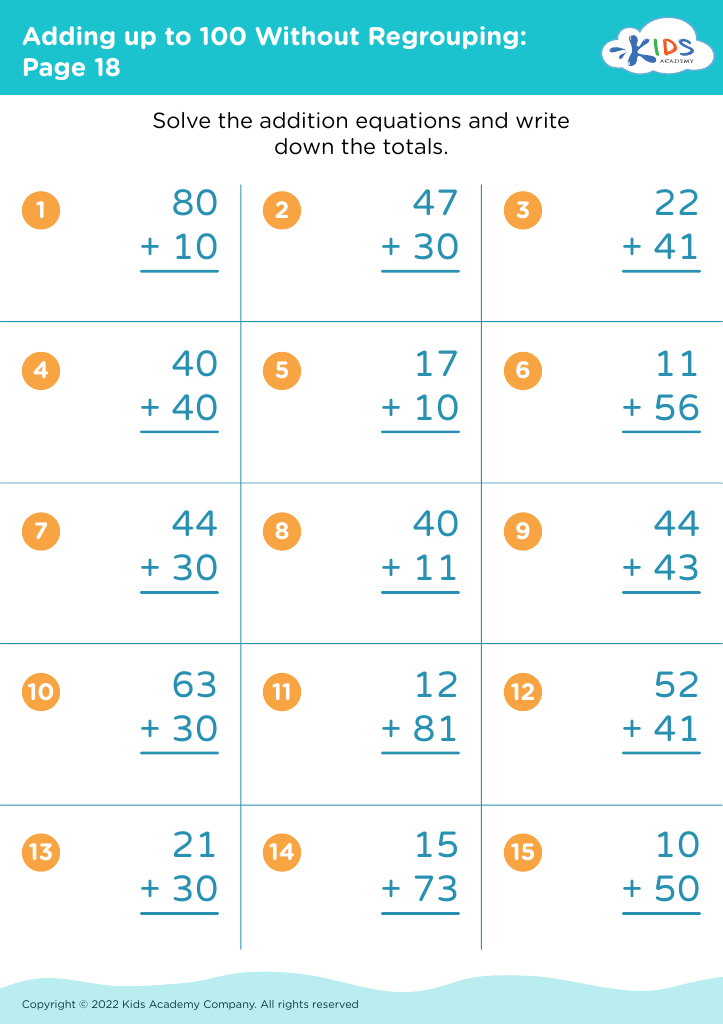
Adding up to 100 Without Regrouping: Page 18
Worksheet
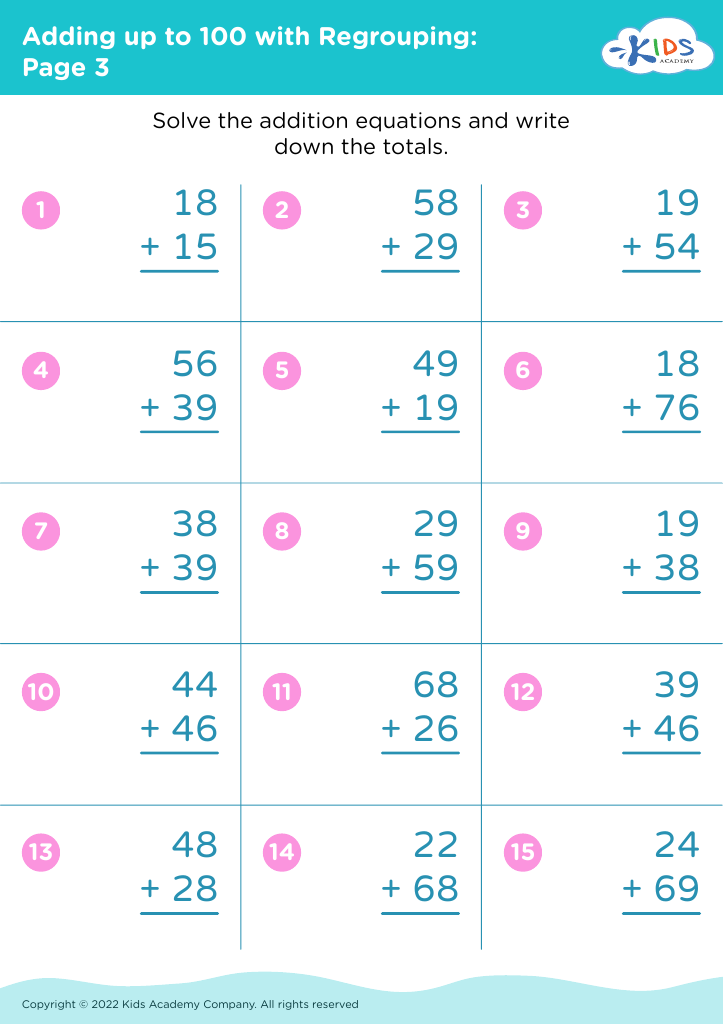
Adding up to 100 with Regrouping: Page 3
Worksheet
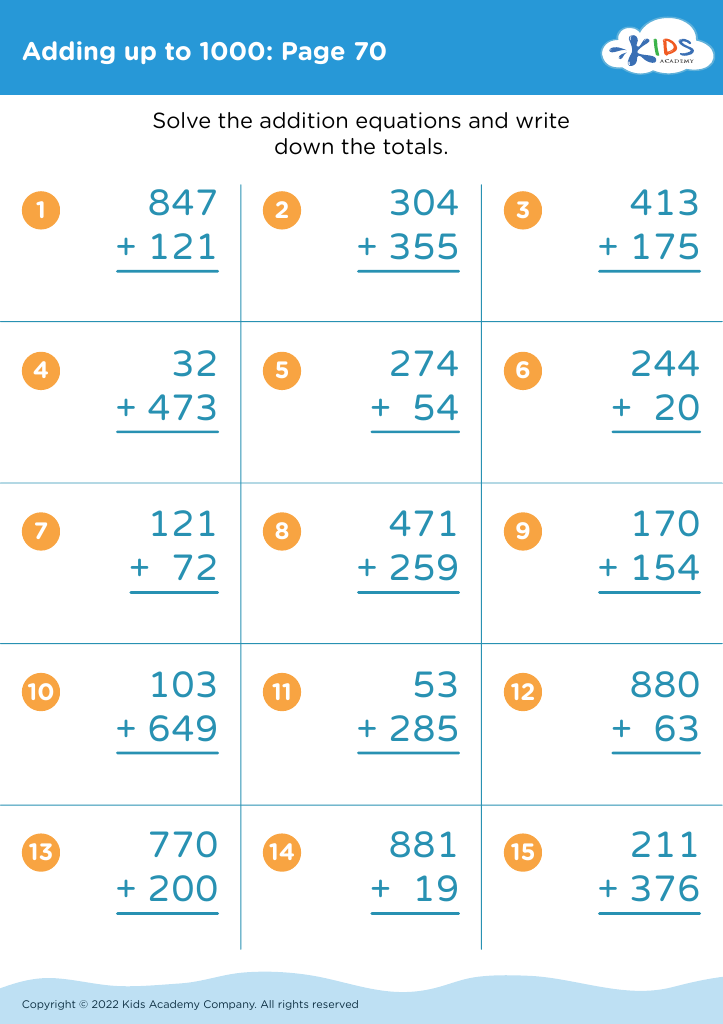
Adding up to 1000: Page 70

Adding up to 1000: Page 70

Adding up to 1000: Page 70
Worksheet
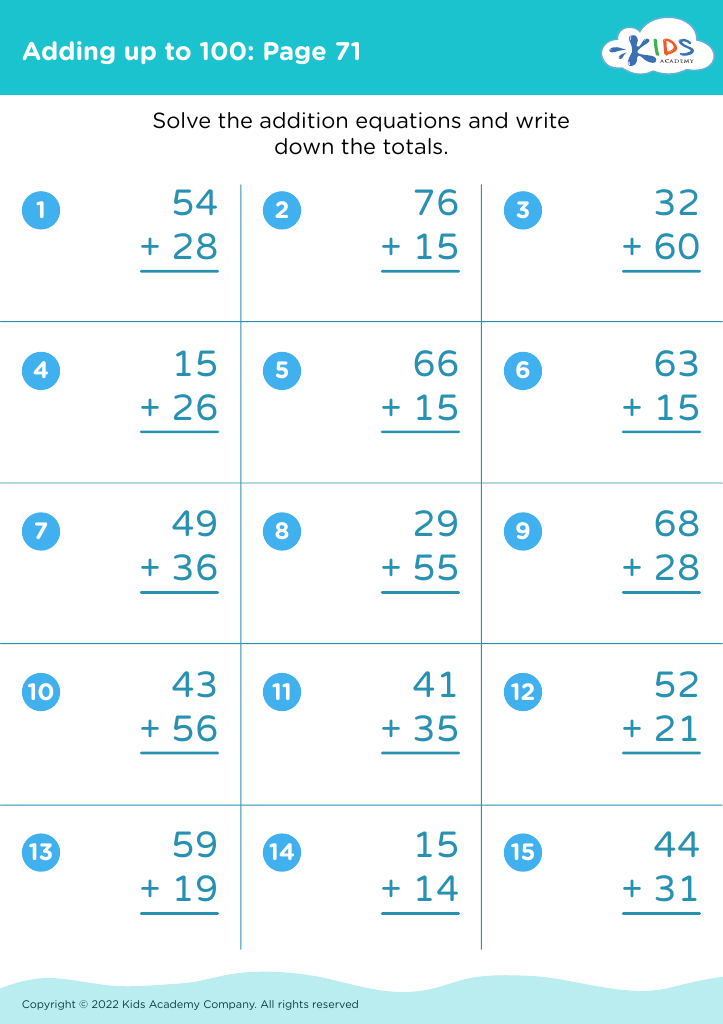
Adding up to 100: Page 71

Adding up to 100: Page 71

Adding up to 100: Page 71
Worksheet
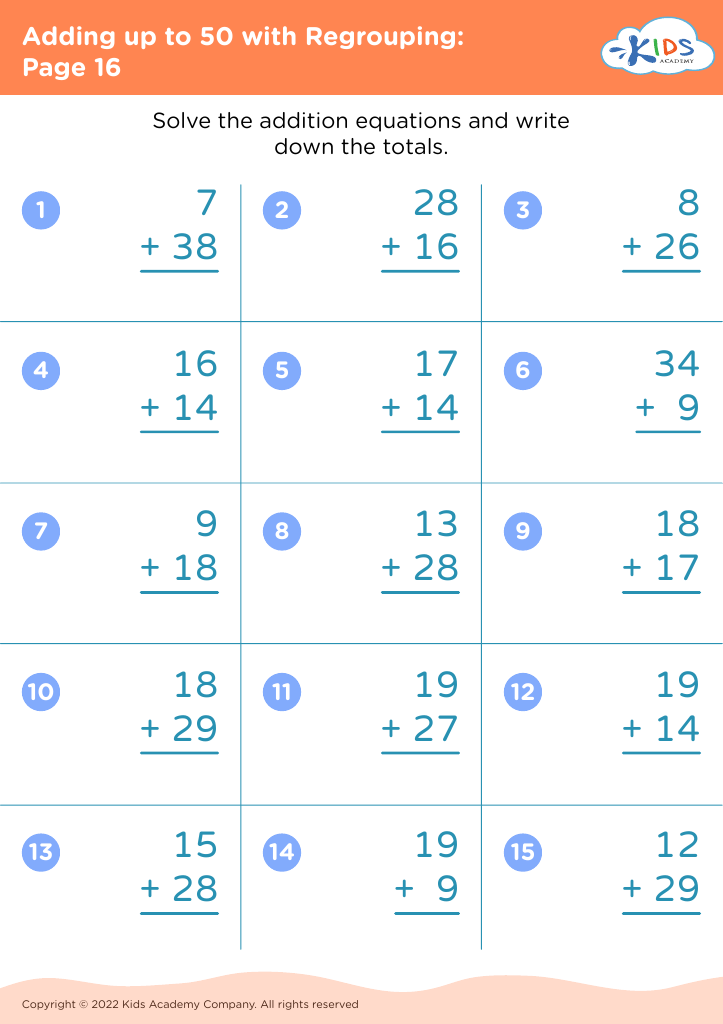
Adding up to 50 with Regrouping: Page 16
Worksheet
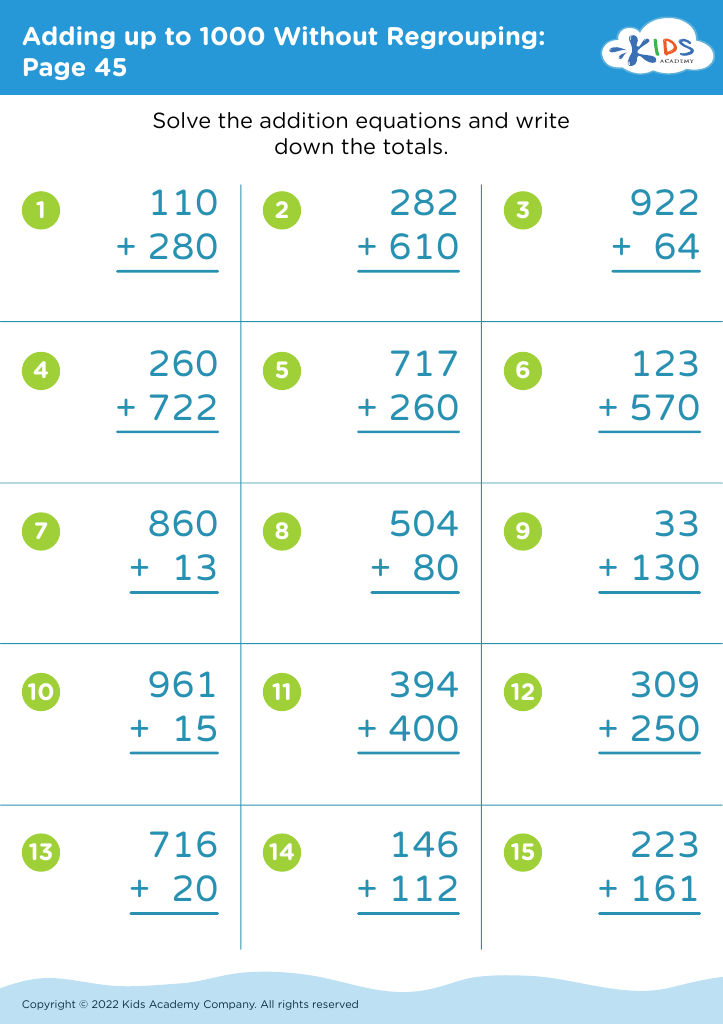
Adding up to 1000 Without Regrouping: Page 45
Worksheet


Parents and teachers should prioritize problem-solving practice in math for children aged 7-8, as this foundational skill fosters critical thinking and encourages resilience. At this age, children are developing their cognitive abilities and learning to approach challenges systematically. Engaging in problem-solving helps them understand mathematical concepts beyond rote memorization, enabling them to apply their knowledge in real-life situations.

Additionally, problem-solving nurtures creativity and innovation. As children tackle diverse challenges, they learn to explore multiple strategies, evaluate options, and arrive at solutions. This process builds confidence, allowing them to face difficulties with a positive mindset. Furthermore, strong problem-solving skills can enhance communication and collaboration, as children often work in pairs or groups to discuss their thought processes.

By involving parents and teachers in this critical stage of learning, they can provide support and encouragement, reinforcing the idea that mistakes are opportunities for growth. As math becomes increasingly essential in a technology-driven world, developing these skills early sets the stage for better performance in higher education and future careers. Ultimately, cultivating problem-solving mastery at a young age is vital for fostering independent thinkers who can navigate complex challenges with ease and adaptability.