
Understanding fractions Math Worksheets for Ages 7-8
208 filtered results
Difficulty Level
Grade
Age
-
From - To
Subject
Activity
Standards
Explore our engaging "Understanding Fractions" math worksheets, specially designed for children aged 7-8! These interactive resources help young learners grasp the concept of fractions through fun exercises, visual aids, and real-world examples. Perfect for developing essential math skills, our worksheets cover identifying, comparing, and adding fractions, ensuring kids build a strong foundation in this critical area of mathematics. Parents and educators will appreciate the clear instructions and vibrant illustrations that make learning enjoyable. Whether for home practice or classroom use, these worksheets are ideal for fostering a love of math and enhancing confidence in young learners. Get started today!
Favorites
With answer key
Interactive
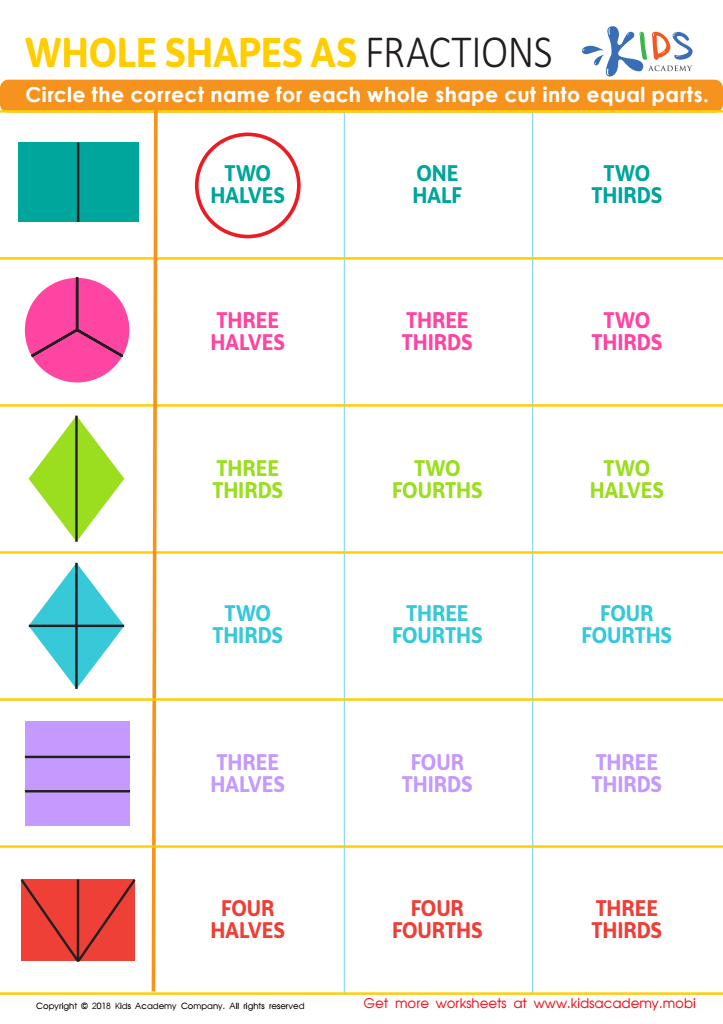
Whole Shapes as Fractions Worksheet
Introduce your child to fractions! After they can draw whole shapes, have them represent them as fractions using a simple worksheet. This will help improve their understanding of naming whole shapes cut into equal parts.
 Assign to My Students
Whole Shapes as Fractions Worksheet
Worksheet
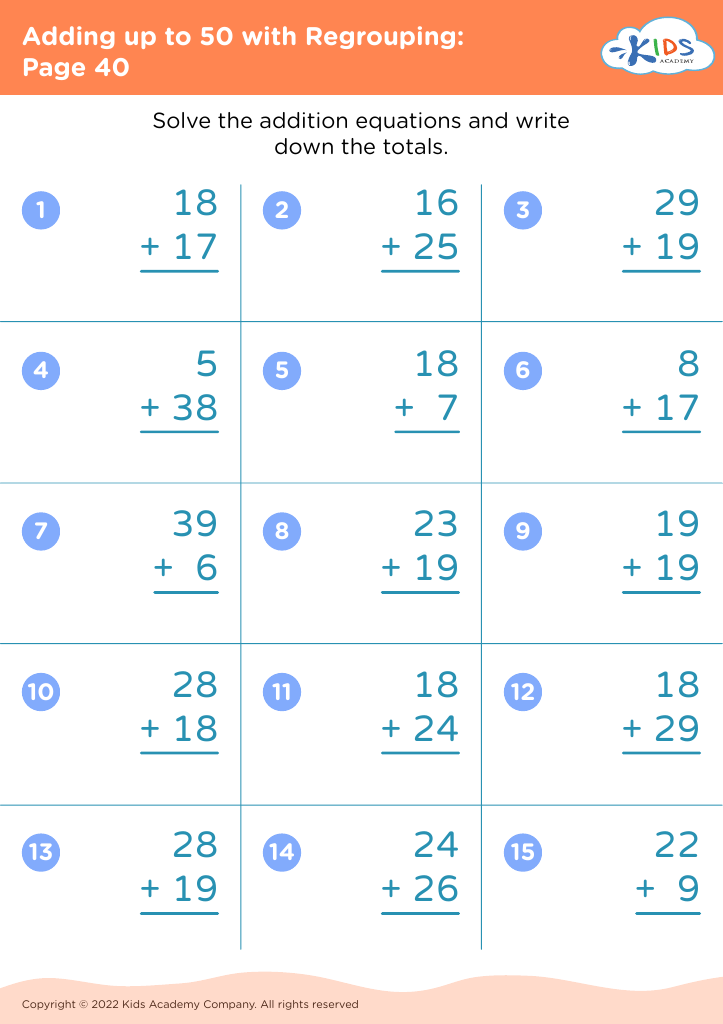
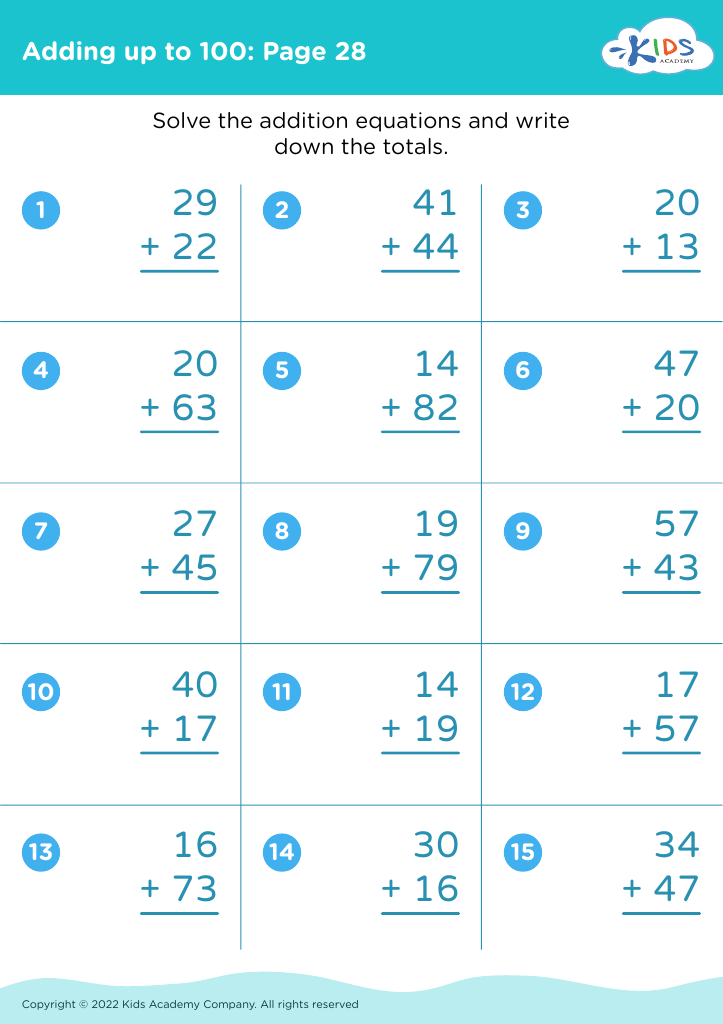
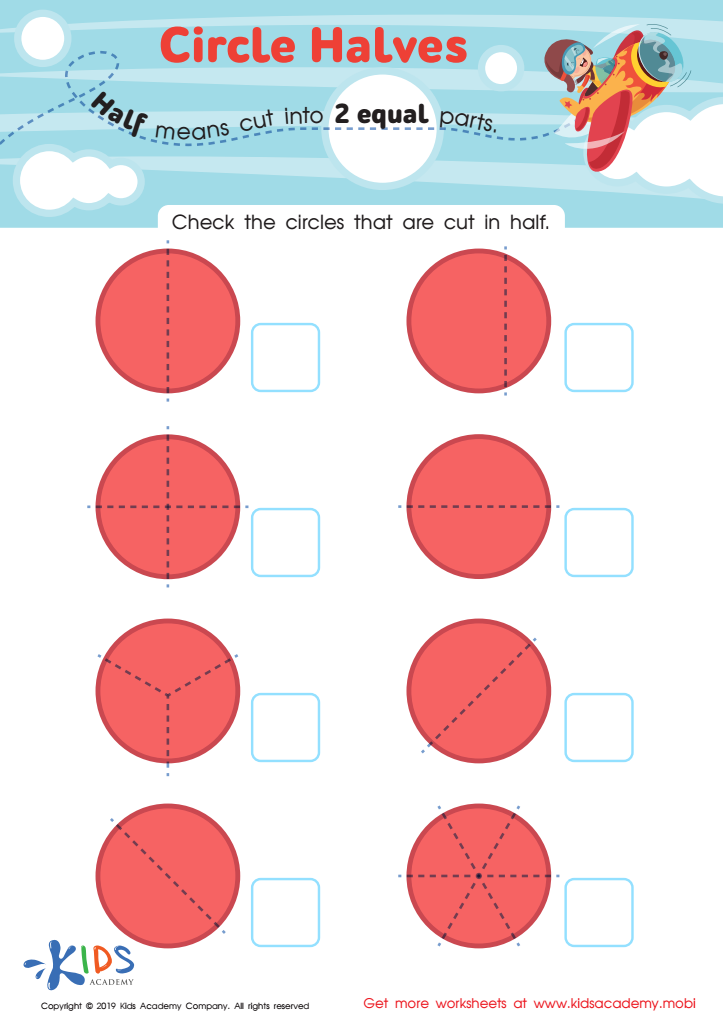
Circle Halves Worksheet
Remind your kindergartners that objects can be divided into halves, thirds and fourths. Now, look at this worksheet with your students and help them check the circles cut in half.
Circle Halves Worksheet
Worksheet
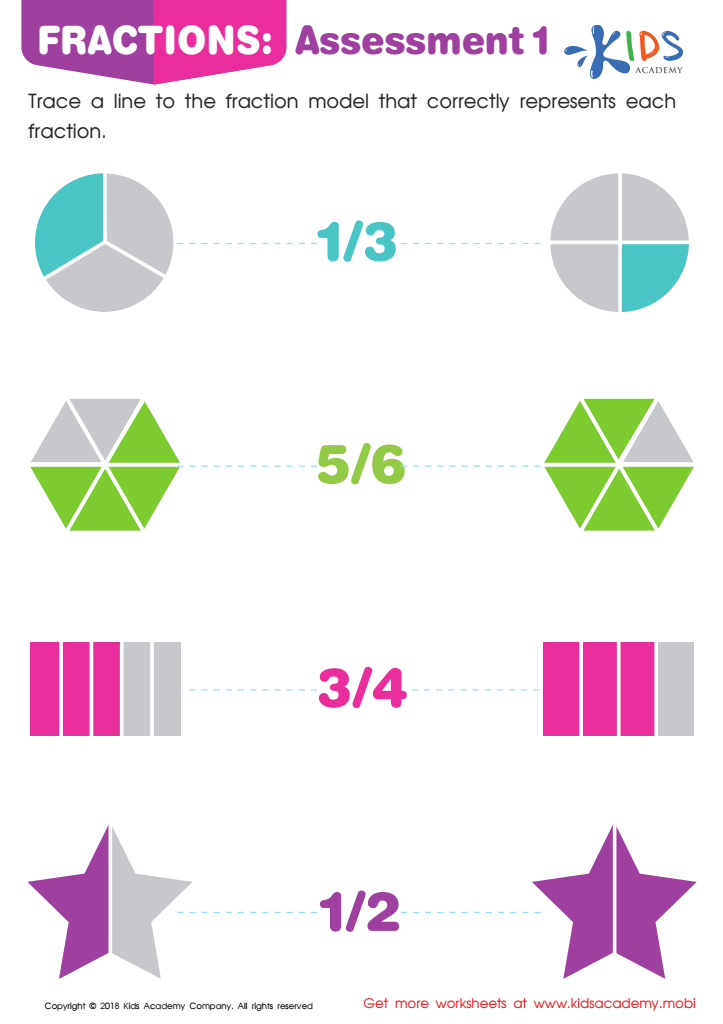
Fractions: Assessment 1 Worksheet
Master fractions easily with this worksheet! It has four sets of fraction models and fraction equations with two models each. Guide your kids to trace a line to the correct fraction model for each equation.
Fractions: Assessment 1 Worksheet
Worksheet
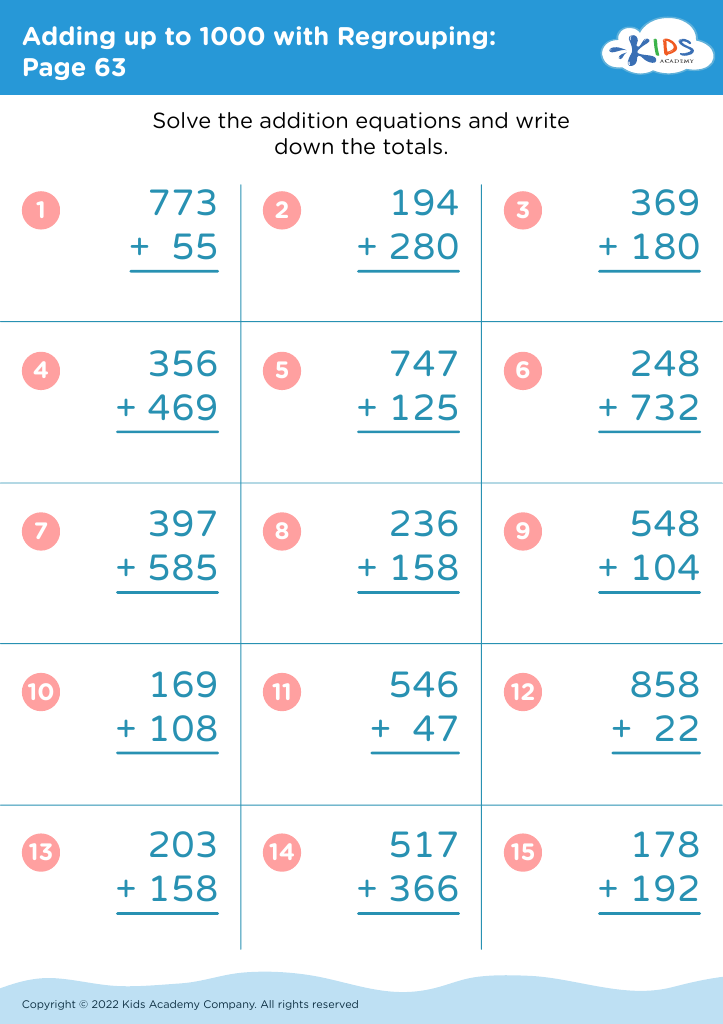
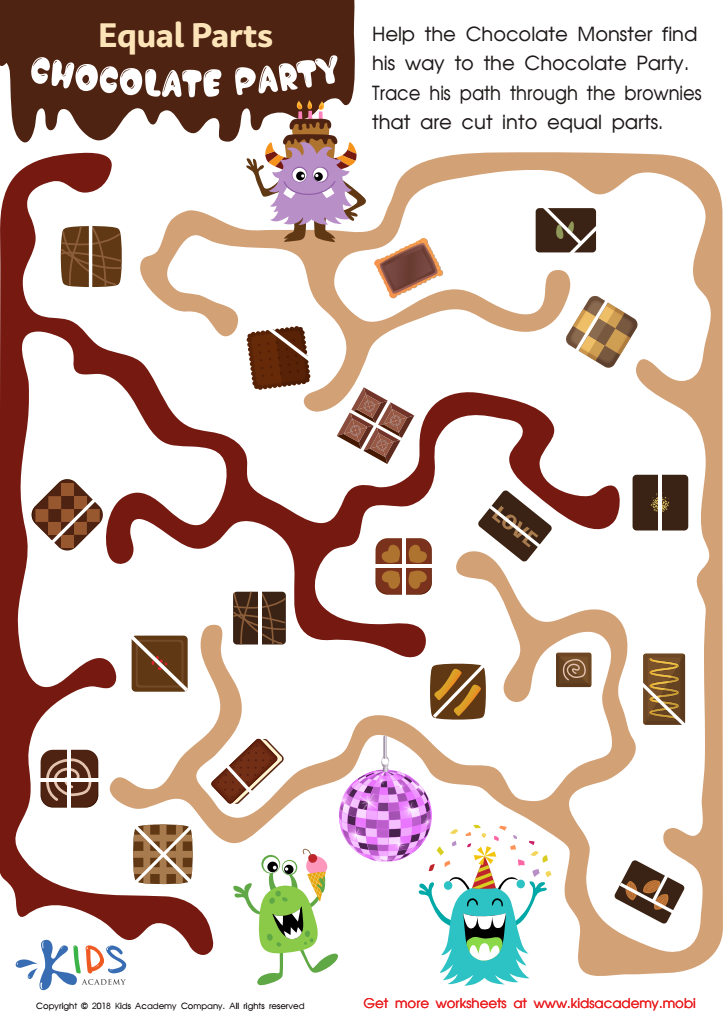
Equal Parts: Chocolate Party Worksheet
Mention "chocolate" and watch your kids' excitement soar! Learning can go hand-in-hand with that sugary treat. This worksheet helps kids guide the Chocolate Monster to the Chocolate Party, following a trail of brownie halves. It's an easy, tasty way to have fun!
Equal Parts: Chocolate Party Worksheet
Worksheet
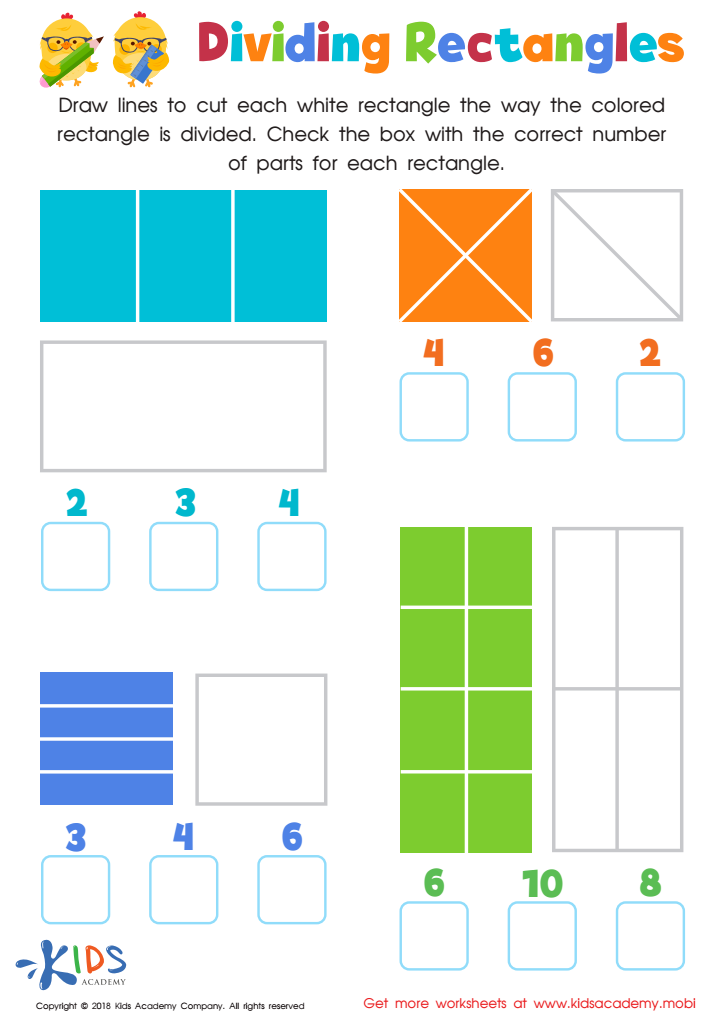
Dividing Rectangles Worksheet
Ask your child to draw lines to divide the white rectangles like the colored ones. Then, have them count the parts in each and choose the correct number. This worksheet will help them practice counting and dividing.
Dividing Rectangles Worksheet
Worksheet
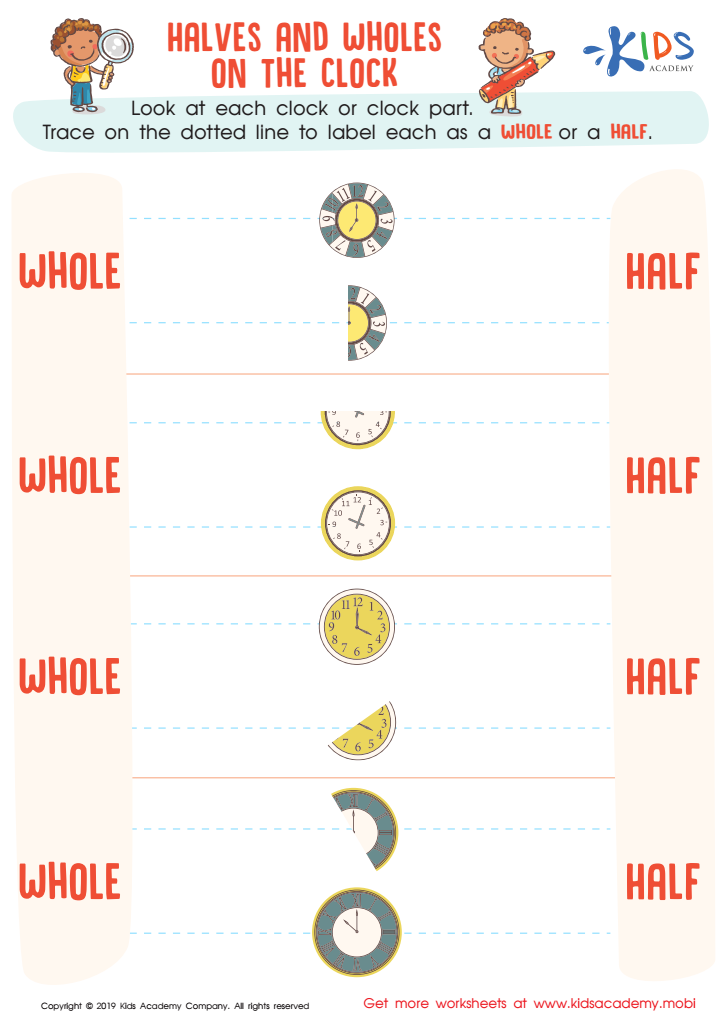
Halves and Wholes on the Clock Worksheet
Ask your kids if they know the difference between a whole and a half. If not, explain it's when a whole is divided into two equal parts. Show them the worksheet with clocks and clock parts, and help them label each shape as a whole or a half by tracing on the dotted line.
Halves and Wholes on the Clock Worksheet
Worksheet
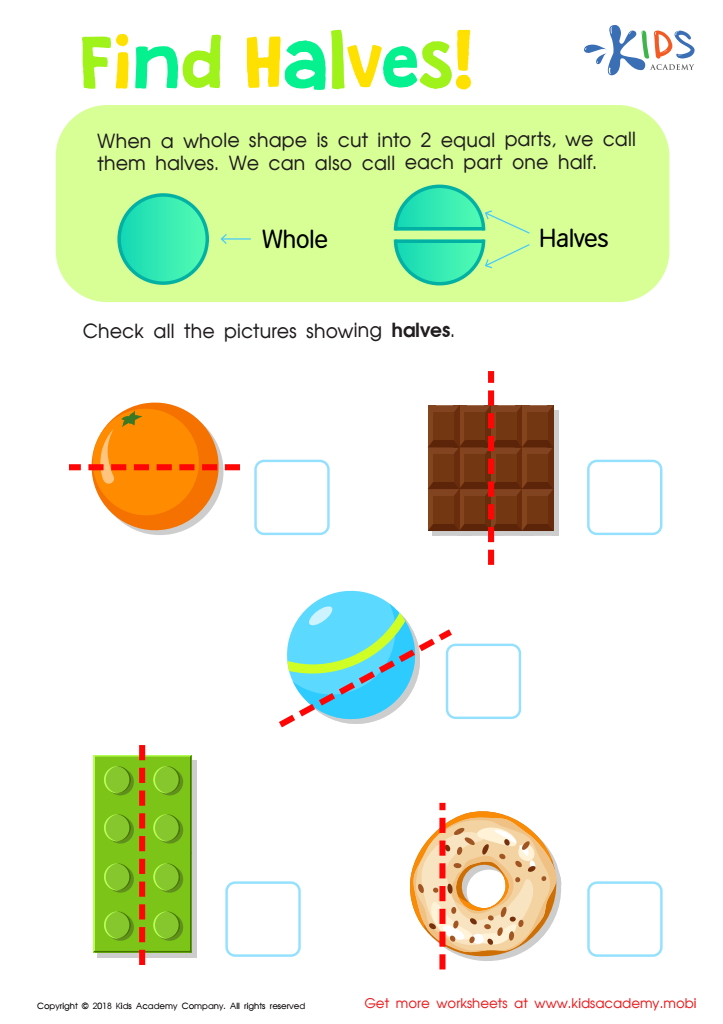
Find Halves Worksheet
If your child can tell you what two, three and four equal parts are called, give yourself a pat on the back! If not, this worksheet can help. Halves are two equal parts of a whole shape. Check the pictures in this printable pdf to help your child understand.
Find Halves Worksheet
Worksheet
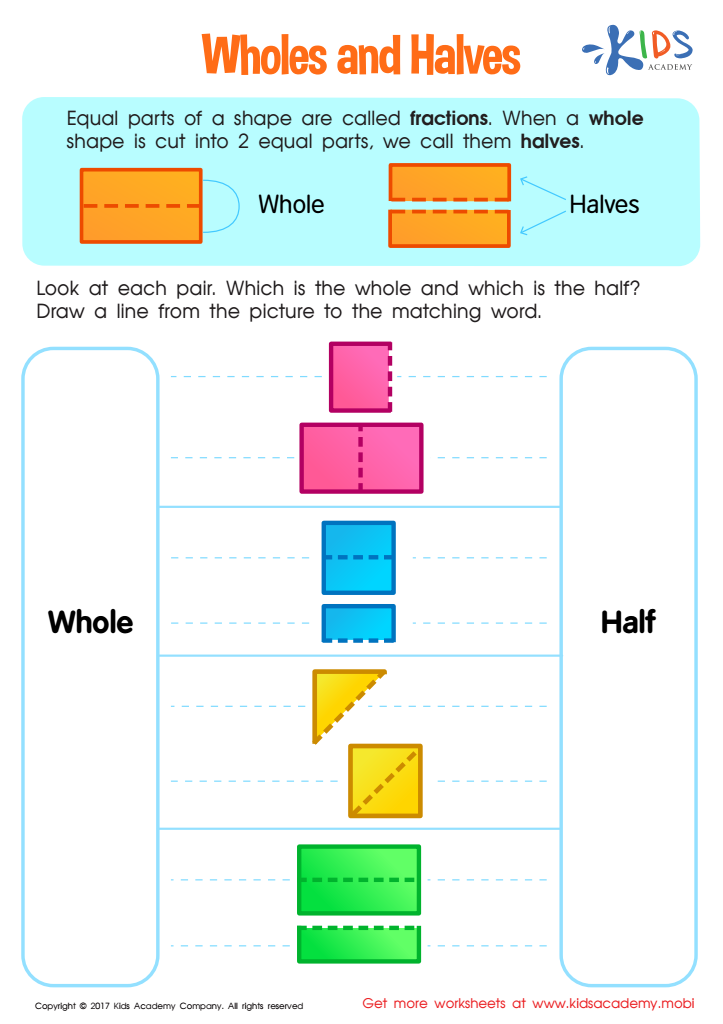
Wholes and Halves Worksheet
Students can feel overwhelmed with fractions. Help take the stress off by using a colorful worksheet to explain whole shapes and how to find halves. Ask them to identify the whole and point to the matching word for the half. A free printout can help guide them.
Wholes and Halves Worksheet
Worksheet
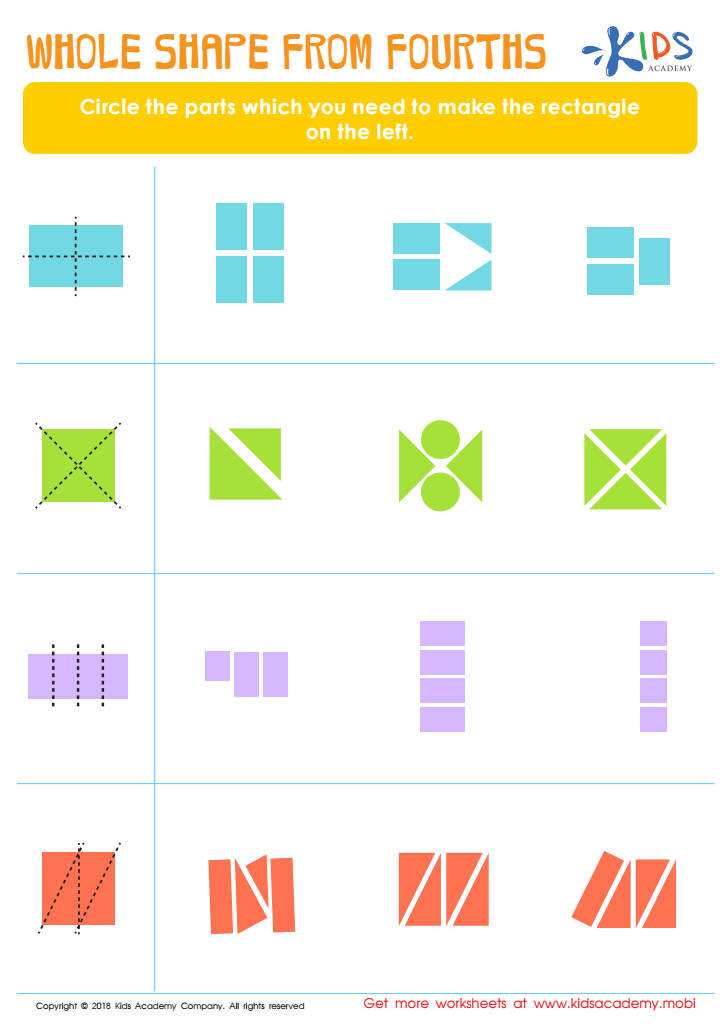
Whole Shape from Fourths Worksheet
Have your kids circle the shapes that'll form the rectangle on the left. It'll test their knowledge of shapes and ability to put them together to make a new one. Ask them to look at the parts on the right and circle the ones that'll form the rectangle.
Whole Shape from Fourths Worksheet
Worksheet
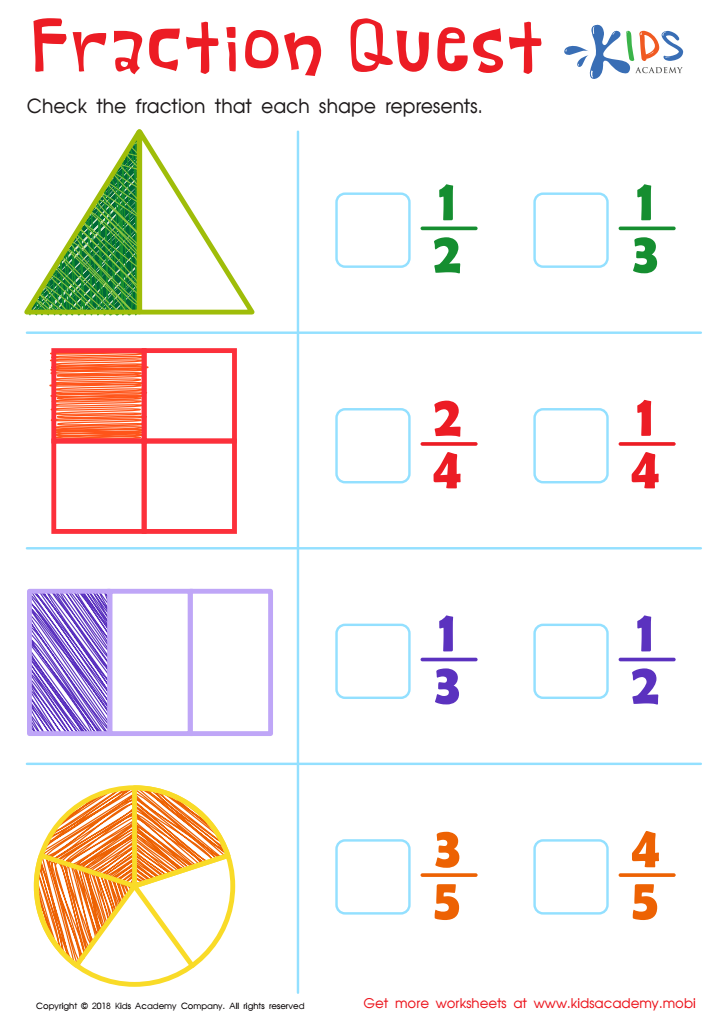
Fraction Quest Worksheet
This colorful and educative worksheet can help kids conquer their fractions struggles. Ask them to identify the four shapes, then the fractions they represent. They can then check the correct answers from the options given.
Fraction Quest Worksheet
Worksheet
Join Kids Academy for Free
Who is primarily going to use this learning content?


%20(1).jpg)
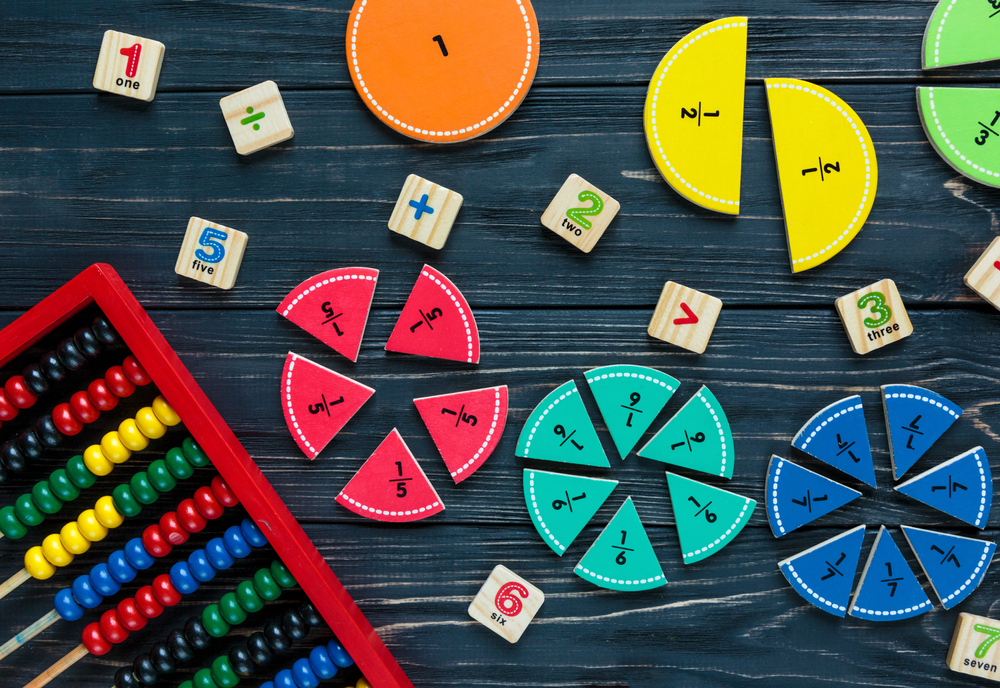



Understanding fractions is crucial for children ages 7-8 as it lays the foundation for their future mathematical learning and everyday problem-solving skills. At this age, children are transitioning from basic arithmetic to more complex concepts, and fractions offer a natural introduction to proportional reasoning. When children grasp fractions, they develop a deeper understanding of parts and wholes, which enhances their ability to comprehend percentages, ratios, and proportional relationships later on.
Furthermore, fractions are not just confined to math; they are prevalent in daily life. Cooking, measuring, and budgeting often involve fractional parts, and equipping children with these skills fosters confidence and independence in practical situations. When parents and teachers prioritize fraction education, they help children build logical thinking and analytical skills that are vital in multiple disciplines beyond mathematics.
Moreover, a solid foundation in fractions boosts performance in standardized testing and higher-level math, ensuring that students do not encounter significant barriers as they advance academically. Lastly, fostering enthusiasm for math through engaging fraction activities can spark a lifelong interest in learning. By emphasizing this critical area of study, parents and teachers play a pivotal role in nurturing not only academic success but also essential life skills in children.








