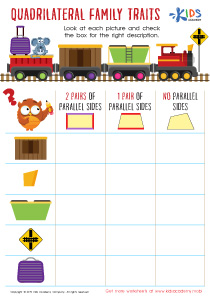
Shape Recognition Tracing Shapes Worksheets for Ages 7-8
5 filtered results
-
From - To
Enhance your child's geometric skills with our "Shape Recognition Tracing Shapes Worksheets for Ages 7-8." These engaging worksheets are designed to help young learners identify, trace, and understand various shapes. Perfect for sharpening math abilities, each worksheet combines fun and education, ensuring students grasp fundamental concepts while enjoying the process. Tailored for children aged 7-8, these printables offer a range of activities that promote fine motor skills, spatial awareness, and critical thinking. Ideal for classroom or at-home learning, our worksheets are an excellent resource for parents and educators aiming to boost their students' shape recognition proficiency.
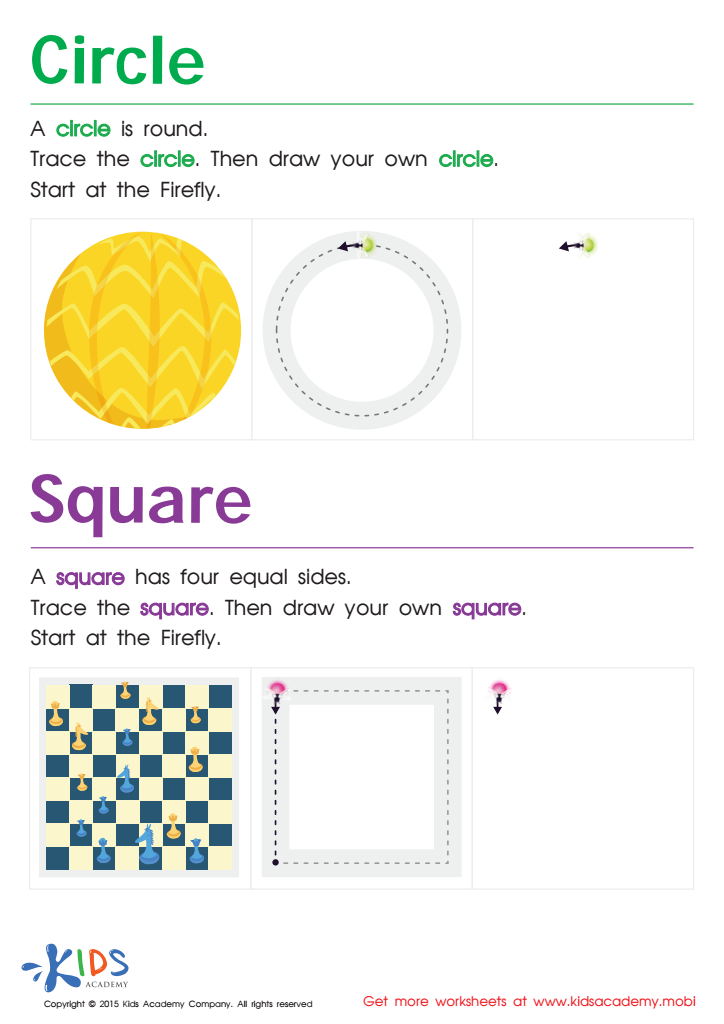
Trace And Draw a Circle And a Square Worksheet
 Assign to My Students
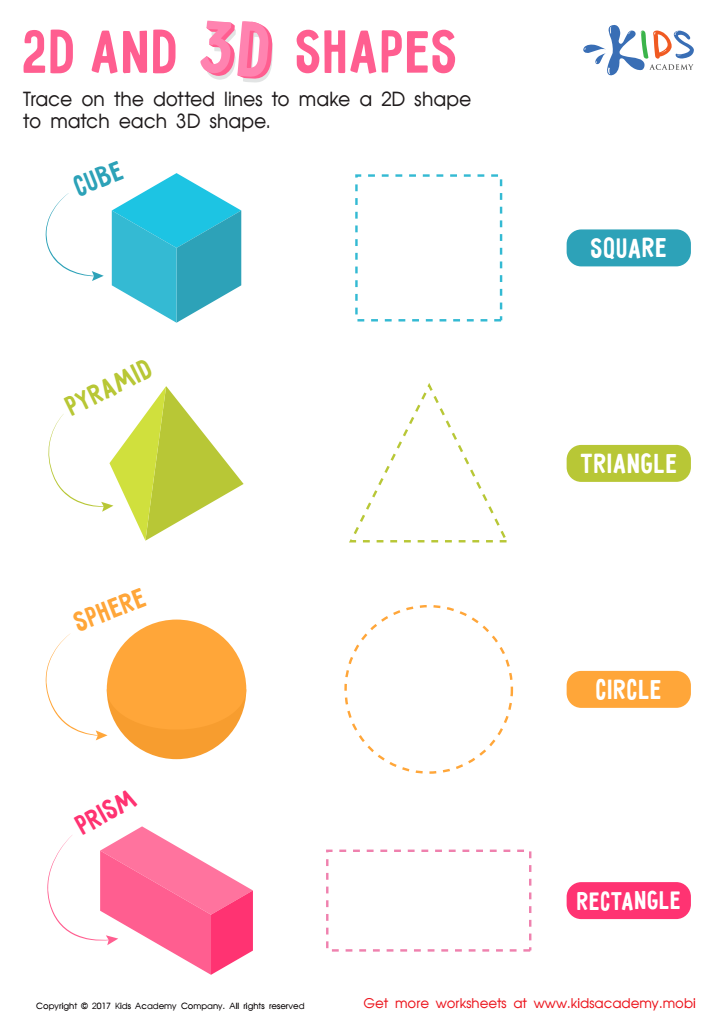
2D and 3D Shapes Worksheet
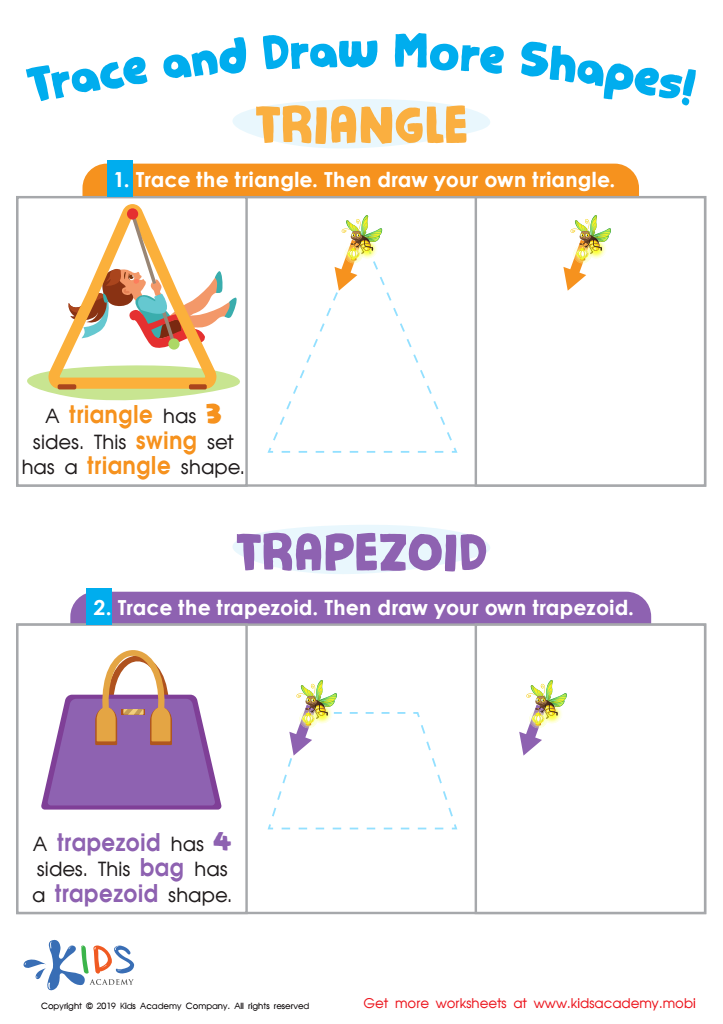
Trace and Draw More Shapes Worksheet
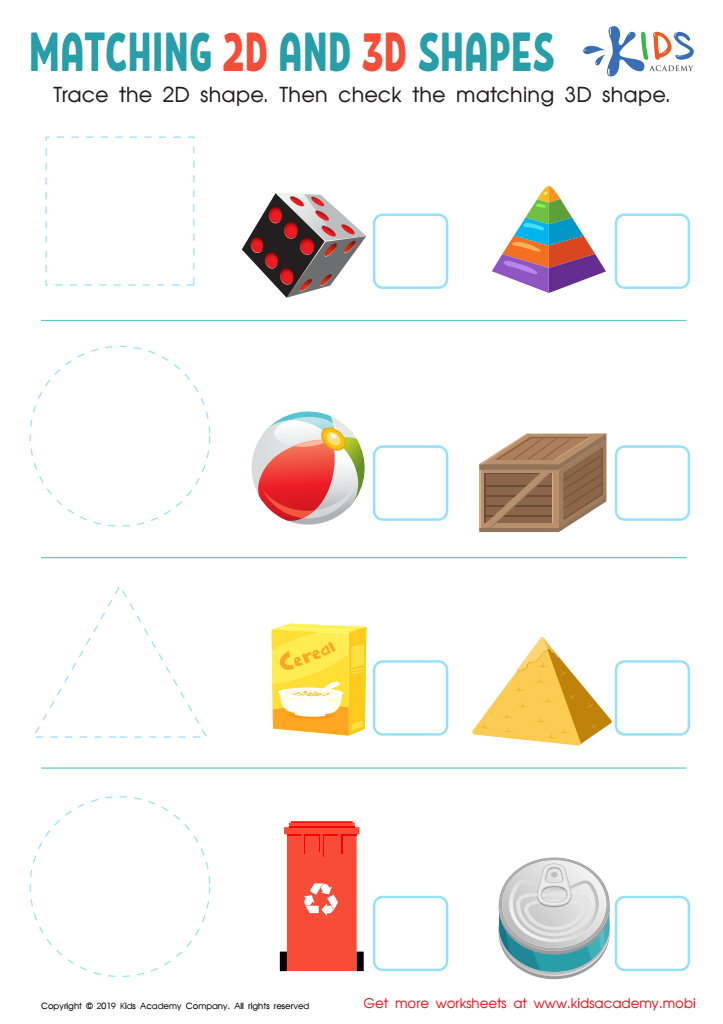
Matching 2D and 3D Shapes Worksheet
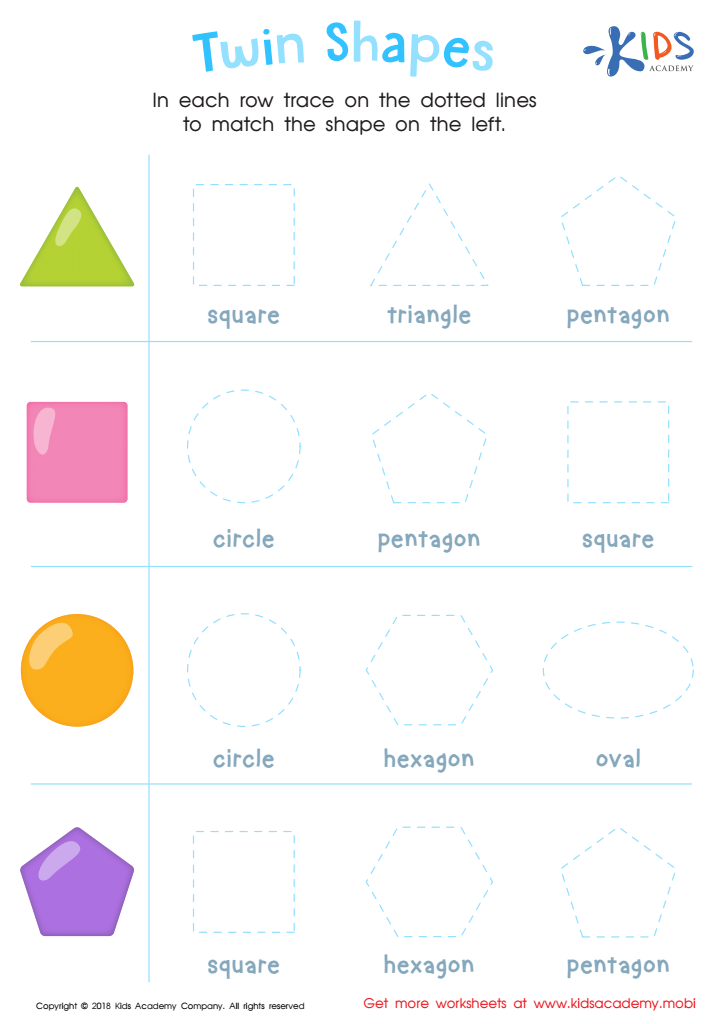
Twin Shapes Dot-to-Dot Worksheet








Shape recognition and tracing shapes are fundamental skills for children aged 7-8 as they play a crucial role in cognitive and motor development. Parents and teachers should care about these activities because they lay the groundwork for many essential abilities.
Firstly, shape recognition enhances spatial awareness. When children identify and differentiate shapes, they acquire a sense of how objects relate to each other and their environment. This spatial reasoning skill is critical for subjects like geometry and even for everyday tasks such as reading maps.
Secondly, tracing shapes helps develop fine motor skills. Holding a pencil and carefully tracing lines boosts hand-eye coordination and control, essential for writing legibly and performing tasks requiring precision.
Additionally, learning about shapes introduces mathematical concepts. Recognizing circles, squares, and triangles contributes to a child’s understanding of geometric properties and dimensions, forming a basis for more complex math learning in later years.
Incorporating shape recognition and tracing also fosters problem-solving and critical thinking abilities. By manipulating shapes and understanding their attributes, children learn to approach tasks methodically and creatively.
In summary, emphasizing shape recognition and tracing in early education supports overall cognitive development, fine motor skill enhancement, mathematical comprehension, and problem-solving prowess, making it a crucial focus for parents and teachers alike.