Identifying story elements Reading Worksheets for Ages 7-8
3 filtered results
-
From - To
Unlock the joy of reading with our engaging Identifying Story Elements Worksheets designed specifically for ages 7-8. These colorful, kid-friendly worksheets help young readers master key components such as character, setting, plot, and theme. Each exercise encourages critical thinking and comprehension, laying a strong foundation for future reading success. Perfect for classroom use or at-home practice, our printable resources support varied learning styles and make story analysis fun. Give your child the tools they need to understand and enjoy literature, while nurturing their love for reading. Explore our collection and watch their storytelling skills bloom!
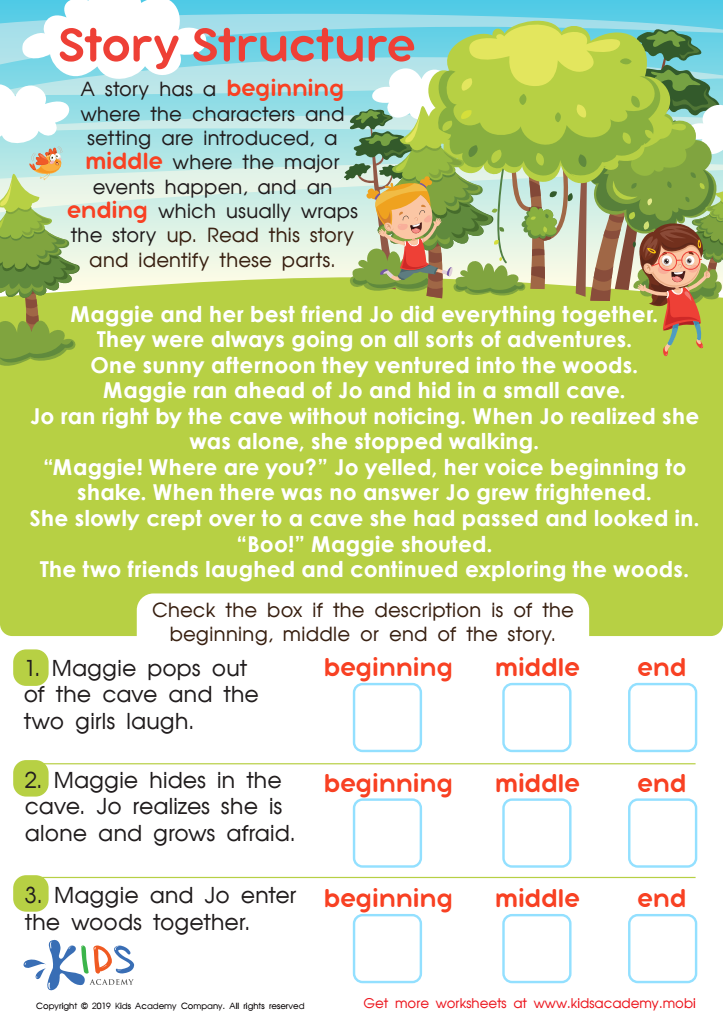
Story Structure Worksheet
 Assign to My Students
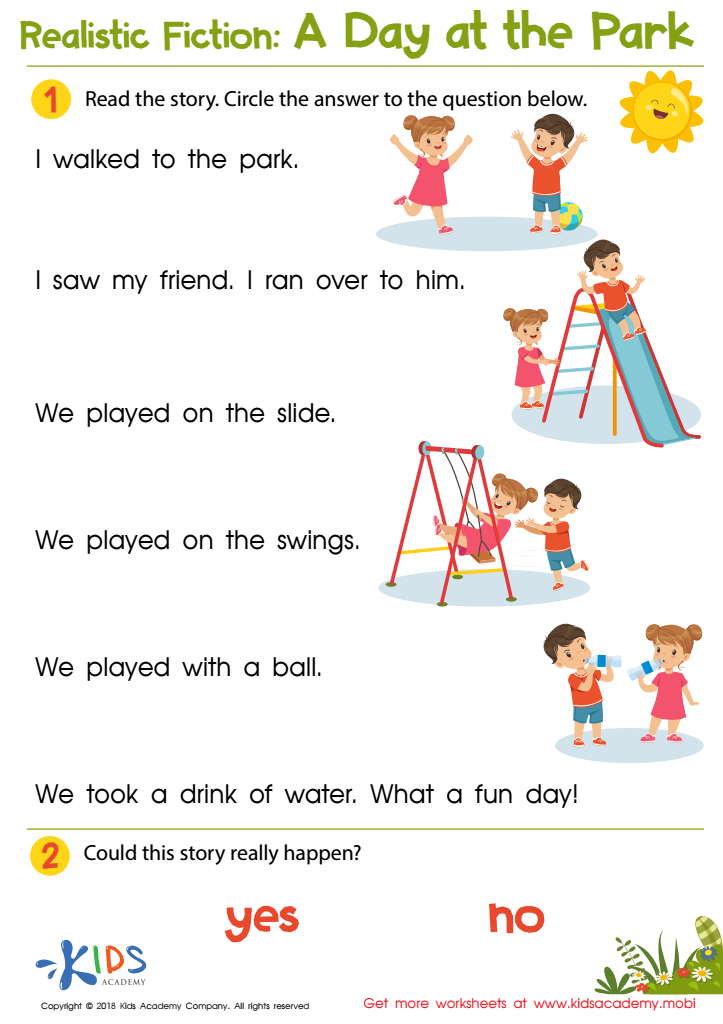
A Day at the Park Worksheet
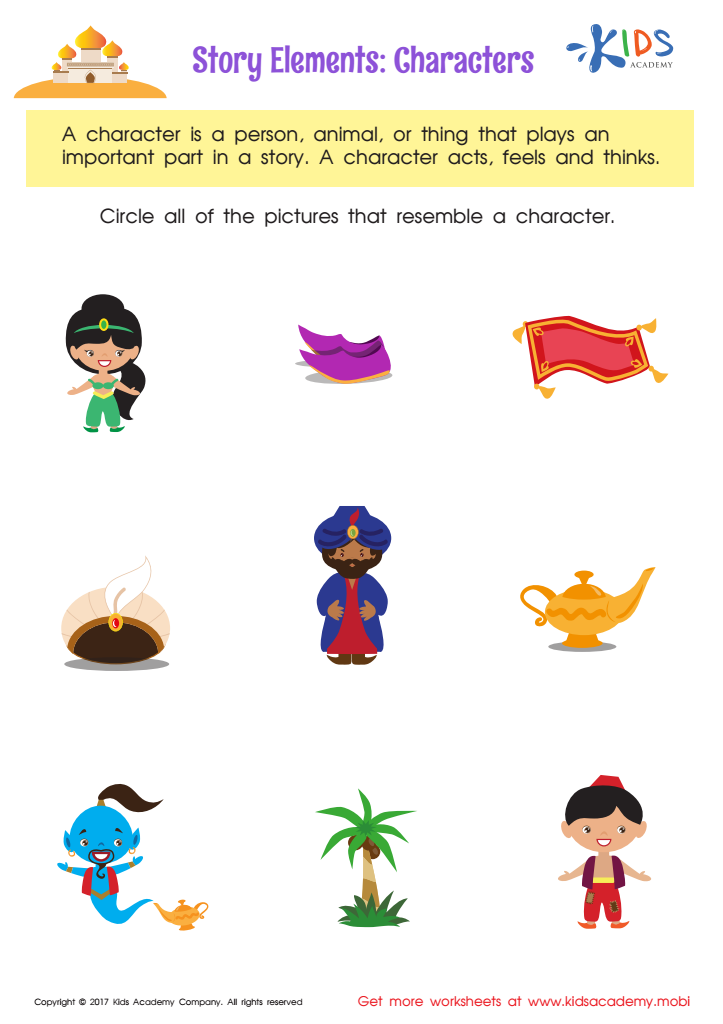
Story Elements Printable




.jpg)



Identifying story elements such as characters, setting, plot, conflict, and resolution is crucial for children ages 7-8 because it significantly enhances their reading comprehension and critical thinking skills. At this age, children are transitioning from decoding words to understanding more complex narratives. Focusing on story elements helps them grasp the structure and purpose of a story, aiding in deeper comprehension and improved retention.
When children recognize the main characters and their roles, they develop empathy and understanding of different perspectives, fostering social-emotional growth. Identifying the setting enriches their visual imagination and context comprehension. Understanding the plot and conflict-resolution dynamics sharpens analytical skills, teaching them to anticipate outcomes and infer possible scenarios.
For parents and teachers, emphasizing these elements lays a solid foundation for future academic success. It develops attentive and reflective reading habits, essential for all subjects. Engaging children in discussions about story elements strengthens communication skills and boosts confidence. Moreover, mastering story elements fuels a love for reading by making it an interactive adventure rather than a passive activity.
In essence, knowledge of story elements not only promotes academic achievements but also nurtures lifelong readers and critical thinkers, equipped to explore the vast landscape of literature and beyond.








