Understanding life cycles Reading Worksheets for Ages 7-8
3 filtered results
-
From - To
Explore our "Understanding Life Cycles" reading worksheets, designed specifically for ages 7-8. These engaging activities help children grasp the fascinating stages in the life cycles of plants and animals. With easy-to-follow texts and vibrant illustrations, kids build essential reading and comprehension skills while discovering how living beings grow and change. Each worksheet encourages curiosity and a love for learning, catering to young readers navigating first to second-grade level material. Use these resources to make biology fun and approachable, ensuring a solid foundation in natural sciences for your child or student.
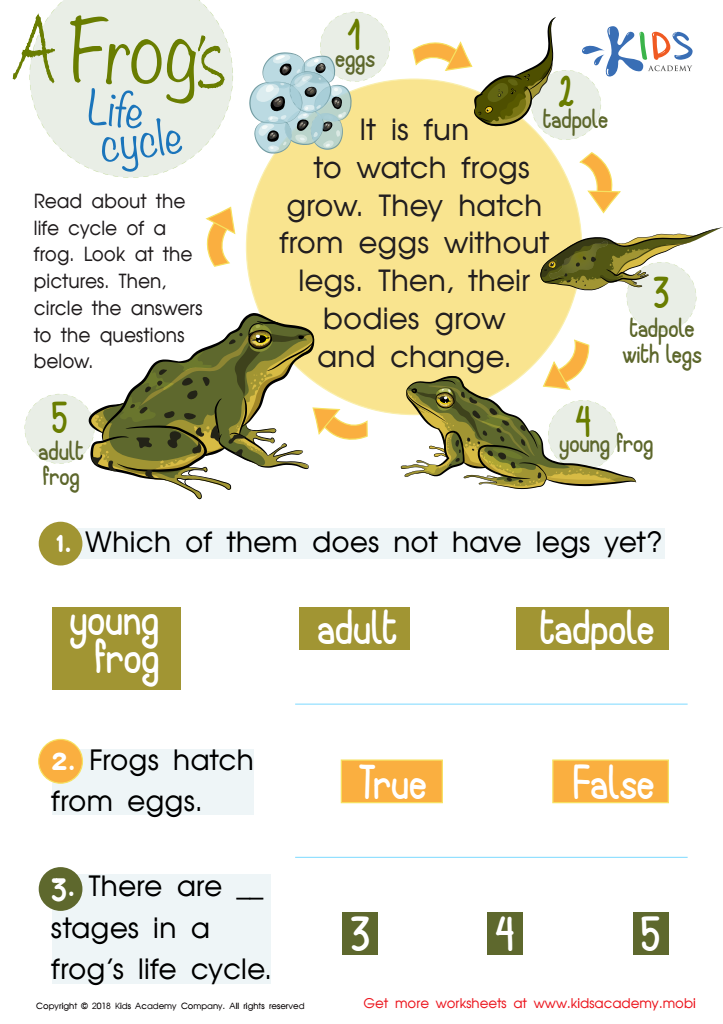
A Frog’s Life Cycle Worksheet
 Assign to My Students
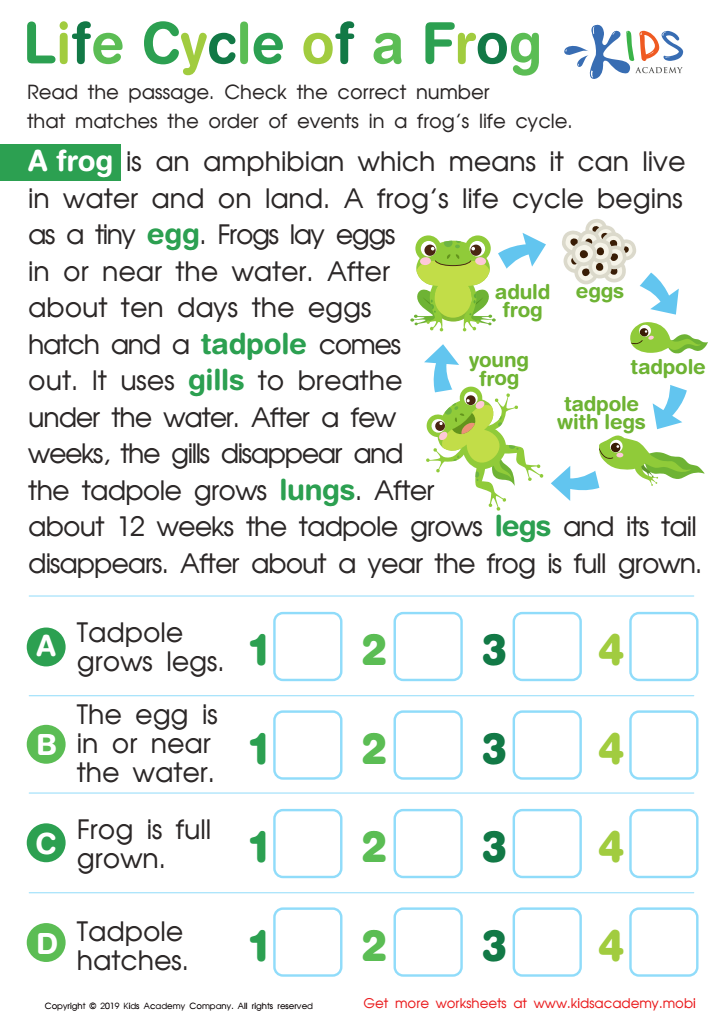
Life Cycle of a Frog Worksheet
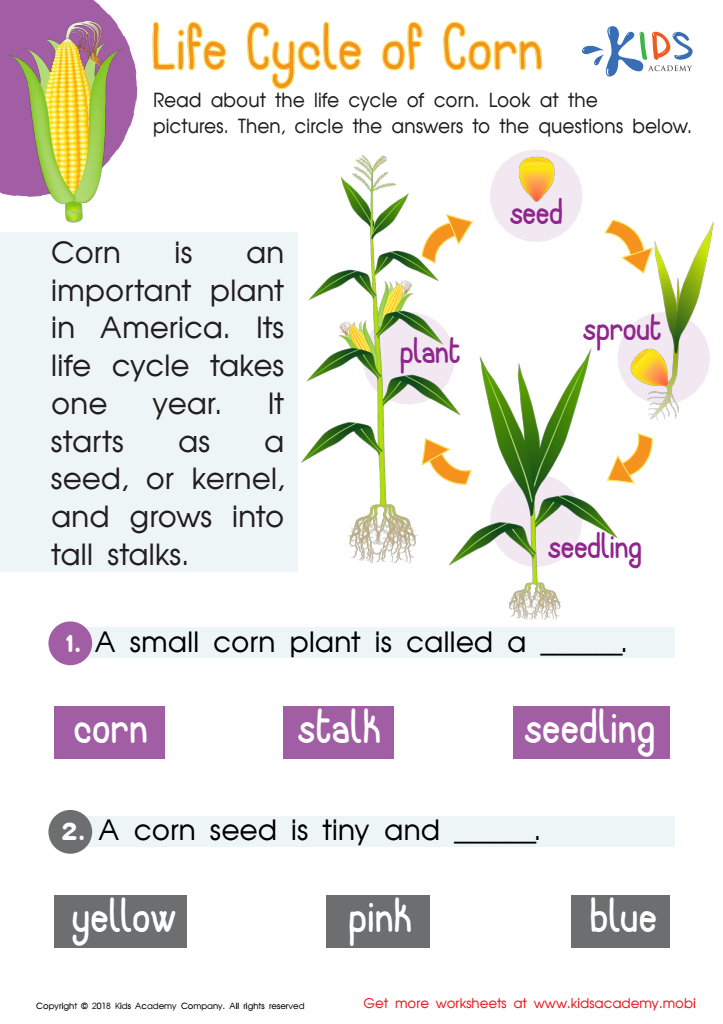
Life Cycle of Corn Worksheet






Understanding life cycles is fundamental for children aged 7-8, as it contributes significantly to their overall cognitive and emotional development. At this formative age, children are natural explorers, curious about the world around them. Delving into life cycles—be it the journey of a butterfly from caterpillar to butterfly, or a seed growing into a flower—provides them with a foundational grasp of nature’s processes, which is both enlightening and engaging.
For parents and teachers, teaching life cycles aids in fostering a sense of curiosity, respect, and responsibility for living things. It serves as a pivotal platform to discuss essential concepts like change, growth, and interdependence, making abstract ideas more concrete and understandable for young minds. Additionally, it deepens their observational skills and encourages a hands-on approach to learning, often igniting a lifelong interest in science and nature.
Beyond scientific knowledge, understanding life cycles can also nurture important moral and emotional lessons. Witnessing the transformative stages of different organisms can instill a sense of wonder and appreciation for the cycles of life and death, growth and transformation. This holistic learning approach helps children develop empathy, patience, and a greater awareness of their environment and their role within it. Thus, integrating such topics into early education is incredibly beneficial, instilling a well-rounded perspective in young learners.








