Filters

32 filtered results

Clear all filters
Favorites
With answer key
Interactive

32 filtered results

Difficulty Level

Grade


Check out this FREE Trial Lesson on Reading Comprehension for age 7-8!

Messages and Lessons in a Text

Favorites
With answer key
Interactive
  • 7-8
  • Critical Thinking
  • Reading Comprehension
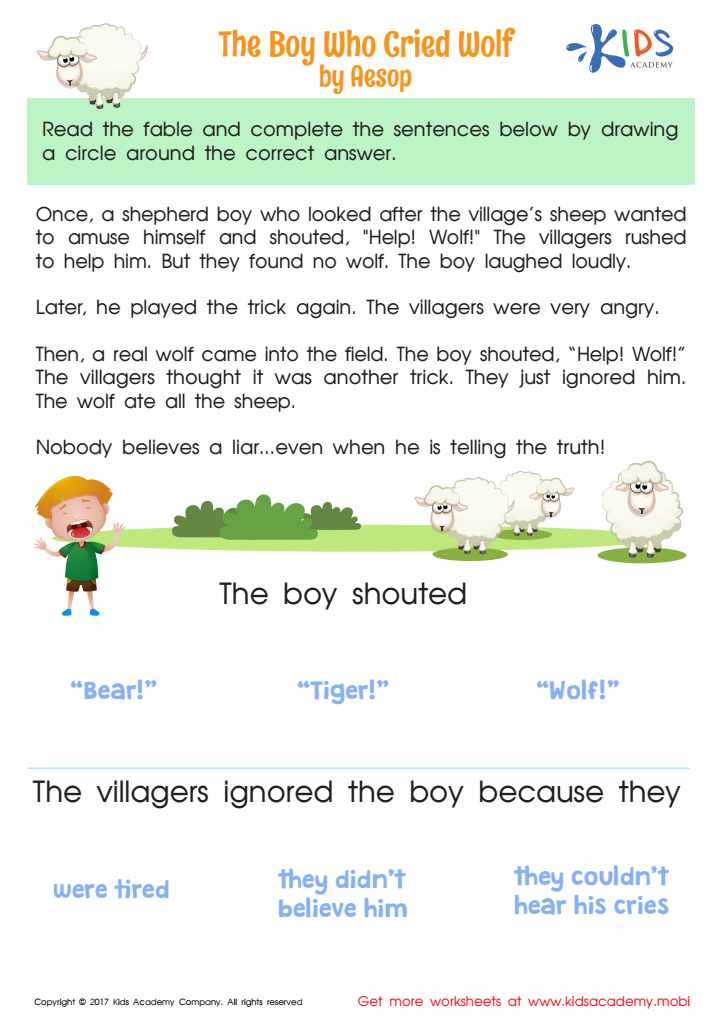
Worksheet: The Boy Who Cried Wolf

The Boy Who Cried Wolf Worksheet

Test your child's reading comprehension with The Boy Who Cried Wolf worksheet. Read the fable, then answer the questions. Use the text to help your child check their answers are correct. Boost reading skills in a fun, interactive way!
The Boy Who Cried Wolf Worksheet
Worksheet
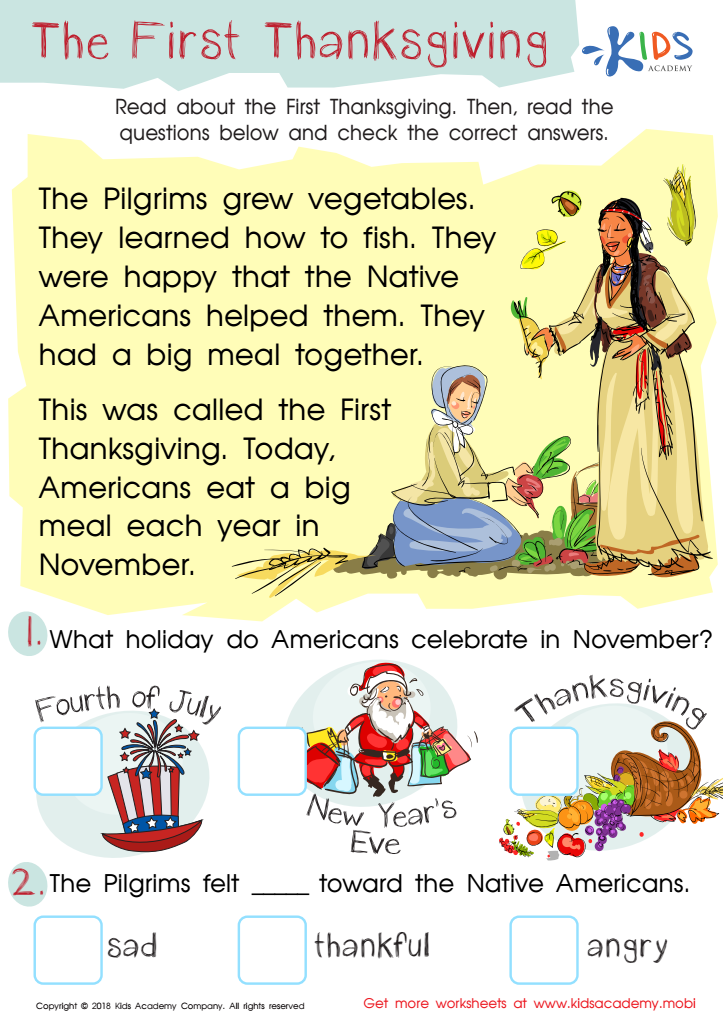
Assessment: First Thanksgiving Worksheet

Assessment: First Thanksgiving Worksheet

When the Pilgrims arrived in America in 1620, they met the Native Americans and formed a pact to live in harmony. The Native Americans taught the Pilgrims how to survive in the new land, which helped them celebrate the First Thanksgiving. Read this text to your children and help them answer the questions below.
Assessment: First Thanksgiving Worksheet
Worksheet
Realistic Fiction: The First Day Worksheet

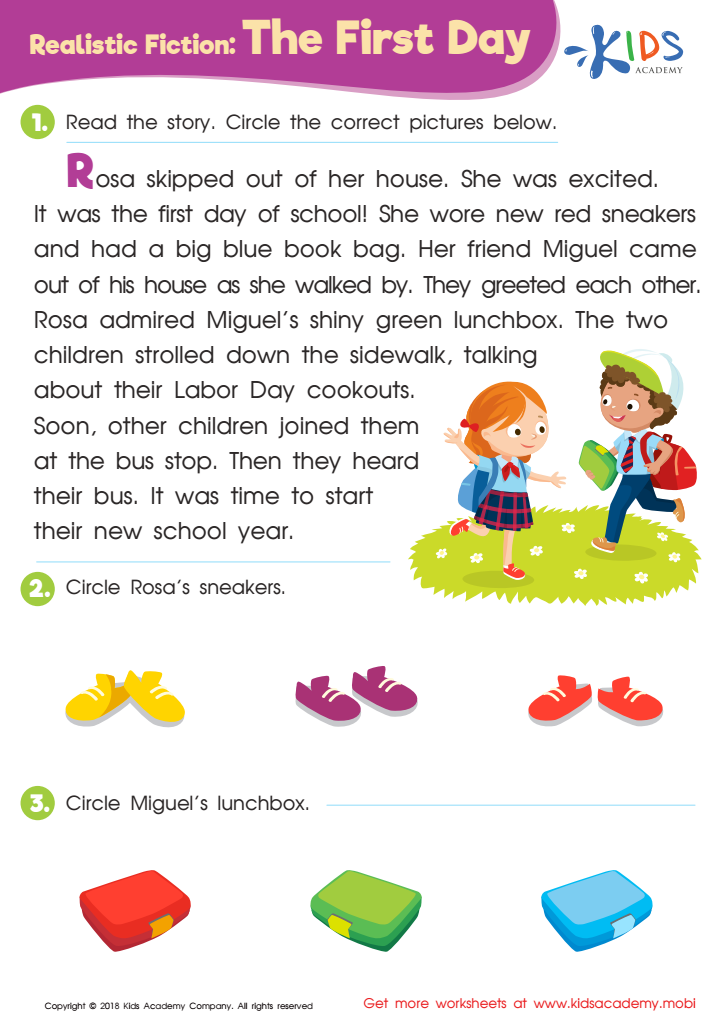
Realistic Fiction: The First Day Worksheet

Fiction is made-up events, so story-writing is fiction writing. In this worksheet, there's a short story about Rosa, her friend Miguel, and their first day back at school. Read the story aloud to your kids and help them circle the right pictures to the questions. Repeat if needed.
Realistic Fiction: The First Day Worksheet
Worksheet
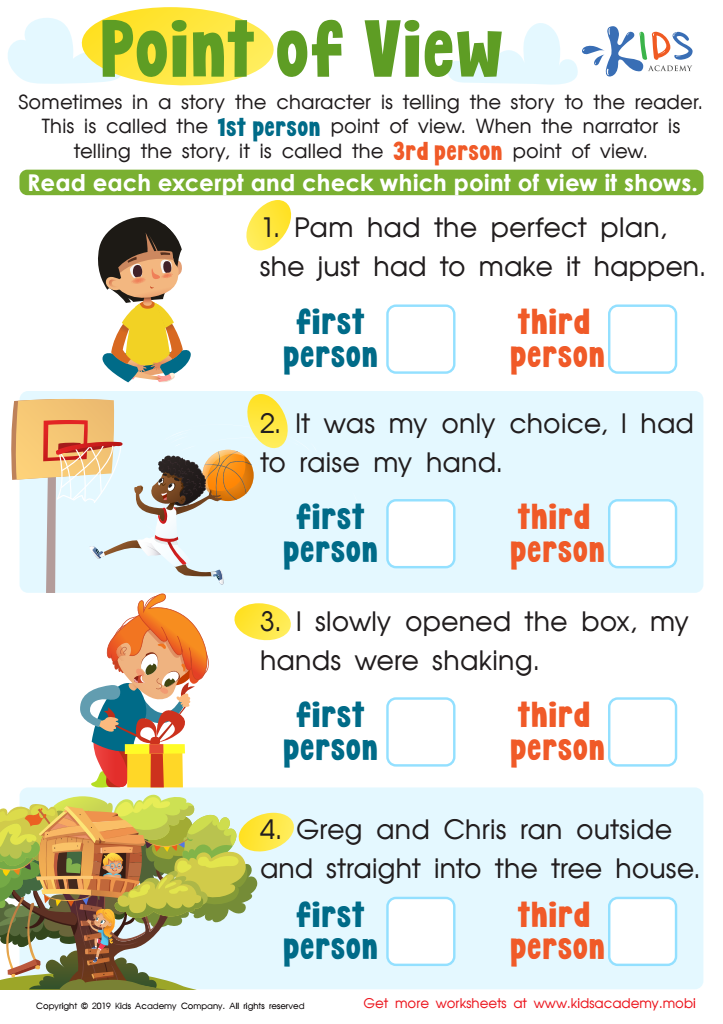
Point of View Printable

Point of View Printable

Teach your kids about points of view with this worksheet! In a story, characters can tell the story in first person or it can come from a narrator in third person. Read the excerpt in the worksheet and ask your kids to identify which point of view it is.
Point of View Printable
Worksheet
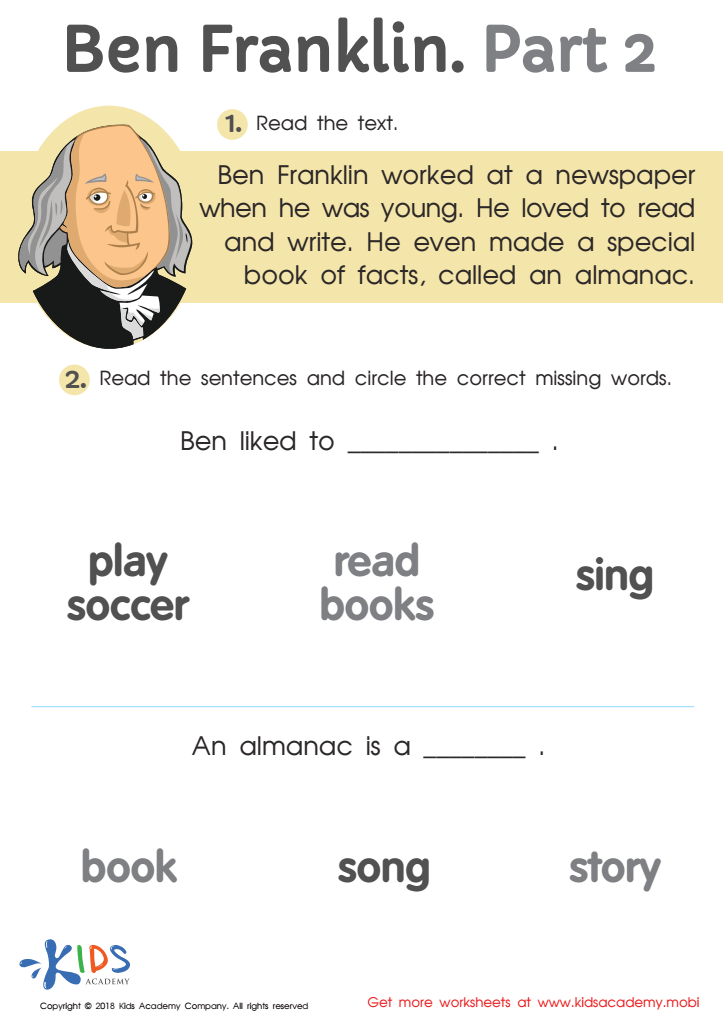
Ben Franklin Part 2 Worksheet

Ben Franklin Part 2 Worksheet

History is filled with great figures, like Benjamin Franklin. Let your kids in on the legacy by introducing them to the founder of the US fire department, diplomat, and inventor. Then, use a worksheet to have them fill in the blanks with the correct word to teach them more. Read the text, then read the sentences and have them circle the missing word.
Ben Franklin Part 2 Worksheet
Worksheet
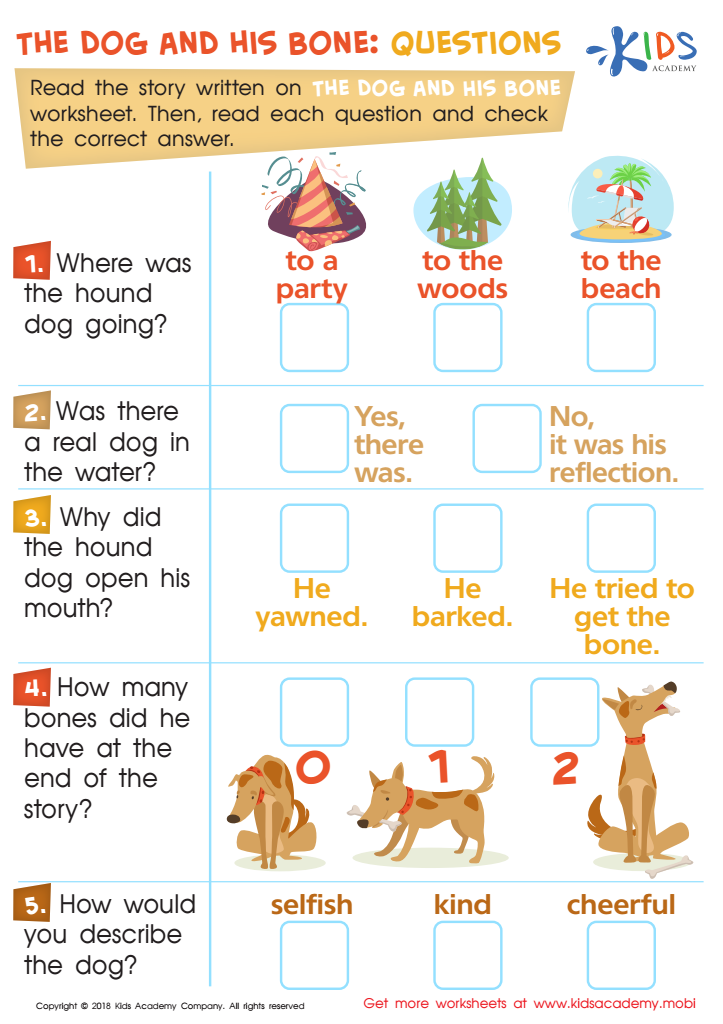
The Dog and His Bone: Questions Worksheet

The Dog and His Bone: Questions Worksheet

Read the story of The Dog and His Bone to your child and help them understand it. Have them read it aloud if possible. Then, read the five questions on the worksheet and guide them to select the correct answers.
The Dog and His Bone: Questions Worksheet
Worksheet
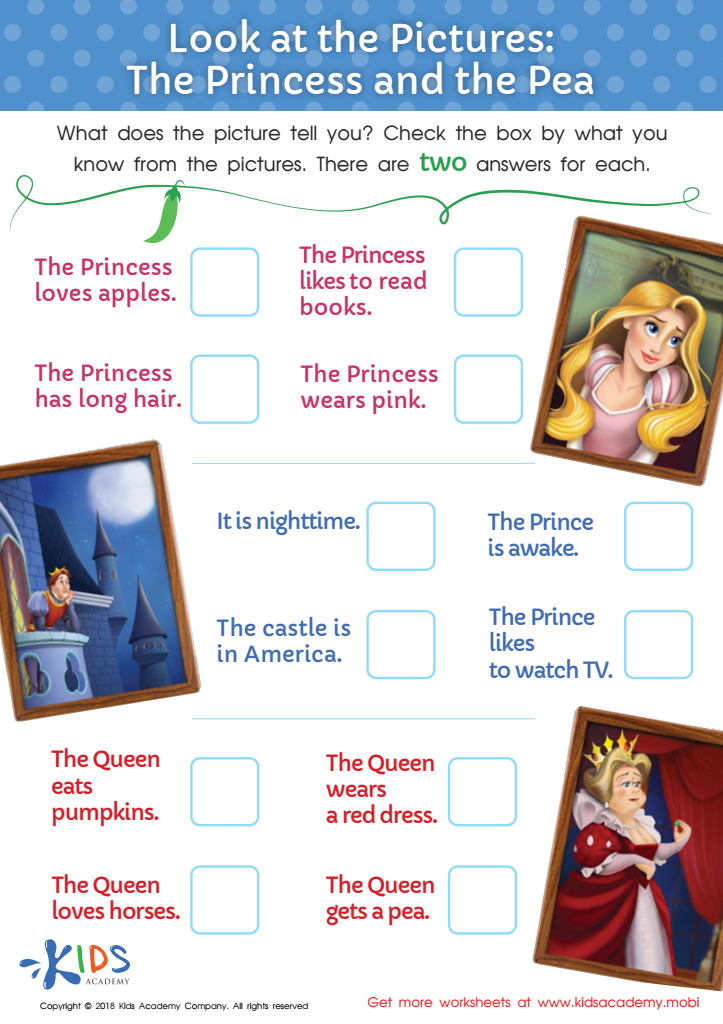
Look at the Pictures: The Princess and the Pea Worksheet

Look at the Pictures: The Princess and the Pea Worksheet

Early readers can benefit from picture clues to understand stories and text. Looking at images helps them learn the meaning of words and comprehend events. Use this worksheet on The Princess and the Pea to let students observe and learn from the pictures. It's a great way to help them comprehend early reading materials.
Look at the Pictures: The Princess and the Pea Worksheet
Worksheet
Think About It: Assessment Worksheet


Think About It: Assessment Worksheet
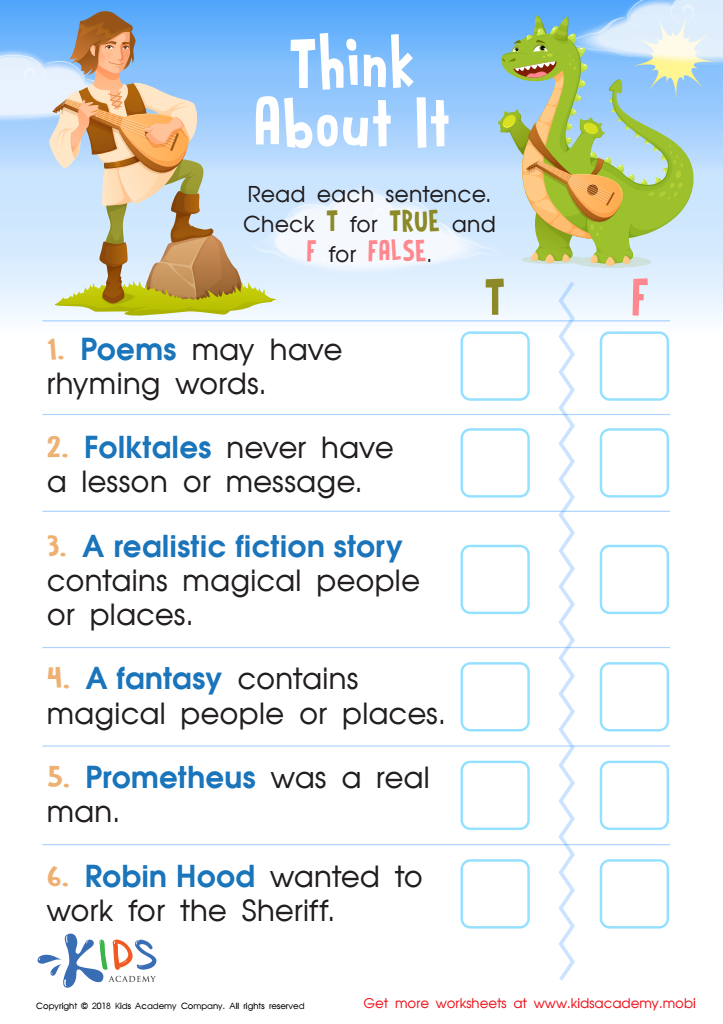
Reading is a fun and important way to learn. Help your students become better readers with this simple yet colorful worksheet. Read each sentence aloud, then have them read it by themselves. Ask them to check T for True and F for False. It's a great way to practice their reading skills!
Think About It: Assessment Worksheet

Worksheet


Critical thinking and reading comprehension are essential skills for children aged 7-8, as these abilities lay the foundation for lifelong learning and problem-solving.

At this developmental stage, children are transitioning from learning to read to reading to learn. Parents and teachers should care about fostering critical thinking reading comprehension because it enhances children's ability to analyze information, make inferences, and draw conclusions from texts. Strong comprehension skills empower children to understand and engage with stories, non-fiction texts, and academic content, enabling them to construct knowledge across various subjects.

Critical thinking also encourages curiosity and inquisitiveness. When children learn to question what they read, they develop a deeper understanding of underlying themes and concepts. This not only boosts academic performance but also builds confidence and intellectual independence.

Furthermore, in a world abundant with information, discerning credible sources from misinformation is vital. Integrating critical thinking into reading comprehension instructs children to evaluate evidence and differentiate between biased and factual perspectives.

Ultimately, nurturing these skills at a young age prepares children for future academic challenges, equips them with essential toolkit for understanding the world, and fosters a generation of thoughtful, informed citizens.