Moral understanding Reading Comprehension Worksheets for Ages 7-8
5 filtered results
-
From - To
Enhance your child's reading comprehension with our engaging Moral Understanding Worksheets designed specifically for ages 7-8. These worksheets focus on developing empathy, ethics, and social awareness by weaving moral lessons into relatable stories and scenarios. By analyzing characters' choices and motivations, children learn to grasp deeper meanings and reflect on their values. Our easy-to-follow activities cultivate critical thinking and promote meaningful discussions about right and wrong. Perfect for homeschooling, extra practice, or classroom use, these worksheets aim to foster well-rounded, morally responsible readers. Equip your child with essential skills for understanding interpersonal relationships through enriching reading experiences today!
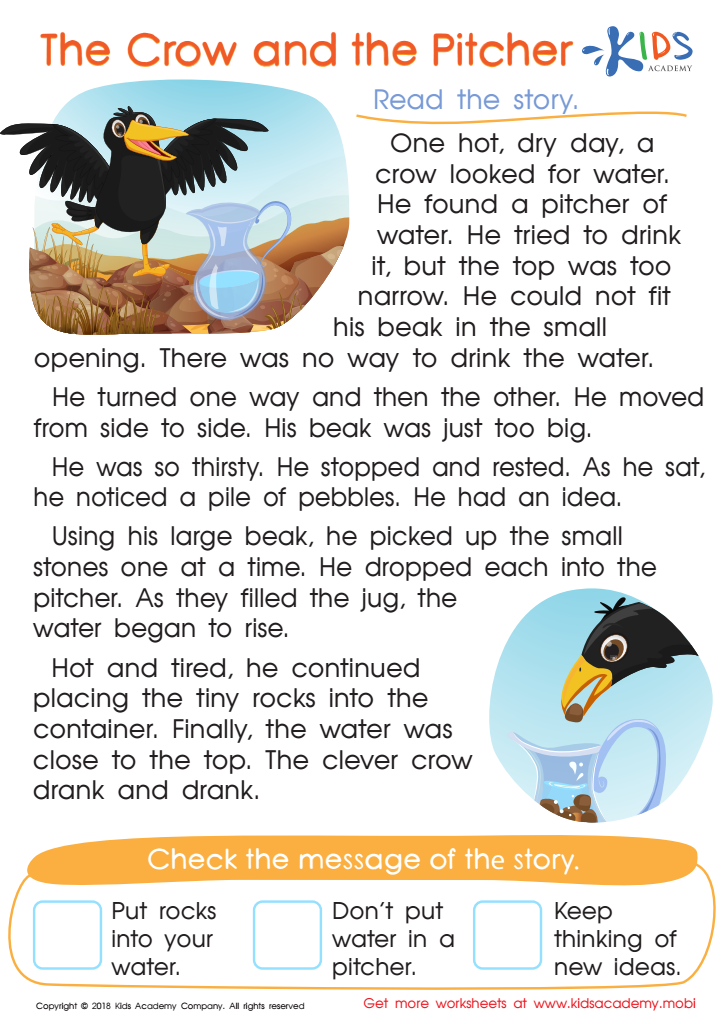
The Crow and the Pitcher Worksheet
 Assign to My Students
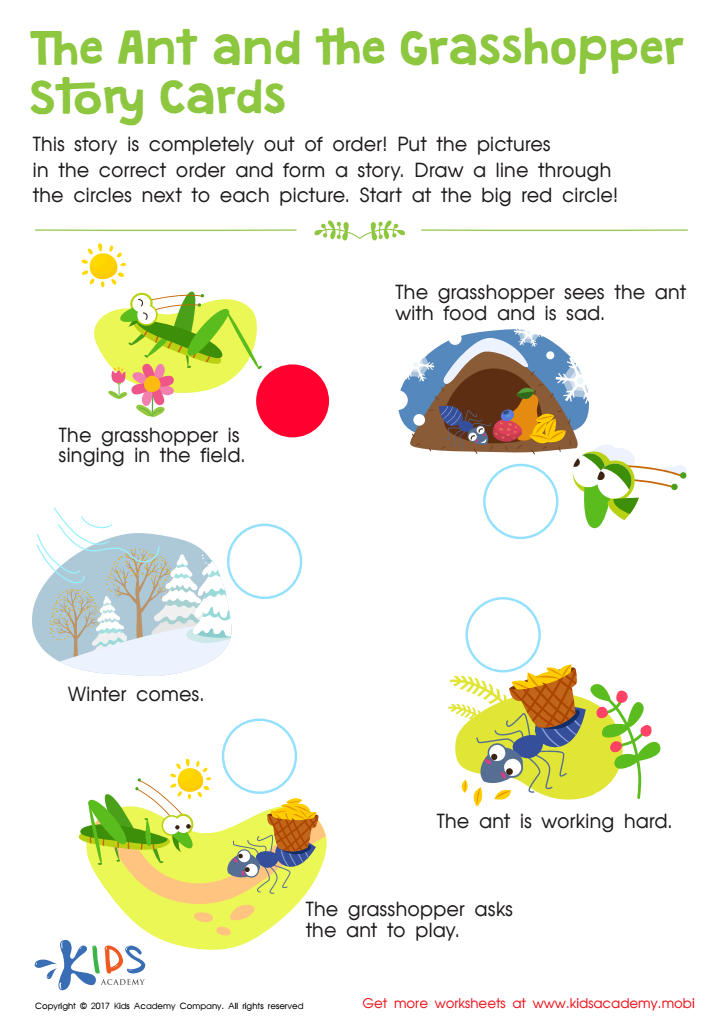
The Ant and The Grasshopper Worksheet
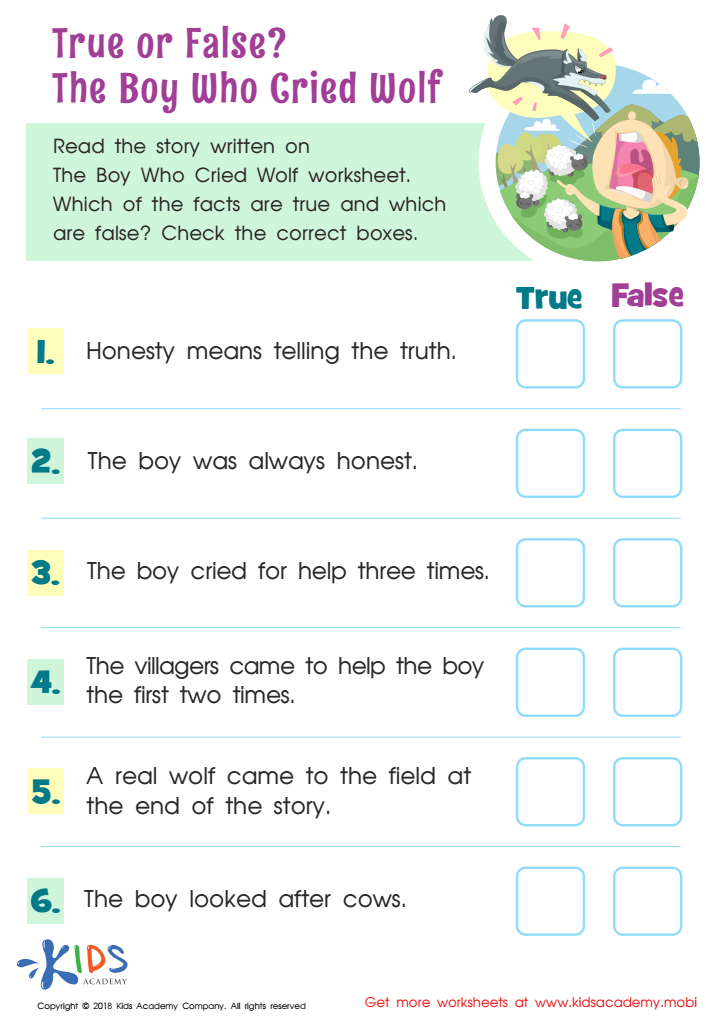
True or False? The Boy Who Cried Wolf Worksheet
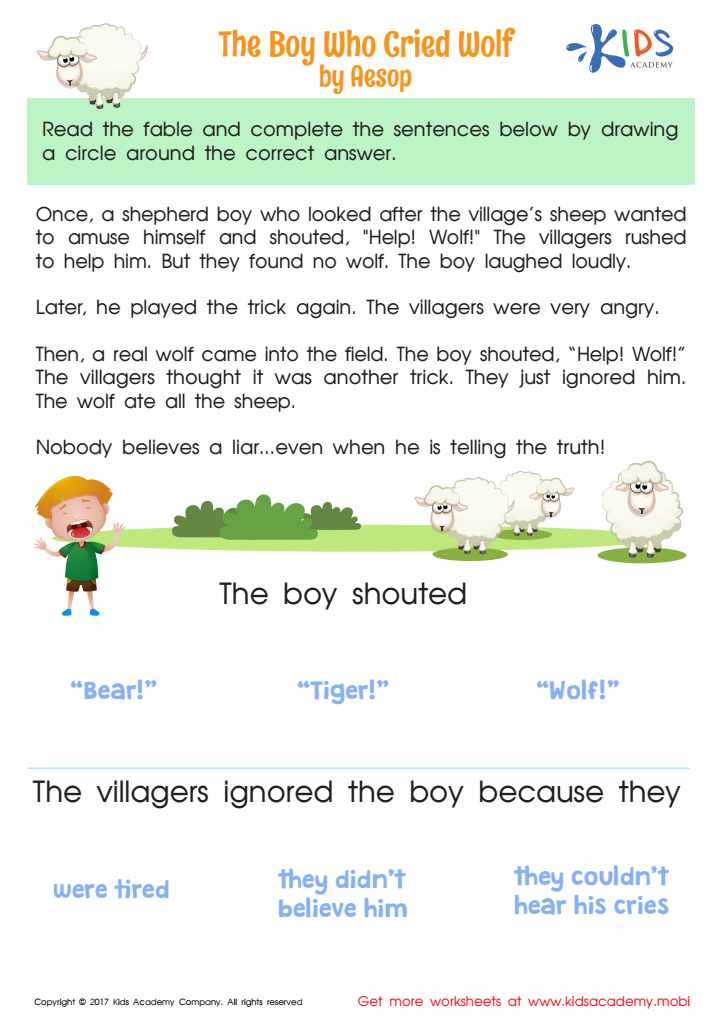
The Boy Who Cried Wolf Worksheet
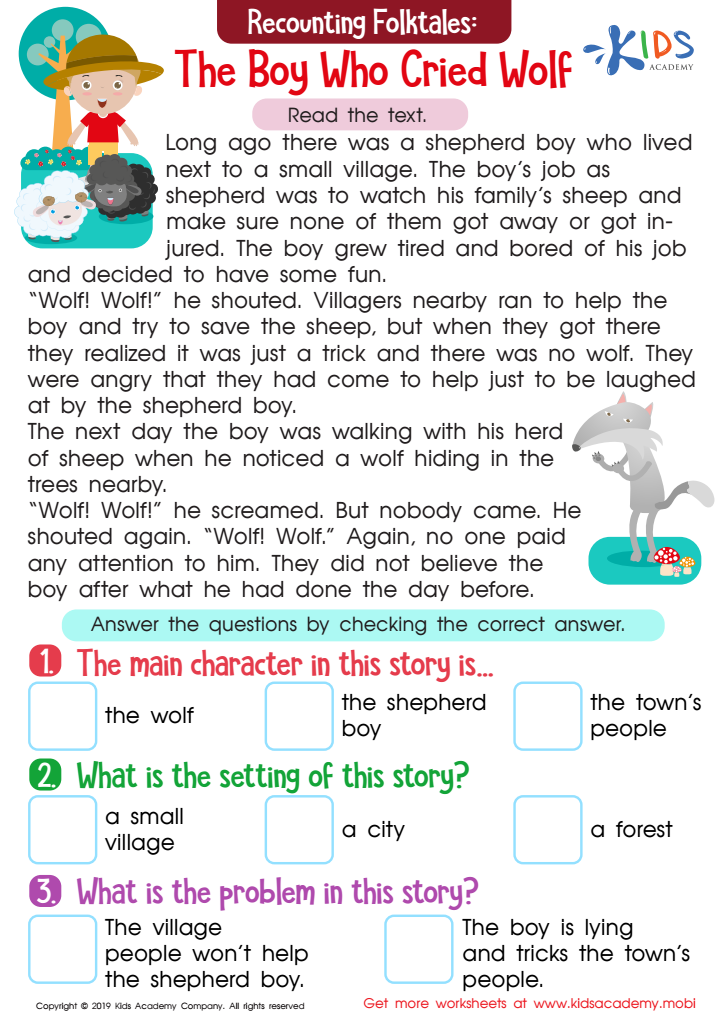
The Boy Who Cried Wolf Part 1 Worksheet








Moral understanding in reading comprehension is crucial for children aged 7-8 as it lays the foundation for empathy, critical thinking, and ethical decision-making. At this developmental stage, children are beginning to grasp complex social interactions and the consequences of actions. By integrating moral themes into reading comprehension, parents and teachers can foster discussions that enhance emotional intelligence.
Stories often present characters facing dilemmas, allowing young readers to explore values such as honesty, kindness, and justice. Engaging with these situations helps children to recognize different perspectives and the feelings associated with them, which is essential for developing empathy.
Furthermore, moral understanding encourages critical thinking. As children reflect on the choices characters make, they learn to assess how actions align with ethical standards, shaping their own moral compass.
By focusing on moral themes during reading comprehension, parents and teachers provide children with tools to navigate their interactions and decisions in the real world. Ultimately, fostering moral understanding through reading empowers children to become responsible, thoughtful individuals, enhancing their social skills and contributing to a more compassionate society.








