
Vocabulary improvement Reading Comprehension Worksheets for Ages 7-8
3 filtered results
Difficulty Level
Grade
Age
-
From - To
Subject
Activity
Standards
Enhance your child’s vocabulary with our engaging reading comprehension worksheets designed specifically for ages 7-8. These worksheets focus on essential reading skills, helping young learners build a robust vocabulary while improving their comprehension abilities. Each activity is crafted to stimulate critical thinking and encourage a love for reading through interactive exercises. With a variety of relatable themes and fun questions, your child will develop confidence in their reading skills and linguistic abilities. Perfect for both classroom learning and home practice, our resources will ensure your child not only understands what they read but also enjoys the journey of vocabulary expansion.
Favorites
With answer key
Interactive
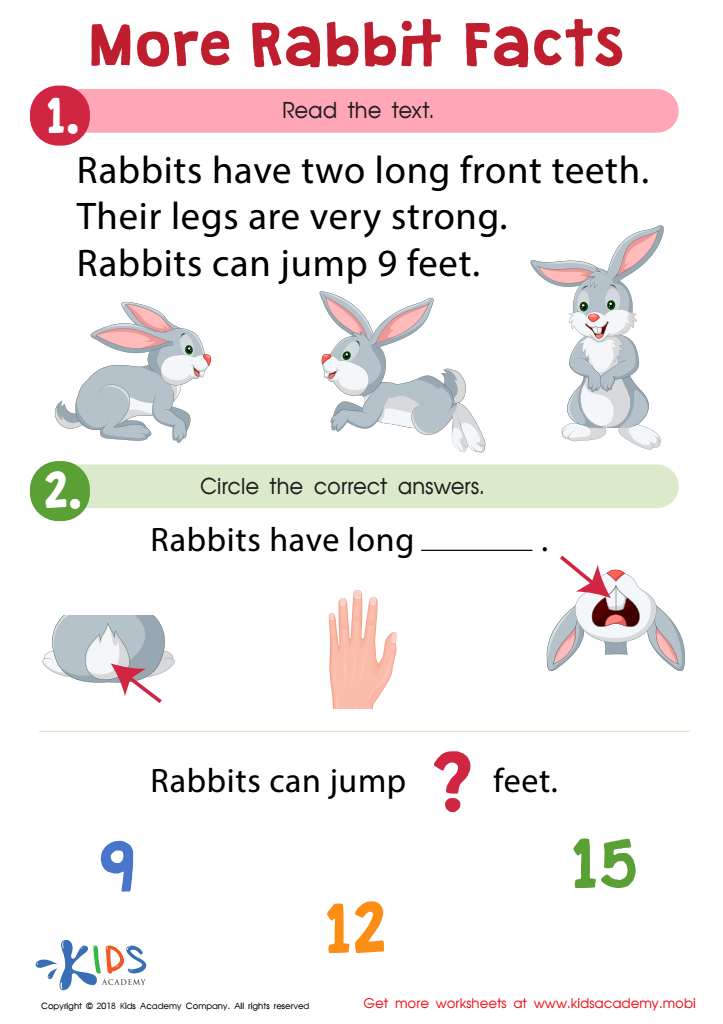
More Rabbit Facts Worksheet
Improve your child's reading comprehension skills with this fun worksheet! Read the paragraph at the top of the page, view the pictures and circle the correct answers indicating what was learned. Develop a better understanding of rabbits while learning how to recall important information from texts.
 Assign to My Students
More Rabbit Facts Worksheet
Worksheet
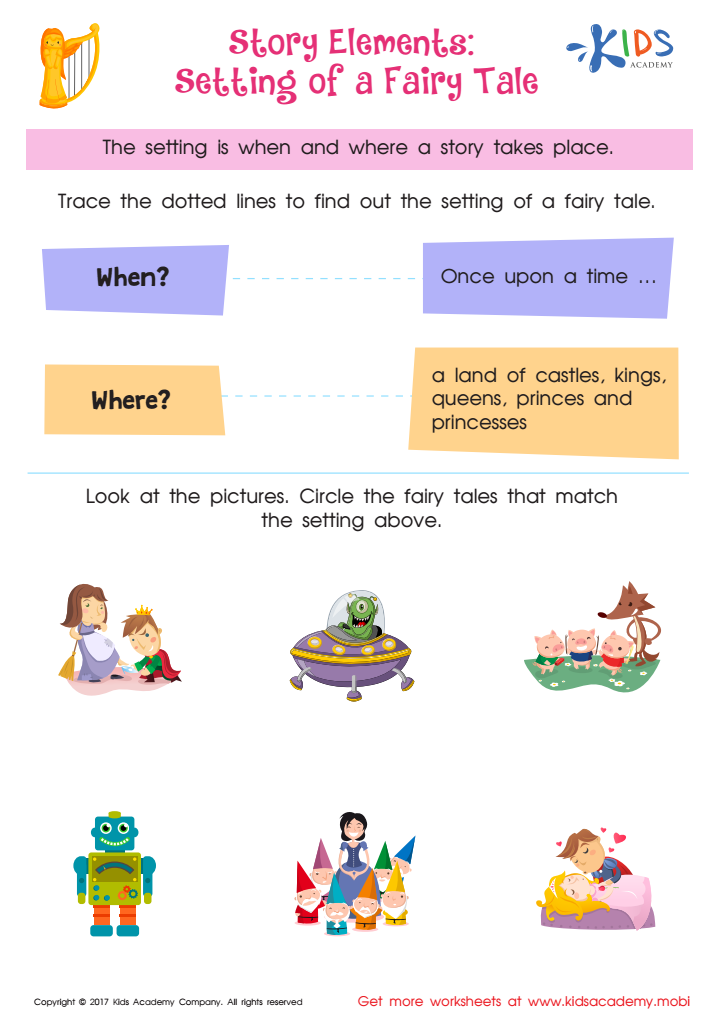
Story Elements: Setting of a Fairy Tale Printable
Help your child learn to analyze stories starting with setting. Use Story Elements worksheet to break down setting into two parts. This will help your child recognize setting quickly and understand its importance in the plot.
Story Elements: Setting of a Fairy Tale Printable
Worksheet
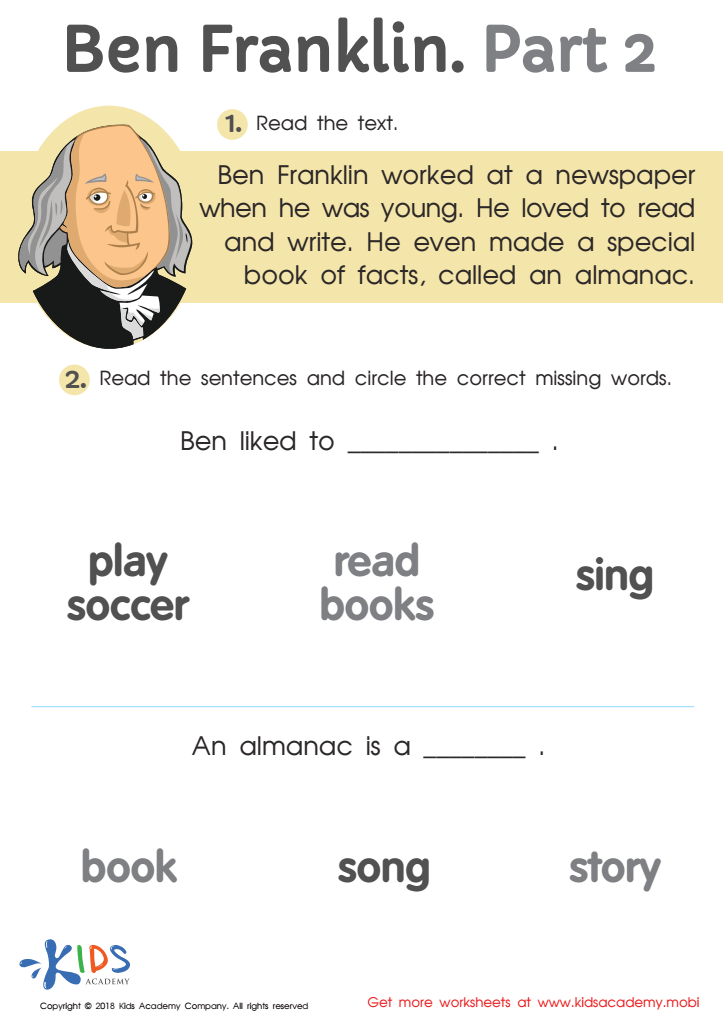
Ben Franklin Part 2 Worksheet
History is filled with great figures, like Benjamin Franklin. Let your kids in on the legacy by introducing them to the founder of the US fire department, diplomat, and inventor. Then, use a worksheet to have them fill in the blanks with the correct word to teach them more. Read the text, then read the sentences and have them circle the missing word.
Ben Franklin Part 2 Worksheet
Worksheet
Join Kids Academy for Free
Who is primarily going to use this learning content?








Vocabulary improvement is crucial for children aged 7-8 because it directly impacts their reading comprehension skills, which are foundational for future academic success. At this age, children are transitioning from learning to read to reading to learn. A robust vocabulary equips them with the tools needed to understand more complex texts and ideas encountered in classroom settings and beyond.
When children have a rich vocabulary, they are better able to comprehend and engage with what they read. This not only helps in grasping the meanings of words but also enhances overall literacy, enabling them to make connections, infer meanings, and analyze characters and plots effectively. Importantly, strong reading comprehension fosters critical thinking skills, helping these young learners to convey their thoughts and ideas clearly, both in speech and writing.
Moreover, vocabulary improvement can encourage a love for reading and learning, as children encounter words that spark their curiosity. This enthusiasm can lead to more reading opportunities and richer language exposure. Consequently, parents and teachers play a vital role in nurturing vocabulary growth through reading aloud, discussing new words, and encouraging varied literary experiences. This investment in their child's linguistic development is fundamental to shaping confident, capable, and informed learners.








