Animal identification Science Worksheets for Ages 7-8
6 filtered results
-
From - To
Unlock the wonders of Animal Identification with our engaging science worksheets designed for children ages 7-8. Our carefully crafted materials encourage young learners to explore diverse animal species, their habits, and habitats through fun activities and illustrations. Each worksheet promotes critical thinking and enhances observational skills, making learning both enjoyable and educational. Perfect for classrooms or at-home learning, these resources align with educational standards, ensuring a comprehensive understanding of the animal kingdom. Foster your child’s curiosity about wildlife and the environment while building essential science skills. Dive into our vibrant worksheets and make science an exciting adventure for your child!
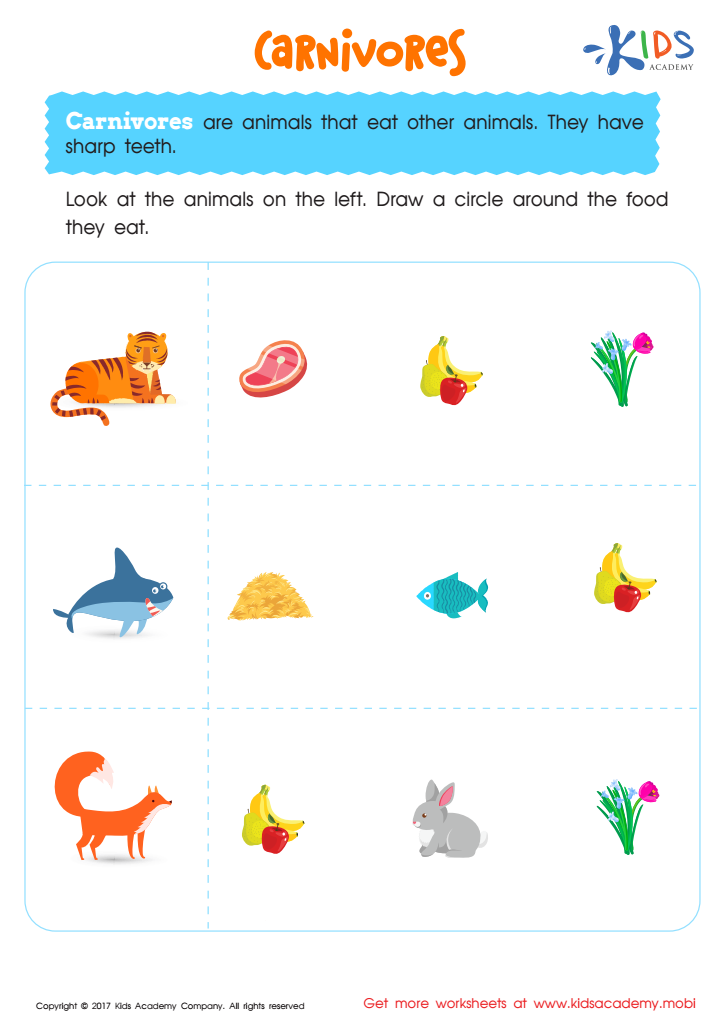
Carnivores Worksheet
 Assign to My Students
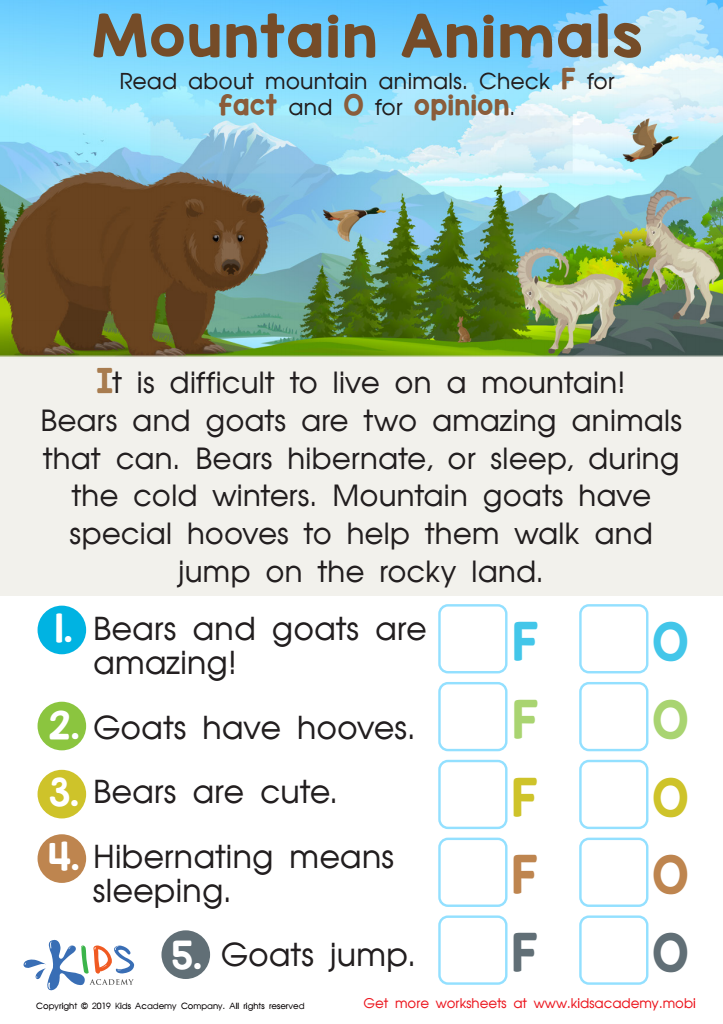
Mountain Animals Worksheet
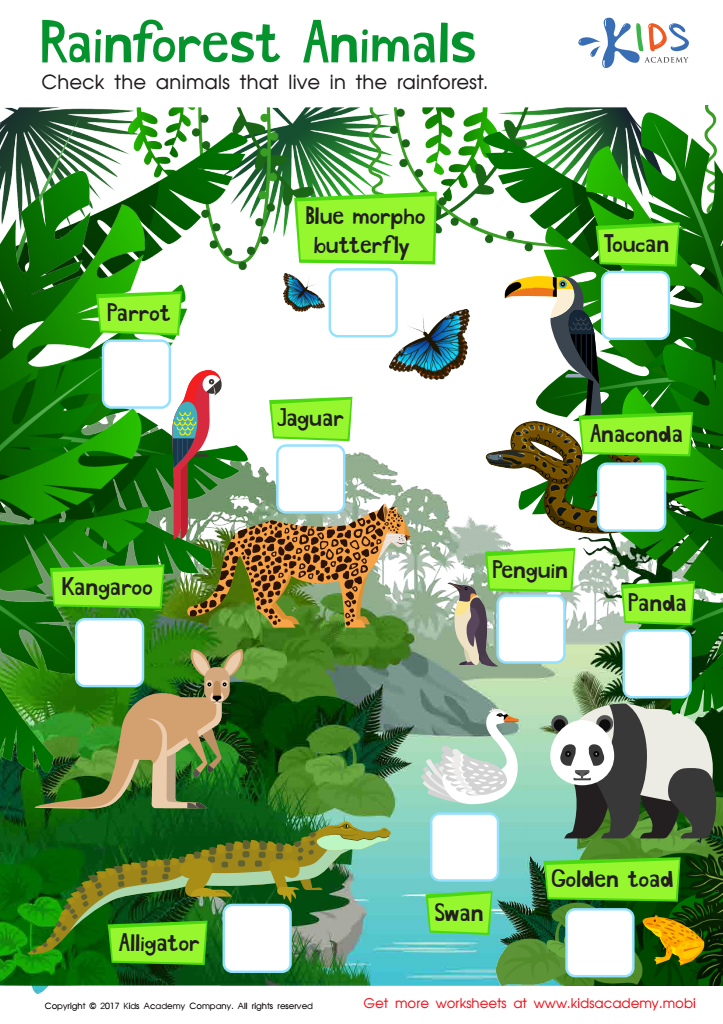
Rainforest Animals Worksheet
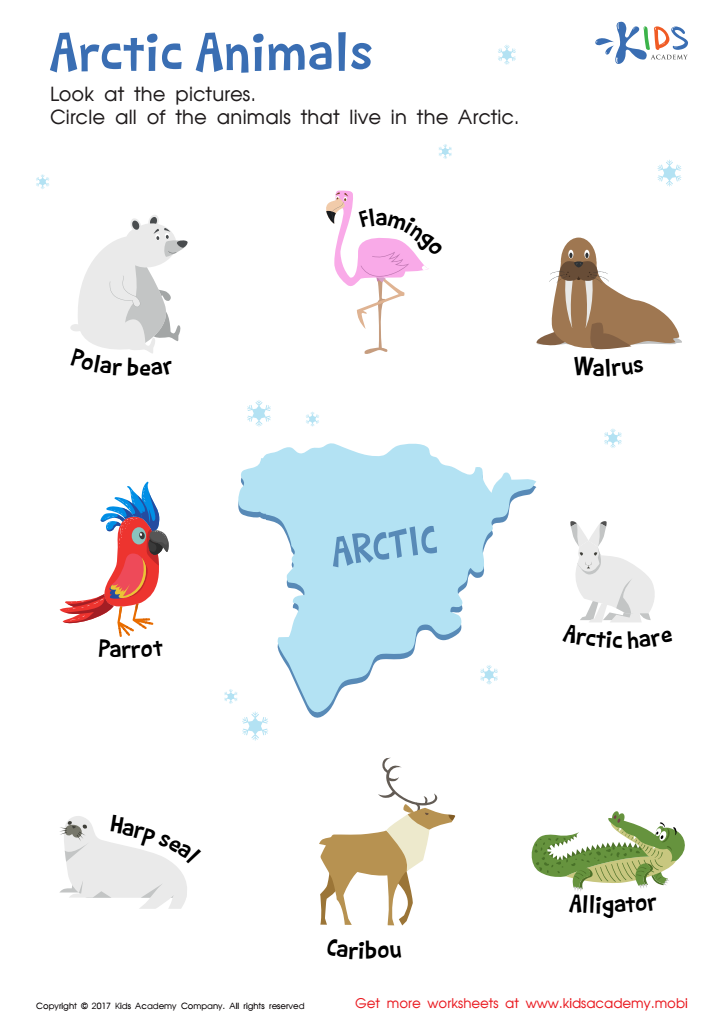
Arctic Animals Worksheet
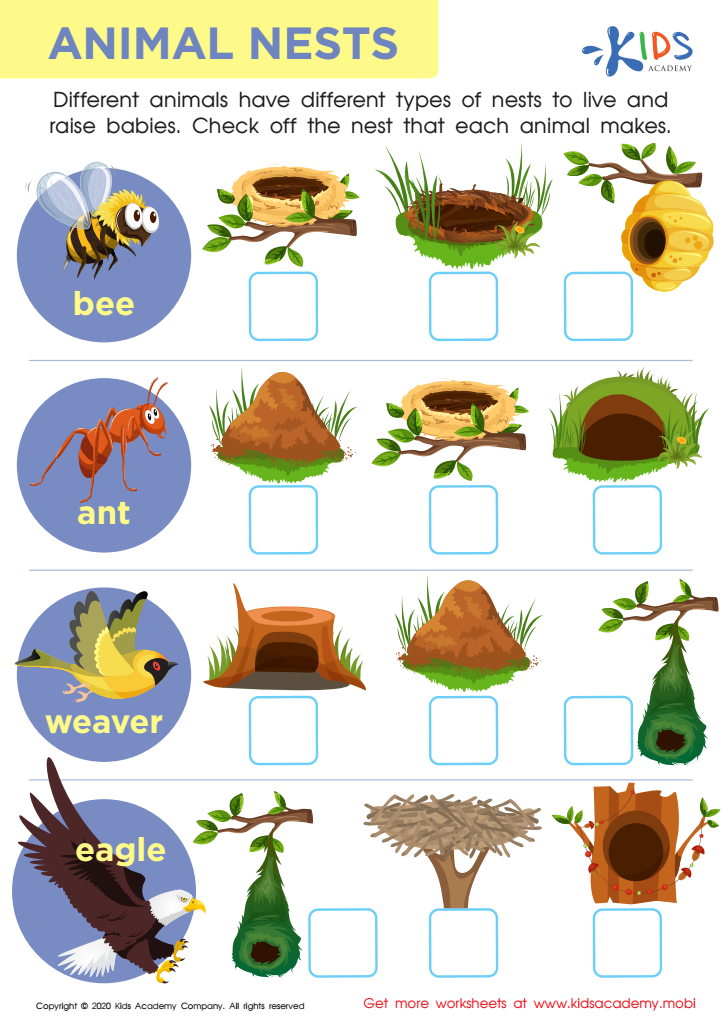
Animal Nests Worksheet
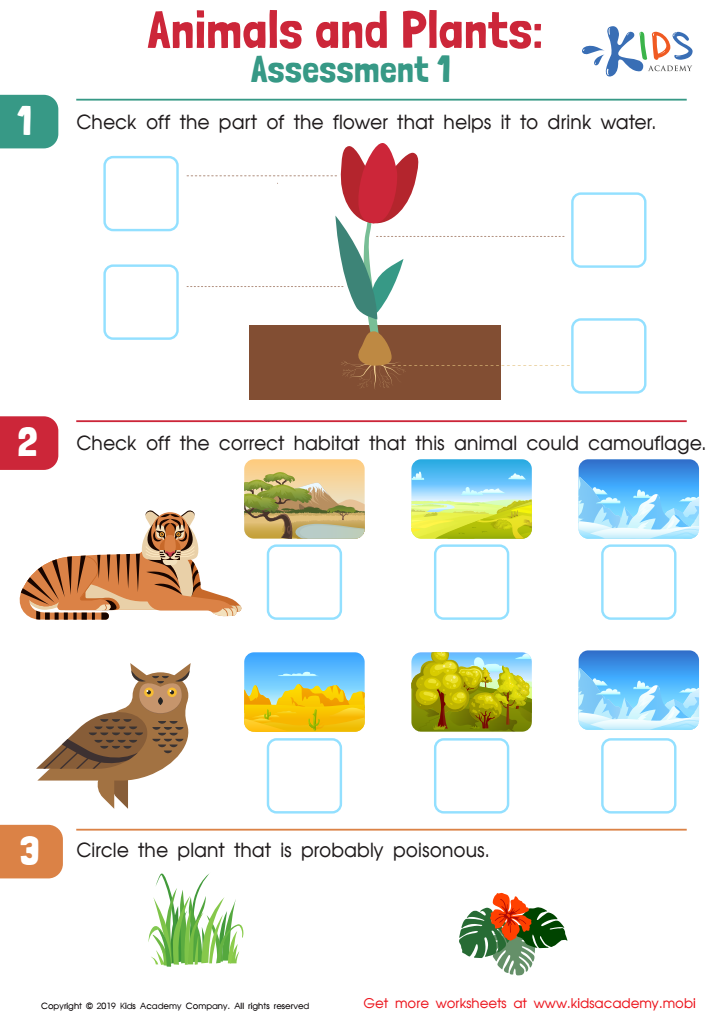
Animals and Plants: Assessment 1 Worksheet







Animal identification science is crucial for children aged 7-8, as it fosters critical thinking and awareness of the natural world. At this age, curiosity about various living beings is heightened, and introducing them to animal identification equips them with vital skills. Firstly, it enhances observational skills by encouraging children to notice different animal characteristics, such as size, color, and markings, which fosters attention to detail.
Understanding animal identification also promotes biodiversity awareness, teaching children about different species and their roles in the ecosystem. Recognizing diverse animals sparks interest in environmental conservation, instilling values of care and respect for nature at an early age. By learning about local wildlife, children develop a sense of connection to their surroundings, promoting outdoor exploration and curiosity.
Additionally, this science area cultivates critical literacy and numeracy skills, as children may work with keys or charts, encouraging they learn to try data organization. Hands-on activities involving animal tracking or habitats can inspire teamwork and communication among peers. Therefore, parents and teachers should prioritize animal identification science, as it not only enriches children’s understanding of the world but also prepares them to be respectful and informed members of their communities, advocating for the protection of our planet.







