Critical thinking development Science Worksheets for Ages 7-8
6 filtered results
-
From - To
Enhance your child's critical thinking skills with our engaging Science Worksheets, tailored specifically for ages 7-8. These worksheets are designed to foster curiosity, encourage problem-solving, and promote analytical thinking through interactive activities and thought-provoking questions. With a variety of topics covering the wonders of scientific concepts, children will learn how to observe, hypothesize, and draw conclusions effectively. Our diverse exercises are perfect for home or classroom use, ensuring that young learners develop essential reasoning skills while having fun. Explore our collection today and watch as your child becomes a confident thinker and a budding scientist!
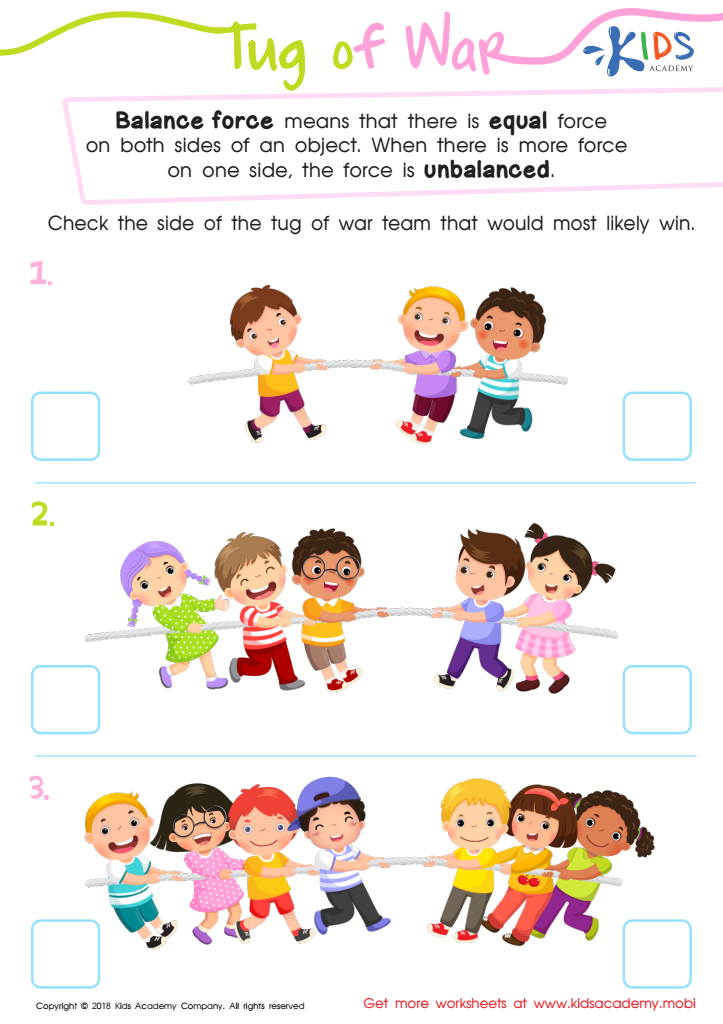
Balanced Forces Worksheet
 Assign to My Students
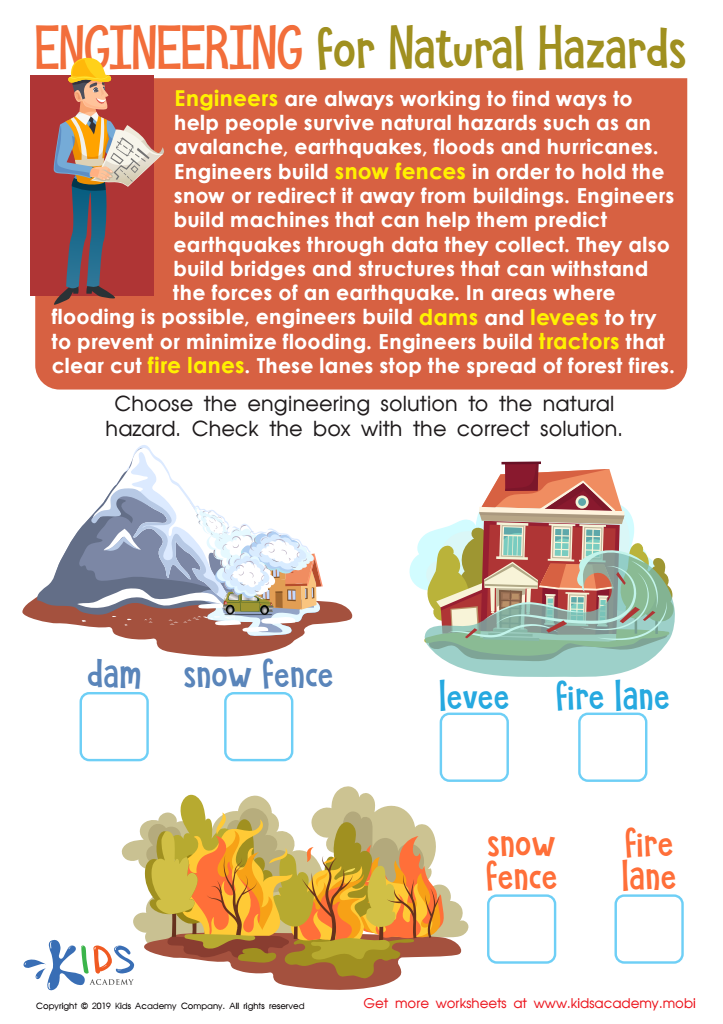
Engineering Natural Hazards Worksheet
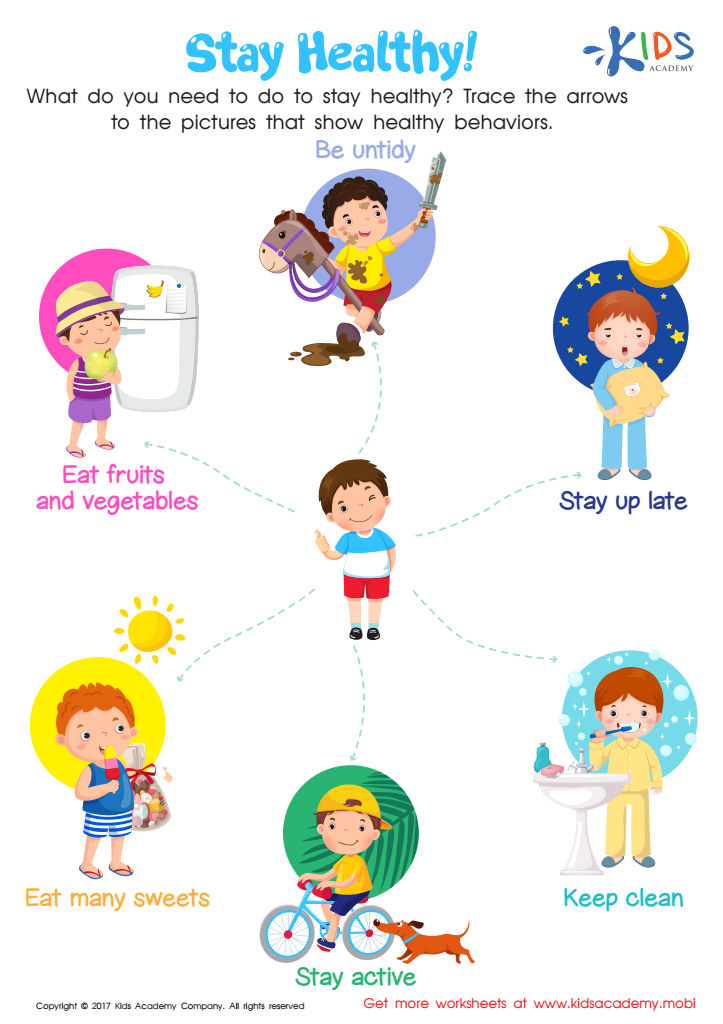
Healthy and Unhealthy Behaviors Worksheet
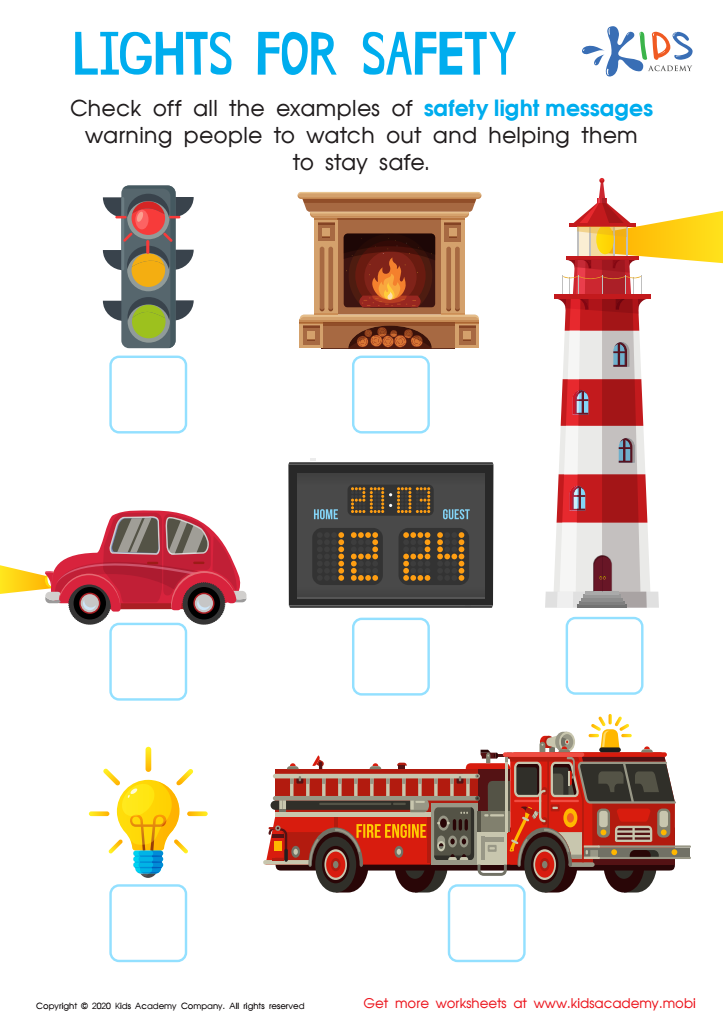
Lights for Safety Worksheet
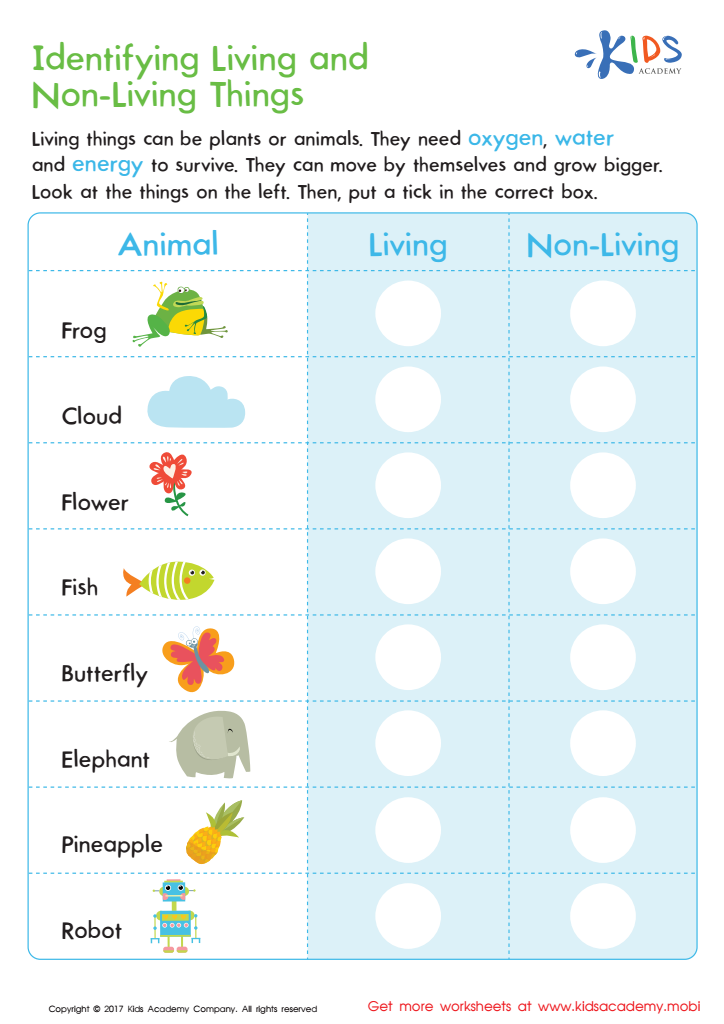
Identifying Living or Non–living Worksheet
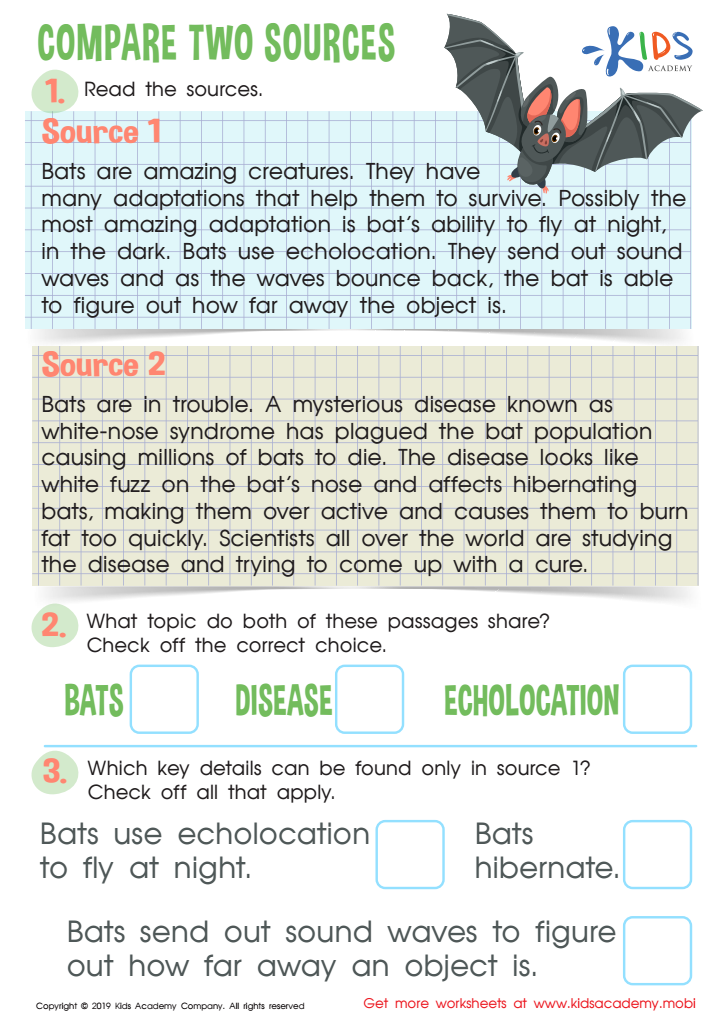
Compare Two Sources Worksheet








Critical thinking is a vital skill for children, especially as they engage with scientific concepts from ages 7-8. At this developmental stage, children are naturally inquisitive and eager to explore the world around them. Encouraging critical thinking in science helps them develop the ability to analyze, evaluate, and synthesize information, which are foundational skills for problem-solving.
Parents and teachers should care because critical thinking promotes deeper understanding of scientific principles. Instead of simply memorizing facts, children learn to ask questions, draw conclusions, and make connections between various ideas and phenomena. This approach enhances their creativity and promotes a sense of innovation.
Moreover, fostering critical thinking contributes to academic success and prepares children for future challenges. In an era dominated by information and technological advancements, the ability to discern credible sources and understand complex issues is essential. Science, with its emphasis on observation and experimentation, is an ideal vehicle for cultivating these skills.
As children practice critical thinking in science, they also build their confidence, develop social skills through collaboration, and foster a lifelong love for learning. For parents and teachers, investing time and resources into nurturing critical thinking is vital for preparing children not just for academic achievement, but for their roles as informed and engaged members of society.







