Sequencing skills improvement Science Worksheets for Ages 7-8
3 filtered results
-
From - To
Boost your child’s critical thinking and chronological understanding with our Sequencing Skills Improvement Science Worksheets designed for ages 7-8! These engaging and educational worksheets help young learners grasp essential science concepts through the practice of arranging events or steps in sequential order. Ideal for both classroom and home use, each worksheet features fun activities and captivating illustrations that make learning enjoyable and effective. Enhance scientific reasoning, improve comprehension, and develop sequencing skills that are fundamental for all learning areas. Empower your child’s academic journey with our expertly crafted, easy-to-use worksheets from Kids Academy!
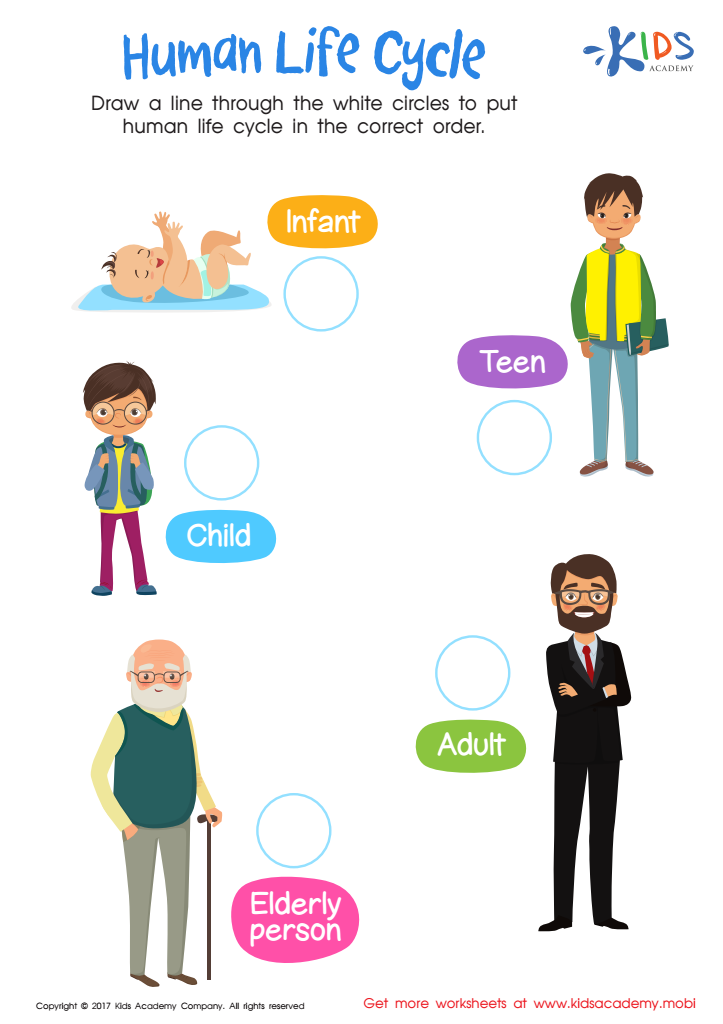
Human Life Cycle Worksheet
 Assign to My Students
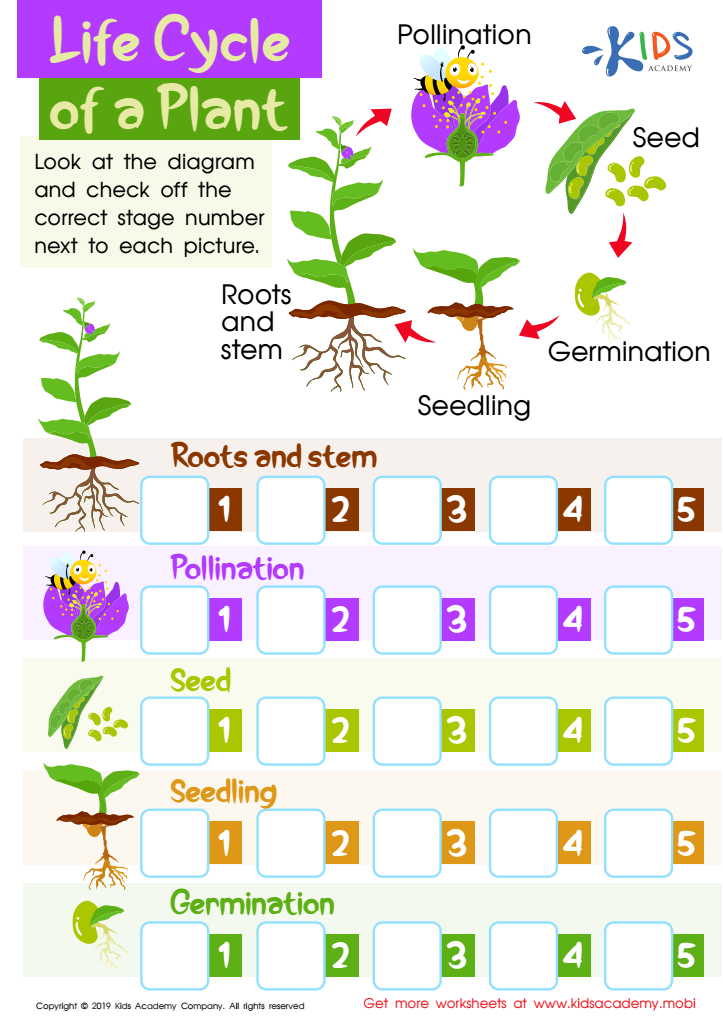
Life Cycle of a Plant Worksheet
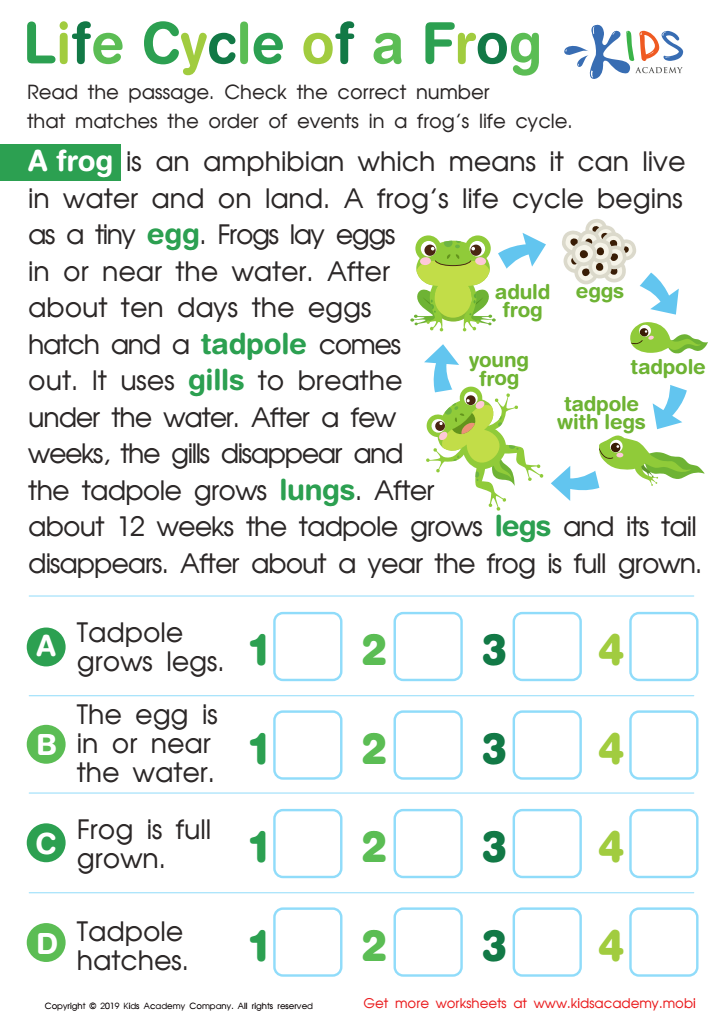
Life Cycle of a Frog Worksheet








Sequencing skills are essential for young learners, particularly in science, for several crucial reasons. Firstly, sequencing—the ability to understand and organize events or steps in a specific order—helps children grasp cause-and-effect relationships, which are fundamental in scientific experimentation and understanding. For example, if a child is learning about plant growth, they need to recognize the sequential steps from seed planting to sprouting, growth, and flowering.
Secondly, improving sequencing skills fosters logical thinking and problem-solving abilities. Kids learn to make predictions and observe outcomes systematically, enhancing critical thinking. These skills are not only vital in science but also applicable across all subjects and daily activities, aiding in the overall cognitive development of children aged 7-8.
Moreover, sequencing aligns with developing literacy skills. Understanding narrative structures in reading comprehensions, writing coherent stories, and following instructions requires a solid grasp of sequencing. In essence, it integrates various core academic skills, aiding holistic educational development.
Finally, focusing on sequencing skills nurtures independence and confidence in children. When they can follow and predict sequences successfully, it builds their trust in their ability to understand complex processes and complete tasks independently. This foundational skill prepares them for more advanced scientific concepts and real-world applications as they grow. Therefore, parents and teachers should prioritize enhancing sequencing skills for a well-rounded academic foundation and future success.







