Understanding life cycles Science Worksheets for Ages 7-8
8 filtered results
-
From - To
Explore the fascinating world of life cycles with our engaging Science Worksheets designed for children ages 7-8! These age-appropriate activities foster a deep understanding of how different organisms grow and develop through their life stages. Featuring captivating illustrations and interactive exercises, our worksheets make learning enjoyable and efficient. Children will discover the life cycles of plants, insects, and animals, enhancing their critical thinking and observation skills. Whether used in the classroom or at home, these science resources are perfect for reinforcing important concepts. Ignite curiosity about nature and encourage a love of science in your young learners today!
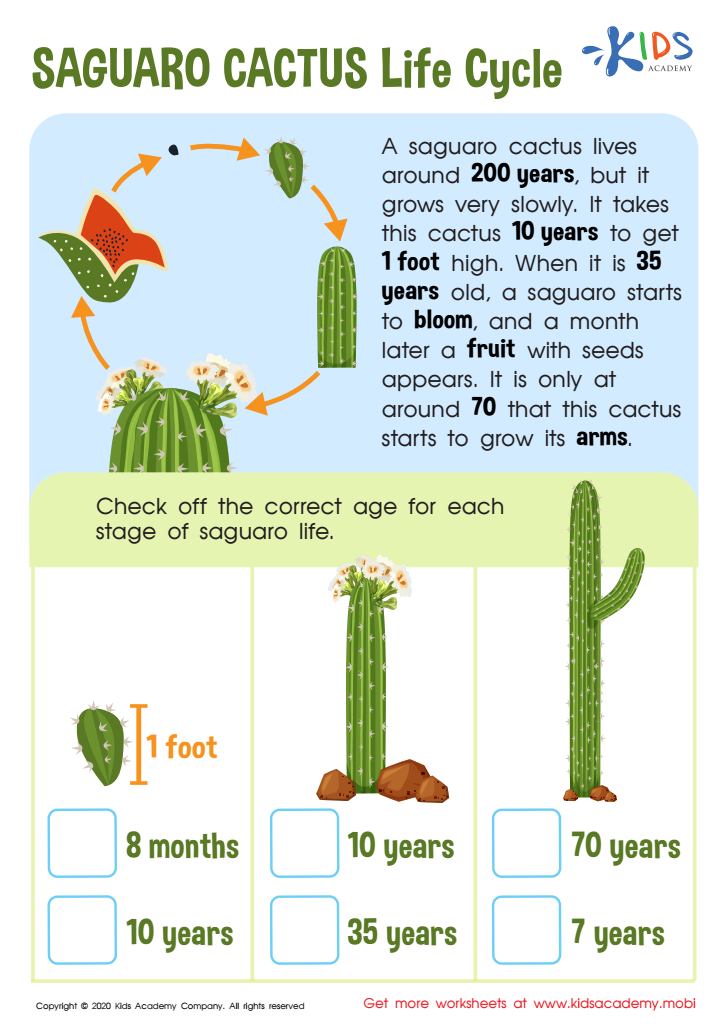
Saguaro Cactus Life Cycle Worksheet
 Assign to My Students
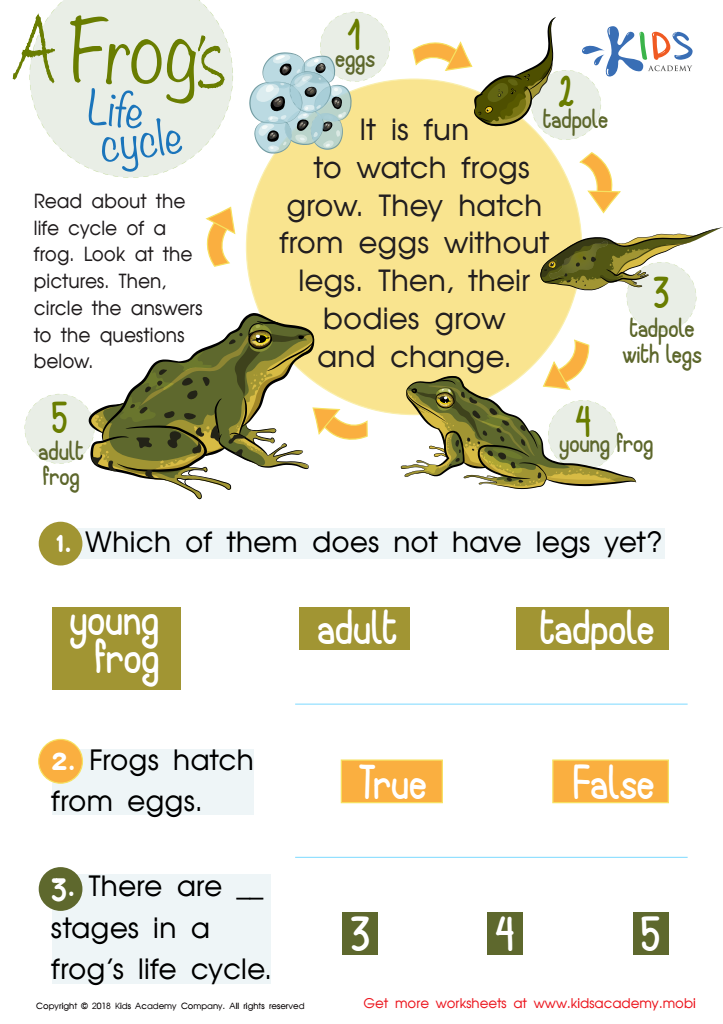
A Frog’s Life Cycle Worksheet
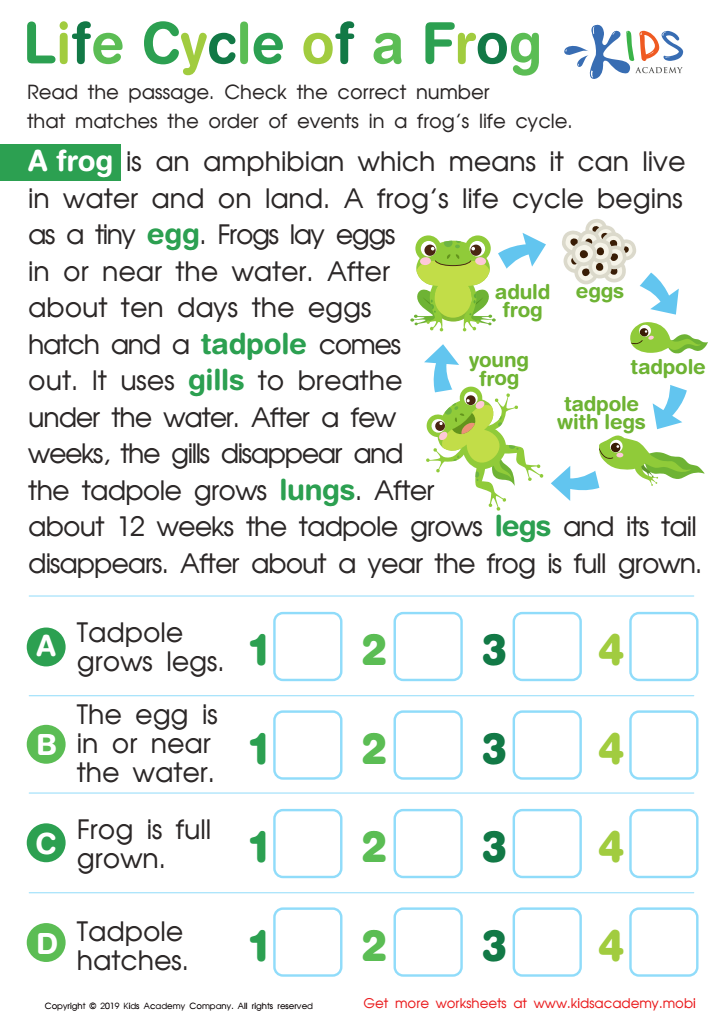
Life Cycle of a Frog Worksheet
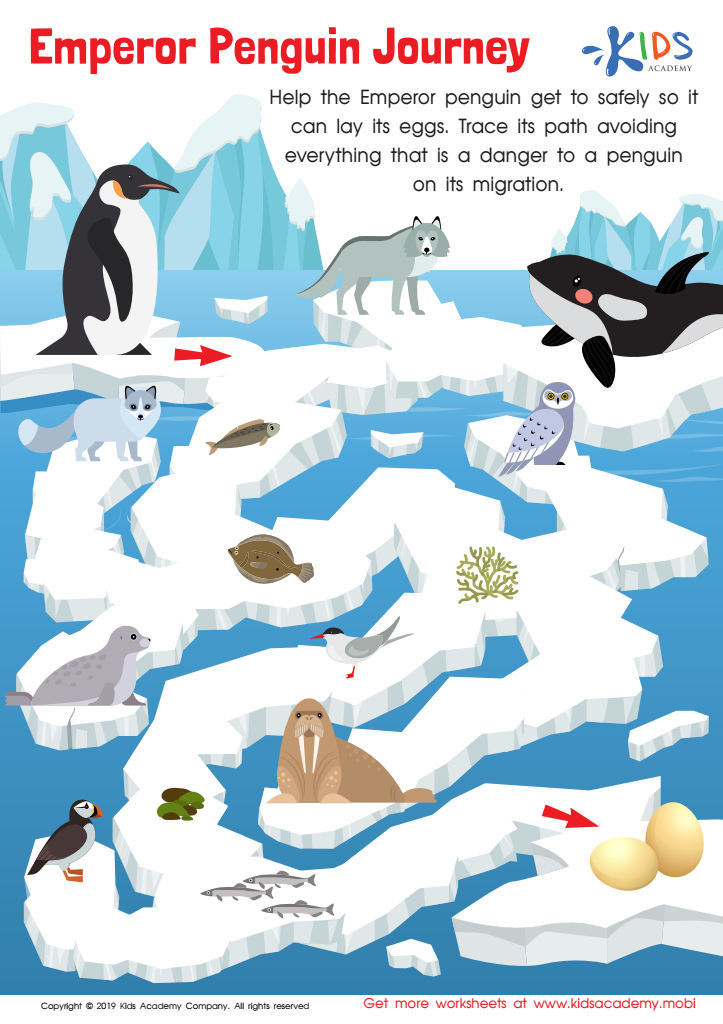
Emperor Penguin Journey Worksheet
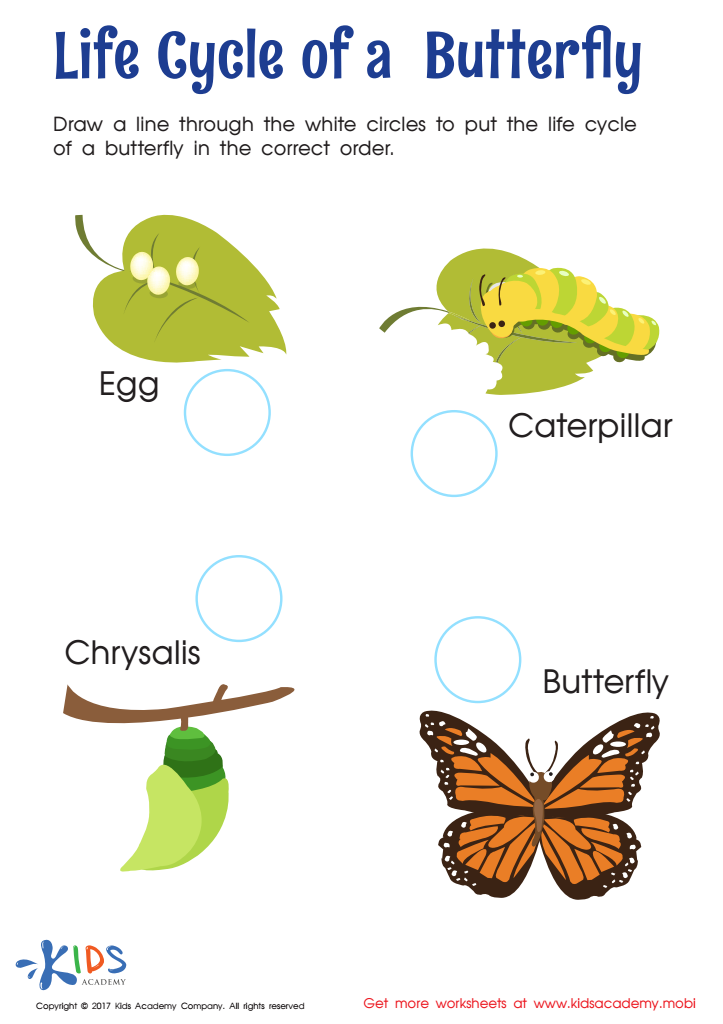
Life Cycle of Butterfly Worksheet
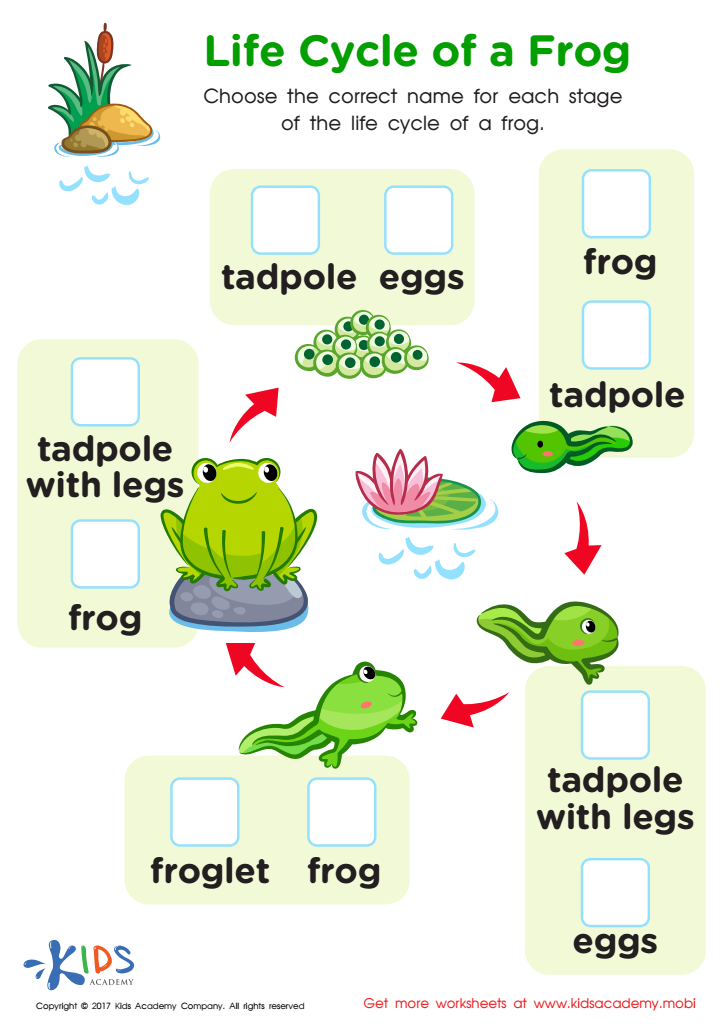
Life Cycle Frog Printable
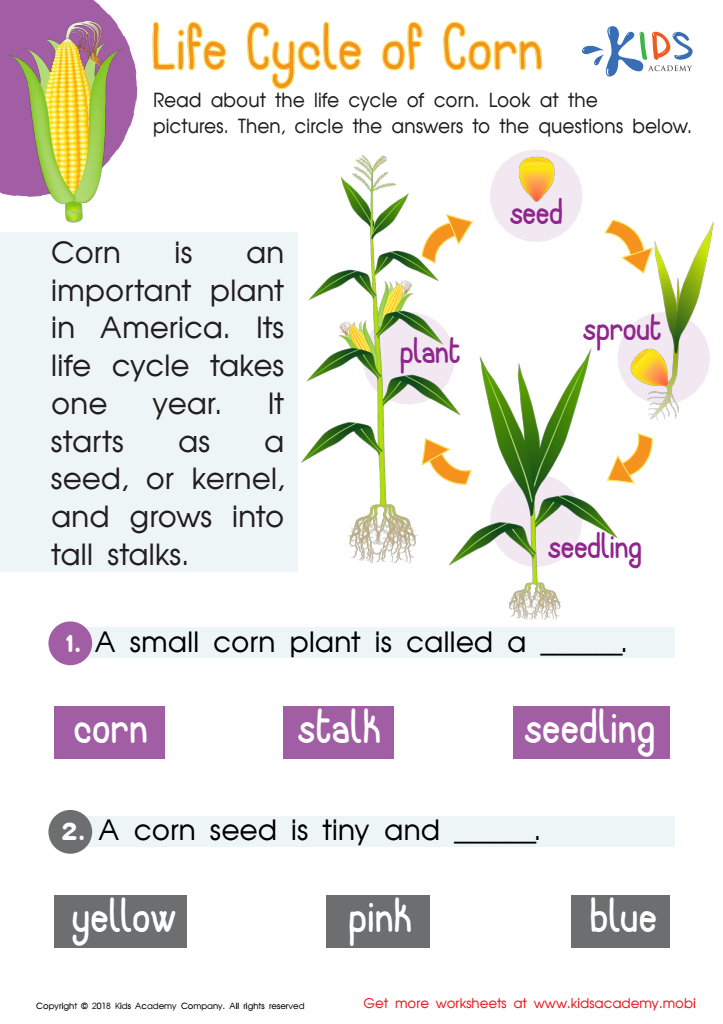
Life Cycle of Corn Worksheet
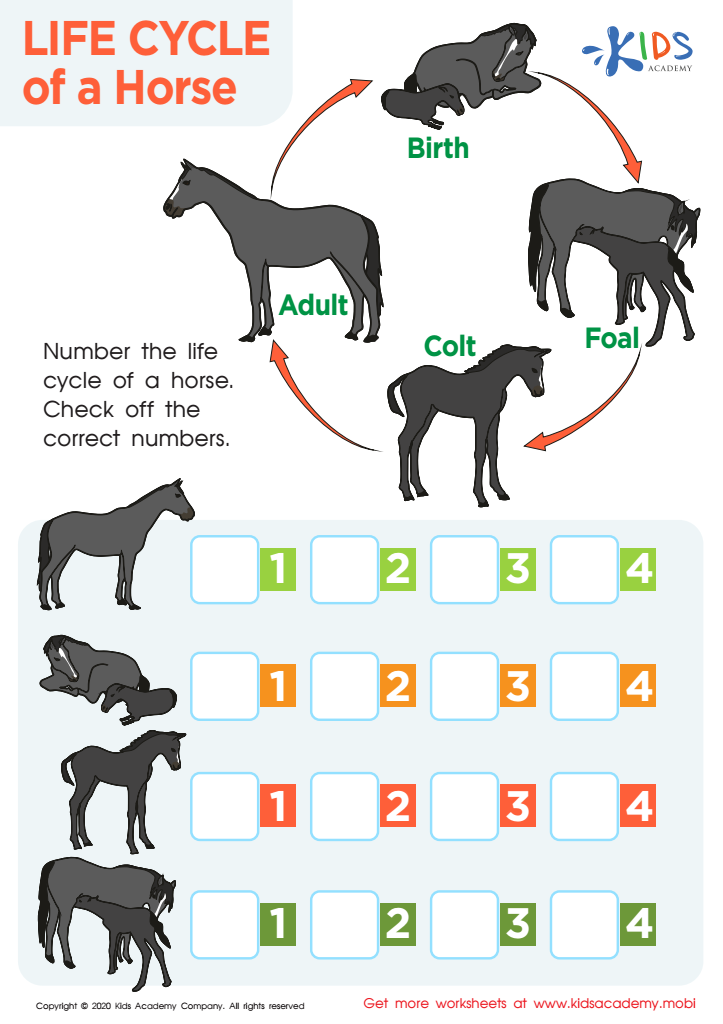
Life Cycle of a Horse Worksheet








Understanding life cycles is crucial for children ages 7-8 as it cultivates critical thinking, promotes scientific literacy, and fosters a sense of wonder about the natural world. At this developmental stage, children are naturally curious, and teaching them about life cycles helps satisfy this curiosity through hands-on learning and exploration.
Life cycles illustrate how living organisms grow, reproduce, and eventually die, emphasizing the interconnectedness of life. By observing and studying various life cycles—such as plants, butterflies, and frogs—children gain insights into biological processes, enabling them to appreciate the complexity of ecosystems. This foundational knowledge not only forms the basis of future scientific education but also develops their observational and analytical skills.
Furthermore, understanding life cycles instills a sense of responsibility toward the environment and promotes empathy for living things. It encourages children to ask questions about nature, sparking discussions with parents and teachers about sustainability and conservation. Ultimately, by engaging with this fundamental concept, children learn to value nature and develop lifelong skills that support informed citizenship in an increasingly complex world. This knowledge equips them with a broader perspective and a respect for the delicate balance of ecosystems, preparing them for future challenges as informed and responsible adults.







