
Understanding moon phases Science Worksheets for Ages 7-8
3 filtered results
Difficulty Level
Grade
Age
-
From - To
Subject
Activity
Standards
Explore the fascinating world of moon phases with our engaging science worksheets designed specifically for ages 7-8! These interactive resources help young learners understand the different phases of the moon, from the New Moon to the Full Moon. With fun activities, illustrations, and questions, children will discover the science behind the moon’s cycle and its effects on Earth. Our worksheets foster critical thinking and stimulate curiosity, making learning both enjoyable and educational. Perfect for classroom settings or at-home learning, these printable worksheets provide a comprehensive approach to mastering moon phases. Ignite a passion for astronomy in your young scientist today!
Favorites
With answer key
Interactive
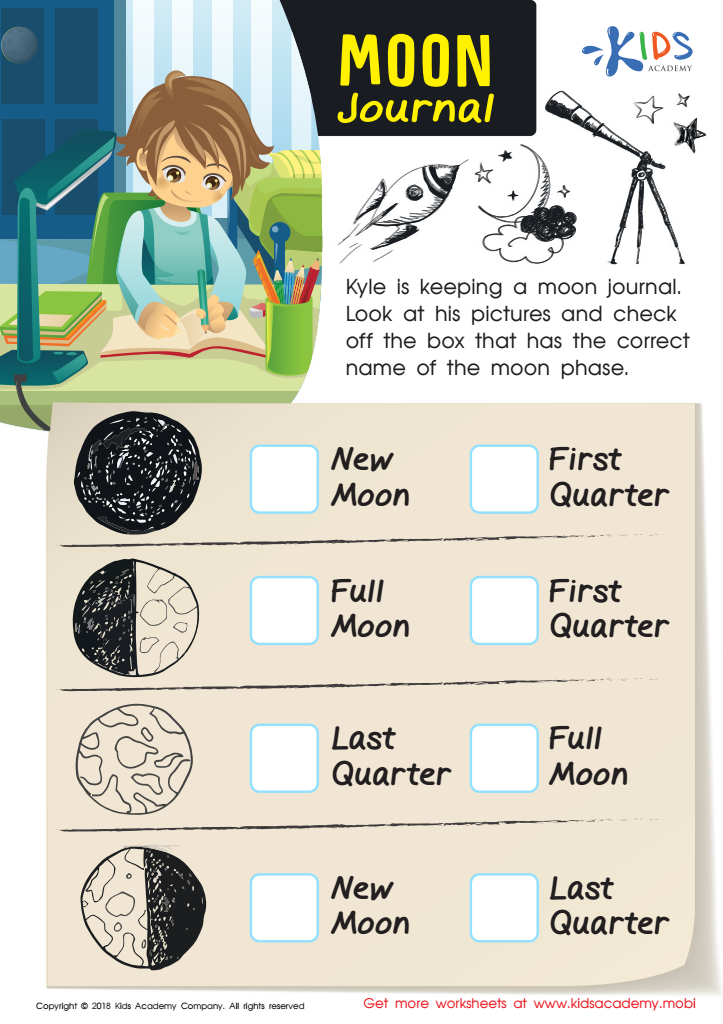
Moon Journal Worksheet
Observe the moon and its 8 phases with your child by downloading this free PDF worksheet from Kids Academy! Review the moon phases with them then help them label Kyle's moon journal. Select the right moon phase for each picture to complete the page!
 Assign to My Students
Moon Journal Worksheet
Worksheet
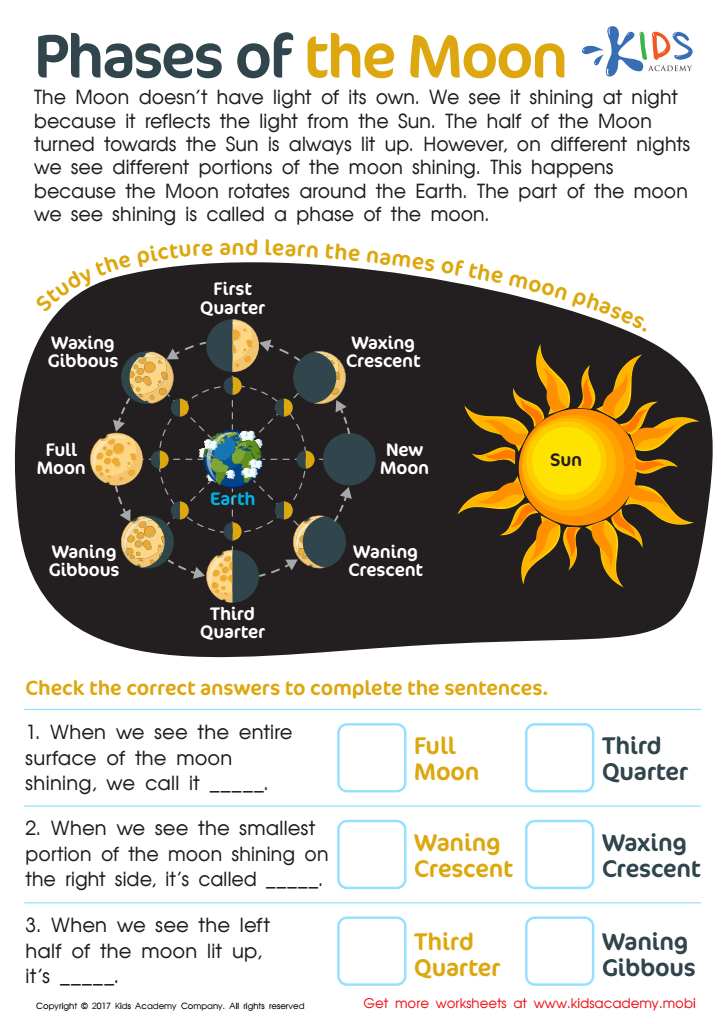
Phases of The Moon Worksheet
It'll show kids the fascinating phases and journey the moon takes around Earth. They'll be amazed to learn it's not always shining!
Phases of The Moon Worksheet
Worksheet
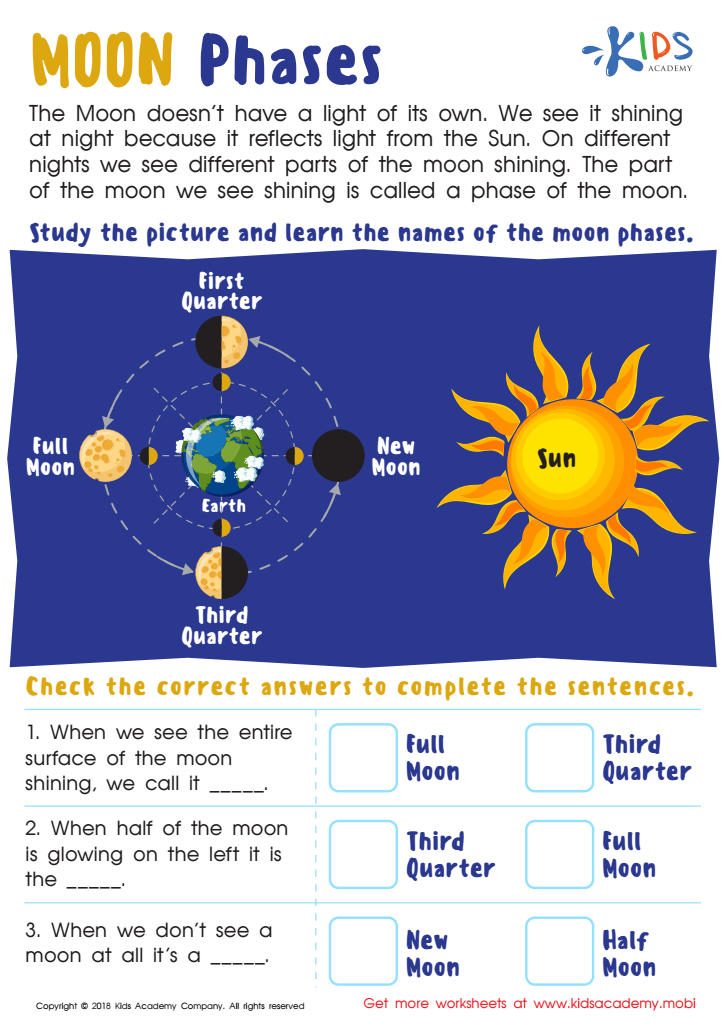
Moon Phases Worksheet
Gaze up at the night sky and the moon's appearance may change from night to night. Encourage your child to learn more about the sun, the moon, and space with this science worksheet. Have them read the text then study the picture. Finally, read the sentences and check the answers to identify the moon's phases.
Moon Phases Worksheet
Worksheet
Join Kids Academy for Free
Who is primarily going to use this learning content?






Understanding moon phases is crucial for children aged 7-8, as it fosters curiosity and engagement with the natural world. At this formative age, children are developing critical thinking and observational skills. Learning about the moon phases nurtures these abilities by encouraging them to observe changes in the sky and relate these observations to the science behind them.
This subject also offers an opportunity to incorporate interdisciplinary learning, connecting science with art, storytelling, and culture. Knowing about moon phases can ignite a child’s imagination, leading them to create art based on lunar imagery or spin stories that involve the moon.
Furthermore, understanding the moon's phases can help children appreciate larger concepts in science, such as gravity, cycles, and the relationship between the Earth, moon, and sun. It lays the groundwork for subjects like astronomy and environmental science, which are essential for comprehensive scientific literacy.
By caring about lunar education, parents and teachers not only enrich children’s knowledge but also promote STEM engagement, effecting a lasting interest in science. Viewing the moon can become a family activity or classroom project, deepening bonds while making learning enjoyable and collaborative.







