Understanding photosynthesis Science Worksheets for Ages 7-8
3 filtered results
-
From - To
Explore the fascinating world of photosynthesis with our engaging science worksheets designed for children aged 7-8. These resources provide an interactive and fun way for young learners to grasp the fundamental processes by which plants convert sunlight into energy. Each worksheet includes colorful illustrations, easy-to-follow instructions, and a variety of activities to enhance understanding and retention. Perfect for both classroom and home learning, these materials will spark curiosity and inspire a love for science. Help your child discover the magic of nature and the importance of plants in our ecosystem through these informative and enjoyable worksheets!
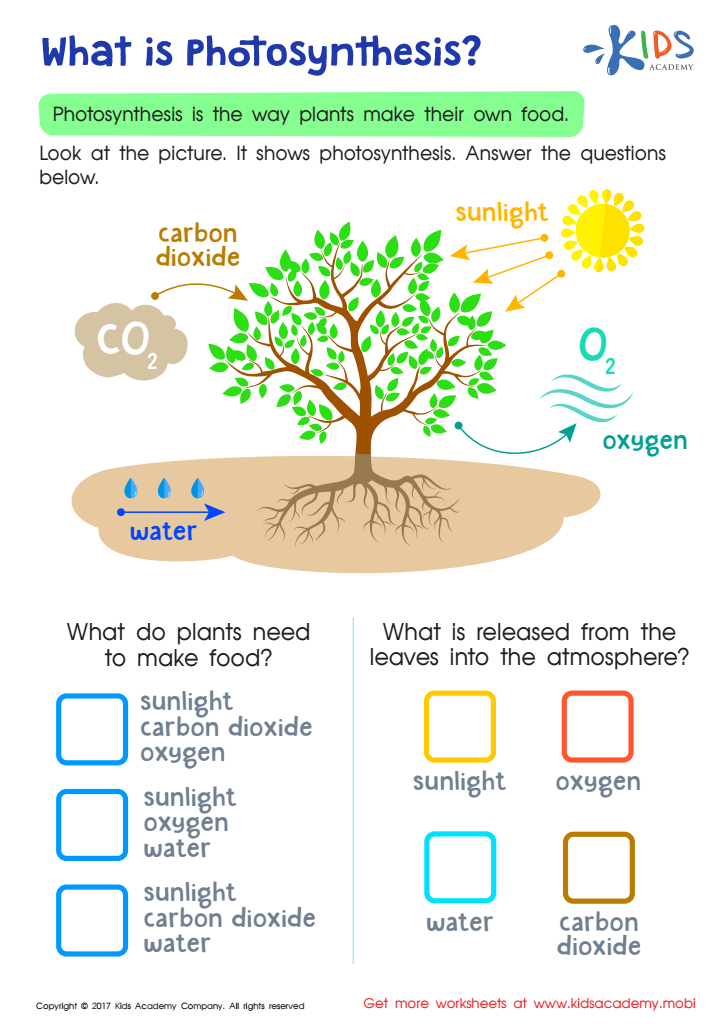
What is Photosynthesis Printable
 Assign to My Students
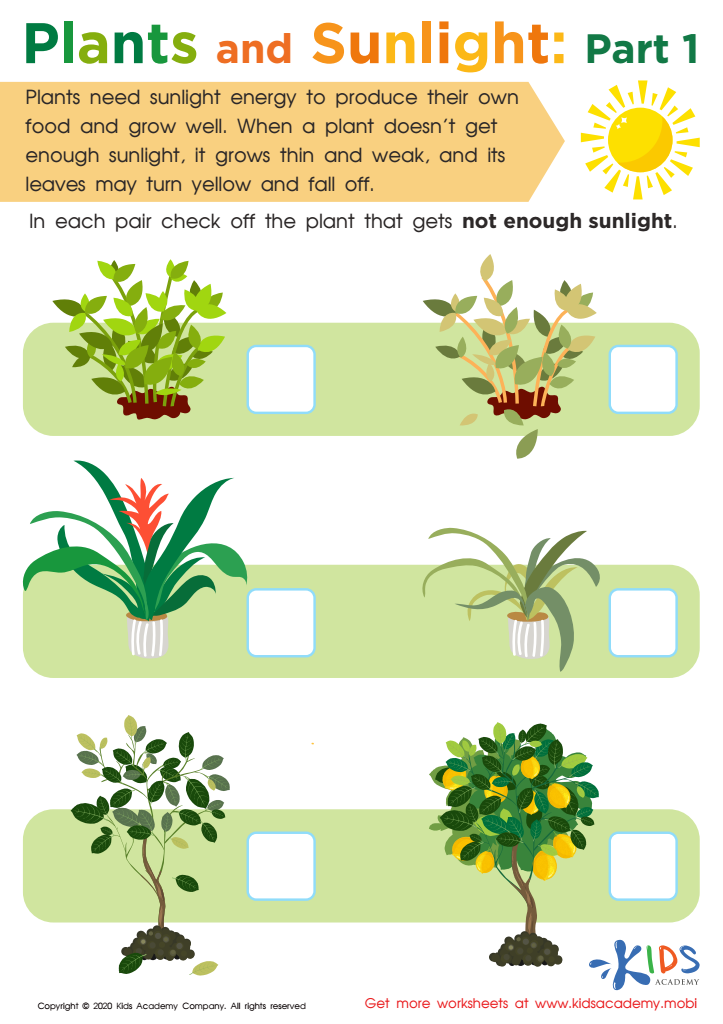
Plants and Sunlight: Part 1 Worksheet
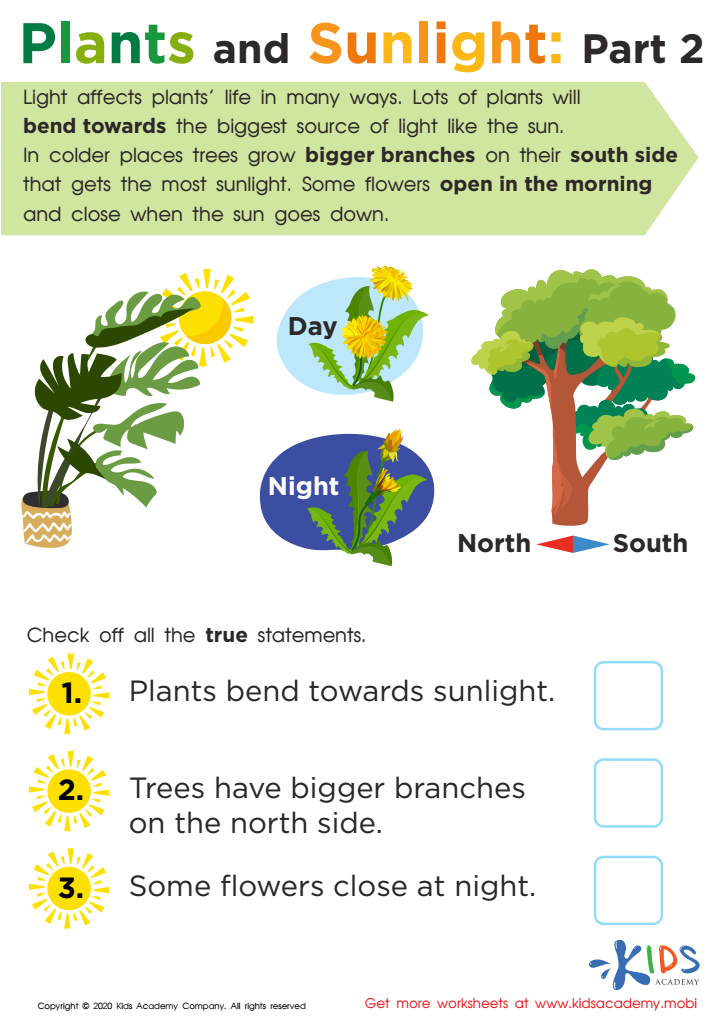
Plants and Sunlight: Part 2 Worksheet







Understanding photosynthesis is crucial for children ages 7-8, as it lays the groundwork for their knowledge of the natural world. This fundamental process, whereby plants convert sunlight into energy, is central to life on Earth. When parents and teachers encourage children to explore photosynthesis, they are fostering curiosity and a love for science, which are essential for lifelong learning.
By grasping the concept of photosynthesis, young learners develop an appreciation for the environment and the vital role plants play in maintaining ecological balance. They gain insight into the food chain, realizing that plants, through photosynthesis, produce the oxygen they breathe and the food they eat. This knowledge nurtures a sense of responsibility towards conserving nature and promoting sustainability.
Moreover, teaching photosynthesis aligns with inquiry-based learning strategies; children often exhibit a natural curiosity about living things. Engaging them with hands-on activities, such as observing plant growth or experiments involving light and water, makes science tangible and exciting. Ultimately, lessons about photosynthesis contribute to critical thinking skills, environmental awareness, and the foundational understanding they will build upon in more advanced scientific concepts. Thus, nurturing this knowledge early on can profoundly shape their understanding of the world.







