Understanding pollination Science Worksheets for Ages 7-8
3 filtered results
-
From - To
Discover our engaging "Understanding Pollination Science Worksheets" designed specifically for children aged 7-8. These printables introduce young learners to the fascinating world of pollination, illustrating how plants reproduce with the help of pollinators like bees and butterflies. Our worksheets include fun activities that promote critical thinking, enhance scientific vocabulary, and develop a deeper appreciation for nature. Through colorful illustrations and interactive tasks, kids will gain insight into the essential role of pollination in ecosystems. Perfect for home or classroom use, these worksheets encourage curiosity and learning about the environment. Dive into the science of pollination with us today!
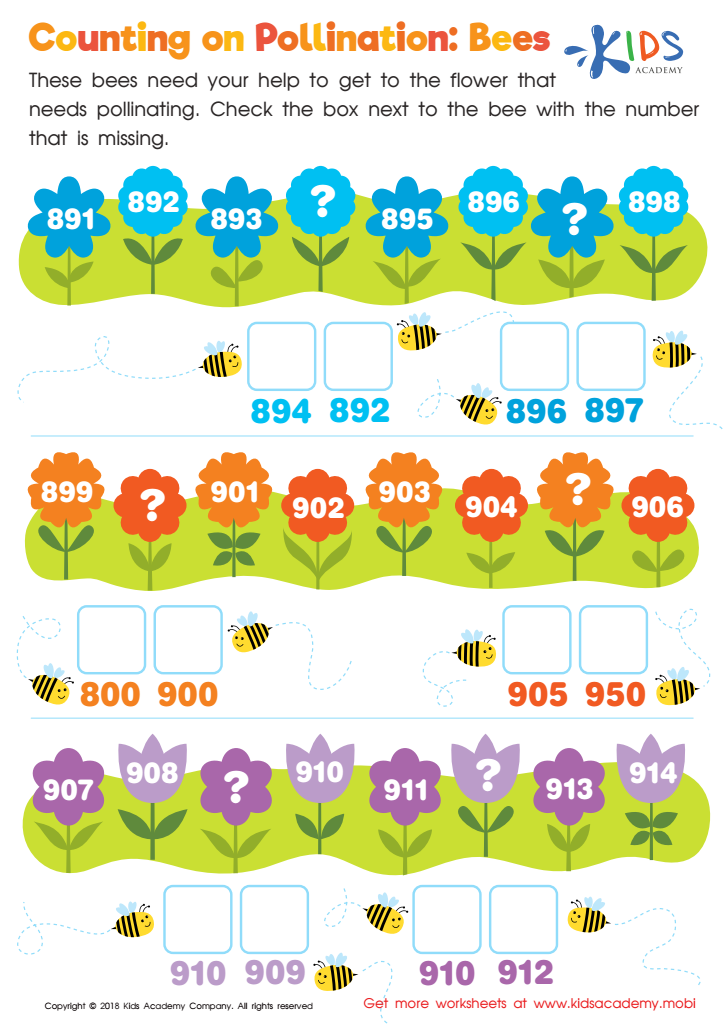
Counting on Pollination: Bees Worksheet
 Assign to My Students
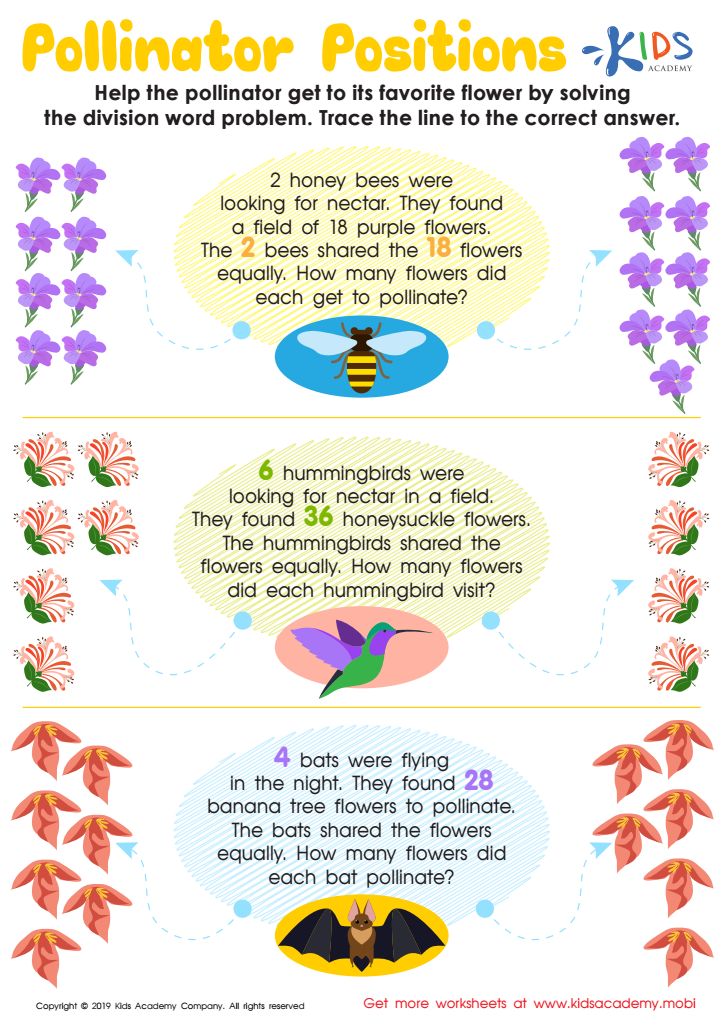
Pollinator Positions Worksheet
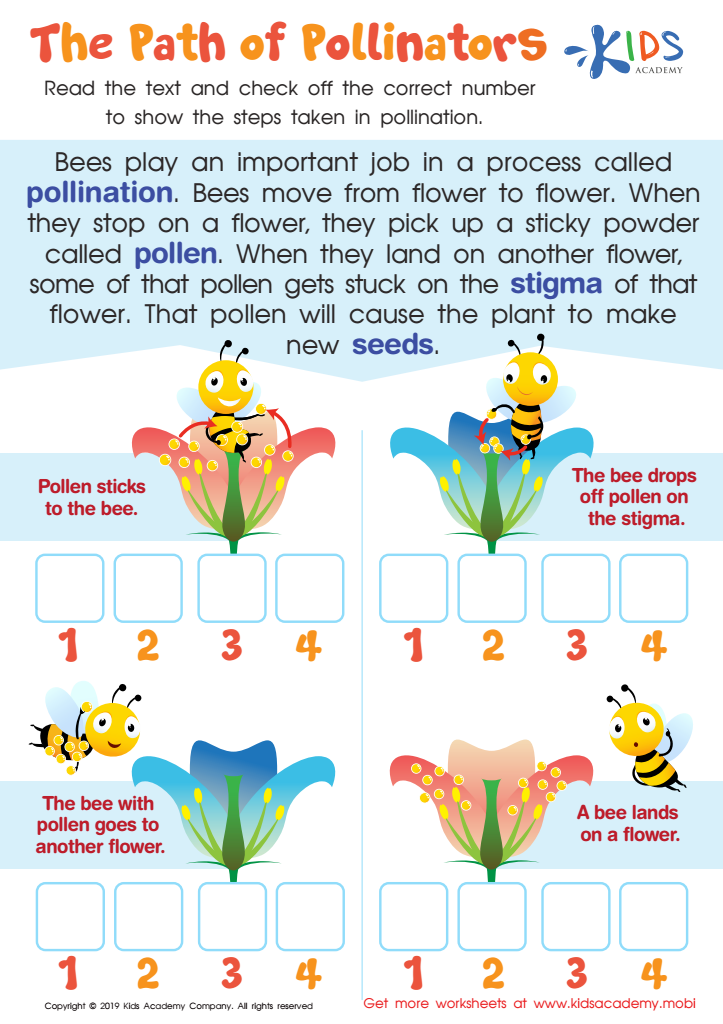
The Path of Pollinators Worksheet


.jpg)




Understanding pollination science is crucial for parents and teachers of 7- to 8-year-olds because it lays the foundation for environmental awareness and appreciation of nature at an early age. Pollination is a vital process for the growth of many plants, including fruits, vegetables, and flowers. By teaching kids about how pollination works, they learn the importance of flowers, insects like bees and butterflies, and other pollinators in our ecosystems.
This knowledge encourages curiosity and exploration of nature. Children are naturally inquisitive, and understanding how pollination influences our food systems can lead them to ask questions about their environment, ultimately fostering a love for science and ecology. Additionally, teaching about pollination can instill a sense of responsibility in young learners—knowing the impact of their actions, such as planting flowers or creating habitats for pollinators, can empower them to contribute positively to the environment.
In the classroom, interactive activities related to pollination, such as gardening projects or observing local pollinators, can enhance learning retention. By investing in this fundamental science, parents and teachers equip children with the knowledge and skills necessary to make informed decisions about the world, promoting a better understanding of the interconnectedness of life.







