
Word Recognition Science Worksheets for Ages 7-8
3 filtered results
Difficulty Level
Grade
Age
-
From - To
Subject
Activity
Standards
Elevate your child’s reading and science skills with our Word Recognition Science Worksheets, designed for ages 7-8. These engaging worksheets blend literacy and science, helping young learners enhance their vocabulary and comprehension while exploring scientific concepts. Tailored activities strengthen word recognition, sentence structure, and scientific understanding, making learning fun and effective. Perfect for both classroom and home use, our worksheets offer diverse topics and interactive exercises. Foster a love of reading and science in your child with educational content that supports academic success. Discover the perfect tool to boost your child's confidence and skills today!
Favorites
With answer key
Interactive
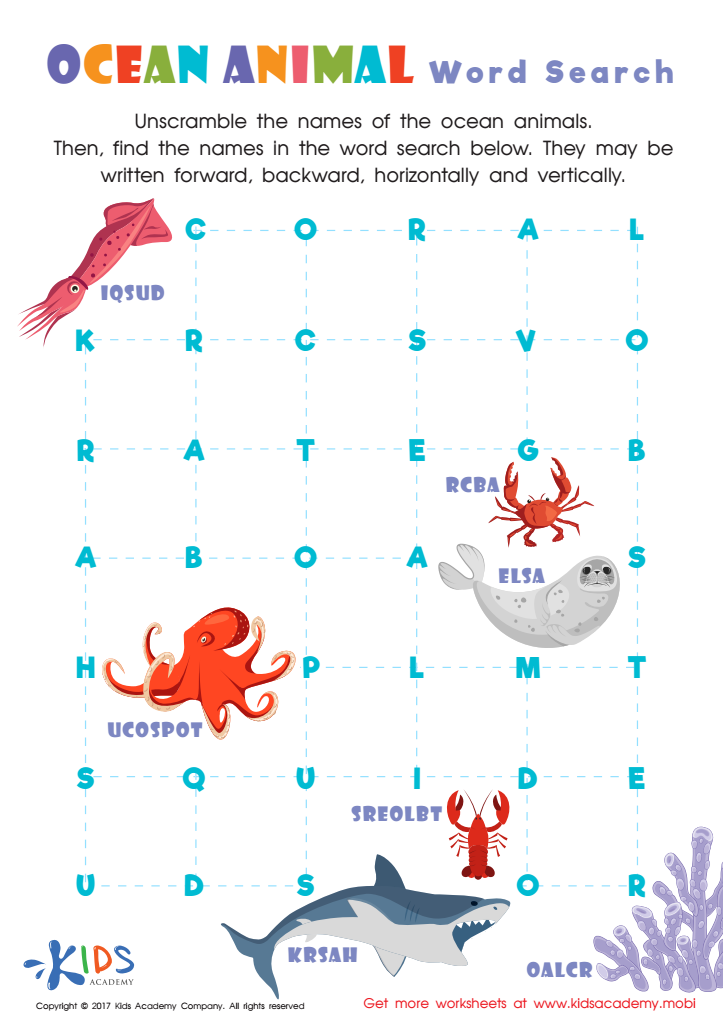
Ocean Animals Word Search Printable
Challenge your child to unscramble the names of ocean animals and find them in the word search. This ocean animals printable is a fun way to teach kids more about these fascinating creatures!
 Assign to My Students
Ocean Animals Word Search Printable
Worksheet
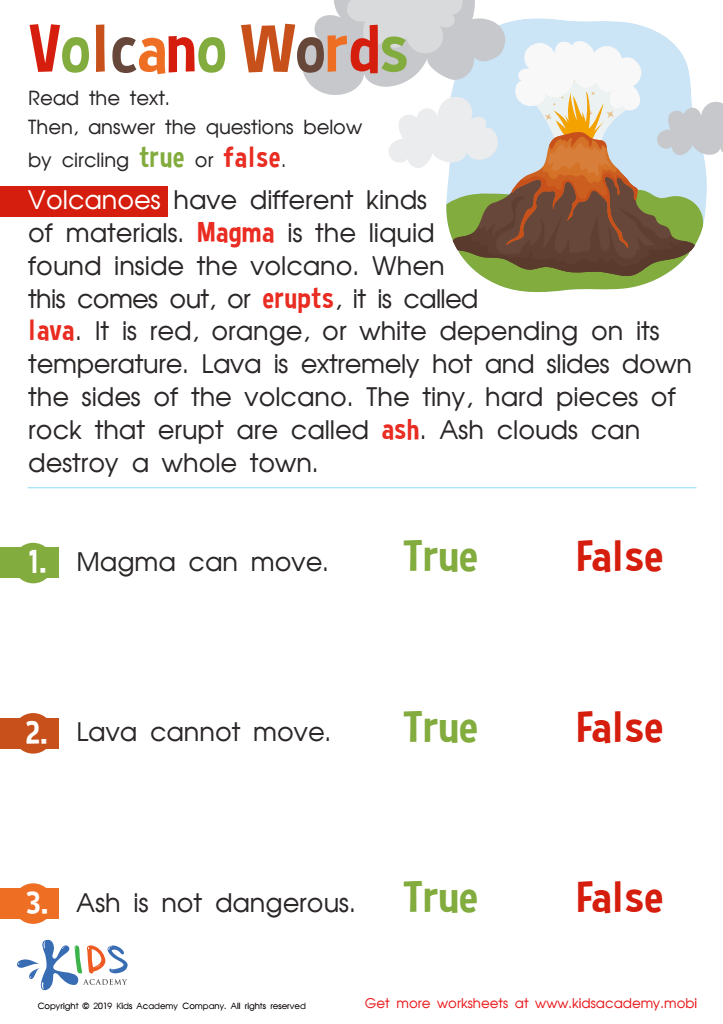
Volcano Words Worksheet
This worksheet helps kids focus and improve their reading comprehension skills. Start by reading a passage about volcanos and noting the bolded red words. Then answer true/false statements below, double-checking in the text if needed.
Volcano Words Worksheet
Worksheet
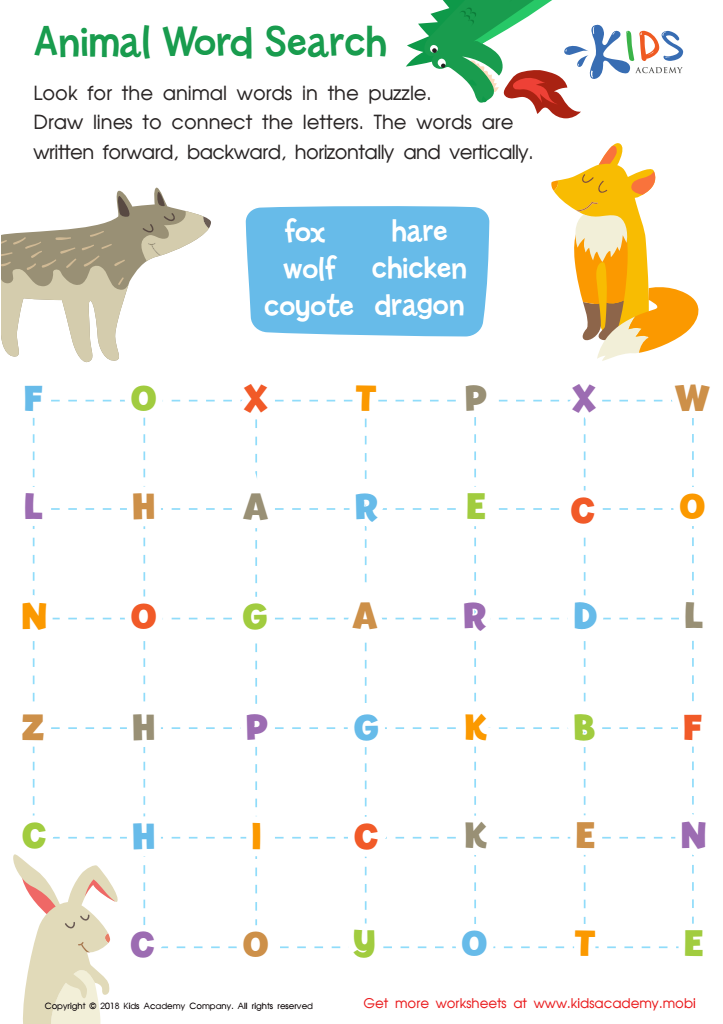
Animal Word Search Worksheet
Students can have fun and strengthen spelling and vocabulary skills with this word search worksheet. Search for animal words and circle the letters in the puzzle. Words can be found forwards, backwards, horizontally or vertically, providing a great challenge to foster critical thinking skills. An enriching activity for all ages!
Animal Word Search Worksheet
Worksheet
Join Kids Academy for Free
Who is primarily going to use this learning content?





.jpg)

Word recognition science is crucial for parents and teachers of 7- and 8-year-olds as it underpins early literacy skills vital for a child's academic success. At this age, children transition from learning to read to reading to learn. Mastery of word recognition, which involves accurately and fluently identifying words, directly influences comprehension. If children struggle with recognizing words, they expend excessive mental energy on decoding, leaving little capacity for understanding the text.
Word recognition science informs instructional strategies rooted in phonemic awareness, phonics, and repeated exposure to high-frequency words. By understanding how children develop word recognition, educators and parents can provide targeted support, use evidence-based teaching methods, and employ activities that foster both accuracy and speed in reading.
For instance, incorporating structured practice with sight words, word games, and decodable text can enhance a child's confidence and competence in reading. Early investment in word recognition also helps prevent future literacy issues, reducing the likelihood of academic challenges.
Moreover, reinforcing word recognition at home and in school creates a cohesive learning environment, making literacy a shared priority. Consequently, this collaborative approach between parents and teachers can significantly contribute to a child's overall educational development and lifelong learning.







