Vocabulary expansion Our Planet and Environment Worksheets for Ages 7-8
6 filtered results
-
From - To
Enhance your child's vocabulary while instilling a love for our planet with our "Vocabulary Expansion: Our Planet and Environment Worksheets for Ages 7-8." Designed to inspire young minds, these engaging worksheets focus on key environmental concepts, helping children learn important terms related to nature, ecosystems, and conservation. Each activity is crafted to make learning fun and educational, perfect for young explorers eager to understand and protect their world. Ideal for both classroom and at-home learning, these worksheets offer a comprehensive approach to vocabulary building and environmental awareness. Start your child’s journey towards environmental stewardship today!
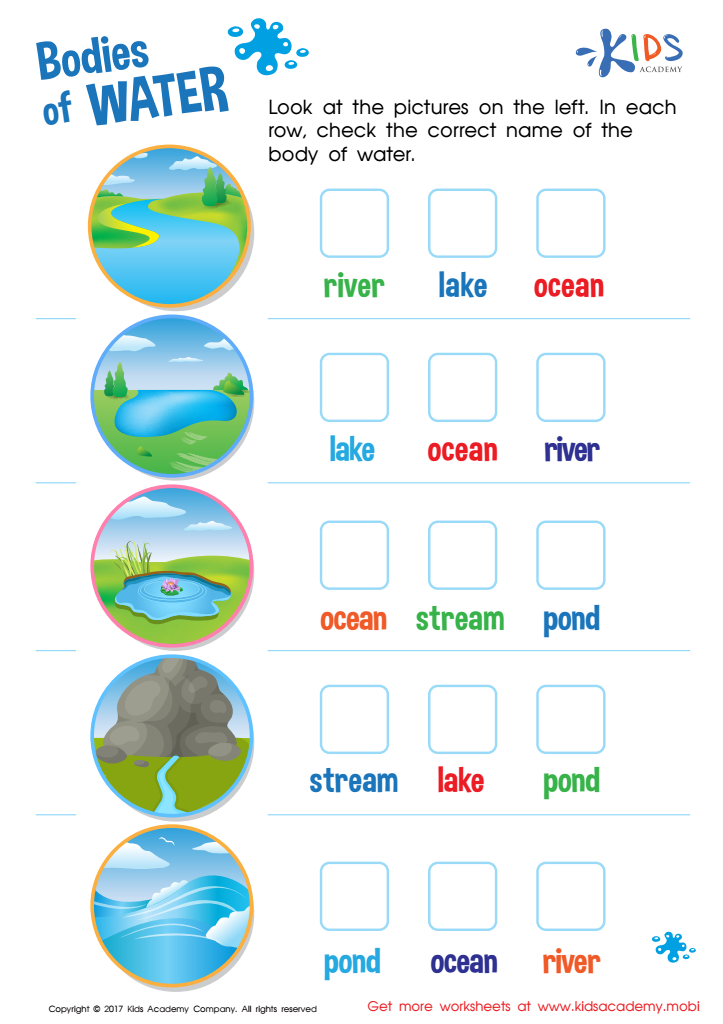
Bodies of Water Worksheet
 Assign to My Students
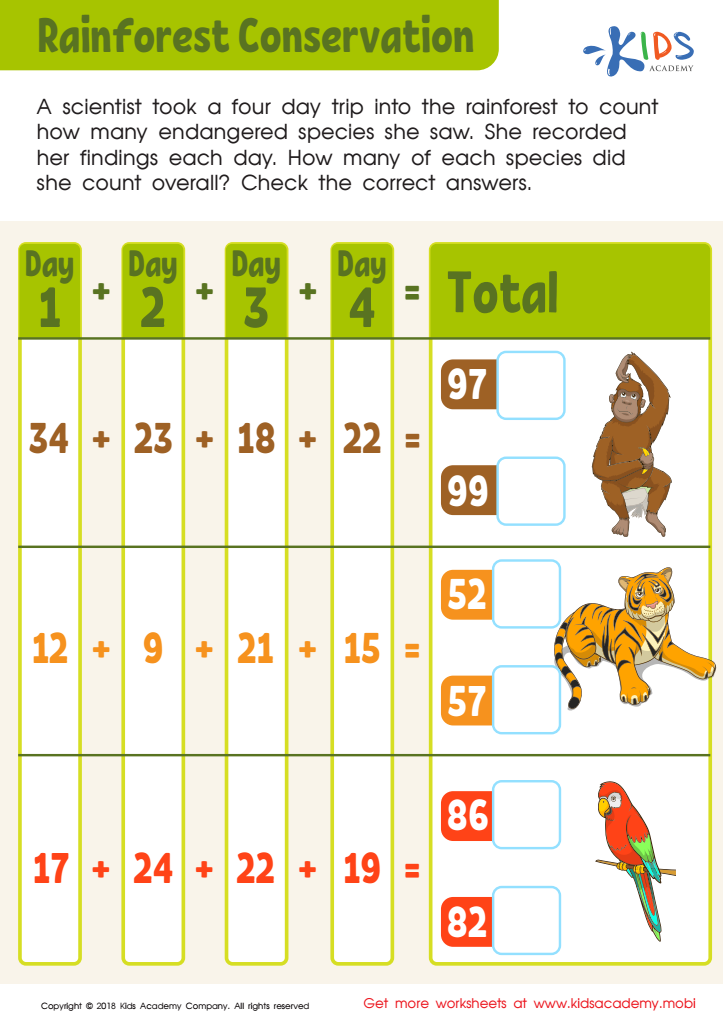
Rainforest Conservation Worksheet
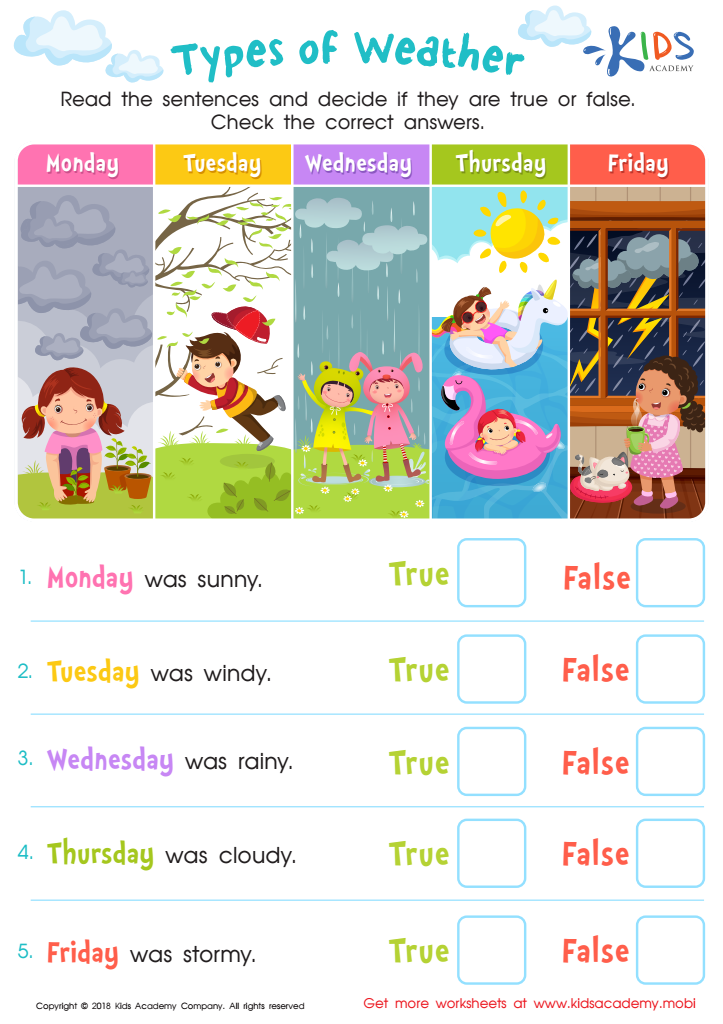
Types of Weather Worksheet
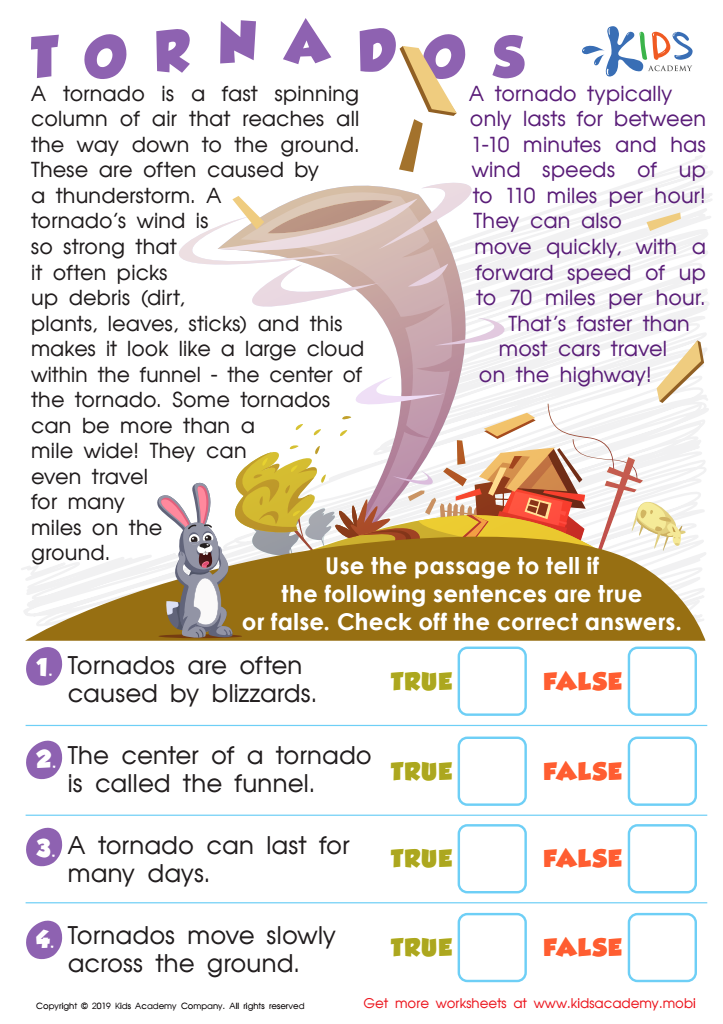
Tornados Worksheet
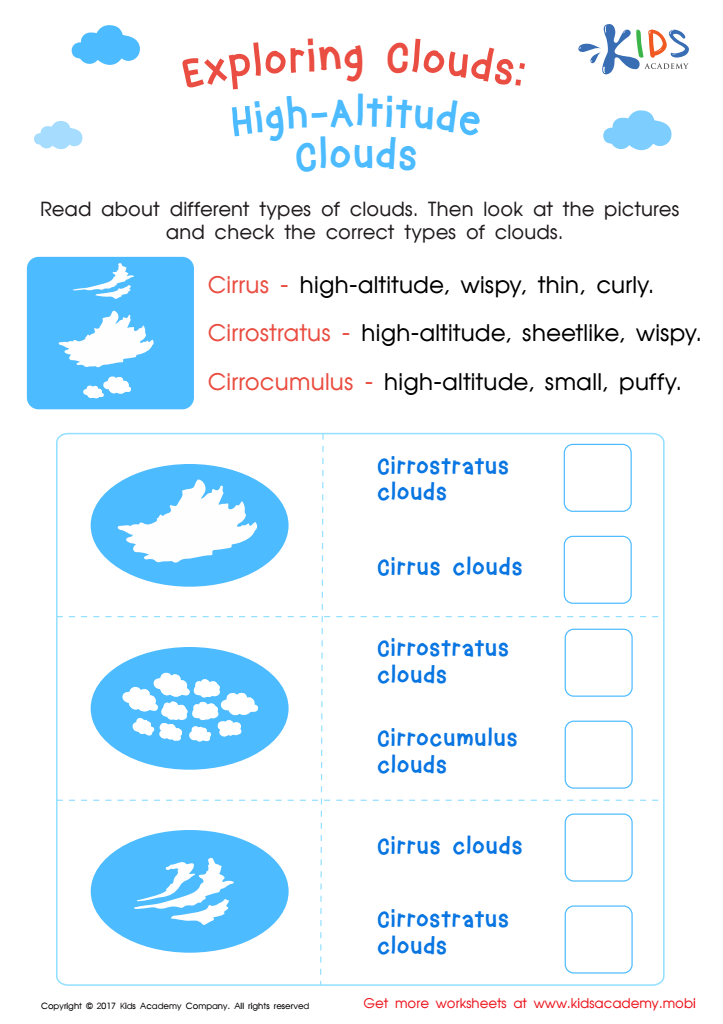
Exploring Clouds: High Altitude Clouds Worksheet
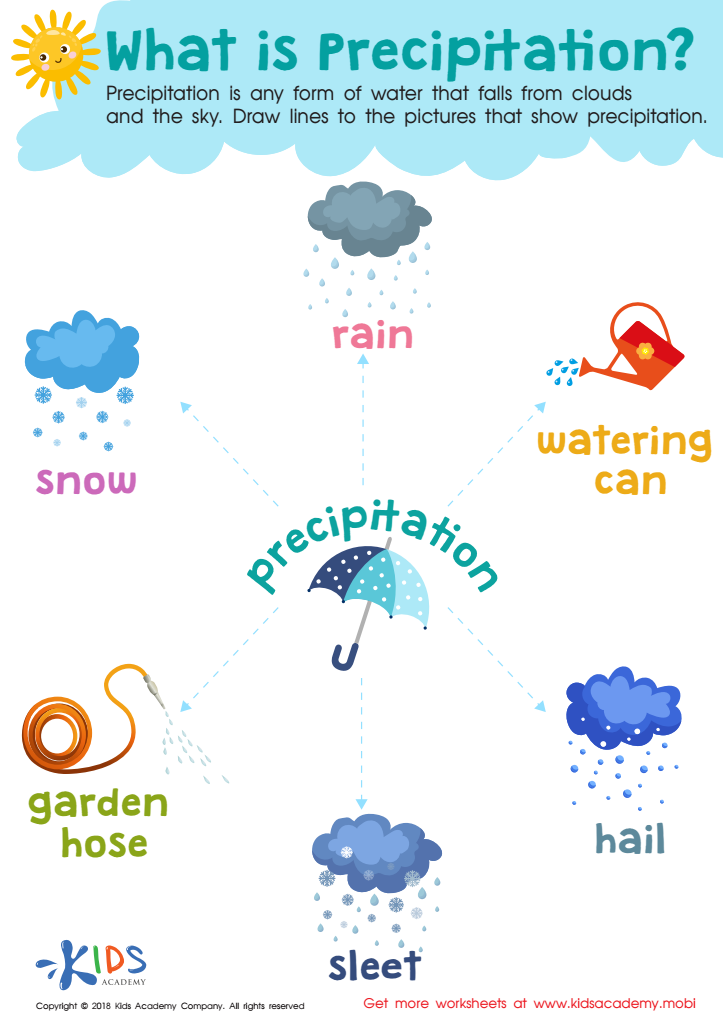
What Is Precipitation? Worksheet




Vocabulary expansion for children ages 7-8, particularly regarding our planet and the environment, is incredibly important. At this age, children's cognitive and language skills are rapidly developing, meaning they can grasp and retain new words effectively. Teaching environmental vocabulary early builds a foundation for understanding critical concepts related to Earth's eco-systems, climate change, and conservation.
When children learn terms like "recycle," "habitat," "pollution," and "renewable energy," they become equipped to discuss these topics meaningfully. This understanding fosters environmental awareness from a young age. Children who are informed about the environment are more likely to develop respect for nature and adopt responsible habits, like recycling and conserving water, as they grow older.
Incorporating environmental vocabulary also enhances their broader academic skills. Words related to the environment often connect with topics in science and geography, building interdisciplinary knowledge that benefits overall academic performance. Moreover, developing a rich vocabulary contributes to better reading comprehension, critical thinking, and communication skills, essential for future academic success.
Ultimately, prioritizing the expansion of environmental vocabulary helps cultivate informed and responsible future citizens. Parents and teachers play a crucial role in introducing these concepts, nurturing curiosities, and empowering children to make a positive impact on the world.







