Categorizing objects Physical Science Worksheets for Ages 7-8
3 filtered results
-
From - To
Discover our engaging "Categorizing Objects Physical Science Worksheets" tailored for ages 7-8. Kids Academy offers high-quality, printable worksheets that help young learners enhance their understanding of physical science by classifying objects based on different properties. These fun and interactive activities promote critical thinking and observational skills while aligning with key science standards. Perfect for both classroom use and at-home enrichment, our worksheets provide hands-on learning experiences that make science exciting. Empower your child to explore the wonderful world of physical science by categorizing objects and uncovering intriguing details about the properties of materials around them.
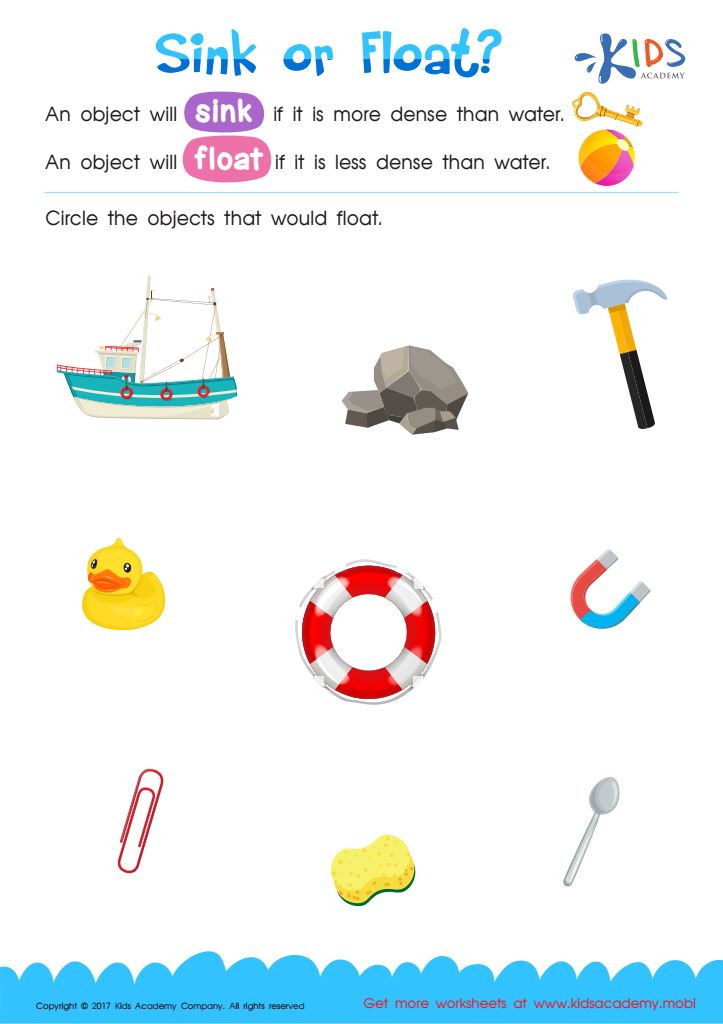
Sink or Float Printable
 Assign to My Students
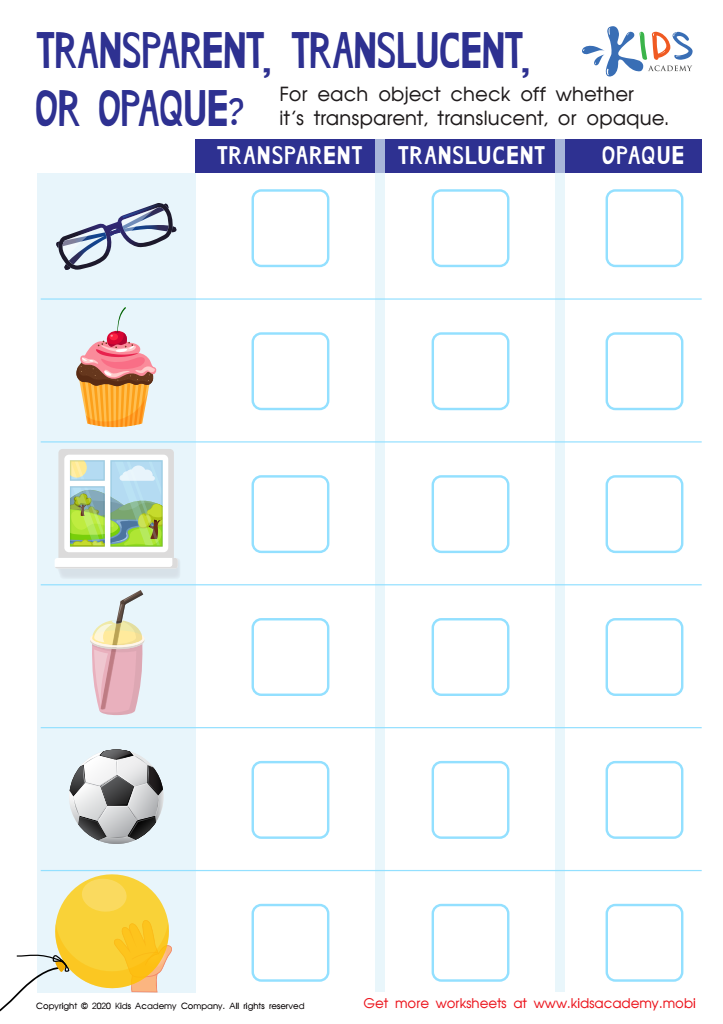
Transparent, Translucent, or Opaque Worksheet
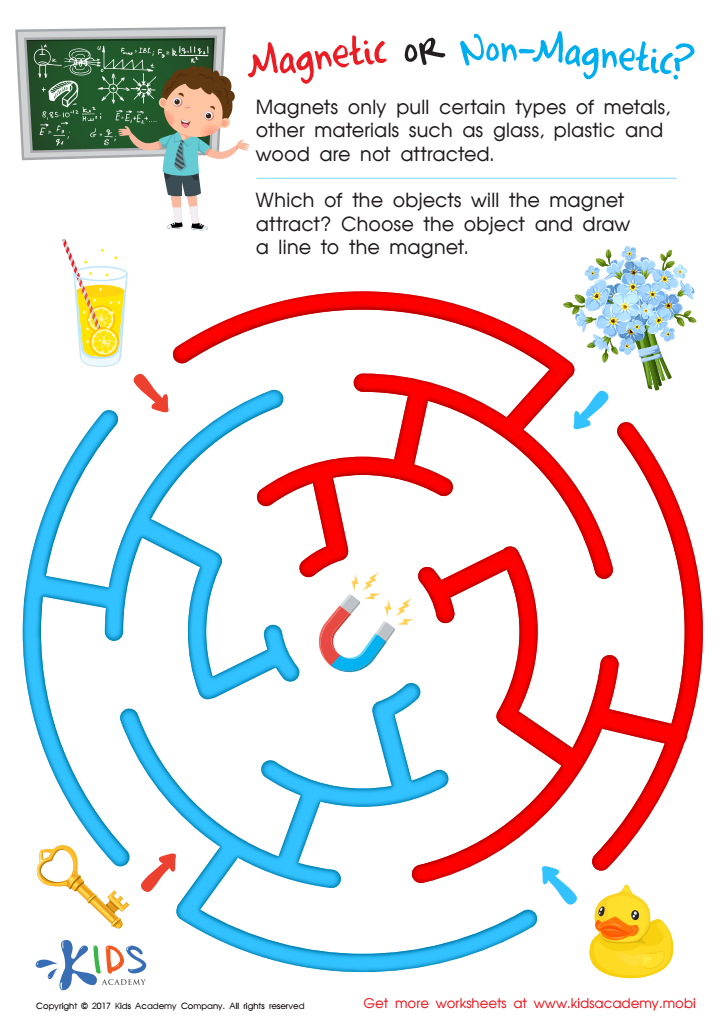
Magnetic or Non–Magnetic Worksheet


.jpg)





Categorizing objects in physical science for children aged 7-8 is crucial for their cognitive development and understanding of the world around them. At this developmental stage, young learners are naturally curious and eager to make sense of their environment. Through categorization, children develop critical thinking skills by observing similarities and differences among objects. This foundational skill greatly enhances their ability to process complex information later on in life.
Moreover, categorization enhances language development. When children group objects and describe their categories, they expand their vocabulary and improve their communication skills. For instance, determining the difference between solids, liquids, and gases requires children to use specific terminology and descriptive words, which bolsters their linguistic capabilities.
Additionally, categorizing objects lays the groundwork for future scientific learning. It introduces fundamental concepts of organization and classification that are pivotal in various branches of science and math. Understanding how to sort objects based on properties such as size, texture, weight, or states of matter not only builds essential knowledge but also fosters a systematic approach to problem-solving.
In summary, teaching children to categorize objects in physical science is instrumental for cognitive development, language acquisition, and preparation for advanced scientific learning. Ensuring that children master this skill will provide them with a strong educational foundation and a better understanding of the natural world.







