
Animal recognition Plants and Animals Worksheets for Ages 7-8
3 filtered results
Difficulty Level
Grade
Age
-
From - To
Subject
Activity
Standards
Discover our engaging "Animal Recognition Plants and Animals Worksheets" designed specifically for children ages 7-8. These interactive worksheets combine fun and learning, helping young learners identify and classify various animals within their environments. Each worksheet features vibrant illustrations and easy-to-follow instructions, making it simple for students to connect with the natural world. Activities include matching animals to their habitats, recognizing characteristics, and exploring animal adaptations. These worksheets support the development of critical thinking and observation skills while fostering a love for science. Perfect for classroom use or at-home learning, these resources are an excellent way to enhance your child's understanding of biodiversity.
Favorites
With answer key
Interactive
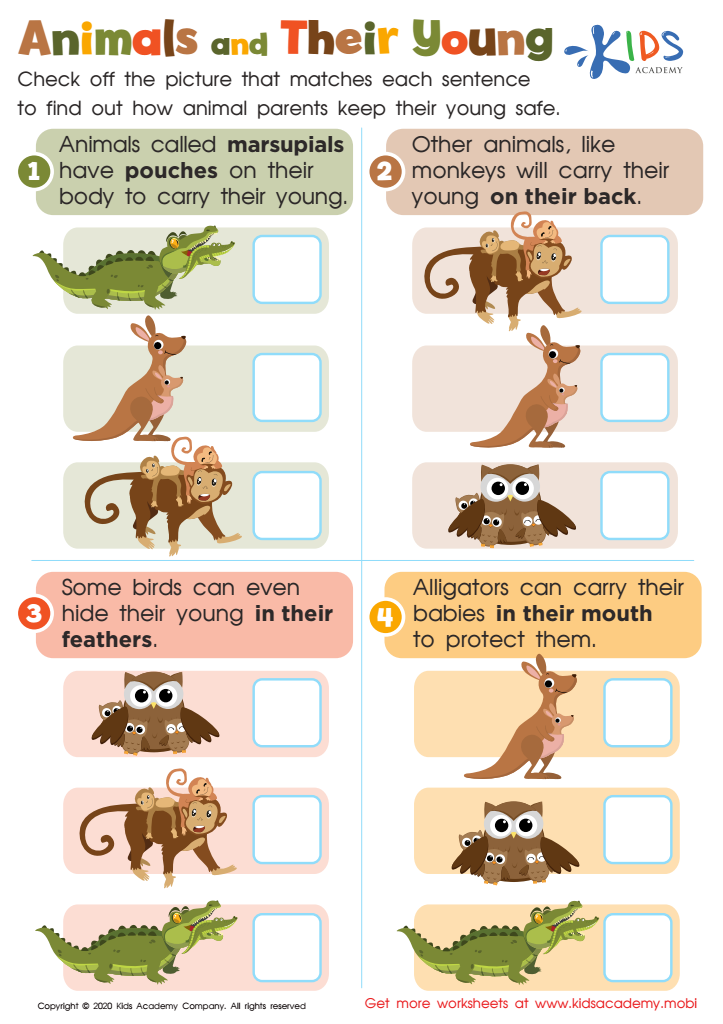
Animals and Their Young Worksheet
Help your child learn more about the animal kingdom with this cute science worksheet! They'll find out how animals protect and keep their babies close. From pouches to hitching a ride on mama’s back, they'll read the sentence above each illustration and select the description that fits. Check off the correct description as they go - a fun and educational activity!
 Assign to My Students
Animals and Their Young Worksheet
Worksheet











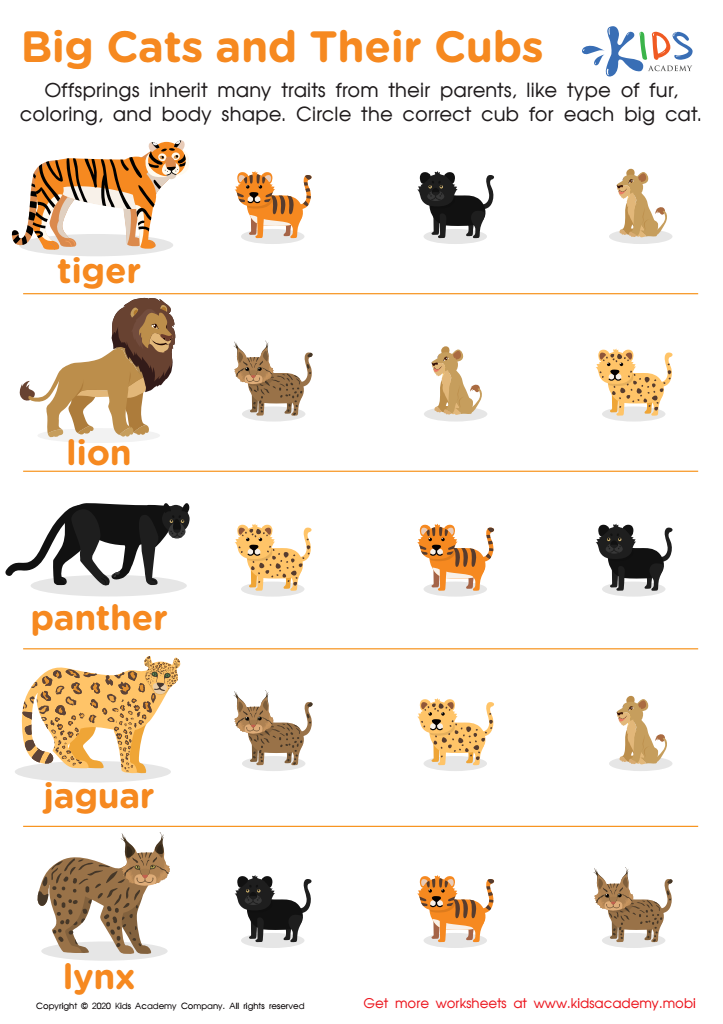
Big Cats and Their Cubs Worksheet
Kids are often like their parents, and the same is true for big cats and their cubs. Introduce your young scientists to genetics with this fun printable worksheet from Kids Academy! Observe the big cats and their cubs, then circle the right cub to complete! It's a great way to teach an early lesson in genetics.
Big Cats and Their Cubs Worksheet
Worksheet
Join Kids Academy for Free
Who is primarily going to use this learning content?








Parents and teachers should prioritize teaching animal recognition and understanding plants and animals for children aged 7-8 because it lays a foundation for environmental education and fosters a deep appreciation for nature. At this developmental stage, children are naturally curious and eager to explore their surroundings. Engaging them in learning about animals and plants enhances their observational skills and critical thinking abilities.
Recognizing different animals and plants promotes an understanding of biodiversity and ecosystems, which is crucial in combating environmental challenges. Knowledge of flora and fauna can inspire a sense of responsibility towards the environment, encouraging children to engage in conservation efforts as they grow. Furthermore, this subject matter enhances literacy and math skills through various activities, such as classification, counting species, and storytelling about habitats.
Incorporating animal and plant recognition not only enriches academic knowledge but also supports social-emotional learning by fostering empathy and respect for living creatures. Ultimately, by investing time and resources into this educational focus, parents and teachers help cultivate environmentally-conscious, well-rounded individuals who are likely to become advocates for nature in the future.








