
Number Recognition Plants and Animals Worksheets for Ages 7-8
7 filtered results
Difficulty Level
Grade
Age
-
From - To
Subject
Activity
Standards
Discover engaging Number Recognition Plants and Animals Worksheets designed for children ages 7-8 at Kids Academy! These interactive worksheets combine the wonders of nature with essential math skills, making learning both fun and effective. By featuring vibrant illustrations of plants and animals, students can practice recognizing and sequencing numbers while enhancing their knowledge of the natural world. Perfect for classroom or home use, these worksheets foster curiosity and focus, ensuring kids stay motivated and excited about math. Empower your child's educational journey with resources that link mathematical concepts to real-life contexts. Explore our collection and watch their skills grow!
Favorites
With answer key
Interactive
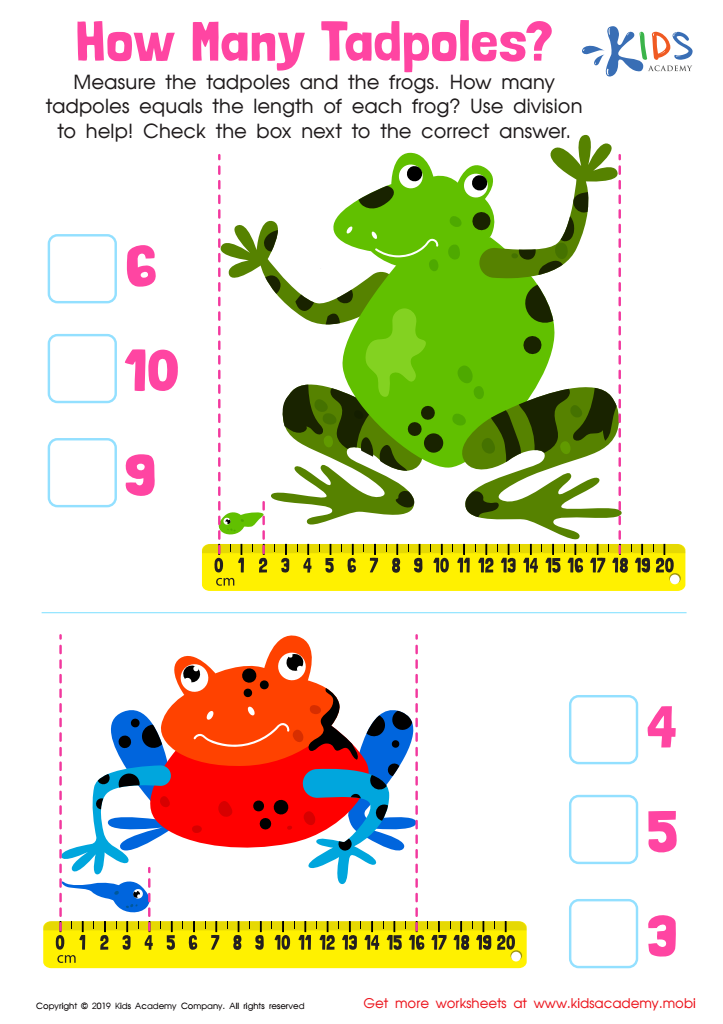
How Many Tadpoles Worksheet
Kids love tadpoles! They'll have fun using them to work out the measurements of their frog friends. By dividing the length of the frogs by the length of the tadpoles, children can deduce how many tadpoles it takes to equal a frog. With the use of 'how many' and 'each' they'll solve math problems without realizing it!
 Assign to My Students
How Many Tadpoles Worksheet
Worksheet











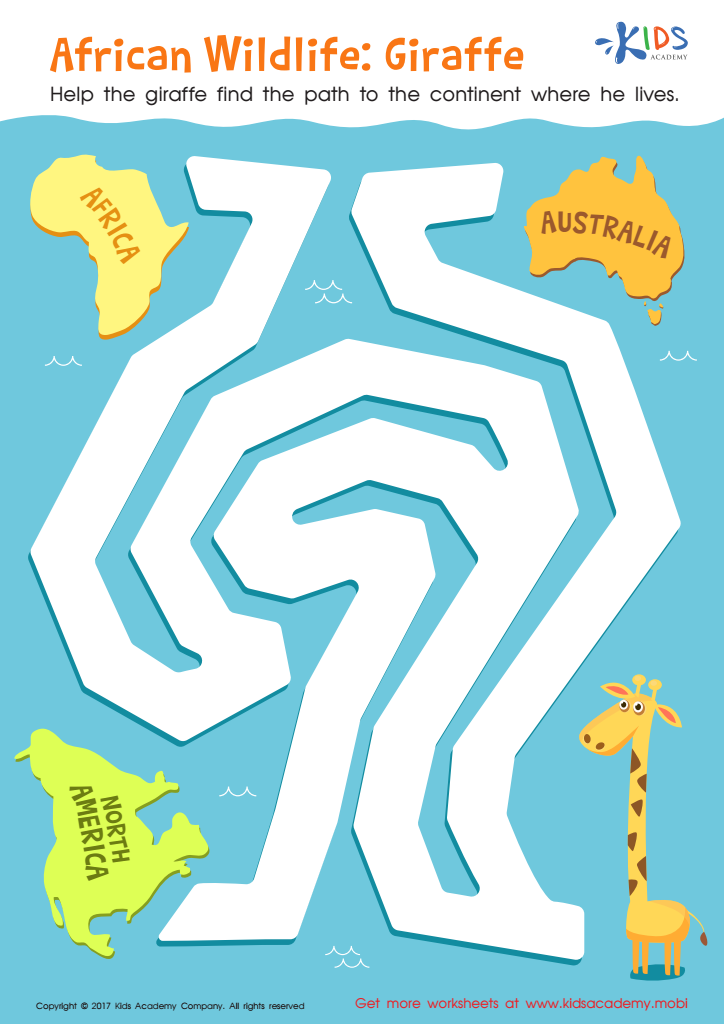
African Wildlife: Giraffe Worksheet
Help the giraffe get home! This African wildlife giraffe worksheet will boost your child's logical reasoning skills while they complete a maze to help the giraffe navigate choppy waters. Learn about different continents and their unique climates, practice problem solving and expand knowledge of the world and its habitats. Perfect for inspiring little learners!
African Wildlife: Giraffe Worksheet
Worksheet
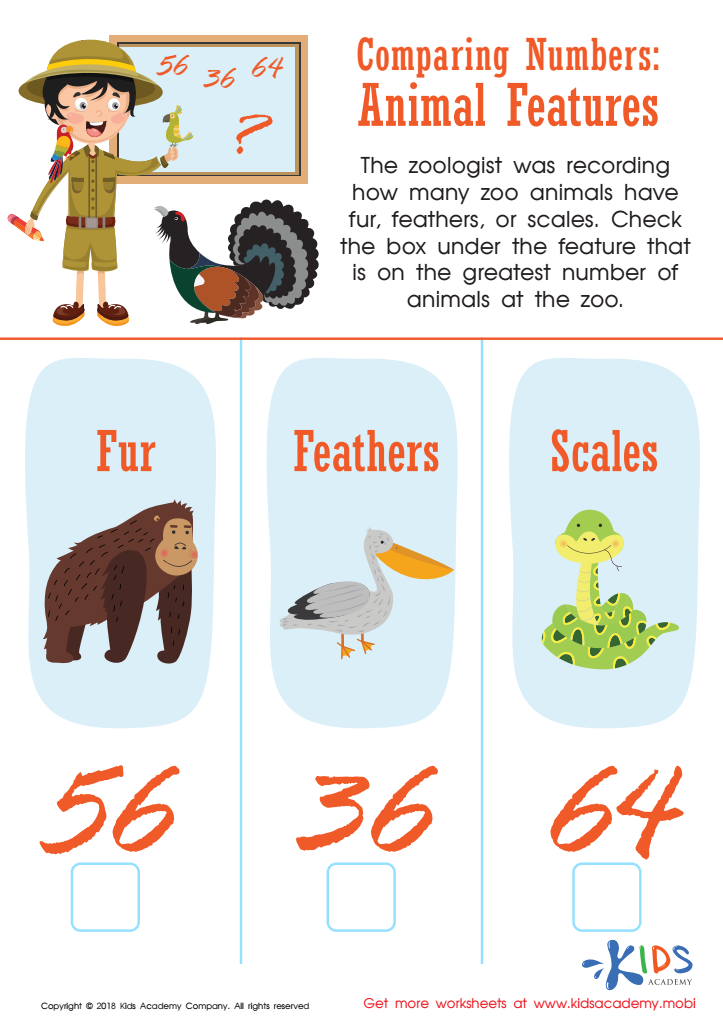
Animal Features Worksheet
Let your kids join a budding zoologist! They can count zoo animals' fur, feathers or scales, then use numbers and comparison to check the box with the most friends. The PDF will captivate them and help them understand how the value of '6' changes based on its position.
Animal Features Worksheet
Worksheet
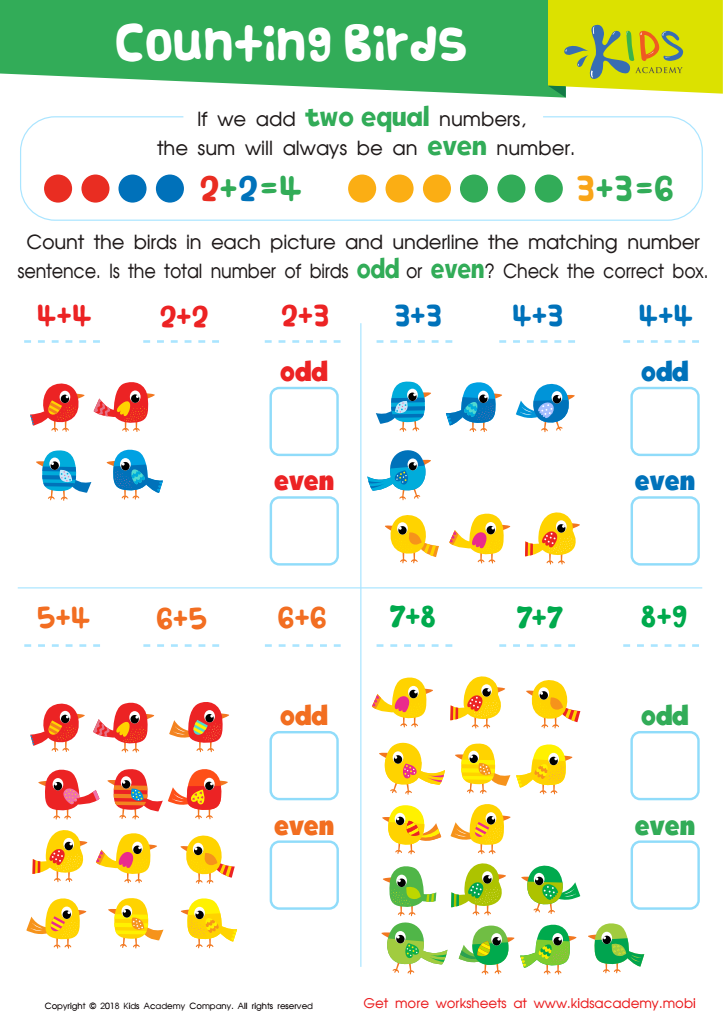
Counting Birds Worksheet
Help your child count and underline the matching number sentence in the worksheet. Ask them if the total number of birds in each picture is odd or even, then check the correct box. When two equal numbers are added, the sum is always an even number (e.g. 2+2=4, 4+4=8, both divisible by 2).
Counting Birds Worksheet
Worksheet
More Octopus Facts Worksheet
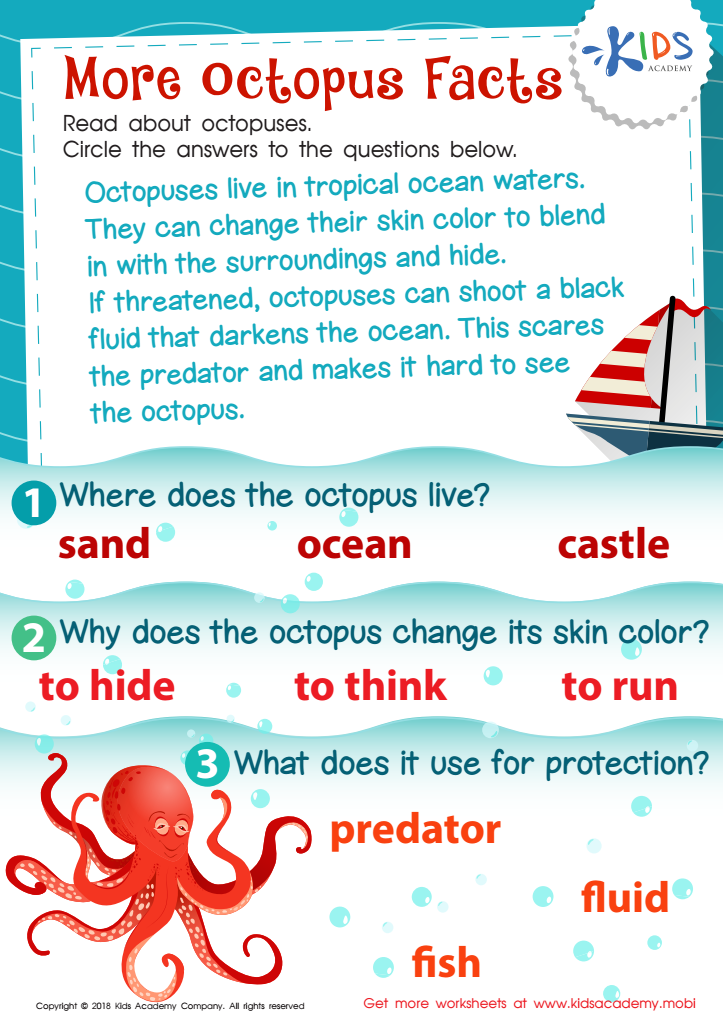
This worksheet will help your kids learn about the Octopus. Read the text carefully and have kids read with you. Now, ask them questions based on it and help them answer them by circling the right choices. Teaching your kids facts about animals will help them in the long run.
More Octopus Facts Worksheet
Worksheet
Counting Birds Worksheet
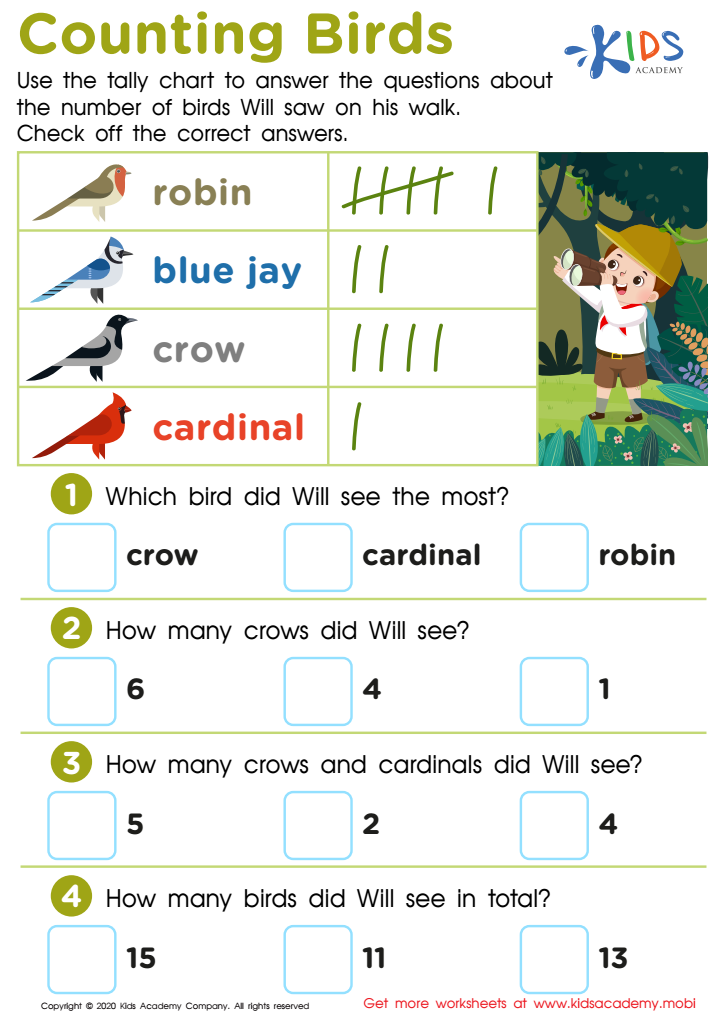
Introduce your child to the exciting activity of bird watching! This PDF worksheet features a tally chart of the different types of birds Will saw on his walk. Have your kid use the tally chart to organize information and use it to answer the questions that follow, thus boosting early science and math skills.
Counting Birds Worksheet
Worksheet
Octopus 8’s Worksheet
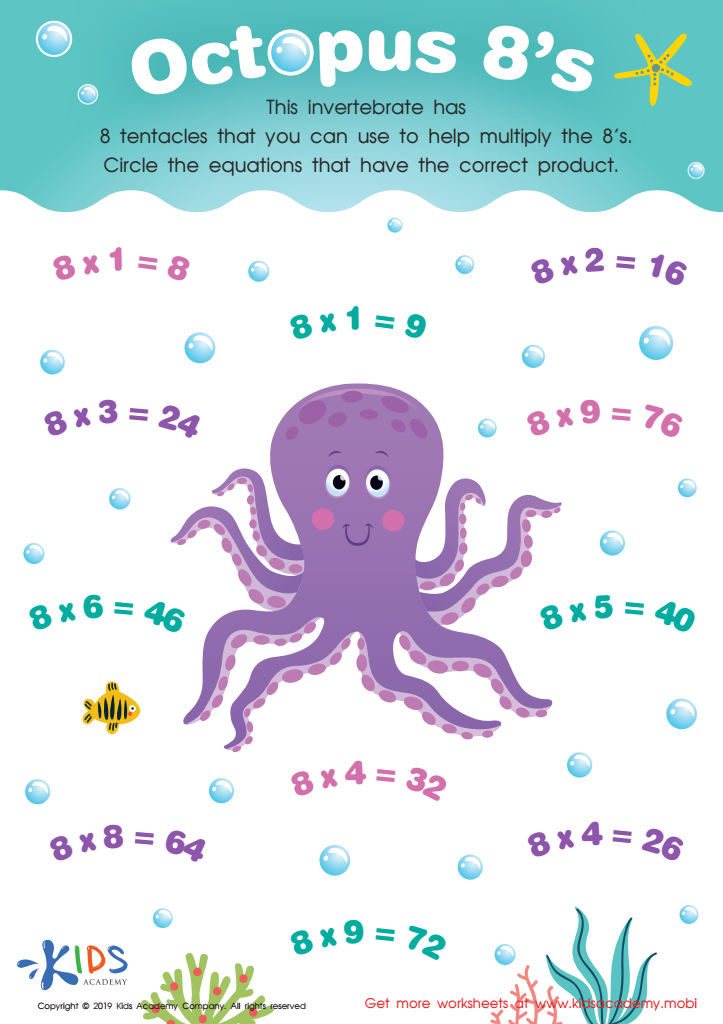
Can your child identify the octopus in the worksheet? It's an invertebrate with 8 tentacles. Have your child circle the equations with the correct products, and see if they can tell you some other features of the octopus too.
Octopus 8’s Worksheet
Worksheet
Join Kids Academy for Free
Who is primarily going to use this learning content?








Number recognition and an understanding of plants and animals are fundamental for young learners ages 7-8 as they form a crucial building block for future academic and life successes. Blending number recognition with biological concepts stimulates cognitive development and offers multidimensional learning opportunities, helping children grasp abstract numerical concepts through concrete, relatable examples from nature.
Engaging with numbers using plants and animals ignites curiosity, making learning both fun and meaningful. For instance, counting leaves on a plant or spots on a ladybug offers a tactile and visual experience that reinforces number skills. This hands-on approach helps children more deeply internalize numerical concepts, understanding not just the "how" but the "why" of math.
Moreover, such activities foster observational skills and introduce basic biological knowledge. By identifying differences between plant species or animal characteristics while recognizing numbers, children naturally learn to compare, contrast, and categorize.
Furthermore, nurturing a fascination with the natural world early on can promote environmental stewardship. By coupling numerical literacy with biology, kids are inspired to appreciate and protect ecosystems.
Parents and teachers should prioritize these integrated learning experiences to create a solid foundation in math and science and spark lifelong intellectual curiosity and environmental consciousness.








