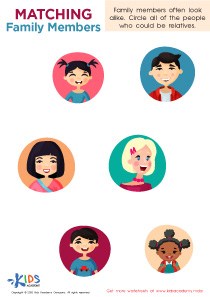
Enhancing Reading Comprehension Governance and Civics Worksheets for Ages 7-8
7 filtered results
-
From - To
Discover our engaging "Enhancing Reading Comprehension Governance and Civics Worksheets" designed specifically for ages 7-8. These interactive worksheets help young learners develop essential reading skills while exploring key concepts of governance and civics. Each worksheet is crafted to facilitate understanding of fundamental ideas related to citizenship, community, and civic responsibility through age-appropriate text and visuals. By incorporating comprehension questions and fun activities, children will enhance their ability to analyze and interpret information. Equip your students with the tools to discuss more complex subjects confidently while fostering a love for learning about their roles in society. Perfect for classroom or at-home learning!
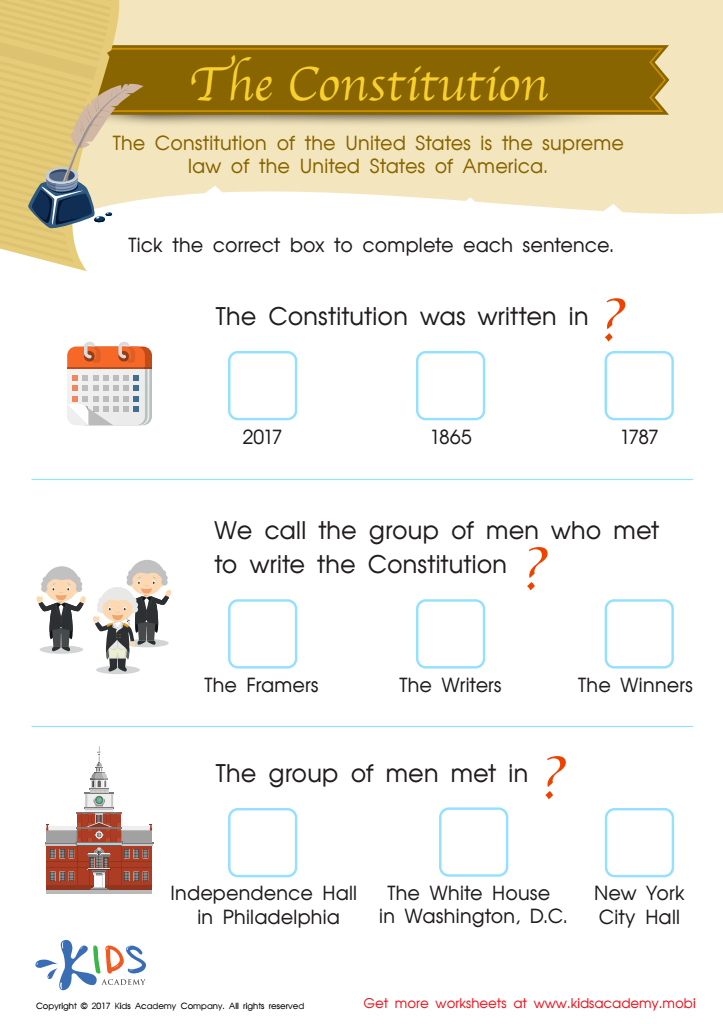
The Constitution Worksheet
 Assign to My Students
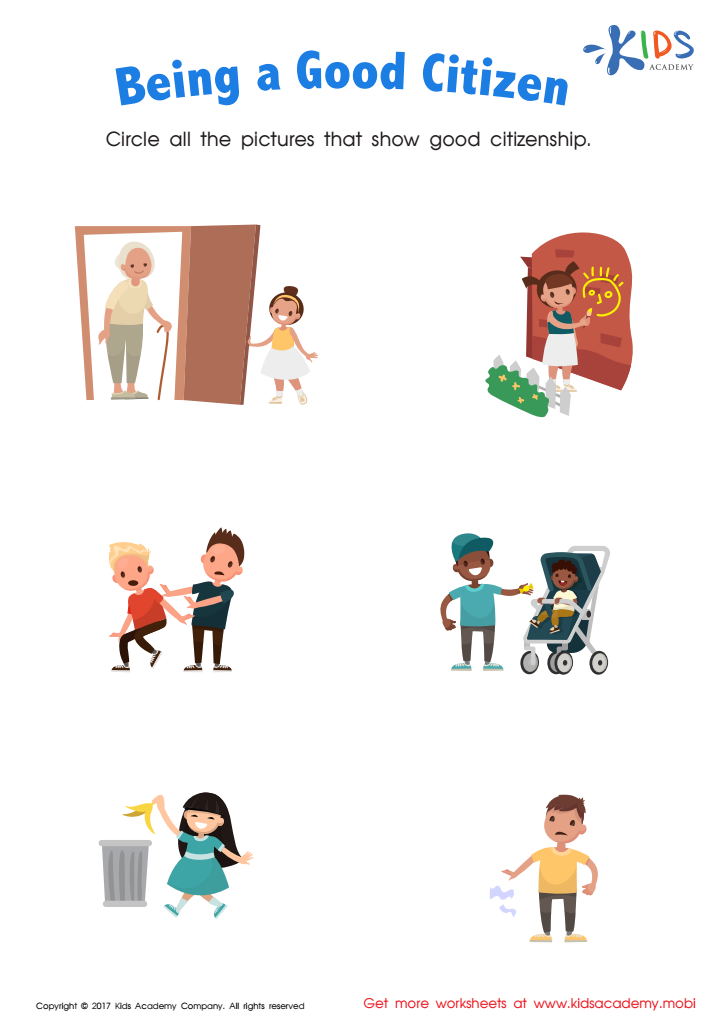
Being a Good Citizen Printable
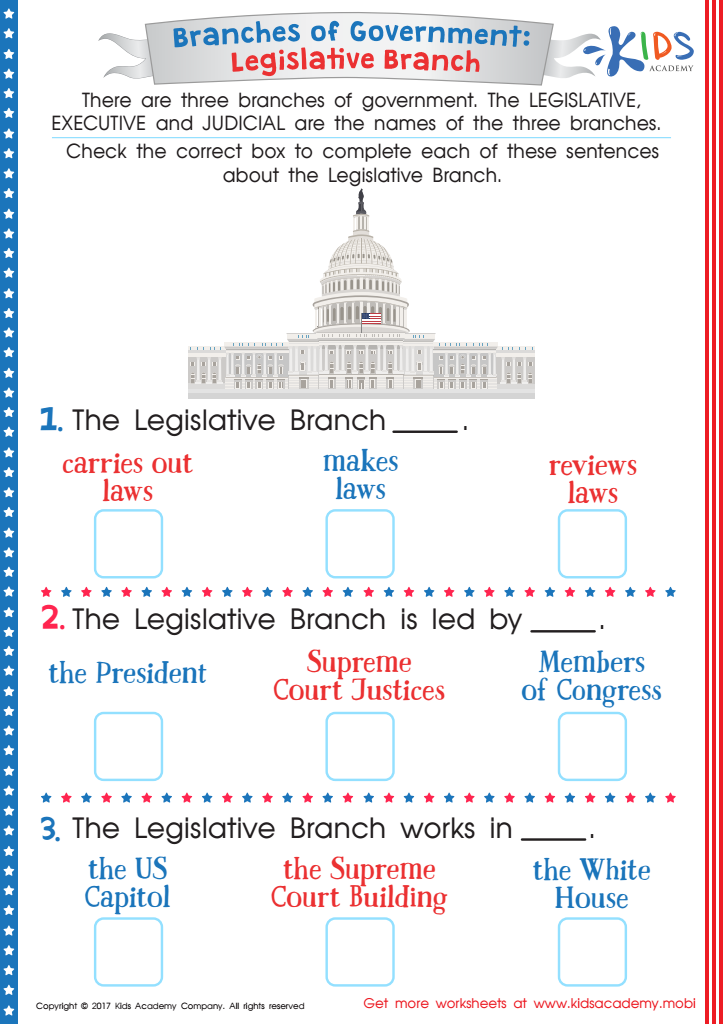
Branches of the Government: Legislative Branch Worksheet
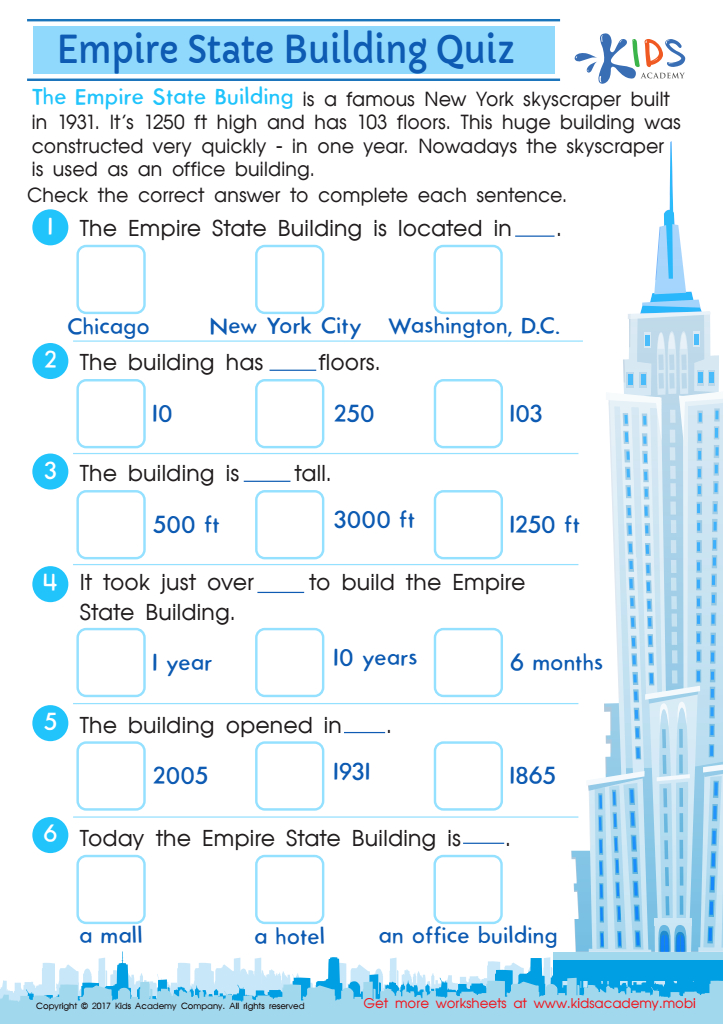
Empire State Building Printable Worksheet
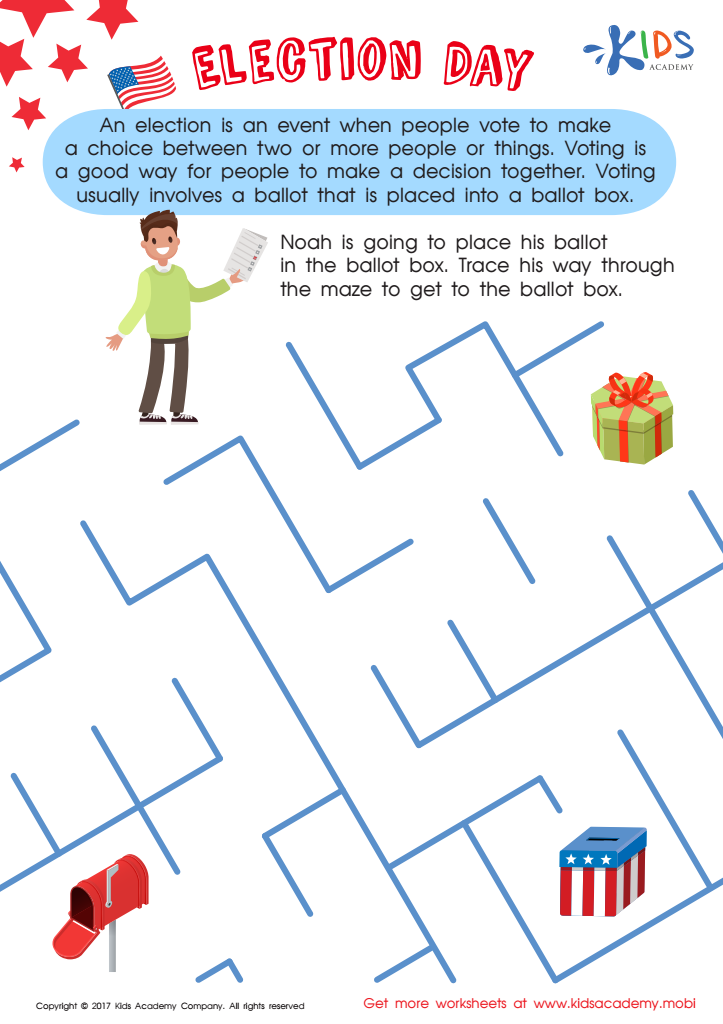
Election Day Worksheet
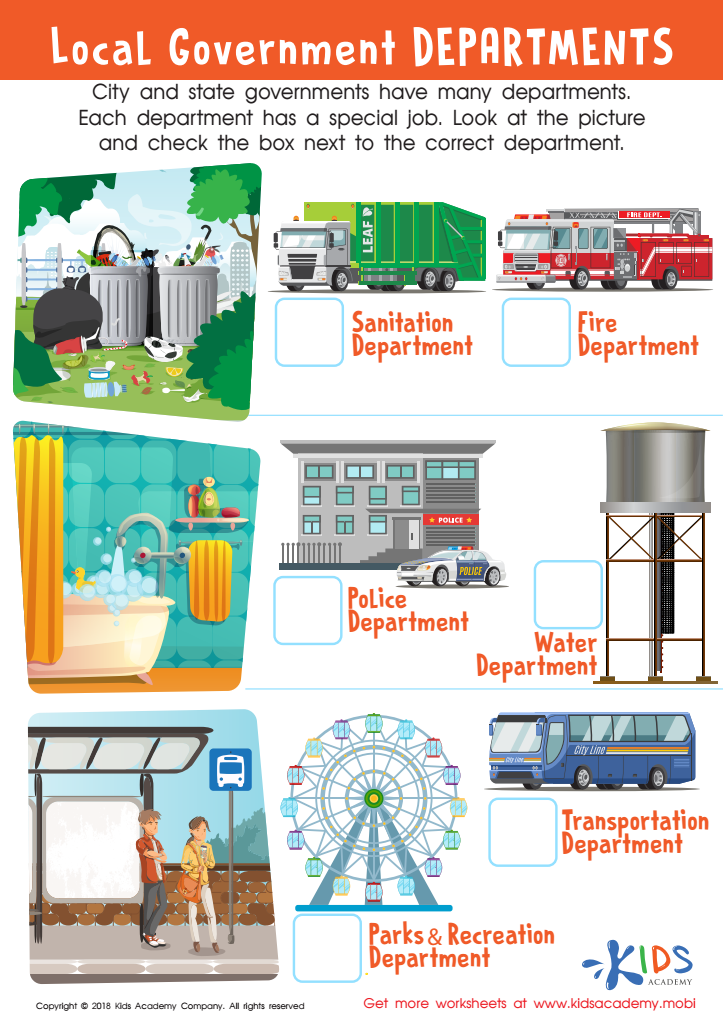
Local Government Departments Worksheet
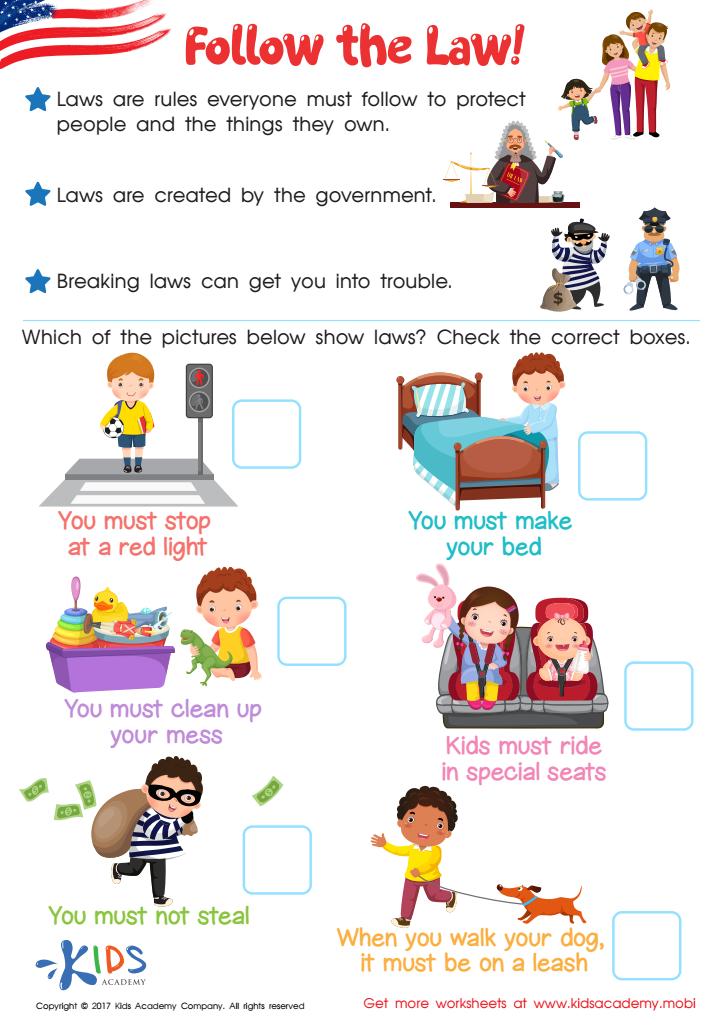
Follow the Law Worksheet


Enhancing reading comprehension in governance and civics for children aged 7-8 is crucial for several reasons. At this developmental stage, children are beginning to form their understanding of the world around them. By introducing them to civics and governance concepts, parents and teachers can foster critical thinking skills, civic awareness, and social responsibility. Reading comprehension allows children to decode texts, grasp fundamental ideas, and engage meaningfully with topics such as community roles, government functions, and the importance of active citizenship.
Furthermore, enhanced reading skills in this area promote discussion and inquiry, encouraging children to ask questions about laws, rights, and their role within society. This engagement empowers youngsters to develop their opinions and values, which are essential for personal and societal growth.
A solid foundation in governance and civics not only equips children with knowledge about their rights and responsibilities but also nurtures informed, participatory adults. In an era where understanding complex societal structures is necessary for informed decision-making, a focused approach in enhancing reading comprehension on these subjects lays the groundwork for motivated, impactful future citizens. Thus, it is imperative for parents and teachers to prioritize these educational strategies.