Reading Skills History Worksheets for Ages 7-8
3 filtered results
Difficulty Level
Grade
Age
-
From - To
Subject
Activity
Standards
Enhance your child's reading proficiency with our engaging "Reading Skills History Worksheets for Ages 7-8." Designed for young learners, these worksheets combine essential reading techniques with captivating historical content to encourage exploration and understanding. Covering interactive lessons, students will delve into various historical topics while honing their reading comprehension and critical thinking skills. Each worksheet is age-appropriate, neatly formatted, and easy to use, making learning fun and accessible. Perfect for classroom activities or home study, our expertly crafted materials will empower your child to become a confident reader and ignite a lifelong interest in history. Unlock the joy of learning today!
Favorites
With answer key
Interactive
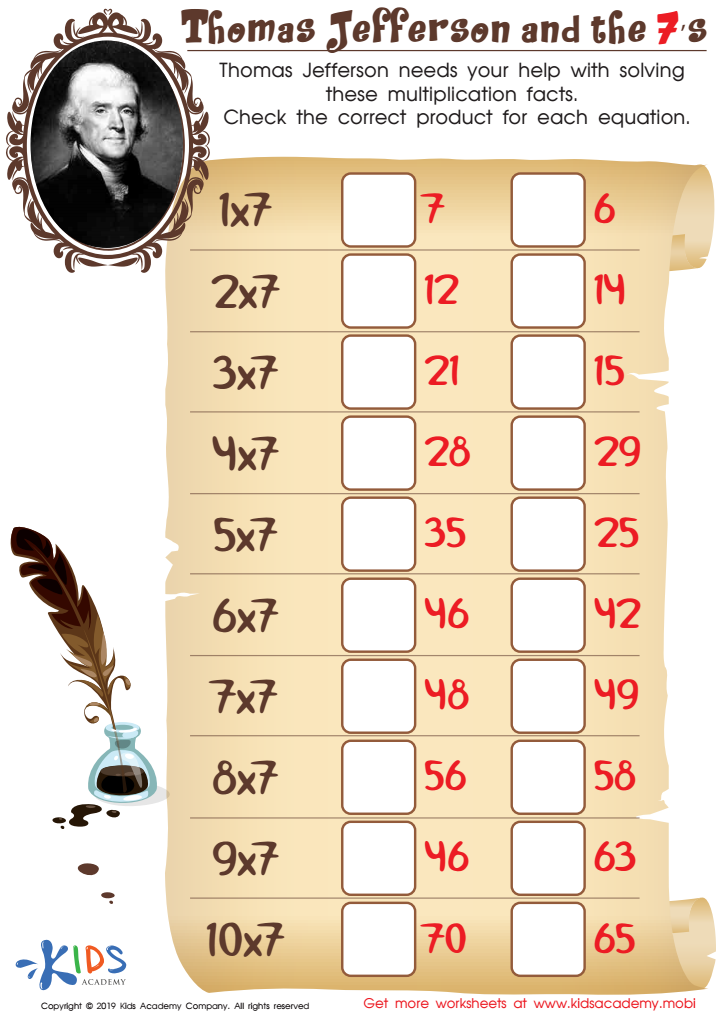
Thomas Jefferson and the 7’s Worksheet
Thomas Jefferson championed education and wants kids to know their times tables. Help your child with this worksheet focusing on 7's. Check the box for the correct answer for each multiplication problem. Make sure your child gets the facts right!
 Assign to My Students
Thomas Jefferson and the 7’s Worksheet
Worksheet
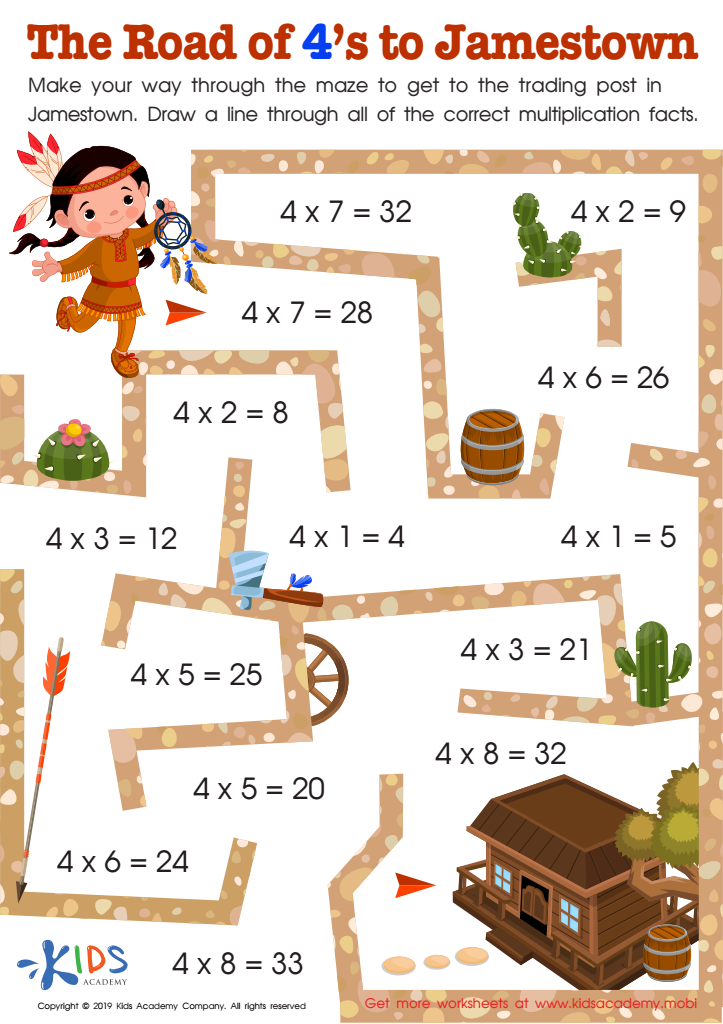
The Road of 4’s to Jamestown Worksheet
Does your child enjoy trips? Help them remember the best ones with this fun worksheet maze! Get your kid to look at the picture and draw a line through all the right multiplication facts to get to Jamestown's trading post. This worksheet is a great way to stimulate their problem-solving skills.
The Road of 4’s to Jamestown Worksheet
Worksheet
Ben Franklin Part 2 Worksheet
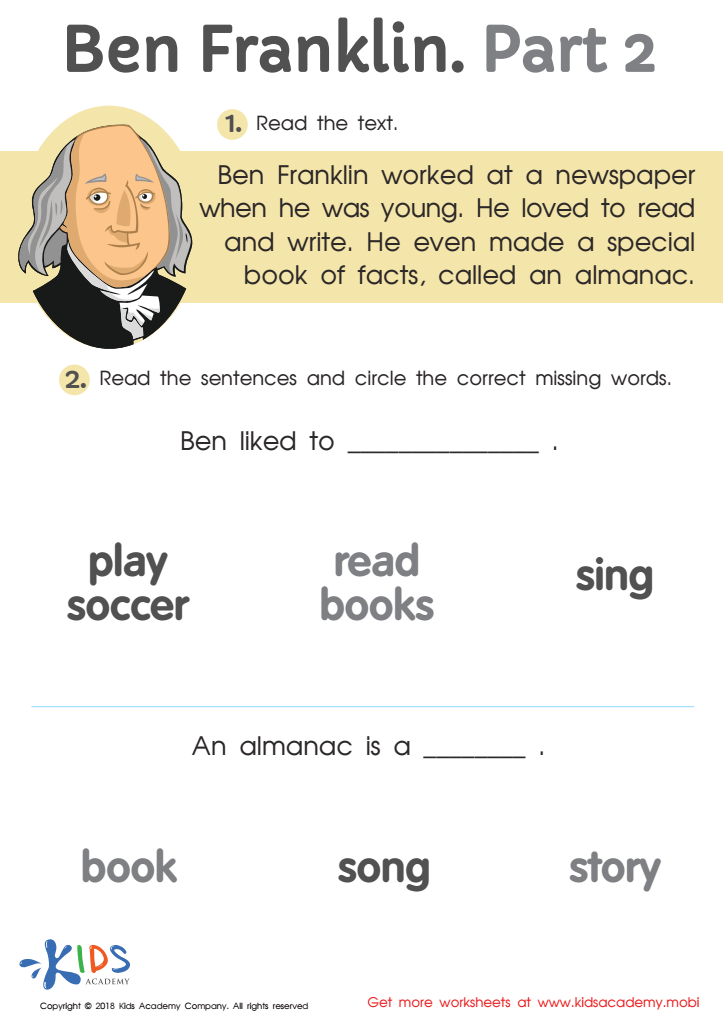
History is filled with great figures, like Benjamin Franklin. Let your kids in on the legacy by introducing them to the founder of the US fire department, diplomat, and inventor. Then, use a worksheet to have them fill in the blanks with the correct word to teach them more. Read the text, then read the sentences and have them circle the missing word.
Ben Franklin Part 2 Worksheet
Worksheet
Join Kids Academy for Free
Who is primarily going to use this learning content?








Parents and teachers should deeply care about the reading skills history for ages 7-8 because this period is crucial for cognitive development and literacy acquisition. During these years, children transition from learning to read to reading to learn, making it essential to have a solid foundation in reading skills. Understanding reading skills history helps educators identify effective methodologies, recognize the evolution of literacy standards, and apply best practices to engage young learners.
Moreover, historical trends reveal how factors such as technology, educational policies, and multicultural influences have shaped reading instruction. By examining these elements, parents and teachers can appreciate the importance of tailored approaches that address diverse learning styles and reading challenges. This awareness fosters a supportive and enriching environment that not only improves reading proficiency but also builds a lifelong love for learning.
Additionally, reading influences academic achievement across subjects, emotional development, and critical thinking. Parents and teachers equipped with knowledge about the evolution of reading skills can guide children toward effective strategies, monitor progress, and implement engaging reading activities. Ultimately, prioritizing reading skills history empowers families and educators to champion literacy, ensuring children have the tools they need for success in school and beyond.