Understanding timelines Social Studies Worksheets for Ages 7-8
5 filtered results
-
From - To
Explore our "Understanding Timelines" Social Studies worksheets, specially designed for children aged 7-8. These engaging resources help young learners grasp the concept of timelines, fostering their ability to sequence events and understand the passage of time. Through a variety of interactive activities, students will learn to create, read, and interpret timelines, enhancing their historical comprehension and critical thinking skills. Each worksheet aligns with educational standards, ensuring a fun and effective learning experience. Perfect for classroom use or at-home practice, these worksheets lay the foundation for better understanding history and event relationships, promoting essential skills for future studies.
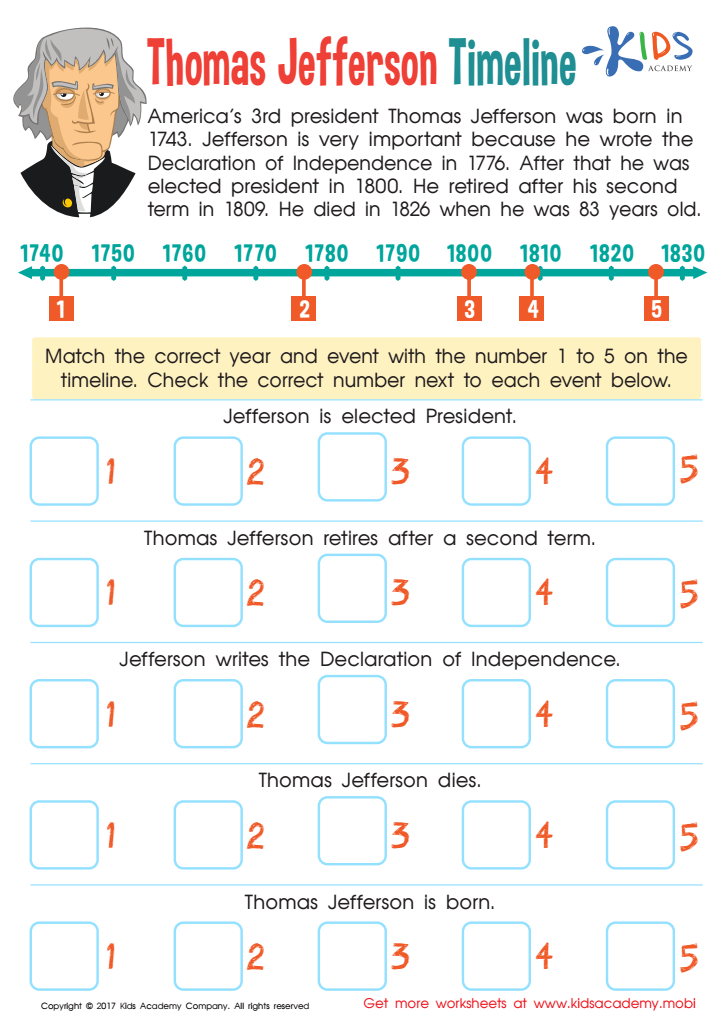
Thomas Jefferson Timeline Worksheet
 Assign to My Students
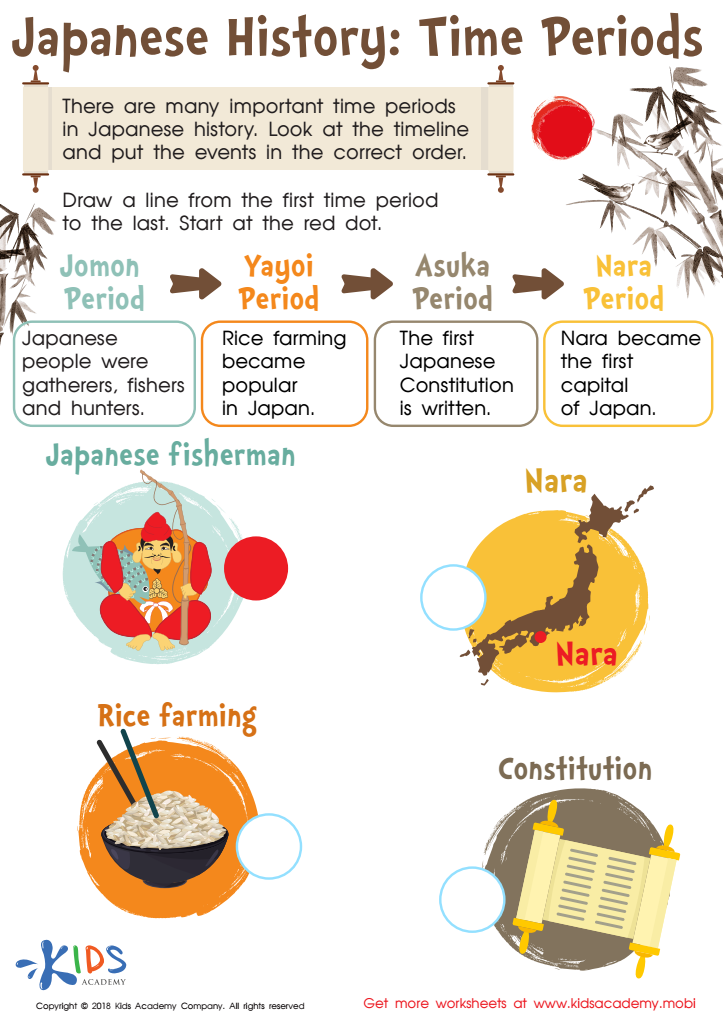
Japanese History: Time Periods Worksheet
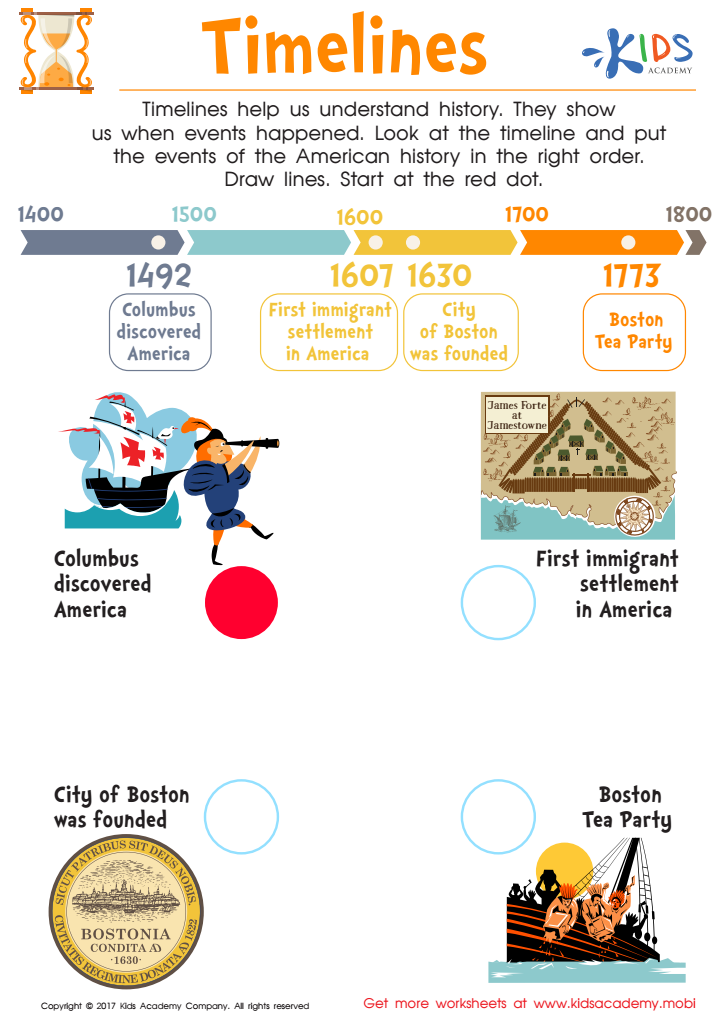
American History Timeline Worksheet
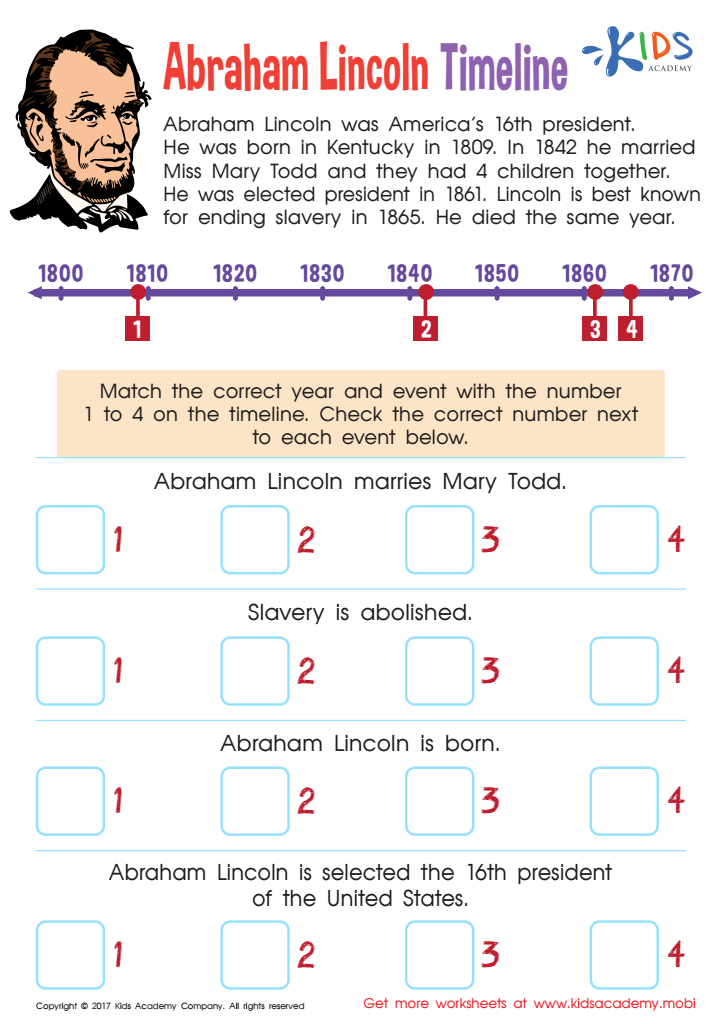
Abraham Lincoln Timeline Worksheet
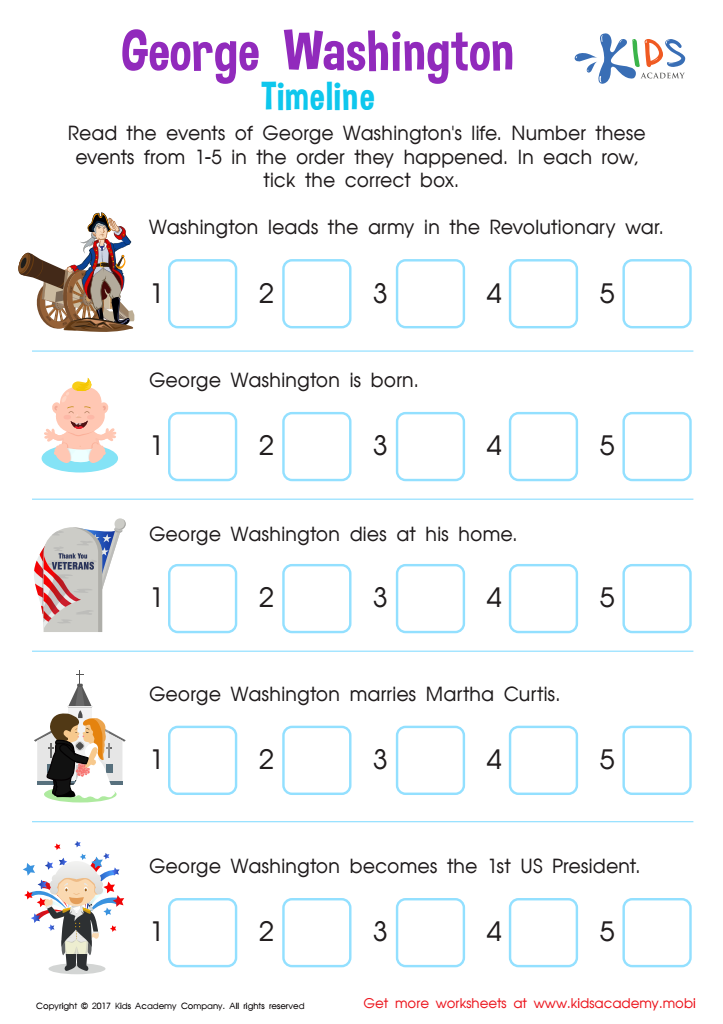
George Washington Timeline Worksheet








Understanding timelines in social studies is crucial for children aged 7-8 as it lays the foundation for their perception of history and the interconnectedness of events. At this age, children are beginning to grasp the concepts of past, present, and future. By learning about timelines, they can visualize the sequence of historical events and comprehend how earlier events influence later ones.
Timelines also help children develop critical thinking skills as they analyze the relationship between different time periods and significant occurrences. They learn to categorize information, make connections, and identify cause-and-effect relationships, fostering a deeper understanding of history and its relevance to contemporary society.
Moreover, incorporating timelines into social studies makes learning more engaging and interactive. Parents and teachers can use visually appealing timelines, incorporating imagery and multimedia elements that captivate children’s attention. This type of learning promotes retention and recall, encouraging children to develop a sense of curiosity and inquiry about the world around them.
Incorporating timelines into the curriculum not only enhances academic skills but also cultivates an appreciation for history and culture in young learners, instilling the value of understanding our shared human experience from a young age.