Critical Thinking Writing Worksheets for Ages 7-8
4 filtered results
Difficulty Level
Grade
Age
-
From - To
Subject
Activity
Standards
Explore our engaging Critical Thinking Writing Worksheets designed specifically for ages 7-8! These interactive resources promote creativity and analytical skills in young learners. By engaging with thought-provoking prompts, kids will develop the ability to express their ideas clearly while analyzing complex scenarios. Each worksheet encourages independent thinking and helps students practice forming coherent arguments, enhancing both their writing and comprehension abilities. Perfect for classroom use or homeschooling, our worksheets make learning enjoyable and stimulating. Help your child unlock their potential as a critical thinker and confident writer with our thoughtfully crafted materials that contribute to their academic growth!
Favorites
With answer key
Interactive
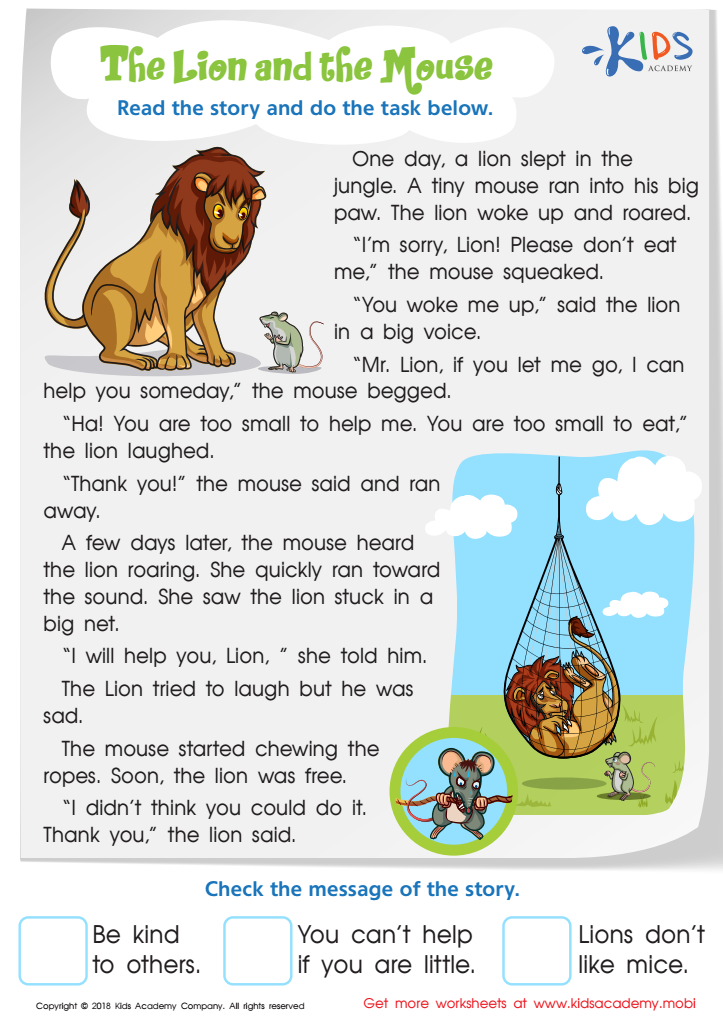
The Lion and the Mouse Worksheet
Writers often have a hidden message or theme in their stories. This printable worksheet helps readers uncover these themes by looking at what characters do and say in "The Lion and the Mouse". It's a great practice resource for learning to interpret stories.
 Assign to My Students
The Lion and the Mouse Worksheet
Worksheet
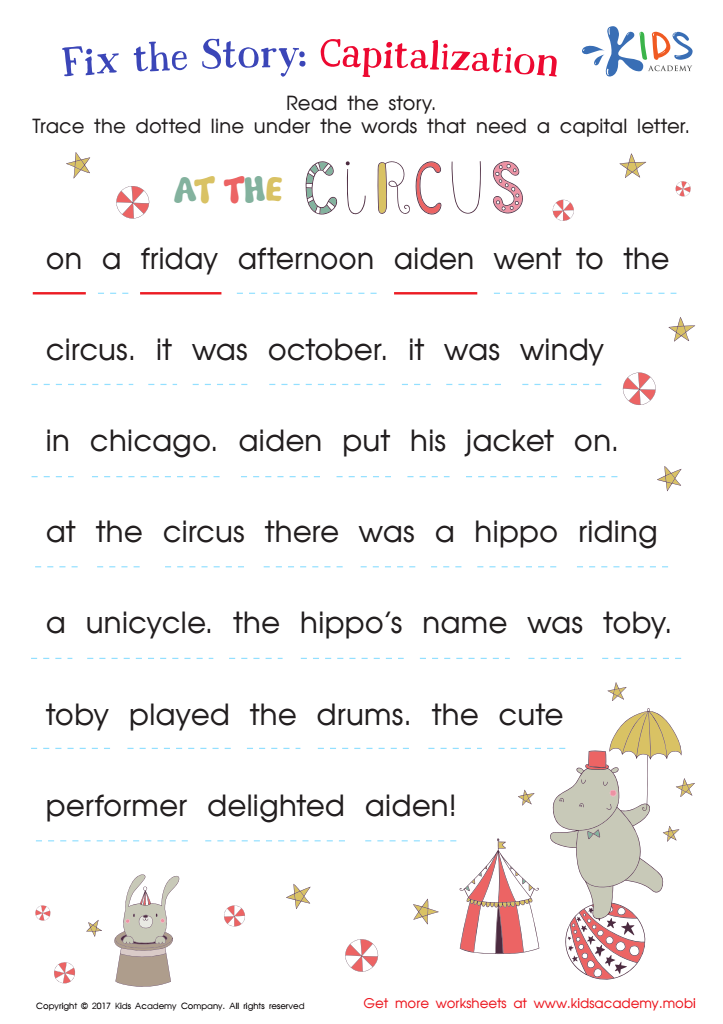
Capitalization: Fix the Story Worksheet
This worksheet is perfect for mastering capitalization in stories: Fix the Story. Read along with your child and help them find all the words that require capitalization. It's sure to be a fun and engaging challenge!
Capitalization: Fix the Story Worksheet
Worksheet
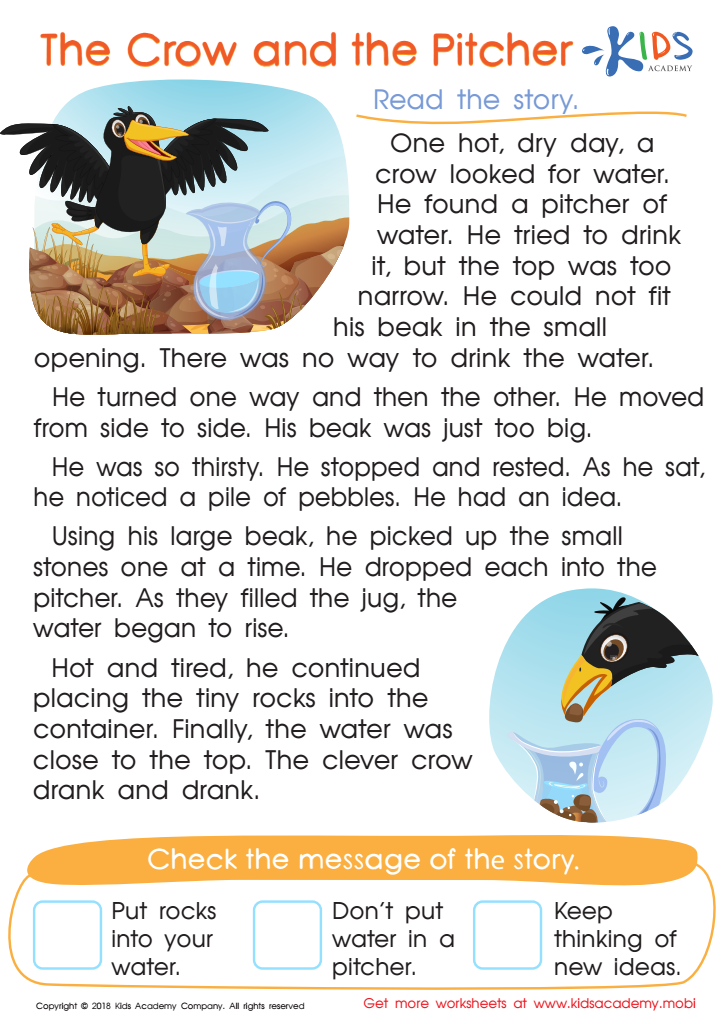
The Crow and the Pitcher Worksheet
Introduce your child to reading comprehension with this fascinating worksheet from Kids Academy! Featuring Aesop's fable of a thirsty crow, your child will enjoy reading and determining the central theme of the passage. This worksheet is a great way to give your child a purpose for reading while helping to build their comprehension skills.
The Crow and the Pitcher Worksheet
Worksheet
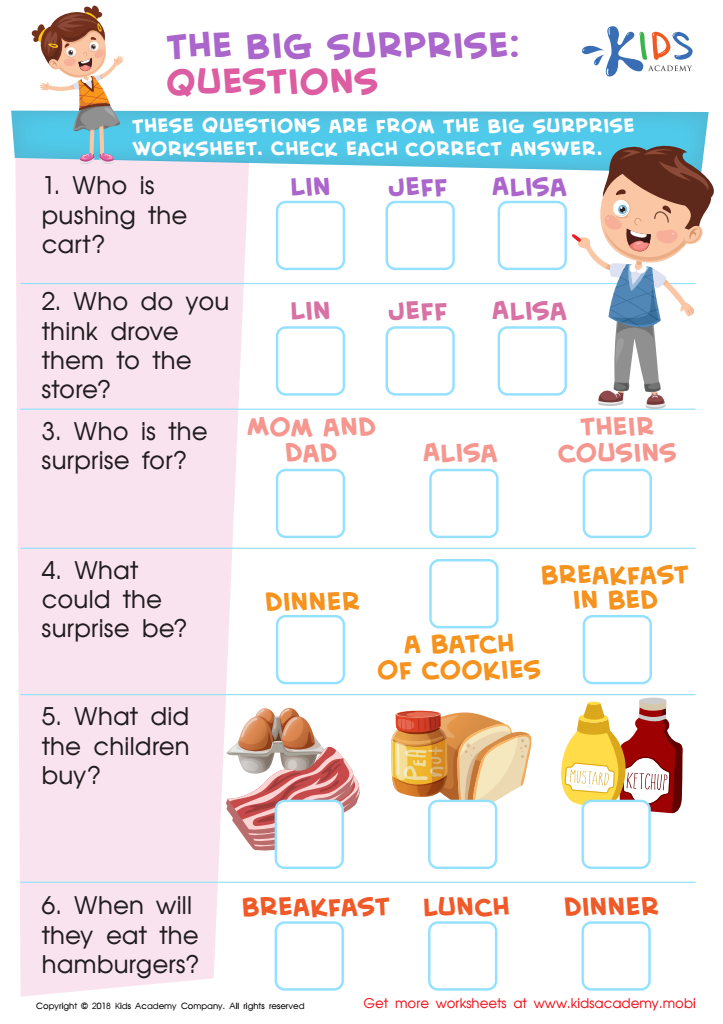
The Big Surprise: Questions Worksheet
Have your child read or listen to The Big Surprise. Ask them the questions in the printable, help check the answers and discuss the story. Keep it to 80 words.
Have your child read or listen to The Big Surprise, then ask them the questions in the printable. Discuss the story and help them check the answers.
The Big Surprise: Questions Worksheet
Worksheet
Join Kids Academy for Free
Who is primarily going to use this learning content?







Critical thinking writing for ages 7-8 serves as a foundational skill that greatly benefits children both academically and personally. At this age, children are developing their ability to analyze information, form opinions, and express their thoughts clearly. Encouraging critical thinking helps them learn how to question assumptions, evaluate evidence, and consider multiple perspectives, fostering intellectual curiosity.
When parents and teachers emphasize critical thinking writing, they guide children in structuring their ideas and articulating them effectively. This not only enhances their writing skills but also boosts their confidence in communication. The ability to think critically and write about various subjects enables children to engage more deeply with learning materials, leading to improved comprehension and retention of information.
Moreover, critical thinking writing cultivates important life skills such as problem-solving, decision-making, and emotional intelligence. It prepares children to navigate real-world challenges, encouraging them to think independently and responsibly. In a rapidly changing world, these skills are essential for success in both academic settings and everyday life. Ultimately, fostering critical thinking writing in young learners equips them with the analytical tools required to thrive in the future. Thus, it is essential for parents and educators to prioritize and support this vital aspect of education.