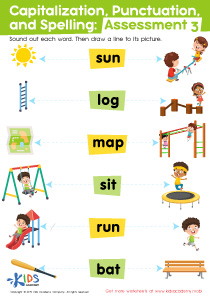
Color recognition Tracing Words Worksheets for Ages 7-8
9 filtered results
Difficulty Level
Grade
Age
-
From - To
Subject
Activity
Standards
Introduce young learners to the vibrant world of color with our "Color Recognition Tracing Words Worksheets for Ages 7-8". These engaging, visually appealing worksheets are designed to help children enhance their writing and reading skills while learning to identify and name different colors. By tracing color-related words, kids simultaneously improve their fine motor skills and letter formation. Perfect for both classroom and home use, this collection blends fun with education, encouraging active learning through hands-on practice. Boost your child's confidence and creativity with these interactive tracing activities, thoughtfully crafted to spark a lifelong love for learning.
Favorites
With answer key
Interactive
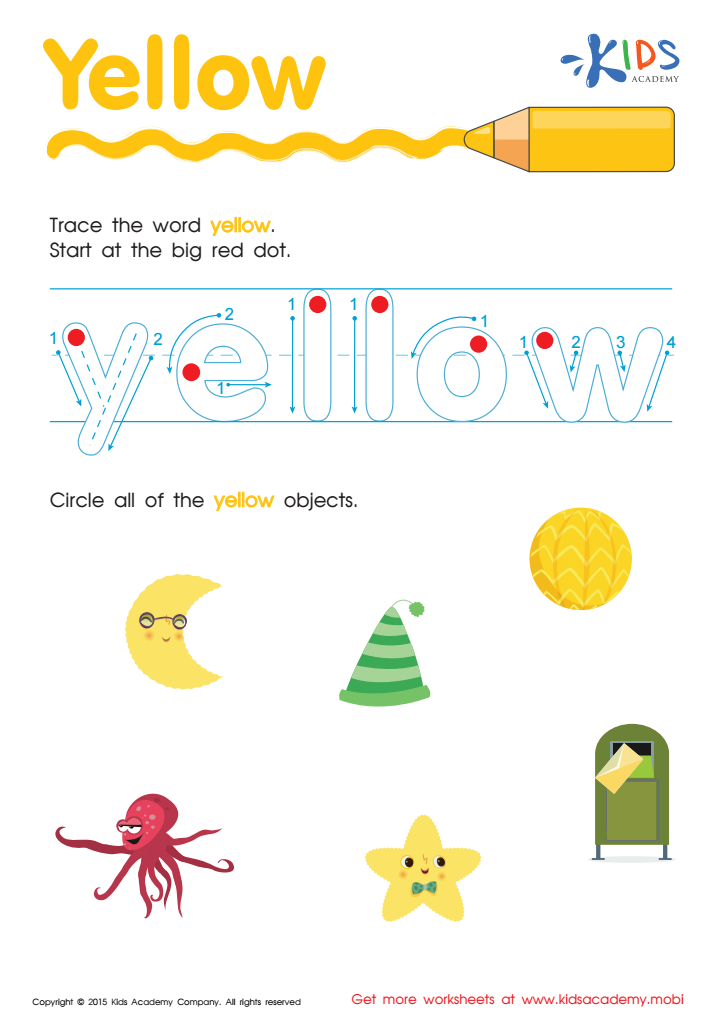
Yellow Tracing Color Words Worksheet
Tracing is a great way to start learning handwriting! Our printable worksheet helps your kindergartener practice and master the basics. They'll trace lines and fill in the word "yellow" with bright colors, sure to captivate and inspire them for more practice. Check out here for more tracing of color words.
 Assign to My Students
Yellow Tracing Color Words Worksheet
Worksheet
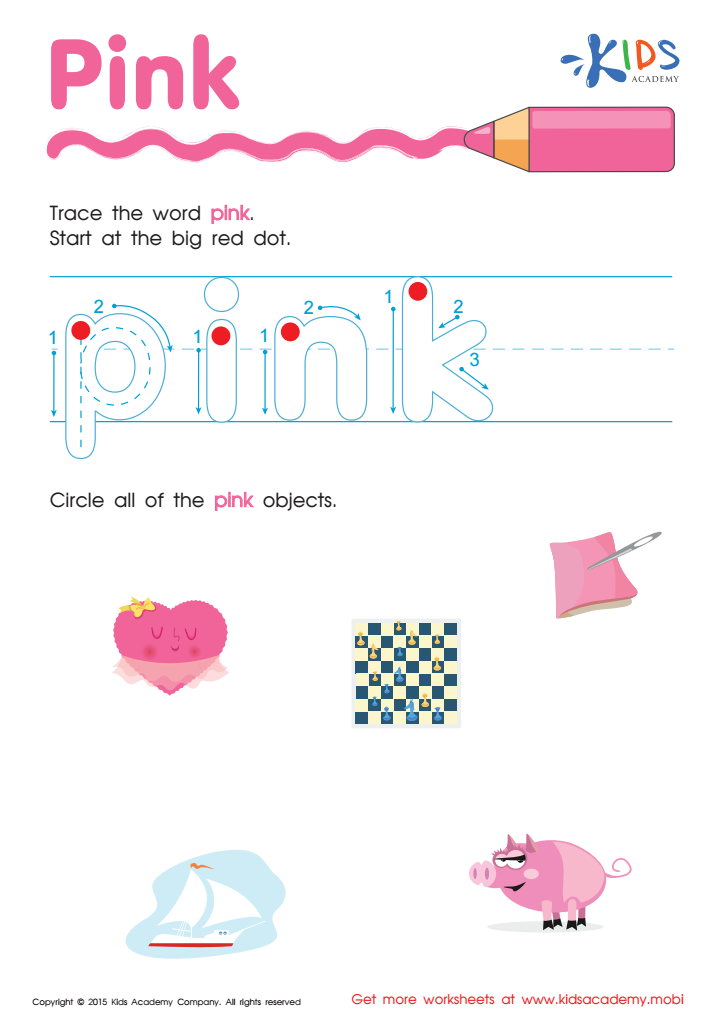
Pink Tracing Color Words Worksheet
Trace 'pink' with a pink crayon for an exciting handwriting lesson! Build fine motor skills and learn about sight words with this fun printable. Get creative and give it a splash of color for a colorful learning experience. For more tracing color words, explore here.
Pink Tracing Color Words Worksheet
Worksheet
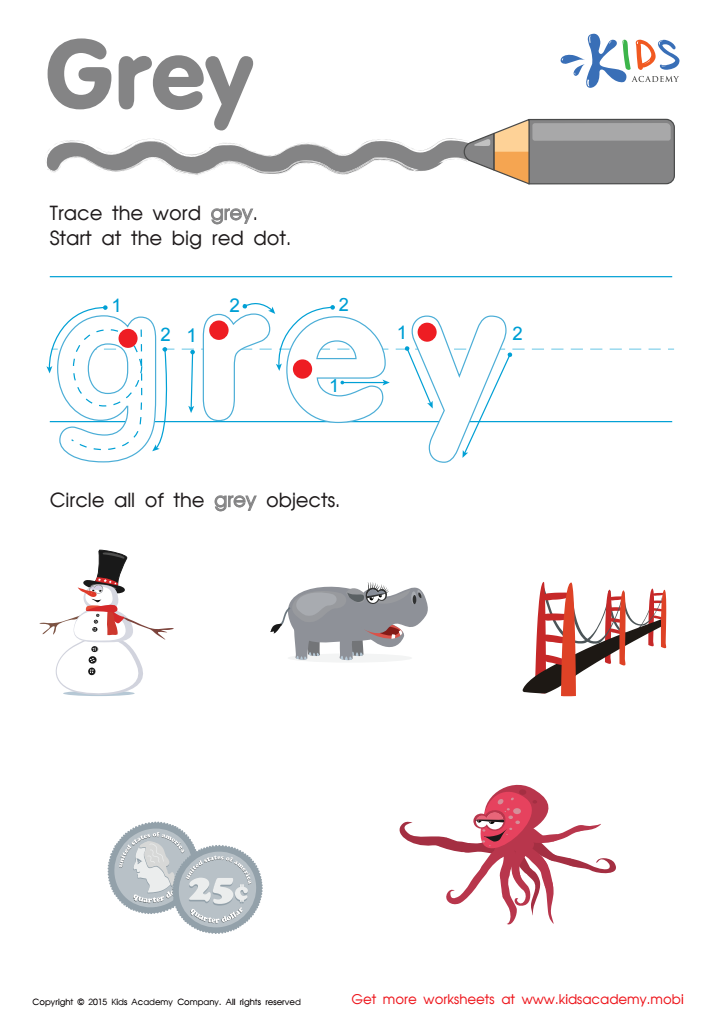
Grey Tracing Color Words Worksheet
Help your kindergartener boost their writing skills with this free printable handwriting worksheet! They can trace the sight word "grey" with a grey crayon, starting at the big red dots. Sounding out and tracing the letters can help strengthen their handwriting. Ask them to name and circle all the grey objects to give extra practice. Get more free worksheets here!
Grey Tracing Color Words Worksheet
Worksheet
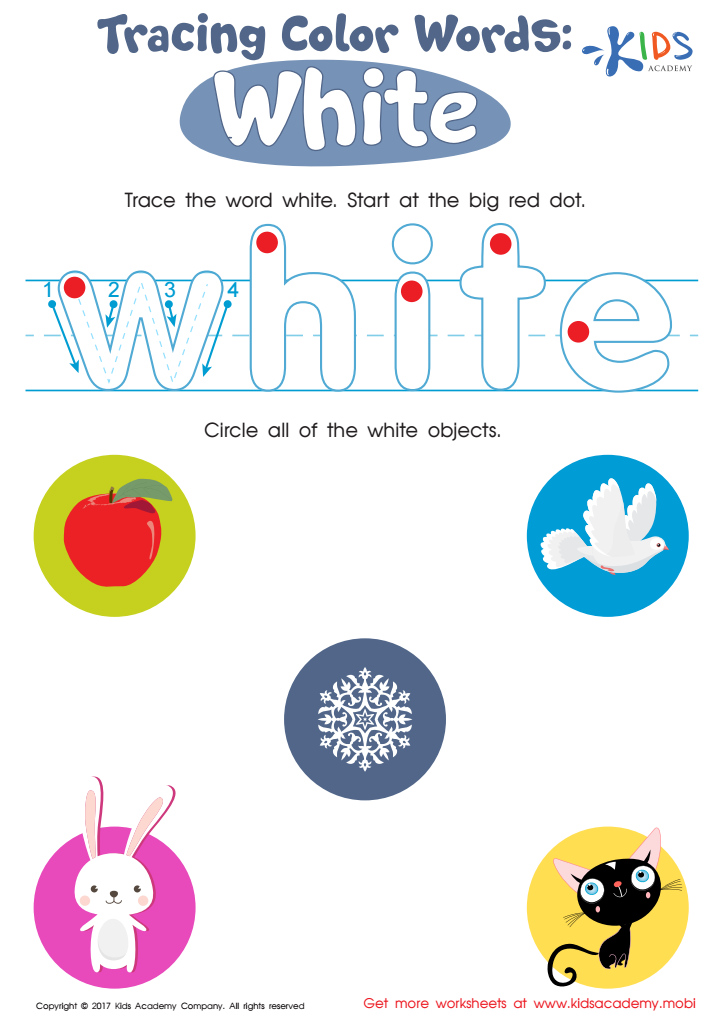
White Tracing Color Words Worksheet
This fun worksheet helps children learn color words quickly. They trace the letters and circle pictures of the color. This helps them practice reading and identifying objects, and they can do it without needing to read phonetically. Download it now and watch your child's skill grow!
White Tracing Color Words Worksheet
Worksheet
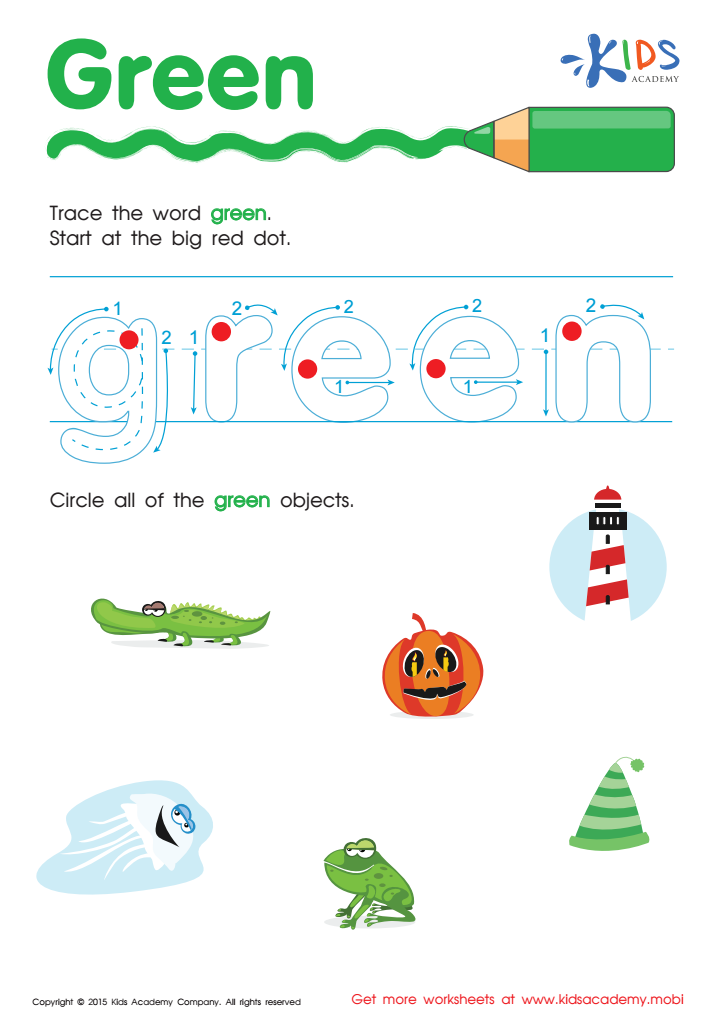
Green Tracing Color Words Worksheet
Encourage writing and spelling practice with this vibrant free handwriting worksheet. Have your child trace the new name of a primary color, "green," and circle green items in the picture. Ask them what else can be green for a challenging activity. Through this worksheet, your kindergartener can learn and play at the same time. For more free printables, look here.
Green Tracing Color Words Worksheet
Worksheet
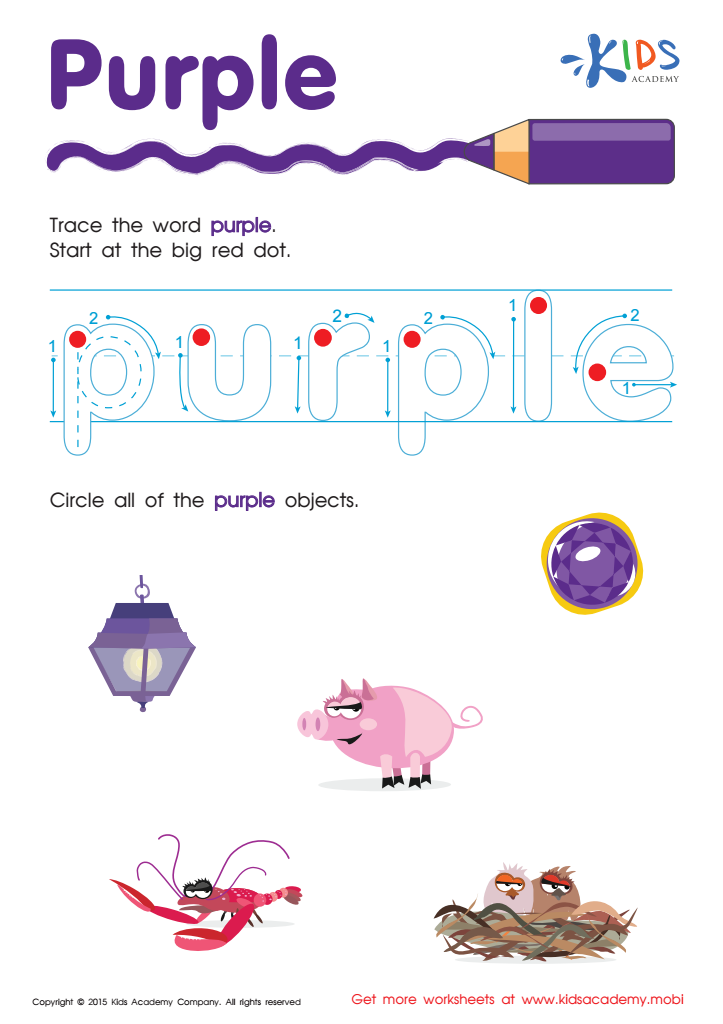
Purple Tracing Color Words Worksheet
Help your kindergartener practice their handwriting with this fun, free printable. They'll trace and color the word “purple”, starting at the big red dots, and pick out and circle all the purple objects they see. They'll get to train their fine motor muscles while having fun! Check out here for more handwriting practice.
Purple Tracing Color Words Worksheet
Worksheet
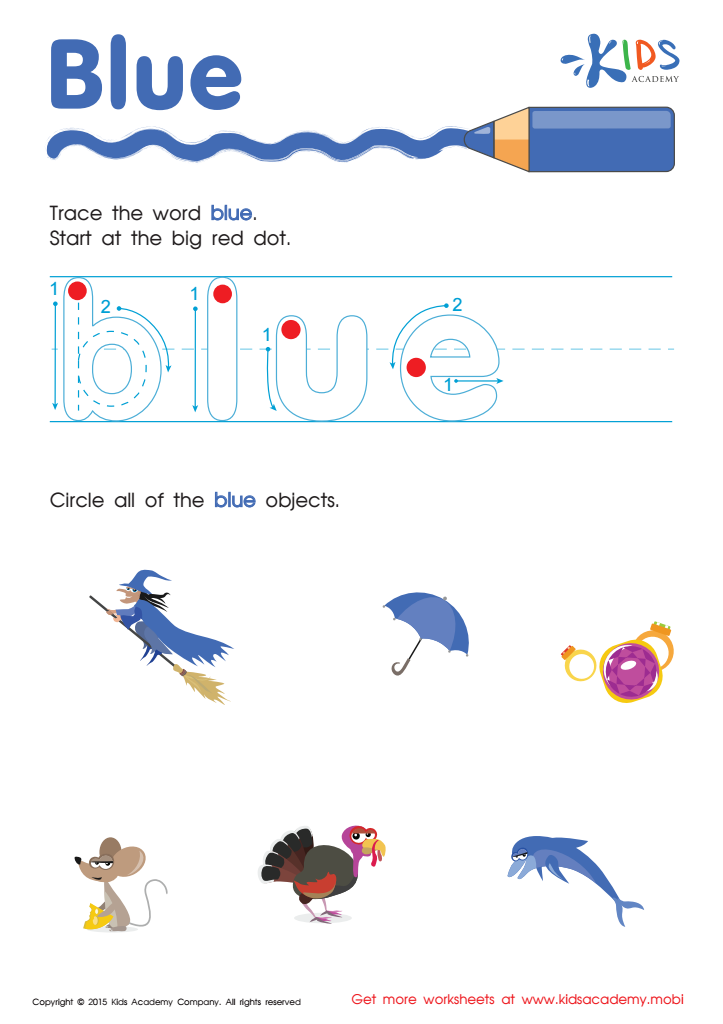
Blue Tracing Color Words Printable
Encourage your child's motor skills by having them trace the word "blue" with their blue crayon on this free printable handwriting worksheet, starting at the red dots. Ask them to circle all the blue objects they see. Check out here for more handwriting practice.
Blue Tracing Color Words Printable
Worksheet
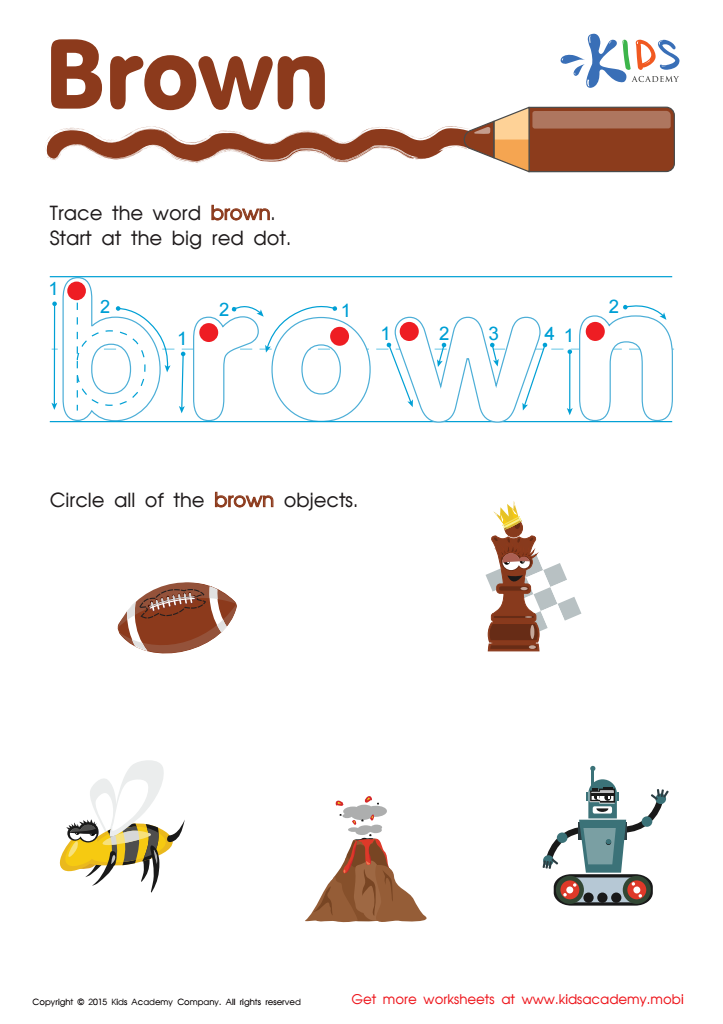
Brown Tracing Color Words Worksheet
This worksheet helps kids develop fine motor muscles and practice writing. Have them trace the word "brown" with a crayon, then find the brown objects in the picture. Ask them to look around and say what's brown in their room to make it more fun. Writing basics and a bit of fun - check out this free printable handwriting worksheet! For more tracing color words, check out here.
Brown Tracing Color Words Worksheet
Worksheet
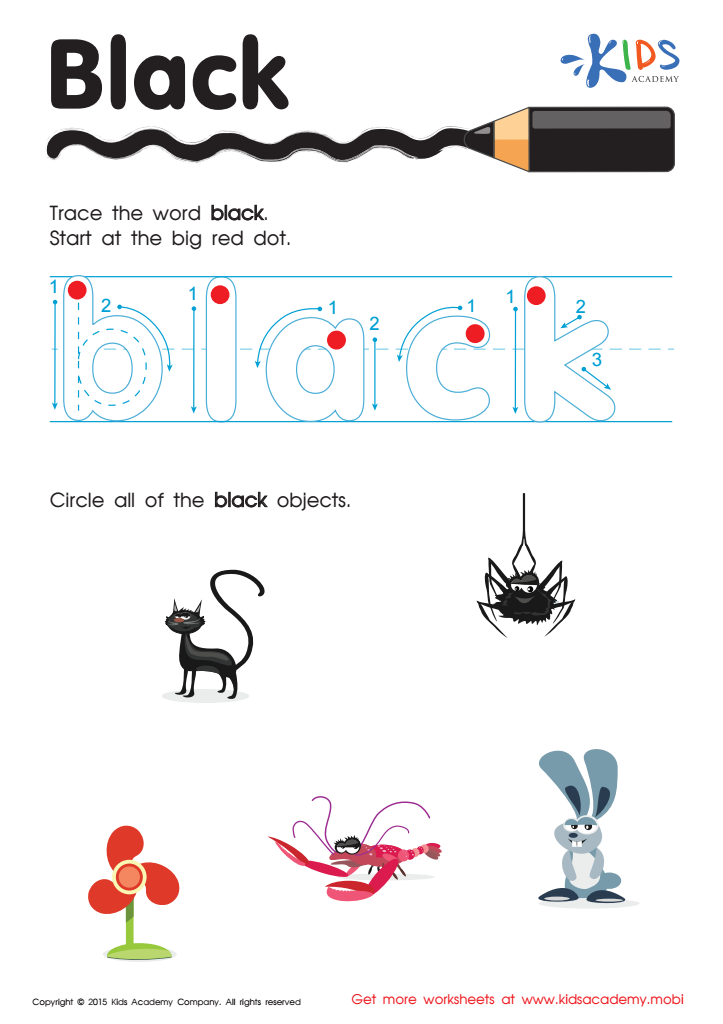
Black Tracing Color Words Printable
Tracing is essential for kids to learn good handwriting and boost their fine motor skills. This handwriting worksheet lets kids trace the word "black" letter by letter using a black crayon and spot all the black items. With this free printable, they'll have fun while writing! For more practice, check out the link.
Black Tracing Color Words Printable
Worksheet
Join Kids Academy for Free
Who is primarily going to use this learning content?







Color recognition and tracing words are fundamental activities for children aged 7-8, as they play an essential role in cognitive and motor skill development. Parents and teachers should care about these activities because they offer multiple benefits that reinforce a child’s learning foundation. At this age, children are refining their ability to differentiate colors and associate them with objects, enhancing their cognitive abilities related to categorization, memory, and information processing.
Color recognition not only improves visual perception but also aids communication skills, as children learn to describe and interpret their environment more accurately. This foundational skill is vital for subjects like art, math (for understanding concepts like grouping and patterns), and reading comprehension, where colors can be used for sorting and interpreting data.
Tracing words, on the other hand, helps develop fine motor skills and coordination, which are crucial for effective handwriting. This activity enhances muscle memory in the fingers and hands, promoting better control and stability with writing instruments. In addition, tracing helps in reinforcing sight word recognition and improving spelling abilities, which are integral parts of literacy development in early elementary education.
By prioritizing these activities, adults facilitate a more rounded developmental process that supports both academic growth and essential life skills in young learners.