Color Identification Alphabet Worksheets for Ages 7-9
4 filtered results
-
From - To
Enhance your child's learning experience with our Color Identification Alphabet Worksheets, designed specifically for ages 7-9! These engaging, interactive worksheets blend color recognition with alphabet mastery, allowing kids to explore letters while identifying vibrant hues. Ideal for early learners, each page encourages creativity and reinforces essential skills in a fun, visual way. Perfect for use at home or in the classroom, these worksheets support children’s cognitive development while fostering a love for learning. Download now to give your child the tools they need for academic success and enjoyment through colorful exploration! Discover the joy of learning through play and discovery!
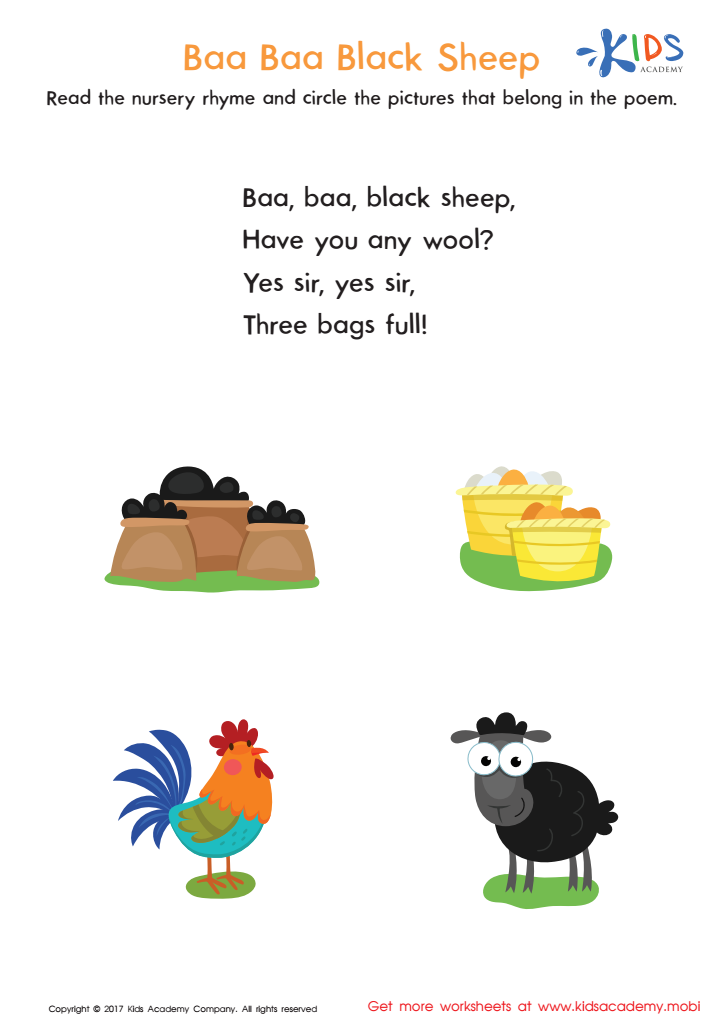
Baa Baa Black Sheep Printable
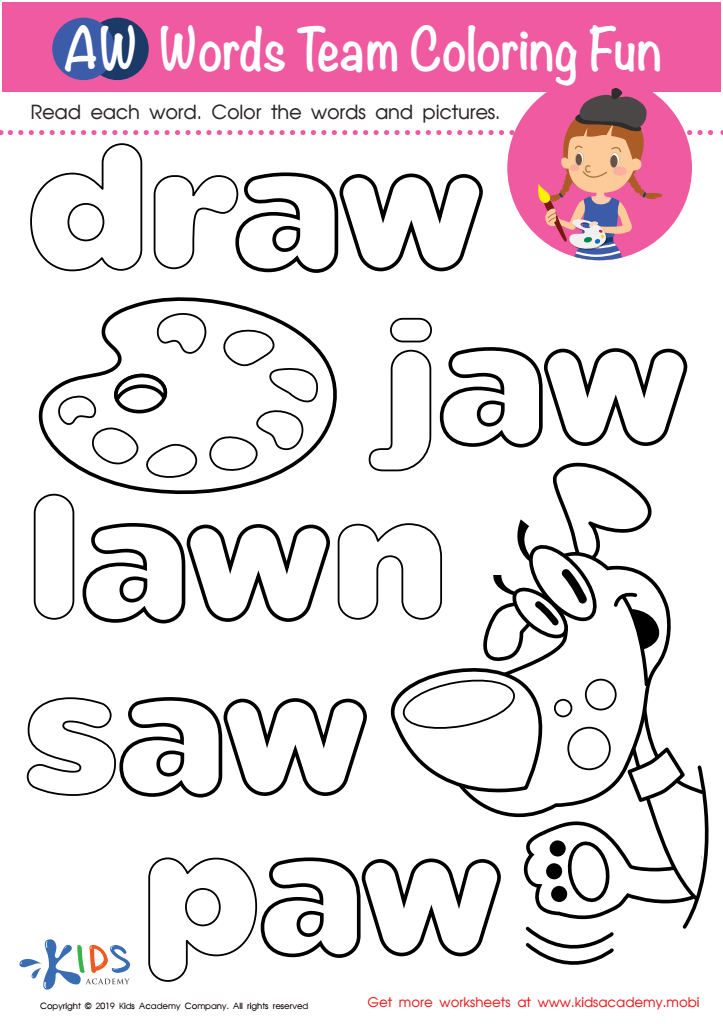
AW Words Team Coloring Fun Worksheet
 Assign to My Students
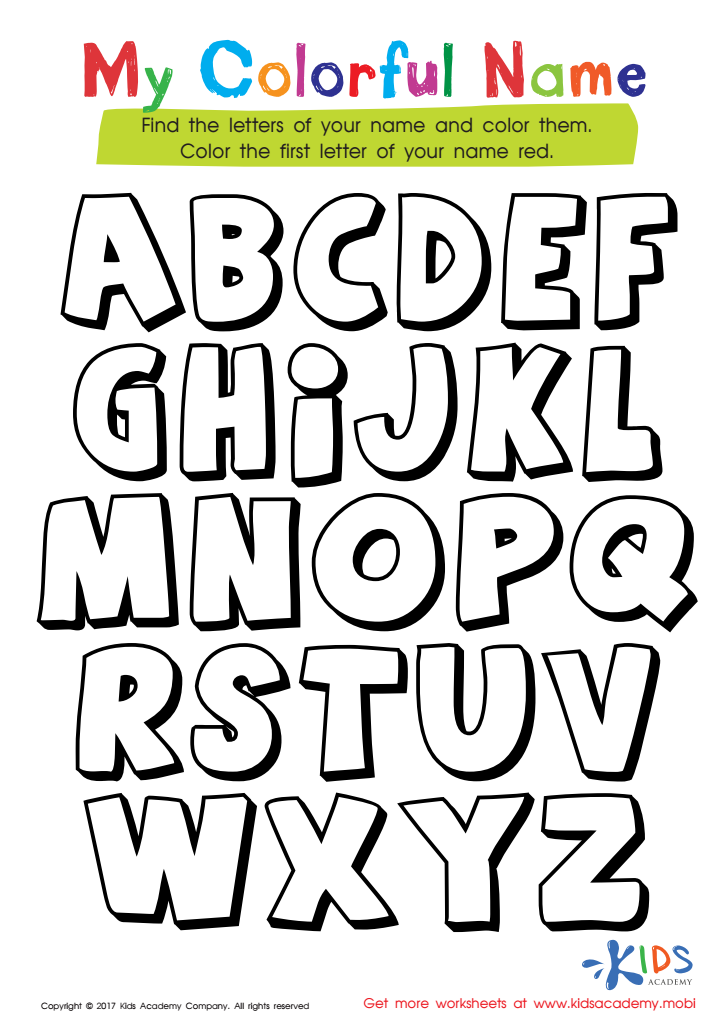
My Colorful Name Worksheet
Assign to My Students
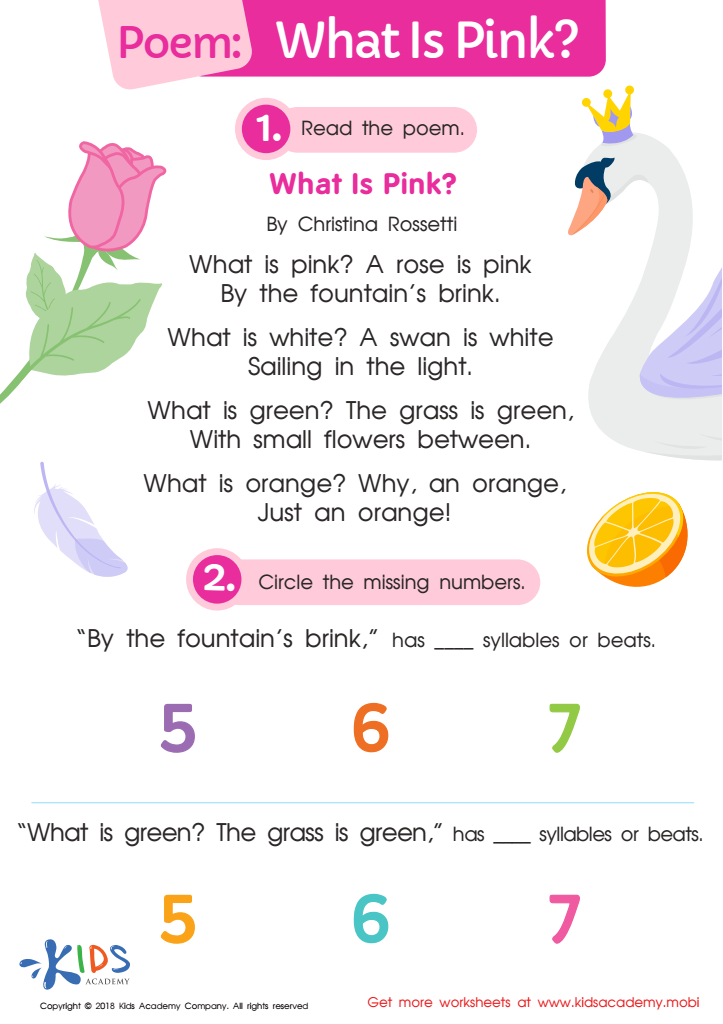
Poem: What Is Pink? Worksheet







The Color Identification Alphabet is a valuable tool for children aged 7-9, fostering critical cognitive and social skills. For parents and teachers, engaging with this concept translates to enhanced learning experiences. Color identification aids in developing vocabulary, as children learn to associate colors with corresponding words, enriching their language skills.
Moreover, understanding colors helps promote visual and spatial awareness. This age group is at a pivotal stage where they begin to grasp more complex concepts in art, science, and mathematics. For example, colors can be deployed in scientific classifications or in understanding various phenomena, making learning interactive and enjoyable.
Teachers can leverage the Color Identification Alphabet to incorporate creative activities, such as art projects or games, which encourage collaborative learning environments, promoting teamwork and interpersonal skills. Each color can instigate discussions about emotions, cultures, or nature, allowing children to connect their academic knowledge to real-world contexts.
Furthermore, mastering color identification supports children's ability to follow instructions, offering structured guidance in both classroom activities and home assignments. In sum, prioritizing color identification contributes significantly to cognitive development and fosters a well-rounded educational foundation, benefiting children's academic growth and personal development.







