Letter-sound recognition Phonics Worksheets for Ages 7-9
3 filtered results
-
From - To
Boost your child's reading confidence with our engaging Letter-Sound Recognition Phonics Worksheets designed for ages 7-9. These printable resources are an ideal foundation for honing essential early literacy skills, enabling young learners to connect letters with sounds effortlessly. Through fun, interactive activities, children will strengthen their phonemic awareness, aiding in smoother reading and spelling. Perfect for both classroom and home use, our worksheets provide a comprehensive approach to mastering crucial language arts skills. Parents and educators trust Kids Academy to make learning both effective and enjoyable. Get started today and watch your child's reading abilities soar!
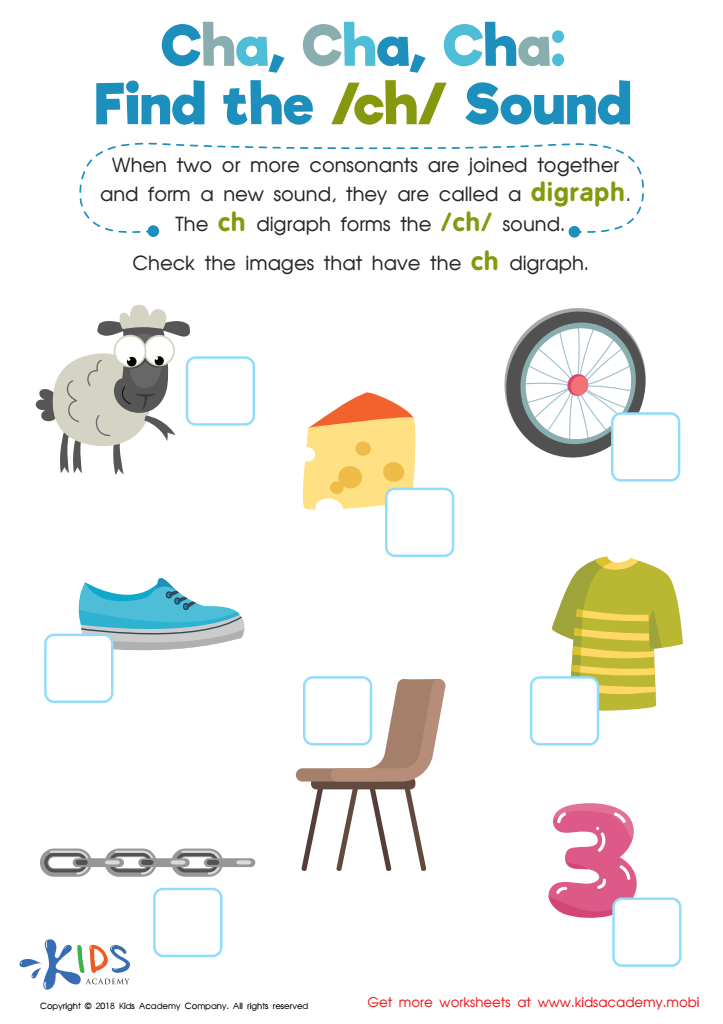
Cha, Cha, Cha: Find the /Ch/ Sound Worksheet
 Assign to My Students
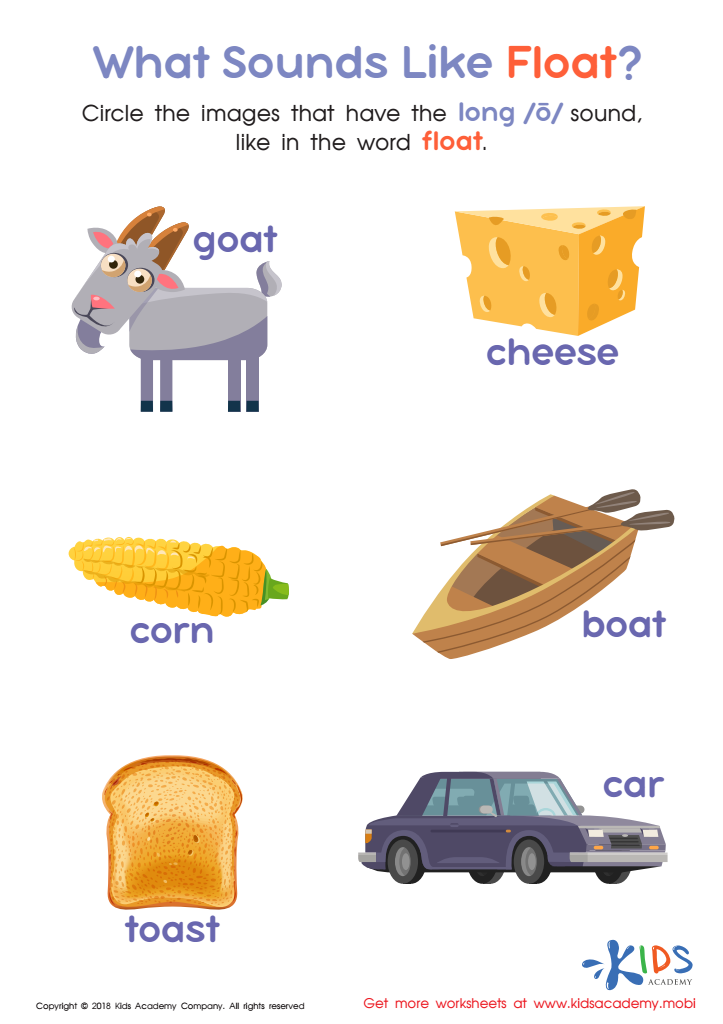
What Sounds Like Float? Worksheet
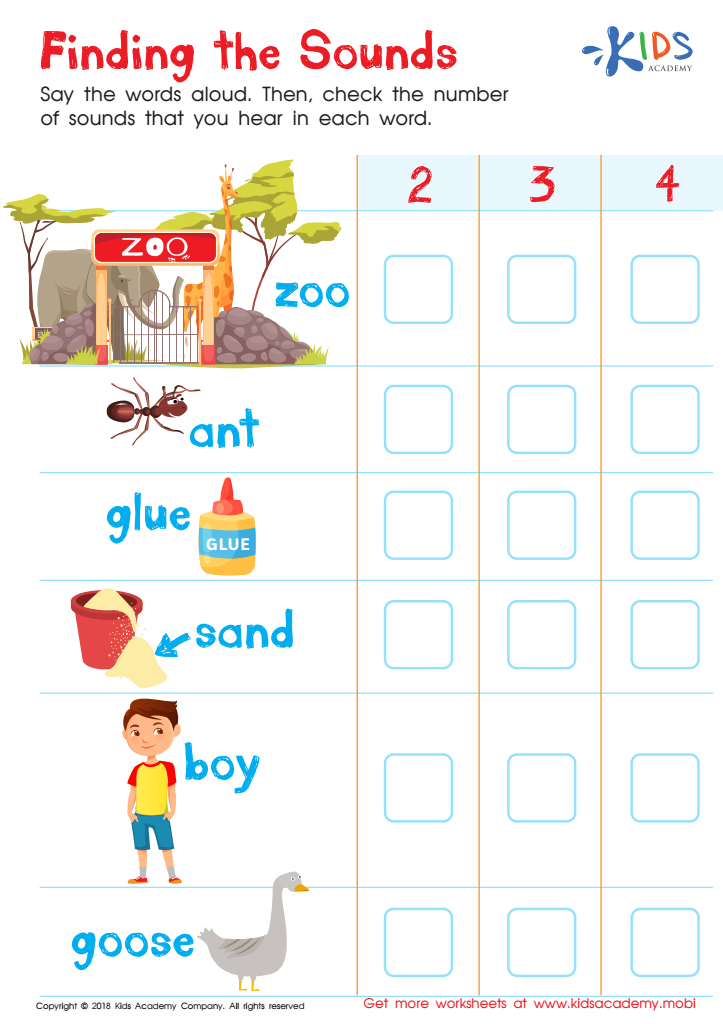
Finding the Sounds Worksheet








Letter-sound recognition and phonics are critical foundational skills for children aged 7-9, forming the basis of reading proficiency and overall literacy development. At these ages, children's brains are highly receptive to learning the relationships between letters and sounds, and mastering this can lead to successful reading and comprehension.
When parents or teachers focus on letter-sound recognition and phonics, they help children decode written words more fluently. This skill enables children to read new words independently, fostering a sense of confidence and a love for reading. Improved phonics skills also contribute to better spelling and writing abilities, as children understand the logical connections between sounds and letters.
Early proficiency in phonics sets the stage for more advanced literacy skills, such as reading comprehension, critical thinking, and analytical abilities. As children become fluent readers, they can focus less on sounding out words and more on understanding and interpreting content, which is vital for success in all academic areas. Moreover, strong literacy skills have been linked to positive outcomes in overall academic achievement and lifelong learning.
Therefore, investing in letter-sound recognition and phonics at this critical stage not only supports immediate educational goals but also lays the groundwork for a child's future learning and success.







